

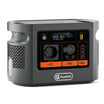
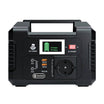

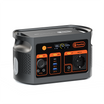


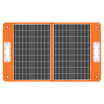
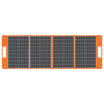


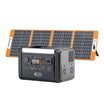

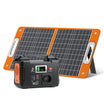

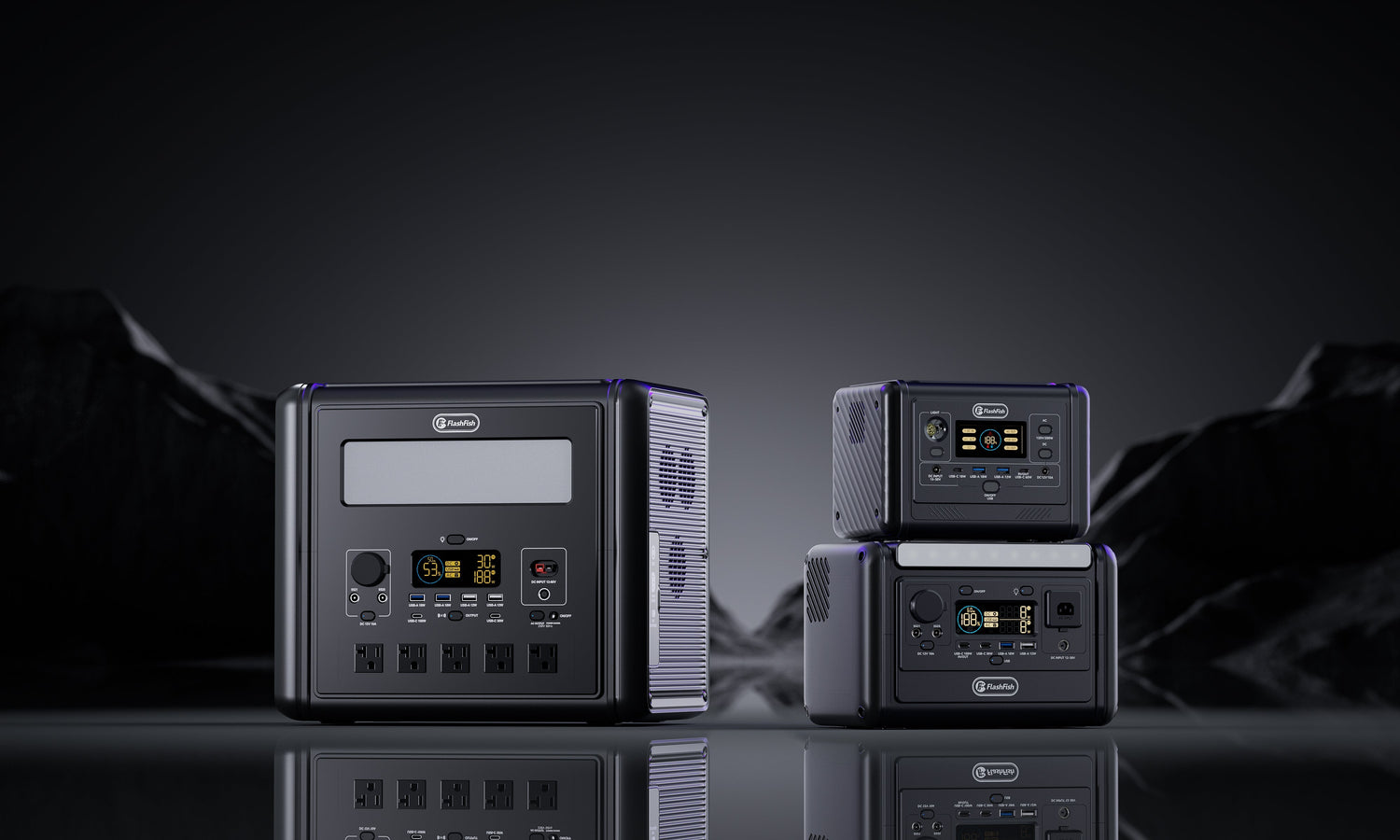
Short answer: a battery management system, or BMS, watches and manages electrical and thermal battery conditions. Depending on the model, it may limit charging or output when it detects temperature, voltage, current, overload or short-circuit conditions. It is an important protection layer, but it cannot make a damaged cable, wet station, wrong charger, blocked vent or modified battery safe.
The practical buying lesson is to judge a power station as a protection stack: electronics + enclosure + charger + clear manual + responsible use. A three-letter BMS badge by itself is not enough evidence to compare safety.
What a BMS is
Regulation (EU) 2023/1542 defines a battery management system as an electronic device that controls or manages a battery's electric and thermal functions for safety, performance and service life, manages relevant battery-state data and communicates with the appliance or charging infrastructure.
That definition is useful because it describes a function, not a marketing slogan. It does not say that every BMS uses the same sensors, software, thresholds, logging, balancing or shutdown logic. Those details must come from the exact product specification and manual.
Protection is a chain, not a shield
| Condition | What a model-specific BMS may do | What the user still has to do |
|---|---|---|
| Battery temperature outside the permitted range | Limit or stop charging or discharging. | Move the station only when safe, let it return to the manual's operating range and correct the environment. |
| Over-current or overload | Disable an output to protect the power electronics and battery. | Disconnect loads, total the nameplate watts and check startup behaviour before one supervised retry. |
| Short circuit | Interrupt the affected output. | Stop using the damaged cable or appliance; do not keep resetting the station. |
| Over-charge or over-discharge condition | Limit the battery operating window or stop a charge/discharge path. | Use only the approved charging path and follow storage-charge instructions. |
| Blocked ventilation or external heat | A temperature response may occur after the station becomes too warm. | Keep vents clear and place the unit as the manual instructs; electronics cannot create airflow through a blocked vent. |
| Impact, swelling, liquid exposure, burning smell or abnormal noise | The system may not recognise every form of physical damage early enough. | Stop use, isolate the area when safe and contact the manufacturer or appropriate local service. |
The LAYERS check for buyers and owners
L - Limits listed
Look for specific protection functions and operating limits in the manual. “BMS protected” without temperature ranges, input limits, output ratings or fault responses leaves too much unexplained.
A - Actions explained
A useful manual should say what an error or shutdown means, whether a load must be disconnected and when support is required. A reset button is not permission to ignore the cause.
Y - Your physical inspection
Before charging or using the station, check the enclosure, ports, cables and connectors for cracks, deformation, dirt, moisture, looseness or heat damage. Health Canada's lithium-ion battery guidance says not to use damaged or modified batteries and to follow manufacturer charging instructions.
E - Environment
Temperature, water, soft surfaces, direct sun and blocked airflow sit outside the BMS's control. Use the station only in the conditions permitted by its manual, keep it dry and leave the required ventilation space.
R - Restart discipline
After a protection event, disconnect the load and record the display or error code. Check the device label, cable and surroundings before a single supervised restart. Repeated tripping, unexpected heat or a returning error belongs with support, not repeated resets.
S - Support and disposal route
Before buying, find the product manual, regional contact route and battery-disposal guidance. A BMS can stop an electrical path; it cannot arrange safe handling of a damaged or end-of-life battery.
A practical example: overload is not an energy problem
Imagine a station with plenty of charge remaining, but a high-watt appliance switches on and the AC output stops. The remaining watt-hours do not prove the appliance is compatible. Capacity in Wh answers how much energy is stored; the continuous output rating and startup behaviour answer whether the station can supply the load.
The correct response is to disconnect the appliance, check its label and startup requirements, total all simultaneous loads and compare them with the station's rated output. Adding more charge will not raise the inverter's continuous rating.
What the FlashFish records show
The manual-derived FlashFish product database lists the same seven protection categories for the T1200S and T2000: high temperature, low temperature, over-discharge, over-charge, overload, short circuit and over-current. That is useful product-specific evidence, but it does not provide the internal trigger thresholds or prove the result of every misuse scenario.
For comparison shopping, record the protection list beside capacity, rated AC output, input limits, operating temperatures, weight, ports and support documentation. Do not score a product higher merely because the marketing page repeats “BMS” more often.
When FlashFish fits and when it does not
FlashFish T1200S or T2000 can fit a buyer who wants manual-documented protection categories and whose devices stay within the verified output, input and temperature limits. The user must still inspect equipment, keep it dry and ventilated, use approved charging methods and treat repeated shutdowns as information.
They do not fit a plan that depends on a BMS to make damaged equipment usable, permits uncontrolled public access, requires internal repair, ignores a recurring fault or substitutes a consumer station for a purpose-designed critical-power system.
Frequently asked questions
What does BMS mean on a portable power station?
BMS means battery management system. It manages electrical and thermal battery functions, but the exact sensors and responses are model-specific.
Can a BMS stop every battery fire?
No. It is one protection layer. Correct charging, dry placement, ventilation, physical inspection and stopping after damage or abnormal behaviour remain necessary.
Does BMS protection make any charger safe to use?
No. Use the supplied or manufacturer-approved charging method and verify voltage, current, connector and polarity.
Why can a protected power station still shut down?
A shutdown may be an intended response to temperature, overload, over-current, short circuit, low charge or another model-specific condition. Read the display and exact manual before restarting.
Should I keep restarting after a protection event?
No. Disconnect the load, record the display, inspect for heat or damage and follow the manual. Escalate repeated or unexplained events to support.
Which protections are listed for T1200S and T2000?
The local product database lists high- and low-temperature, over-discharge, over-charge, overload, short-circuit and over-current protections for both models.
Sources and evidence boundaries
- EUR-Lex: Regulation (EU) 2023/1542 - primary EU definition of a battery management system.
- Health Canada: Lithium-ion battery safety - user inspection, charging, storage and damage boundaries.
- FlashFish product-source bundle and Europe Shopify snapshot, accessed 18 July 2026, for model-specific protection lists and active Europe links.
Human review note: this article is based on manuals, regulatory definitions and public-safety guidance. It does not claim a teardown, sensor test, trip-threshold test or incident-rate result.



Leave a comment
This site is protected by hCaptcha and the hCaptcha Privacy Policy and Terms of Service apply.