


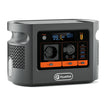
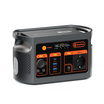

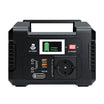
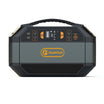
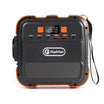

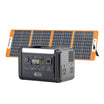
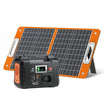

Short answer: choose by port topology, not by brand headline. The BLUETTI AC70P is the stronger documented fit when two field devices each need a USB-C port up to 100W. The E112B is the more plausible fit when 1008Wh nominal capacity and a 100W-plus-30W USB-C layout match the load plan. Neither statement proves compatibility, simultaneous runtime or performance with your equipment.
Method and limits. FlashFish Miles compared current manufacturer pages, the FlashFish exact-model record and the official AC70P EU manual. No side-by-side units, cables, field devices, runtime, heat, noise or charging behaviour were tested. Prices are excluded because they change, and AC output is not used to decide this direct USB-C/DC question.
Documented comparison
| Decision field | FlashFish E112B | BLUETTI AC70P | What it means |
|---|---|---|---|
| Nominal battery capacity | 1008Wh | 864Wh | Capacity alone does not predict field runtime |
| USB-C layout | One up to 100W; one up to 30W | Two ports documented up to 100W each | Match each device's required profiles and simultaneous-use rules |
| 12V route | 12V/10A shared DC group, 120W shared maximum | Regulated 12V/10A car outlet | Connector and polarity still matter |
| Published weight | About 11.2kg | About 10.7kg on the current page; 10.2kg in the manual | No reliable weight winner from these sources |
The first split: one 100W device or two?
The current E112B Europe page documents USB-C1 up to 100W and USB-C2 up to 30W. BLUETTI's AC70P Europe page and EU manual document two USB-C ports with profiles up to 20V/5A. If both field devices require more than 30W, the documented layouts create a meaningful difference.
Do not turn headline watts into a compatibility promise
A USB-C label such as 100W describes a ceiling and supported power-delivery profiles, not a guarantee that every laptop, camera battery charger or field monitor will negotiate correctly. Check the device manual, required voltage profiles, cable rating and any simultaneous-output restrictions. A device drawing less than the headline number can still be incompatible for another reason.
The 12V comparison needs four checks
- Confirm the equipment accepts nominal 12V input.
- Confirm the plug dimensions and centre polarity.
- Keep expected current within the documented outlet or shared group limit.
- Ask the device manufacturer whether the supply route is approved.
E112B's DC outputs share a 120W group maximum. AC70P describes a regulated 12V/10A car outlet. Those labels make a screening comparison possible, but they do not approve a field device or cable.
Capacity helps only after the load is known
E112B's nominal capacity is 1008Wh and AC70P's is 864Wh. The difference may matter when the same verified load and operating conditions are compared, but a Wh figure is not usable runtime. Conversion losses, state of charge, temperature, device duty cycle and simultaneous loads remain unknown here, so this article does not publish hour estimates.
Why this comparison has no weight winner
E112B is listed at about 11.2kg. BLUETTI's current product page lists the AC70P at about 10.7kg, while the official EU manual V1.0 lists about 10.2kg. That is a material manufacturer-source conflict. If carry weight decides the purchase, ask BLUETTI to confirm the current supplied unit and packaging version; do not rank the two from an unresolved value.
AC output is outside this decision
The E112B exact-model record calls 1200W a shared maximum and does not provide a continuous AC value. This comparison therefore does not call it a 1200W continuous station. Direct USB-C and 12V decisions should stay tied to their own port specifications. If your field plan also includes AC equipment, start a separate load review for both models.
Decision map
- Consider AC70P when two independently documented USB-C routes up to 100W are essential and both devices accept the listed profiles.
- Consider E112B when a 100W-plus-30W USB-C layout fits and the larger nominal battery is useful after the load is verified.
- Pause the decision when a proprietary DC connector, weight limit, simultaneous-output rule or missing device manual is unresolved.
Check current E112B Europe details before using this table.
Three equipment profiles
One 100W-class laptop plus a small USB-C accessory
Either topology may fit on paper; confirm the accessory stays within the second port and both devices' profiles.
Two devices that each require more than 30W
AC70P has the stronger documented USB-C layout, subject to its simultaneous-use rules and each device's manual.
A 12V field device with an uncertain plug
Neither station should be selected until plug dimensions, polarity, current and manufacturer approval are confirmed.
Risks and overlooked limits
- No price is stable enough to decide this source-bounded comparison.
- No runtime or thermal result was measured.
- Nominal capacity is not usable delivered energy.
- Cable quality and USB-C e-marker support can change the outcome.
- The selected image is illustrative and not a side-by-side test.
Conclusion
The clearest documented distinction is USB-C layout: E112B offers up to 100W plus 30W, while AC70P documents two ports up to 100W each. E112B has the larger nominal battery; both provide a 12V/10A route with different grouping language. There is no defensible weight winner because BLUETTI's own sources disagree. Build the decision from each field device's manual, then Confirm every device input before choosing.
FAQ
Which is better for two high-power USB-C devices?
AC70P has the stronger documented port layout, subject to device profiles and simultaneous-use rules.
Do both provide 12V/10A?
Yes in their documentation, but connectors, polarity and shared limits still require checking.
Which is lighter?
The reviewed BLUETTI sources conflict, so confirm the current unit rather than relying on a ranking.




Leave a comment
This site is protected by hCaptcha and the hCaptcha Privacy Policy and Terms of Service apply.