

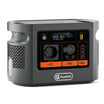
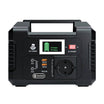

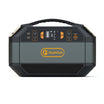
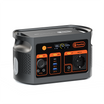






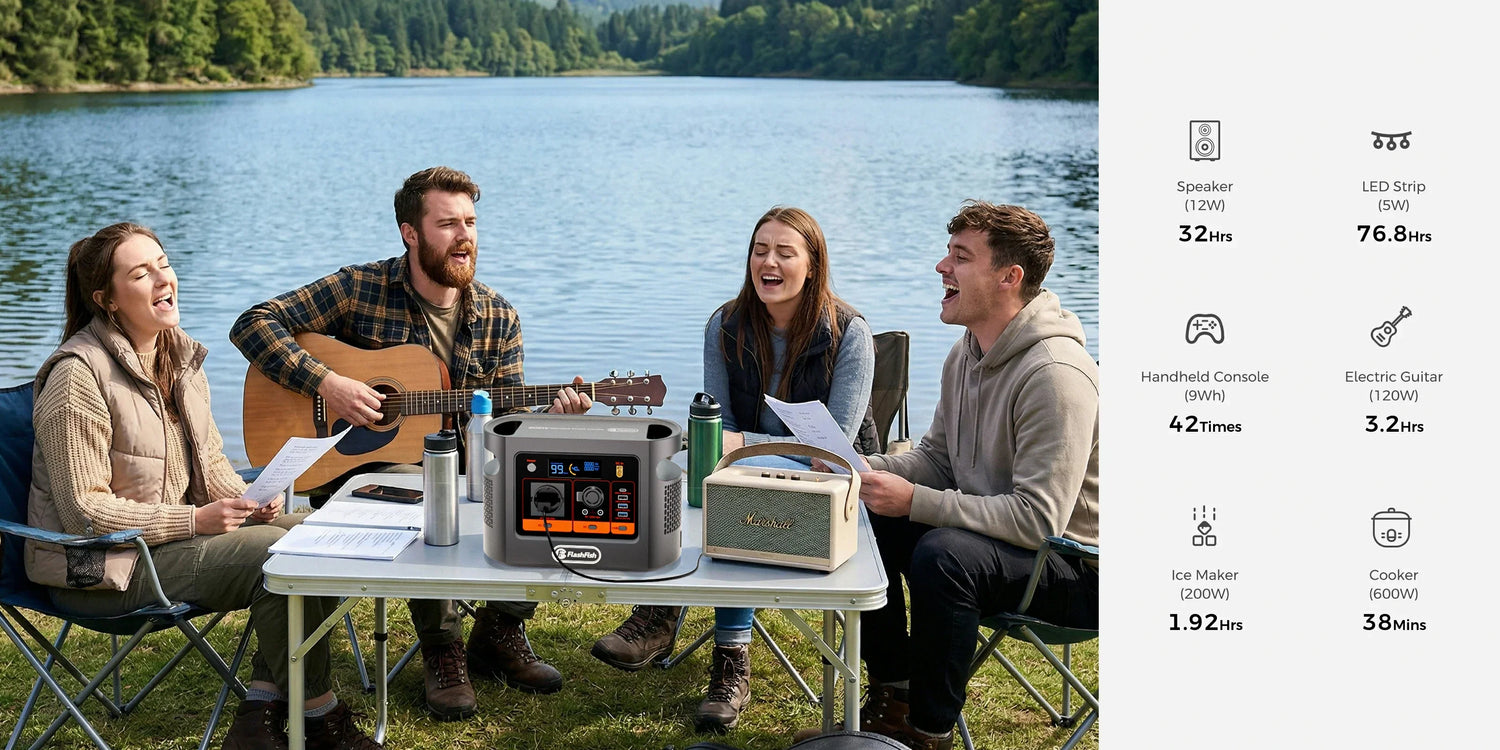
FlashFish E106B vs BLUETTI Elite 30 V2 for Compact Camping
Short answer: choose the FlashFish E106B when its higher documented nominal energy better matches a measured low-watt camping plan. Choose the BLUETTI Elite 30 V2 when lower published mass, 140W USB-C, app control or its documented UPS behaviour matters more. Both publish 600W continuous AC and 200W maximum solar input, so the shared watt label does not decide the comparison.
FlashFish authors this article and sells E106B. The CAMP method keeps the decision auditable: Compare common fields, Align them to the actual device list, check Mobility, and separate Platform features from missing evidence.
Current documented comparison
| Decision field | FlashFish E106B | BLUETTI Elite 30 V2 | What it means |
|---|---|---|---|
| Nominal energy | 384Wh | 288Wh | E106B provides the larger documented energy envelope; not a runtime promise |
| Continuous AC output | 600W pure sine | 600W continuous | Tie on the published running ceiling; startup and exact load still matter |
| Highest documented USB-C | 100W | 140W | Elite 30 V2 has the higher ceiling for a compatible laptop and cable |
| Maximum solar input | 200W, 12-30V, 10A | 200W, 12-28V, 10A | Same headline watts, different voltage windows; panel fit is electrical, not just wattage |
| Published mass | Approximately 5.2kg | 4.3kg | Elite 30 V2 has the lower published carry mass |
| App and continuity evidence | Not provided in the authoritative local record used here | Wi-Fi/Bluetooth app and no-more-than-10ms UPS switching published | BLUETTI provides stronger current evidence for these features; absence in the local E106B record is not proof of absence |
Specifications accessed on 31 August 2026. Verify the exact EU socket, variant, delivery country and current page before purchase. Prices are deliberately excluded because localized and bundle pricing can change and would require a same-variant, same-day comparison.
C: Compare only fields with matching definitions
The E106B local product record supplies 384Wh, 600W continuous pure-sine AC, 100W and 30W USB-C outputs, 200W solar/DC input and approximately 5.2kg. The BLUETTI Elite 30 V2 page supplies 288Wh, 600W continuous output, one 140W USB-C port, 200W solar input and 4.3kg.
BLUETTI also advertises 1500W lifting power. E106B has no equivalent verified local field, and vendor lifting modes may apply only to defined loads. The number is therefore not treated as a comparable surge result. E106B chemistry is also omitted because the authoritative local record leaves it unresolved even though the live page states LiFePO4.
A: Align the station to one device list
Write down the input of every device used together: laptop adapter, camera charger, lights, phone, cool box and any AC appliance. A 600W station is not evidence that every appliance labelled at or below 600W will start, behave normally or run for the required duration. Preserve headroom and verify motor, compressor or heat-load behaviour separately.
For energy, measure or estimate each device's watt-hours over the trip, then add reserve. The 384Wh versus 288Wh difference is relevant only after the load list exists. Neither nominal number is fully deliverable as AC energy, and neither supports a fixed runtime without measured device behaviour.
M: Mobility can outweigh capacity
If the station moves from car to pitch once, higher nominal energy may be worth the extra mass. If it is carried repeatedly with a camera bag, tent and water, the lower published 4.3kg figure can be the more useful advantage. Compare the complete kit, including charging cables and any panel, rather than the power station alone.
P: Platform evidence is a real product difference
BLUETTI publishes Wi-Fi/Bluetooth app control and no-more-than-10ms UPS switching for Elite 30 V2. The authoritative local E106B record does not supply equivalent fields. That means BLUETTI has stronger published evidence for remote settings, monitoring and transfer timing in this comparison; it does not prove E106B has no control or continuity function.
Do not treat a vendor transfer-time figure as permission to support medical equipment or every sensitive device. Verify the connected equipment's continuity requirement, test procedure and regional instructions independently.
Three camping cards
| Camping card | Evidence that matters most | More defensible lean |
|---|---|---|
| USB-C laptop, phone and camera; frequent carrying | Laptop PD requirement, cable rating and total kit mass | Elite 30 V2 if the laptop benefits from 140W and lower mass matters |
| Lights, cameras and low-watt devices over a longer weekend | Measured Wh and reserve | E106B if the higher 384Wh nominal energy fits the completed ledger |
| App-monitored home-to-camp use with a continuity requirement | Documented app controls, transfer time and device tolerance | Elite 30 V2 has stronger published platform evidence; verify the load independently |
When FlashFish E106B fits
- Your measured energy ledger benefits from 384Wh more than it benefits from the lighter competitor.
- Your highest-power USB-C device fits the documented 100W profile with the right cable.
- All AC loads stay within 600W continuous with suitable headroom and separate startup evidence.
- You do not need an app or transfer-time feature that is absent from the authoritative E106B record used here.
When E106B does not fit
- A 140W USB-C laptop profile is central to the trip.
- Repeated carrying makes the lower 4.3kg competitor figure materially more useful.
- The plan requires documented app control or a defined transfer time.
- The appliance start demand, total load, regional socket or environmental conditions remain unresolved.
Check E106B against your completed CAMP device card.
FAQ
Which has more nominal battery energy?
E106B is documented at 384Wh and Elite 30 V2 at 288Wh. That comparison describes nominal energy, not fixed runtime.
Do both provide 600W continuous AC?
Yes. The shared continuous rating does not establish the same startup support, ports, duration or compatibility with every 600W appliance.
Which is easier to carry?
BLUETTI publishes 4.3kg for Elite 30 V2; the E106B record states approximately 5.2kg. Evaluate the full kit and carry pattern.
Which is better for a USB-C laptop?
Elite 30 V2 publishes 140W USB-C and E106B documents 100W. The laptop and cable must support the required Power Delivery profile.
Is one the best compact camping station?
No universal winner is supported. E106B leads on documented nominal energy; Elite 30 V2 leads on published mass, USB-C ceiling and platform evidence.
Decision
E106B is a defensible BLUETTI alternative for buyers who value the higher documented energy envelope and can accept 5.2kg, 100W USB-C and the available platform evidence. Elite 30 V2 is the stronger fit when mass, 140W USB-C or documented app/UPS features decide the trip. If neither 600W-class envelope matches the measured load, Compare current FlashFish power classes if neither compact option fits.
Sources and evidence boundaries
- FlashFish Europe E106B page plus the local product database — current FlashFish fields and unresolved-field boundaries.
- BLUETTI Europe Elite 30 V2 page and regional official page — current vendor specifications and platform claims.
- Camping and Caravanning Club guidance — environment and appliance-suitability boundaries.



Leave a comment
This site is protected by hCaptcha and the hCaptcha Privacy Policy and Terms of Service apply.