

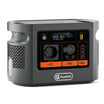
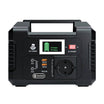

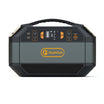
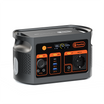






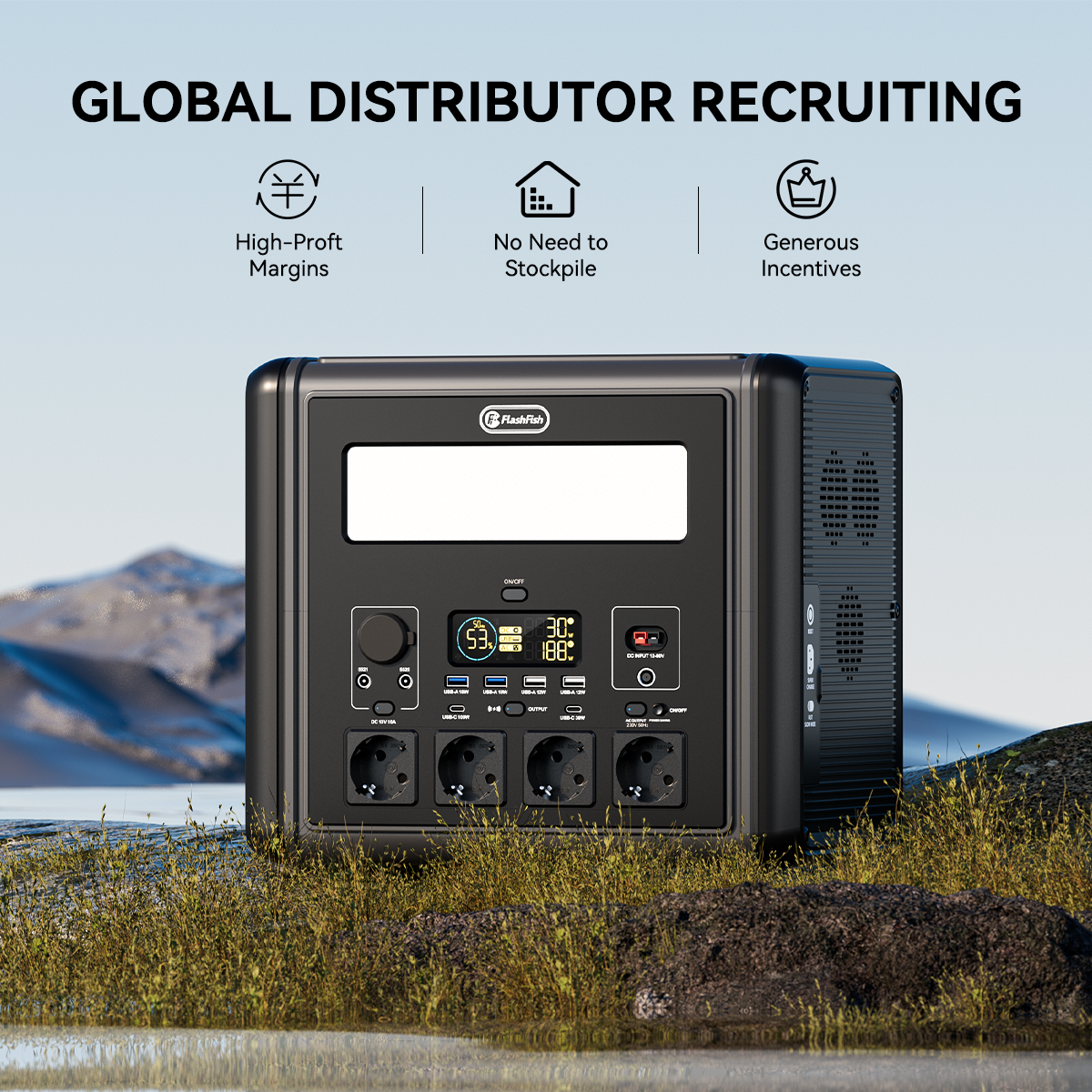
Evidence boundary: this is a current manufacturer-record comparison, not a side-by-side test. It makes no price, fixed-runtime, noise, reliability, weather-resistance or universal UPS claim.
Verified comparison at a glance
| Field | FlashFish T2000 | Anker SOLIX C1000 Gen 2 | Decision boundary |
|---|---|---|---|
| Rated energy | 1536Wh | 1024Wh | Not guaranteed AC runtime. |
| Continuous / peak listing | 2000W / 4000W | 2000W / 3000W | Peak labels are not proof that a specific motor or compressor will start. |
| Ports exposed by reviewed page | 4 AC plus USB-C, USB-A, DC and wireless groups | 9 ports total | The reviewed Anker page did not expose the port-by-port mix; counts are not directly equivalent. |
| Solar input | Up to 600W | Up to 600W | Panel voltage, current, connector, weather and orientation still control real input. |
| AC input claim | Up to 1500W on current page | Up to 1600W in enabled fast mode | Manufacturer times depend on mode, temperature and conditions; this was not tested. |
| Mass | 19.2kg | Exact mass not exposed on reviewed public page | Do not infer an absolute mass from a relative 'lighter' claim. |
| Continuity feature | EPS claim on current page | 10ms UPS claim | Neither claim proves compatibility with one sensitive device. |
Decision step: Compare T2000 with your completed CLASS worksheet. Recheck the exact regional manual and delivered sockets before purchase.
Use CLASS to compare the product class
| CLASS question | Why it changes the choice |
|---|---|
| C — Capacity reserve | List measured watt-hours for required loads, conversion margin and a deliberate reserve. The T2000's extra rated energy matters only if the plan needs it. |
| L — Load envelope | Continuous watts, startup evidence and simultaneous loads matter more than the largest device badge. |
| A — Access to ports | Count the exact AC, USB and DC connections, their individual limits and any shared groups; do not compare total port counts alone. |
| S — Supply recovery | Match wall and solar inputs to actual turnaround opportunities, local limits and panel conditions. |
| S — Site constraints | Mass, dimensions, ventilation, dry placement, cable route, app preference and regional socket evidence can outweigh one headline specification. |
Build a selected-load sheet before choosing
- Name each load: exact appliance, adapter, voltage, frequency, running watts and any manufacturer startup data.
- Separate essential from optional: router, laptop and lighting may be required while a heater or kettle is excluded.
- Measure the real combination: record simultaneous watts for the intended task instead of adding marketing maxima blindly.
- Budget energy: watts multiplied by hours for each state, plus conversion loss and reserve.
- Map connections: exact ports, shared limits, cables and any extension device rating.
- Plan recharge and fallback: define where energy can be restored and what happens if the station is unavailable.
What the headline numbers overlook
Two 2000W stations can serve different buyers. T2000's documented 1536Wh capacity gives 50% more rated energy than 1024Wh, but it also has a documented 19.2kg carry cost. The accessible Anker page emphasizes compactness and app-controlled energy management, yet does not expose an absolute mass in the reviewed text. That missing comparison field should remain missing until an exact regional primary source supplies it.
The same discipline applies to transfer features. A stated EPS or 10ms UPS value is a product claim, not a blanket guarantee for medical-critical, life-safety or interruption-sensitive equipment. Confirm the device's tolerance, regional manuals and a safe test plan.
When FlashFish T2000 fits—and when it does not
When FlashFish fits
- Your measured energy budget benefits materially from 1536Wh rather than 1024Wh.
- You need the documented T2000 connection mix, including four AC outlets, and have checked shared limits.
- A 19.2kg station is acceptable for the storage, vehicle or occasional-carry plan.
When FlashFish does not fit
- Frequent one-person carrying is the dominant constraint and you have not compared exact regional mass and dimensions.
- You specifically need Anker's documented app/TOU functions or its exact ecosystem.
- The decision depends on guaranteed runtime, silent operation, medical continuity or an unverified startup load.
FAQ
Do both stations have the same capability because both list 2000W?
No. The 2000W continuous headline is only one field. Capacity, peak listing, ports, regional configuration, recharge path, mass, controls and the exact selected load all remain separate decisions.
Which station has more rated battery energy?
The reviewed manufacturer records list 1536Wh for FlashFish T2000 and 1024Wh for Anker SOLIX C1000 Gen 2. Rated energy does not equal guaranteed AC runtime.
Which is easier to carry?
The T2000 record lists 19.2kg. The reviewed Anker Germany page says the C1000 Gen 2 is lighter than comparable models but did not expose an exact mass, so this draft does not declare a portability winner.
Can either station guarantee uninterrupted backup?
No guarantee is made here. Anker lists a 10ms UPS claim and T2000 lists an EPS feature on its current page, but the exact device tolerance, regional manual, wiring and transfer behaviour require review and testing.
How should I choose without a fixed runtime estimate?
Measure each selected load, define required hours and reserve, then compare the resulting energy budget with each rated capacity. Treat conversion loss, startup demand, simultaneous loads and recharge opportunities as separate inputs.
Sources and evidence notes
- FlashFish Europe T2000 page and the local product database — current product identity and documented specifications; the bundled 120V/60Hz manual is not transferred to Europe.
- Anker Germany C1000 Gen 2 page — exact-generation capacity, output, port-count, input, cycle, UPS and app claims.
- Electrical Safety First extension guidance and UK Government power-cut guidance — connection and wider-preparedness boundaries.
Editorial viewpoint: a fair comparison preserves missing fields. CLASS shows when T2000's larger energy reserve is valuable and when carrying, controls or ecosystem needs may point elsewhere.
Next step: Review other FlashFish capacity classes before choosing if the measured load does not require the T2000 energy class.
Evidence checked . Human review is required for current competitor facts, exact regional manuals, electrical wording, author/reviewer credentials, links, metadata, image disclosure and rendered FAQ/schema parity before publication.



Leave a comment
This site is protected by hCaptcha and the hCaptcha Privacy Policy and Terms of Service apply.