

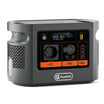
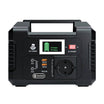

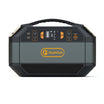
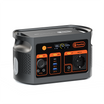






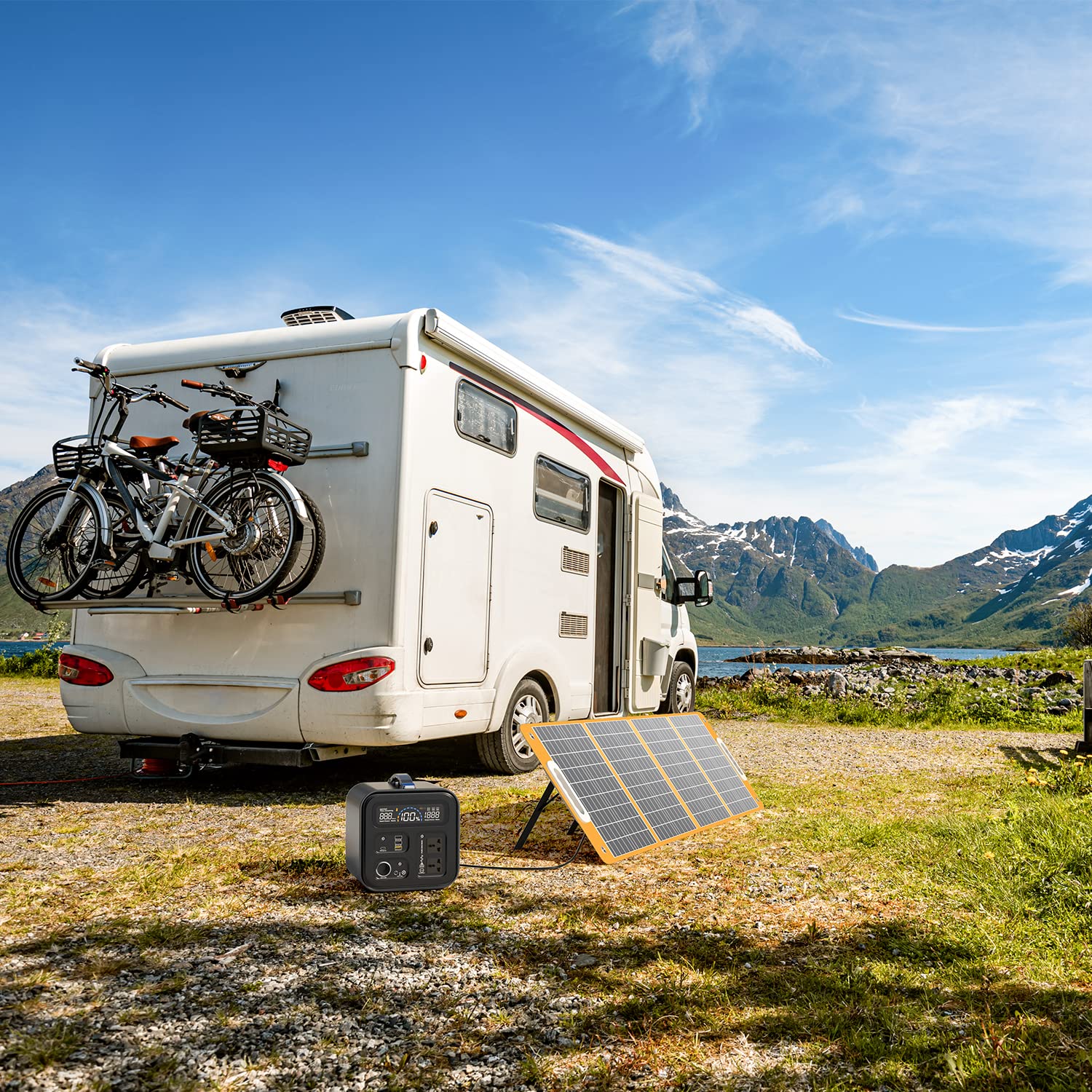
Short answer: MPPT, or maximum power point tracking, is a control method used by compatible solar charge controllers and power stations to find a useful voltage-and-current operating point from a solar panel and convert that available power for battery charging. MPPT can improve how a compatible system uses changing sunlight, but it cannot create sunlight, remove shade, or bypass the power station's input limits.
Portable solar became easier to use when foldable panels, integrated batteries, and charge-control electronics came together in one consumer setup. The important shift is not that every panel now produces its rated watts all day. It is that a compatible controller can respond to changing panel conditions without the user manually adjusting electrical settings.
The portable solar charging chain
| Part | Job | What the user must check |
|---|---|---|
| Sunlight | Provides the energy reaching the panel | Season, time, weather, shade, and placement |
| Solar panel | Converts available light into DC electricity | Rated voltage, current, watts, connector, and cable |
| MPPT controller | Tracks a productive operating point and manages conversion | Whether the power station includes compatible solar control |
| Battery system | Accepts managed charging within its limits | Input voltage, current, watt limit, state of charge, and manual |
Why solar input changes even when the panel rating does not
A panel's rated wattage is a useful comparison label, not a prediction for every minute outdoors. The U.S. Department of Energy's solar-radiation basics explains that solar energy reaching a location varies with time of day, season, location, landscape, and weather. Shade, panel direction, temperature, cable losses, and the battery's charging state can also affect the input shown on a power station.
This is why moving a panel, removing partial shade, or testing at a different time can change input even when the equipment has not changed.
What MPPT does
- Continuously evaluates the panel's available voltage and current.
- Finds a productive operating point as conditions change.
- Converts available panel power into charging power the battery system can accept.
- Works within the controller, cable, connector, and power-station limits.
What MPPT does not do
- It does not turn shade into full sunlight.
- It does not make a 100W panel deliver 100W in every condition.
- It does not make an incompatible voltage, connector, or cable safe.
- It does not override a power station's maximum solar input.
- It does not replace the compatibility checks in the product manuals.
Why this was a practical change for portable power
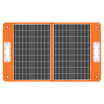
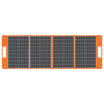
Older small solar setups often required users to understand separate panels, controllers, batteries, and wiring. Portable power stations made the system easier to move and understand by integrating battery management, outputs, displays, and charging electronics. Foldable products such as the FlashFish TSP100 Portable Solar Panel and FlashFish TSP60 Portable Solar Panel support the portable side of that evolution.
The controller still matters. Before connecting any panel, compare its rated voltage, current, wattage, connector, and cable with the exact power station input specification. Do not choose a panel only because its wattage looks close.
Why a portable panel may show low input
| Observed problem | First checks | What not to assume |
|---|---|---|
| Input is much lower than the panel rating | Shade, panel direction, time, weather, surface cleanliness | Do not assume the controller is faulty first |
| Input rises and falls | Passing clouds, moving shade, cable position | Do not assume solar input must be constant |
| No input appears | Connector, cable, power-station input mode, manual compatibility | Do not improvise a cable or connector |
| Input slows near a full battery | Battery state and charging behavior described in the manual | Do not assume the panel stopped working |
A safer matching checklist
- Read the panel and power-station manuals.
- Confirm the station accepts solar input through the intended port.
- Compare voltage, current, wattage, connector, and cable requirements.
- Set up the panel in useful sunlight without placing the battery in an exposed position.
- Observe the display and stop if the setup reports a fault or behaves unexpectedly.
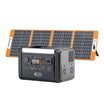
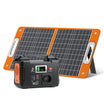
- Use the portable solar panels collection and solar generator kit collection as starting points, then verify the exact pairing before purchase or use.
FAQ
Does every portable power station have MPPT?
No. Check the exact product page and manual. Do not infer controller type from the presence of a solar input port alone.
Will MPPT make a portable solar panel reach its rated watts?
Not necessarily. MPPT helps a compatible system use available panel power, but actual input still depends on sunlight, shade, weather, panel position, temperature, cables, limits, and battery state.
Can I connect any 100W panel to any power station?
No. The wattage label is only one compatibility field. Voltage, current, connector, cable, polarity, and the power station's input limits must also match.




Leave a comment
This site is protected by hCaptcha and the hCaptcha Privacy Policy and Terms of Service apply.