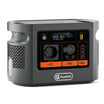
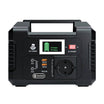

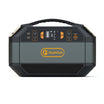
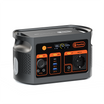




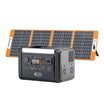



5.12kWh battery capacity, 2400W rated off-grid AC output and up to 2000W PV input.

Portable Power Stations
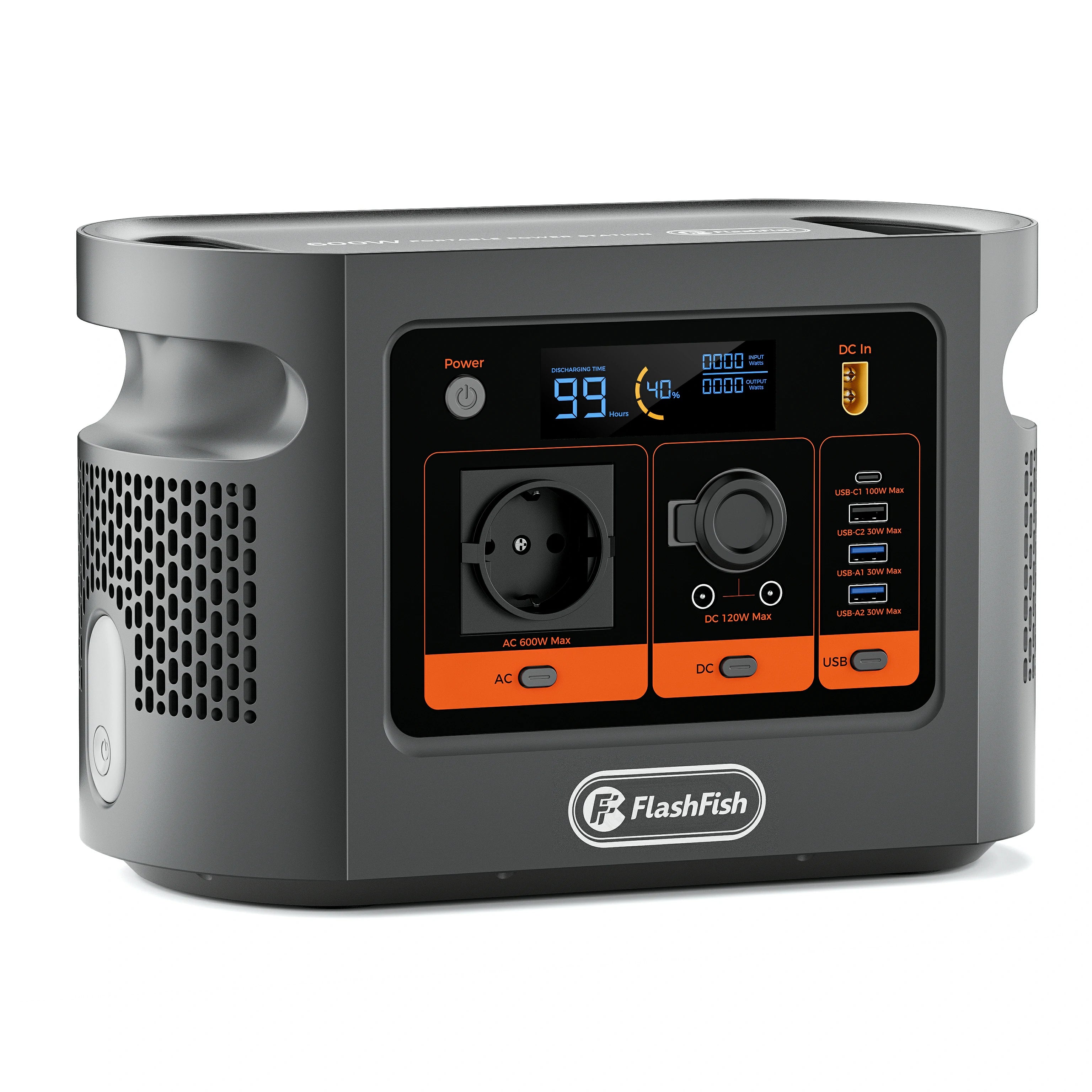
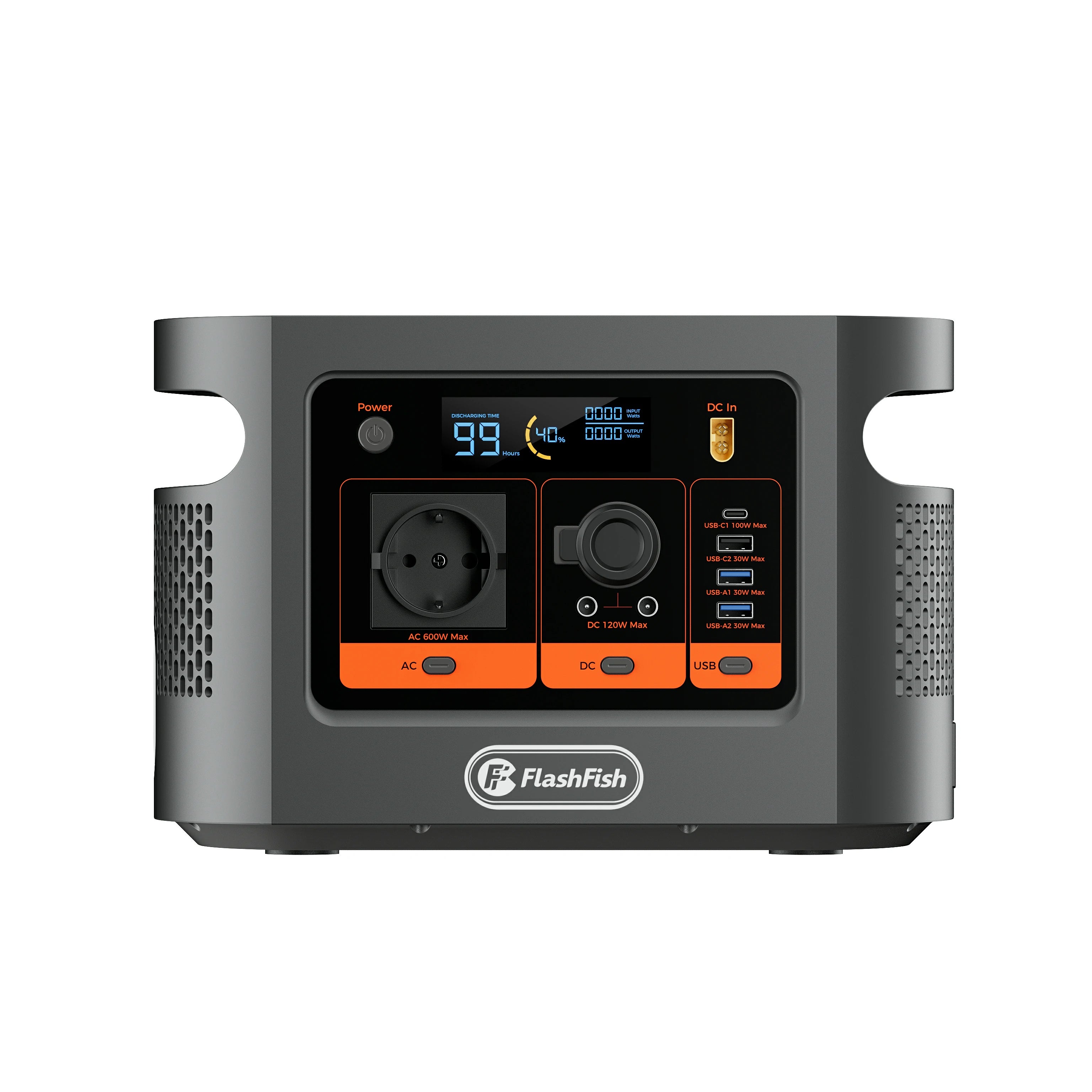
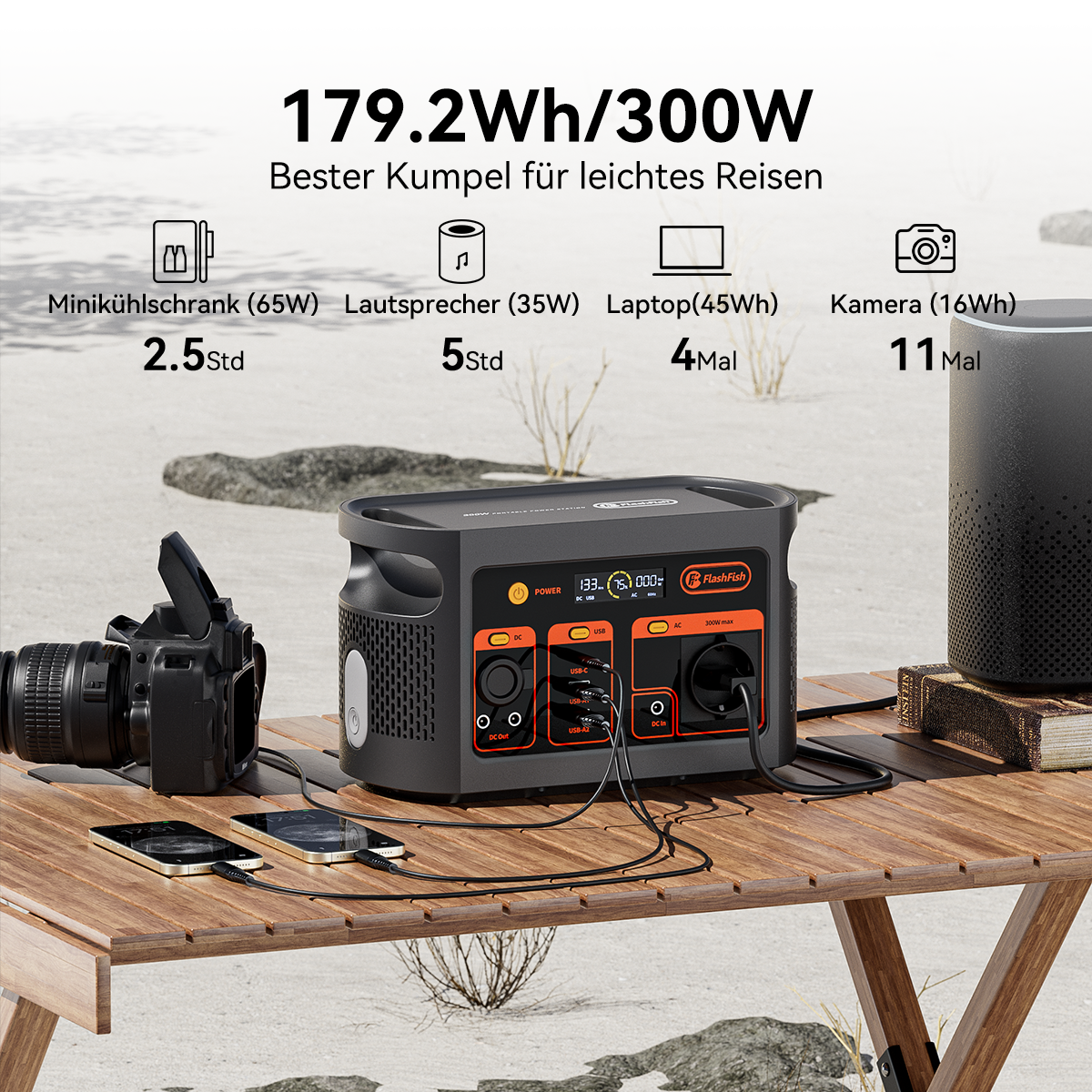
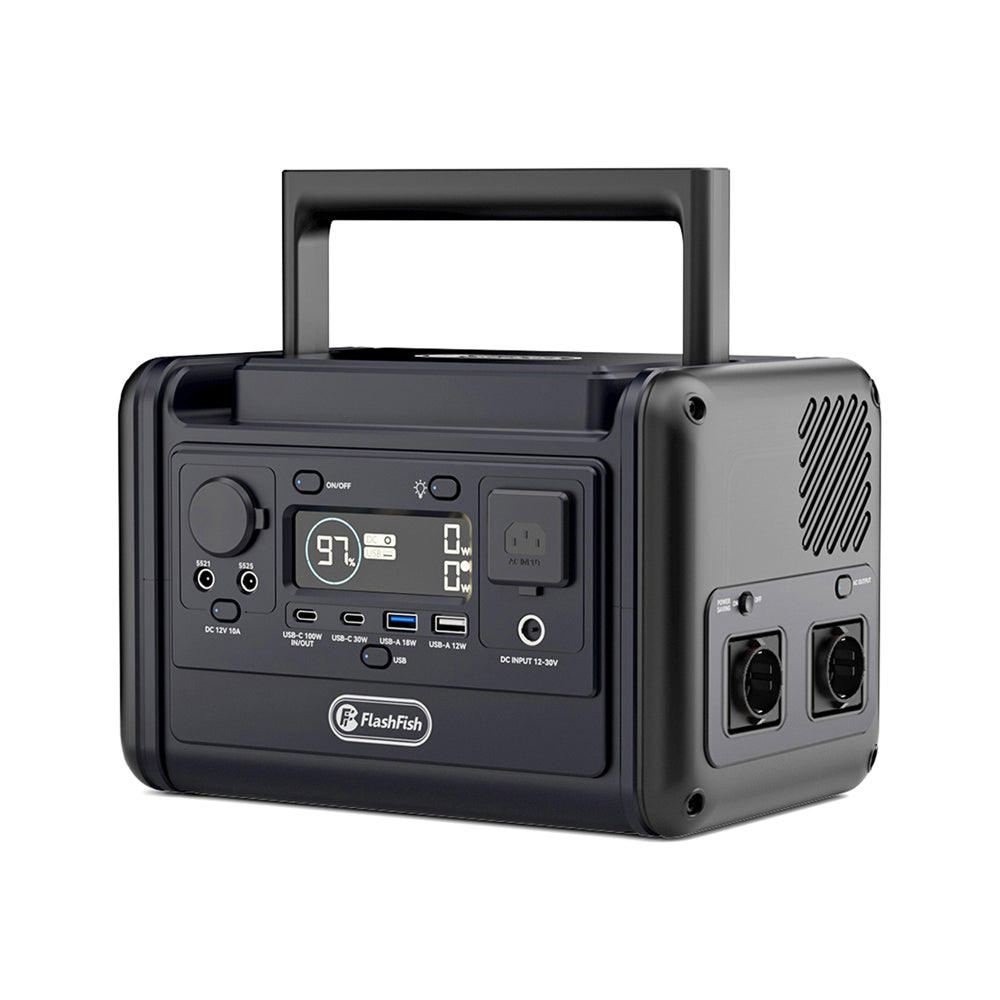
Explore FlashFish portable power stations for camping, campervan trips and selected backup needs. Match rated output in watts with your devices’ running and starting demand; use capacity in watt-hours to plan runtime.
Compare E112B and E106B for higher-capacity options, or E103 and T300PRO for compact 300W models. Smaller models such as E200 are also available. Check each product’s outlets, charging limits and regional version before buying.
Filters
12 products



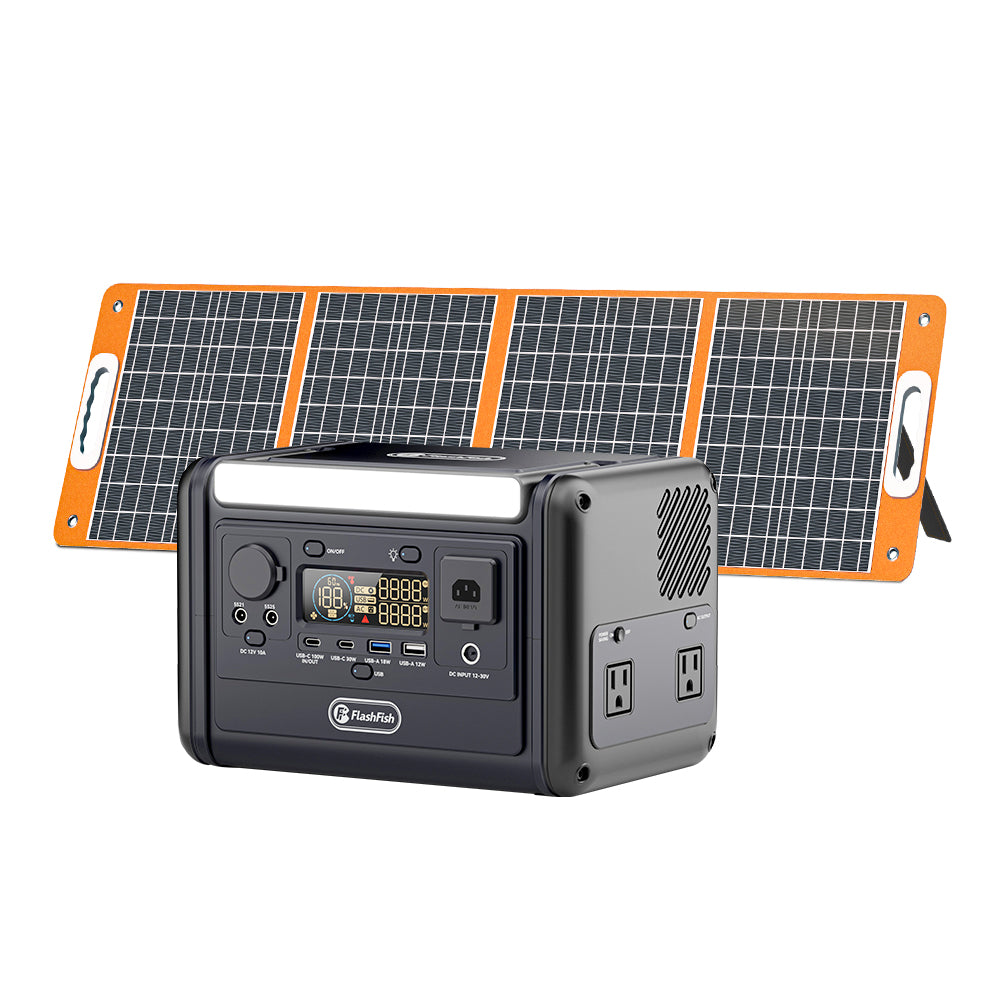
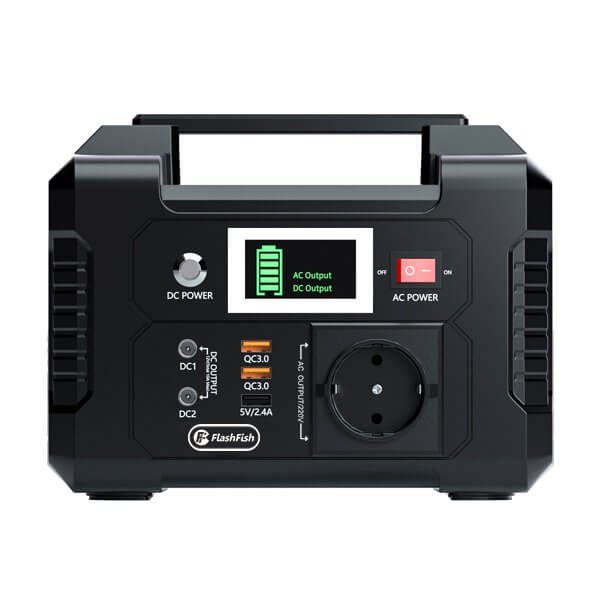
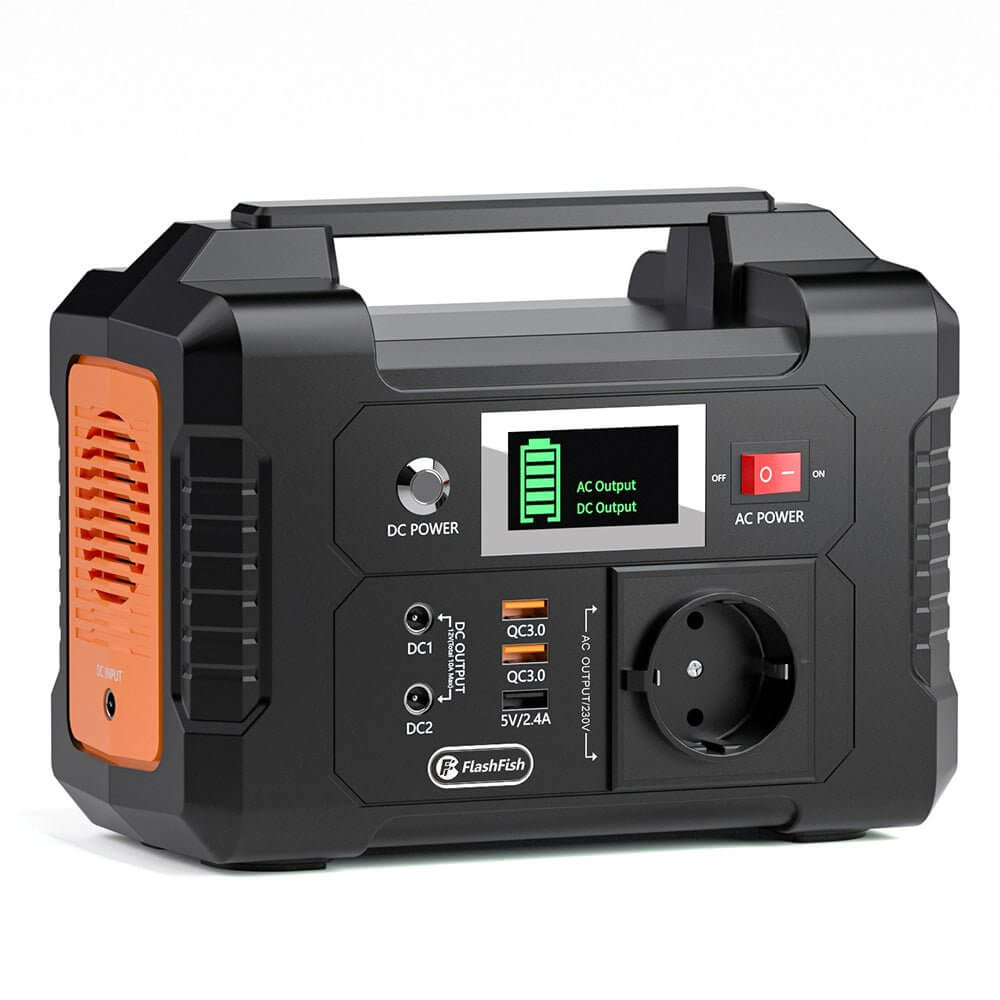
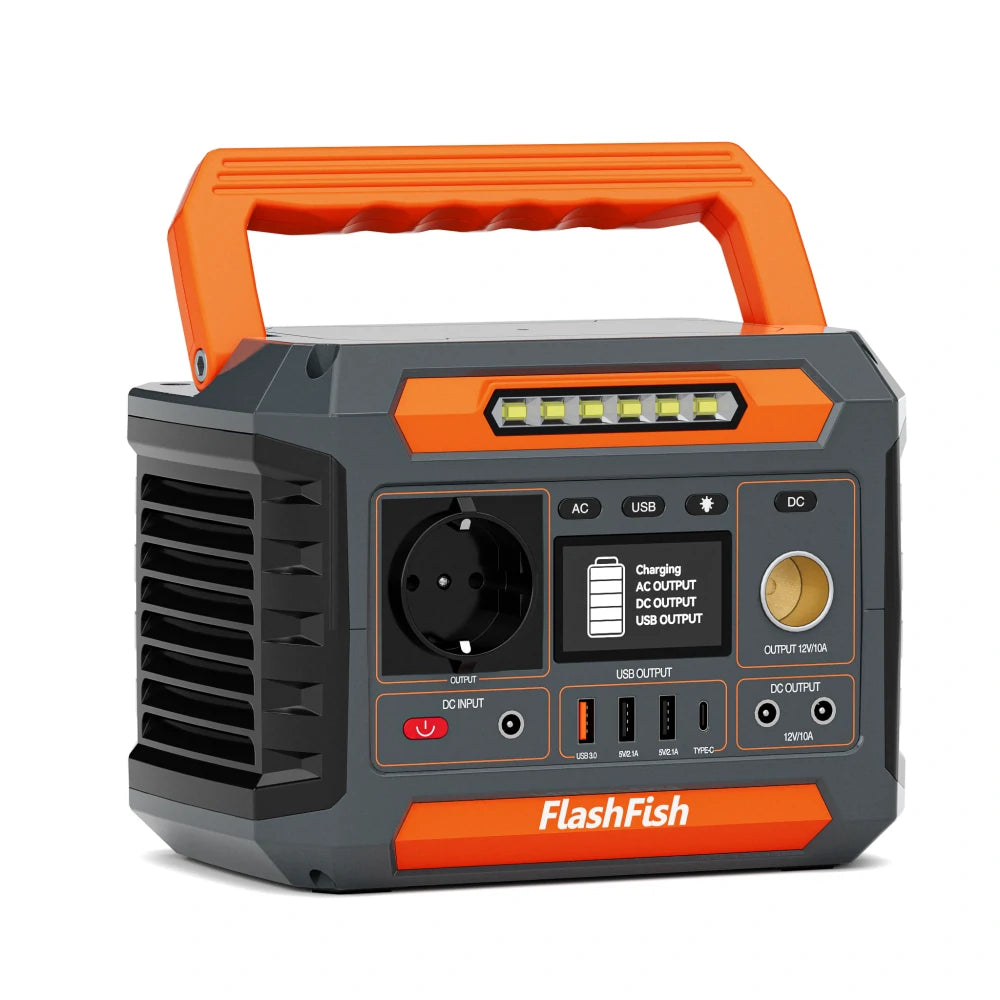
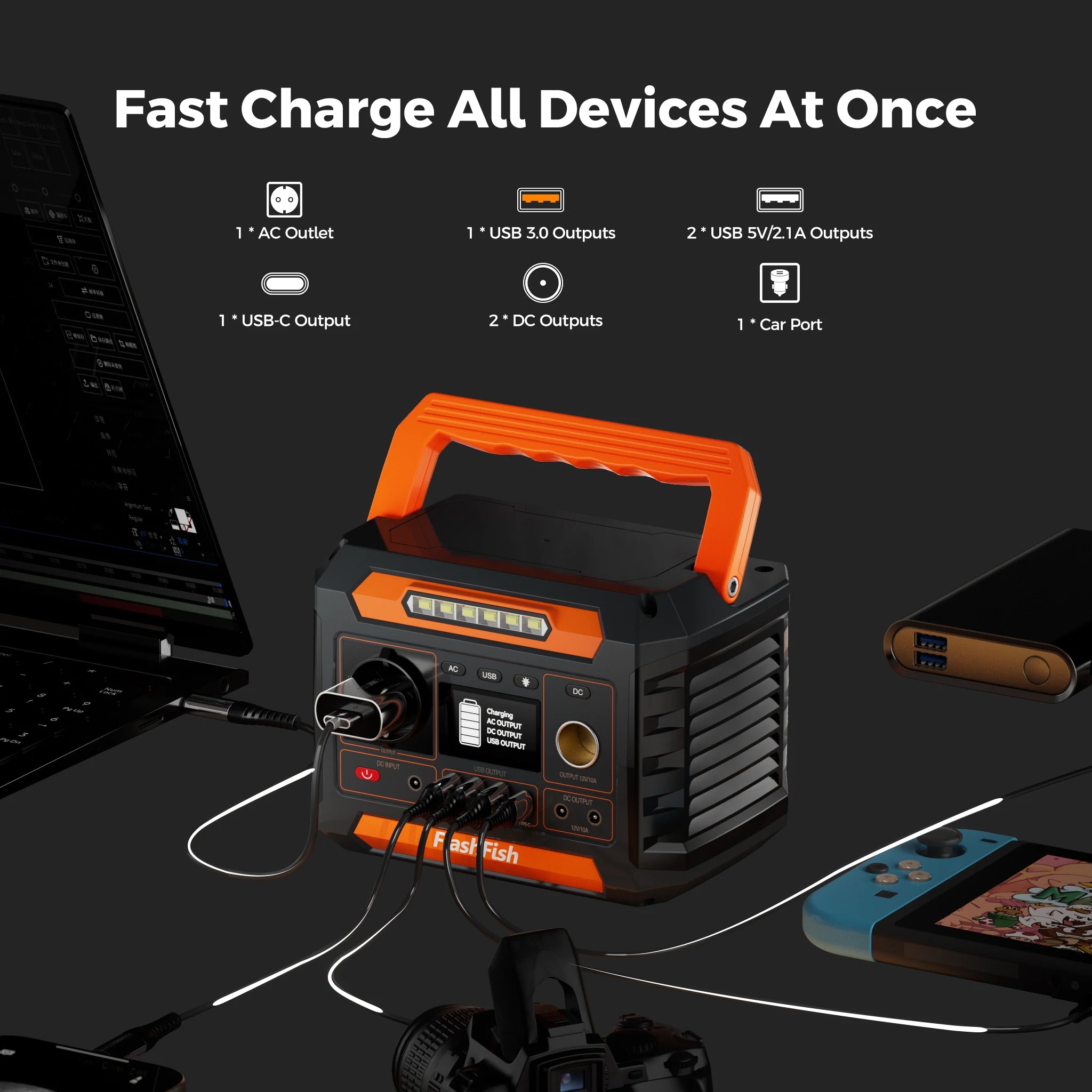
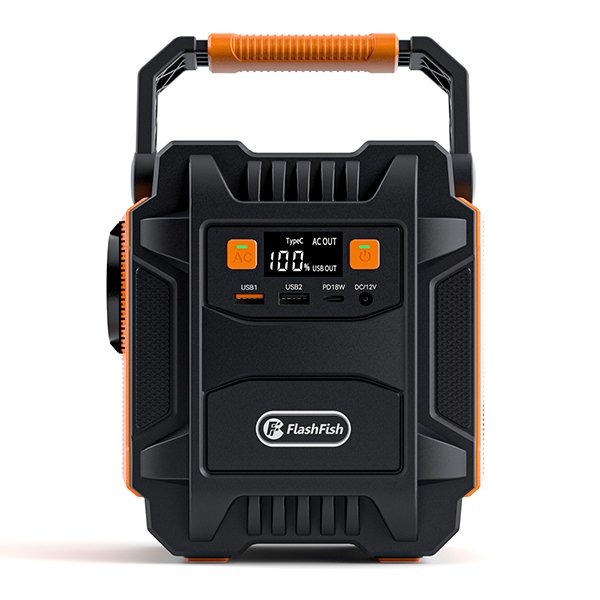
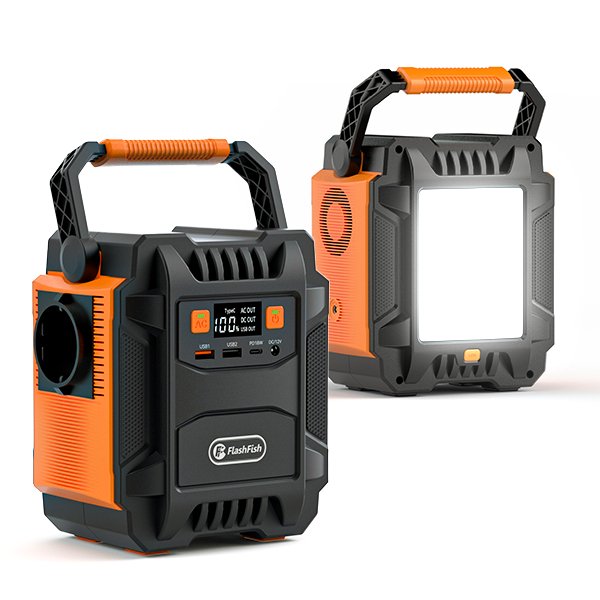
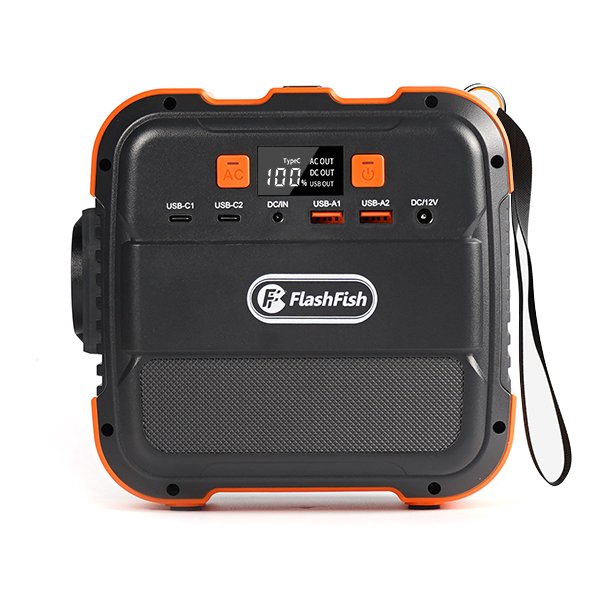
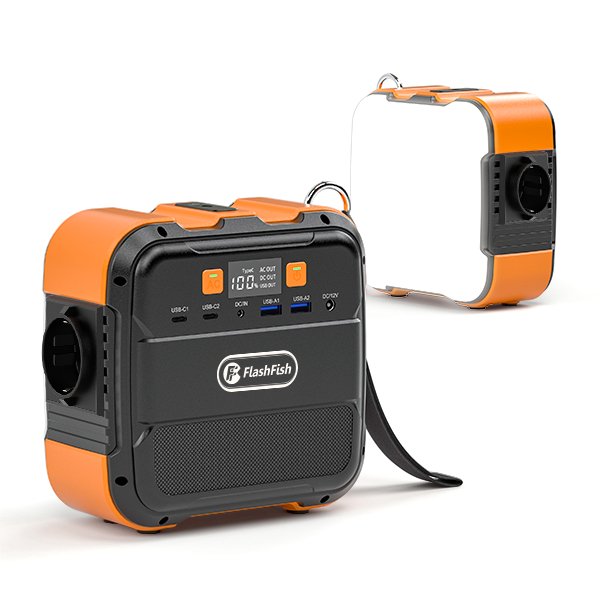
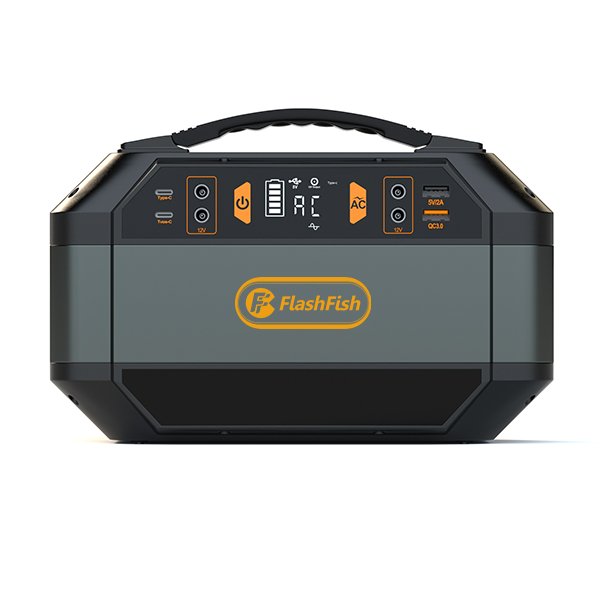
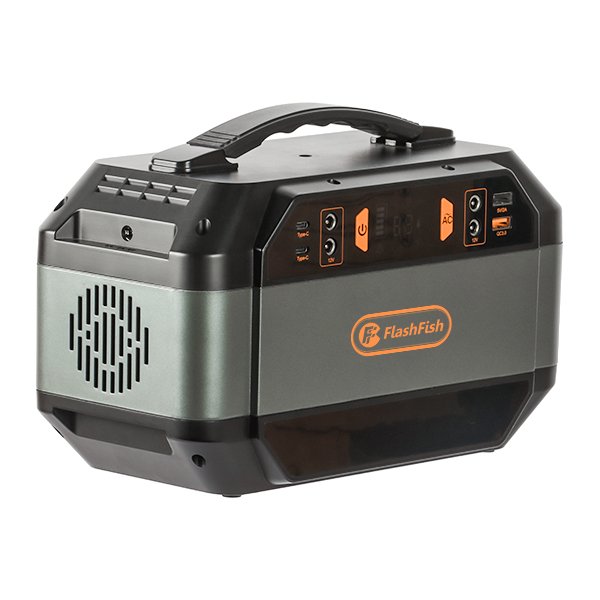
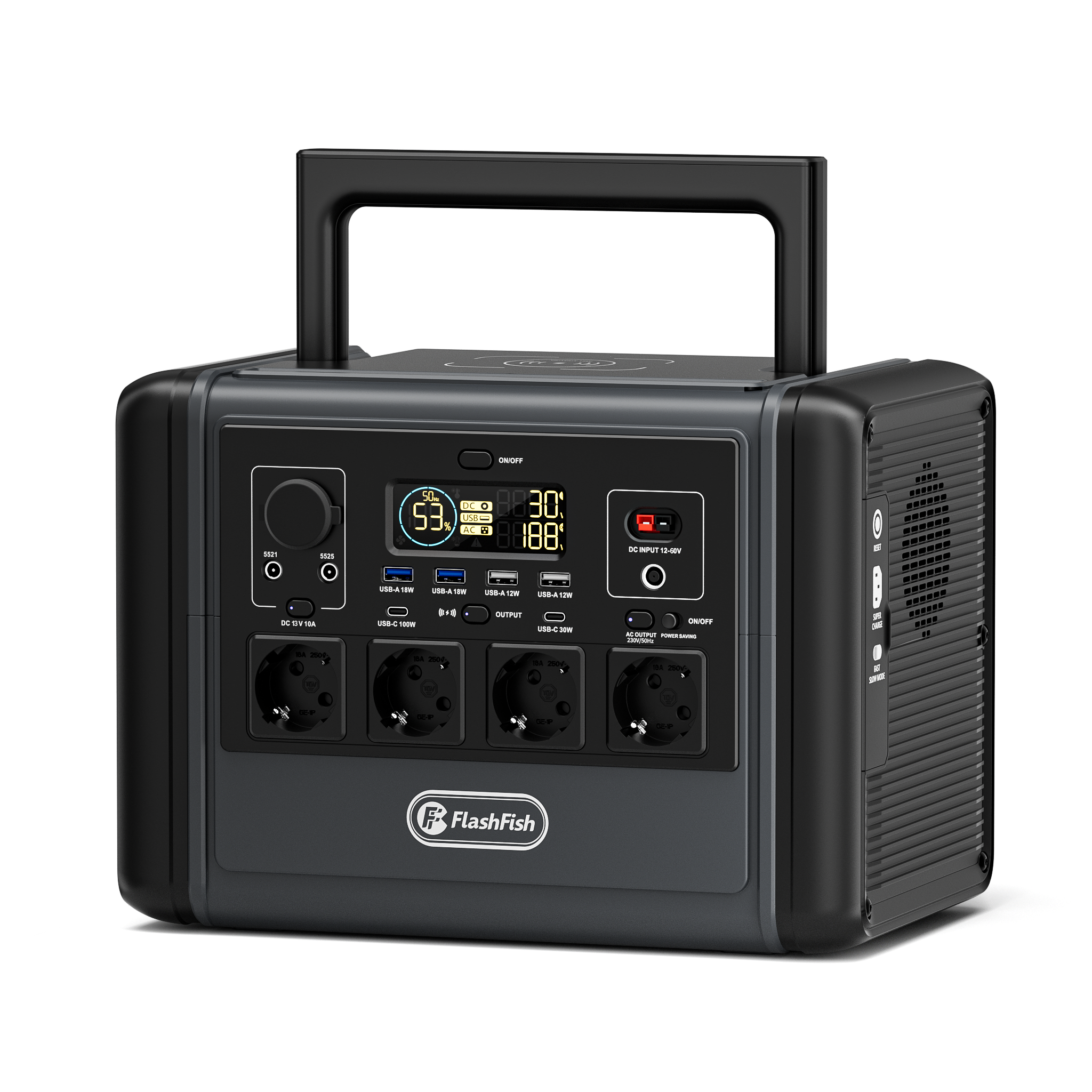

How to compare portable power stations
FlashFish portable power stations store electrical energy for charging and running compatible devices during camping, travel, outdoor work and selected backup situations.
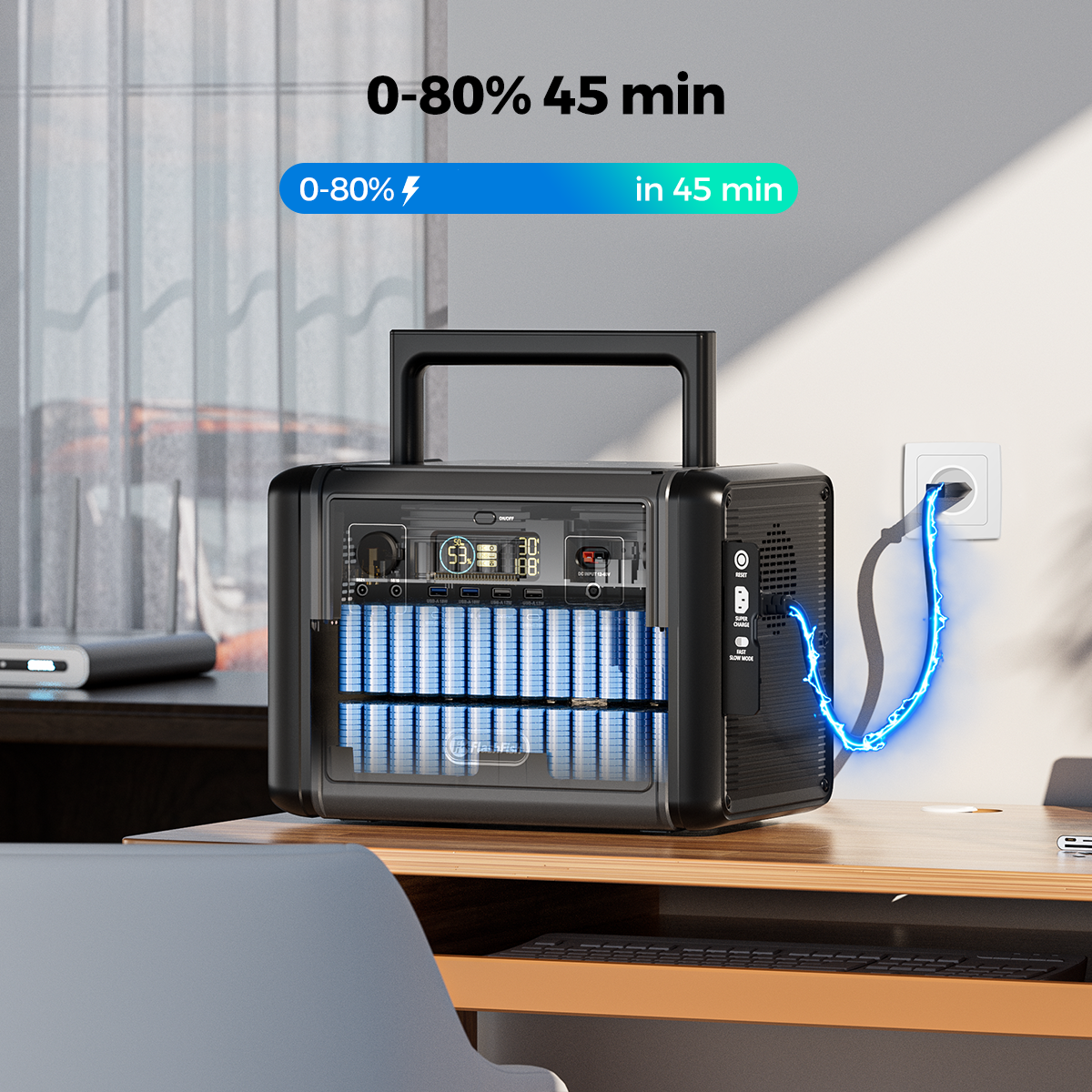
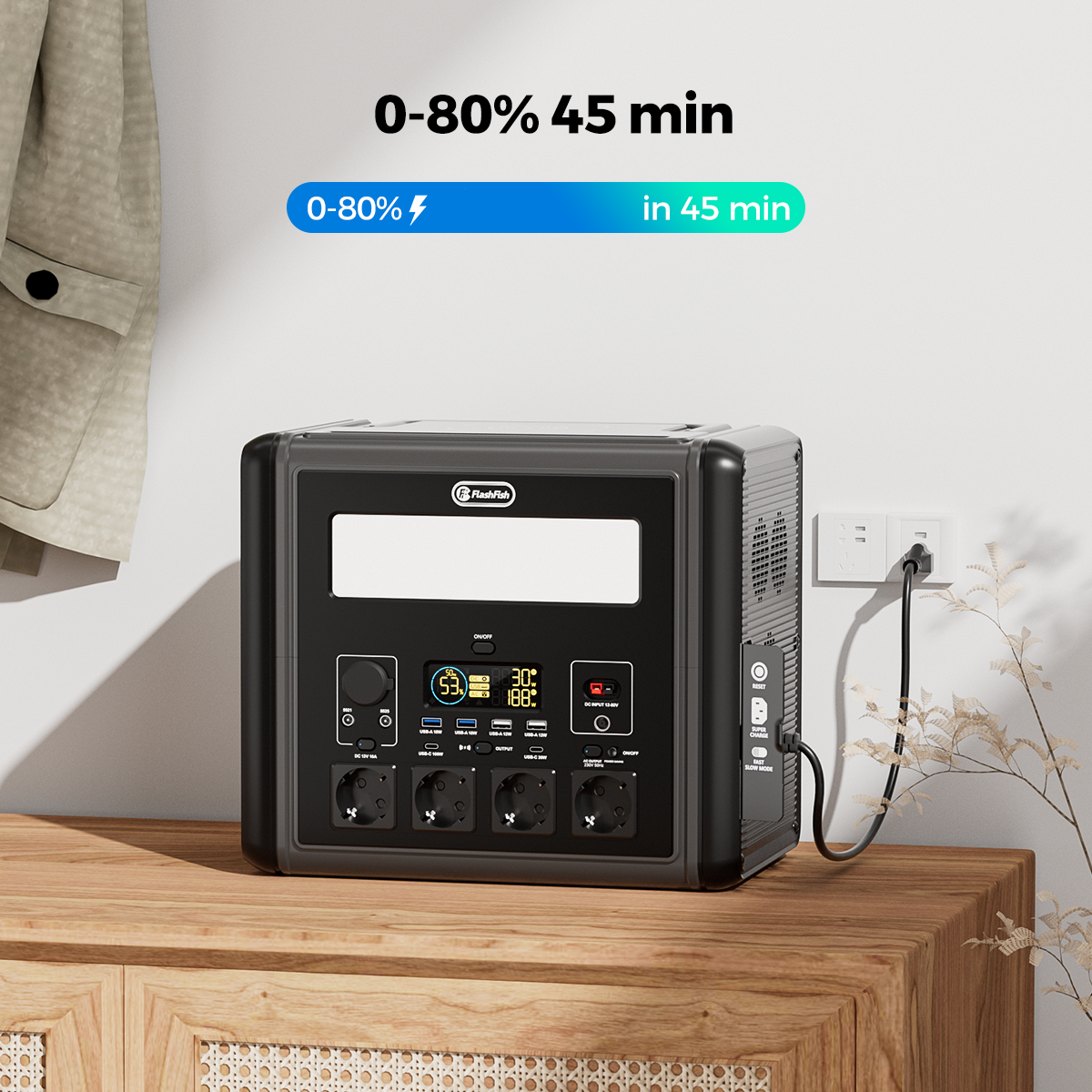
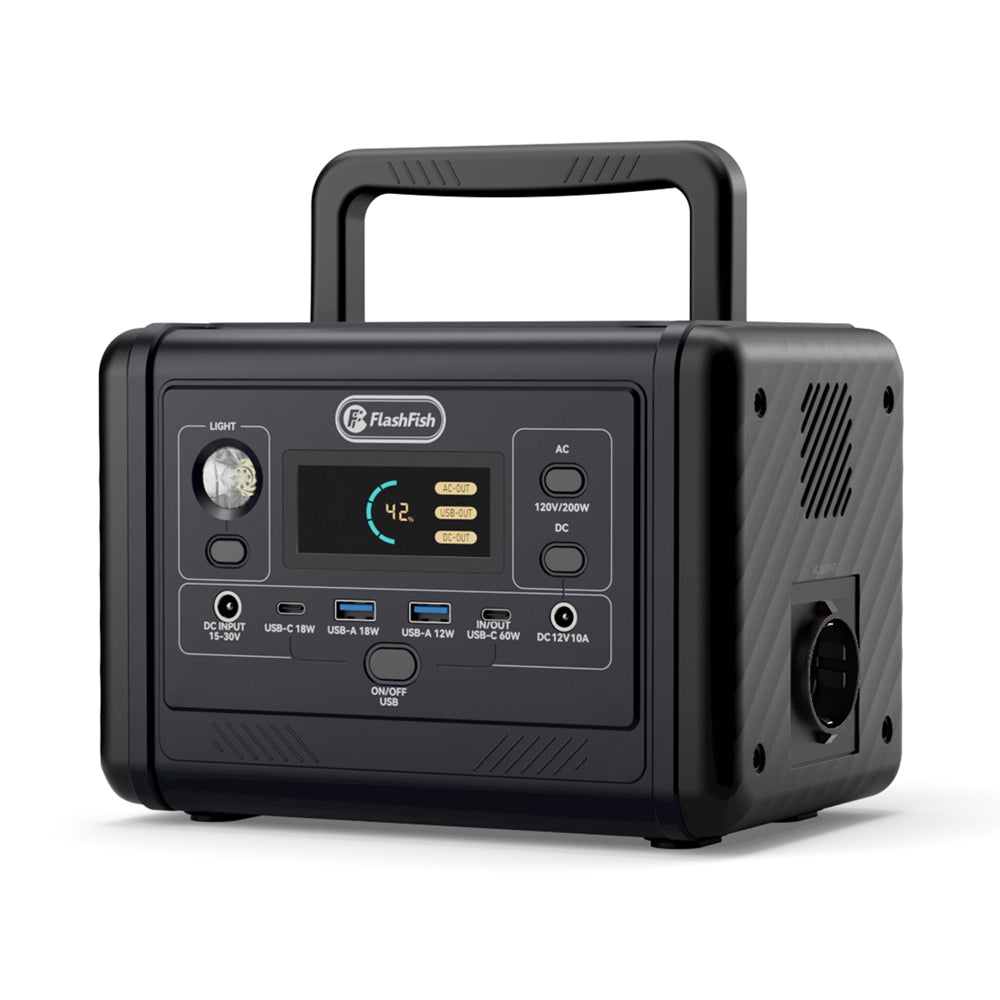
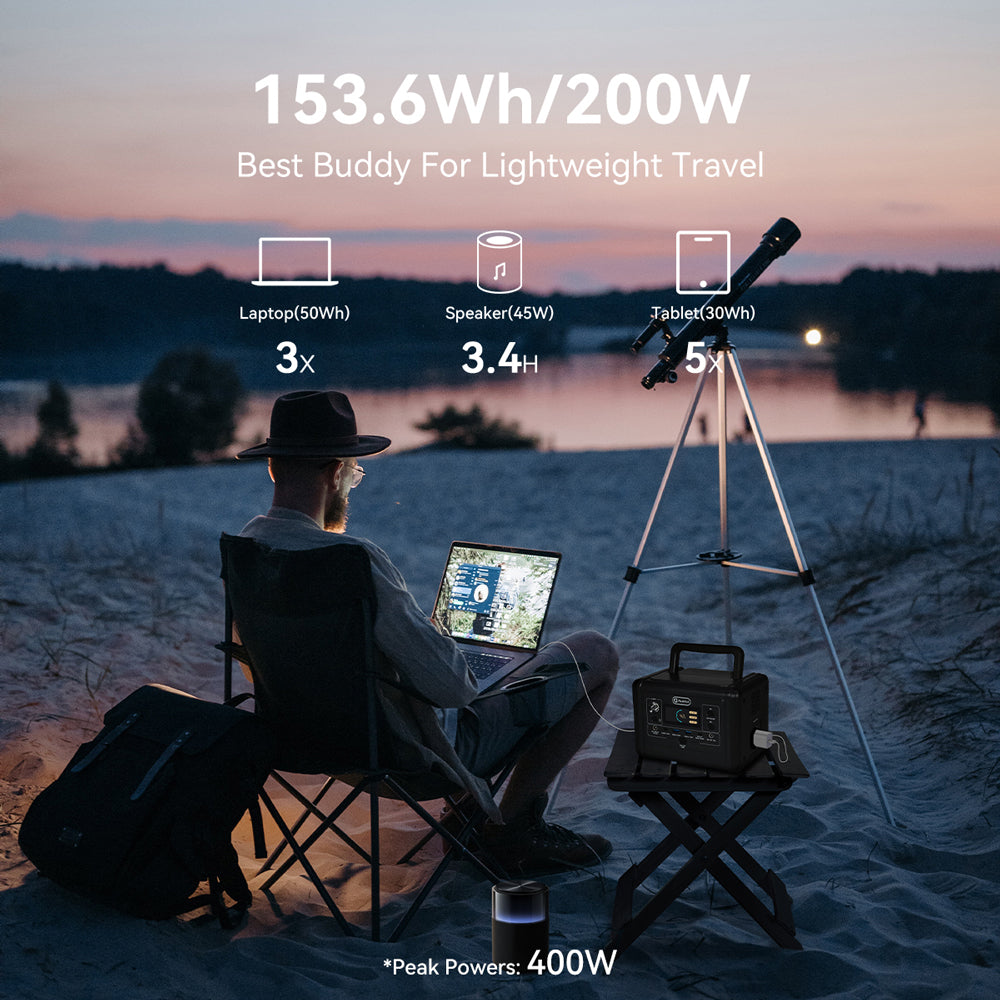
Choose a model by checking the running watts and startup demand of the devices used at the same time. Battery capacity in watt-hours helps estimate runtime, while rated output determines whether the station can support the connected load. Allow a reserve for conversion losses, temperature and changing loads.
Battery chemistry, AC waveform, charging input, ports, weight and socket version vary by model. Check the individual product page and manual instead of applying one specification to the whole collection. Portable power stations are best planned around selected loads and should not be treated as guaranteed whole-home backup or as the sole backup for life-critical equipment.