








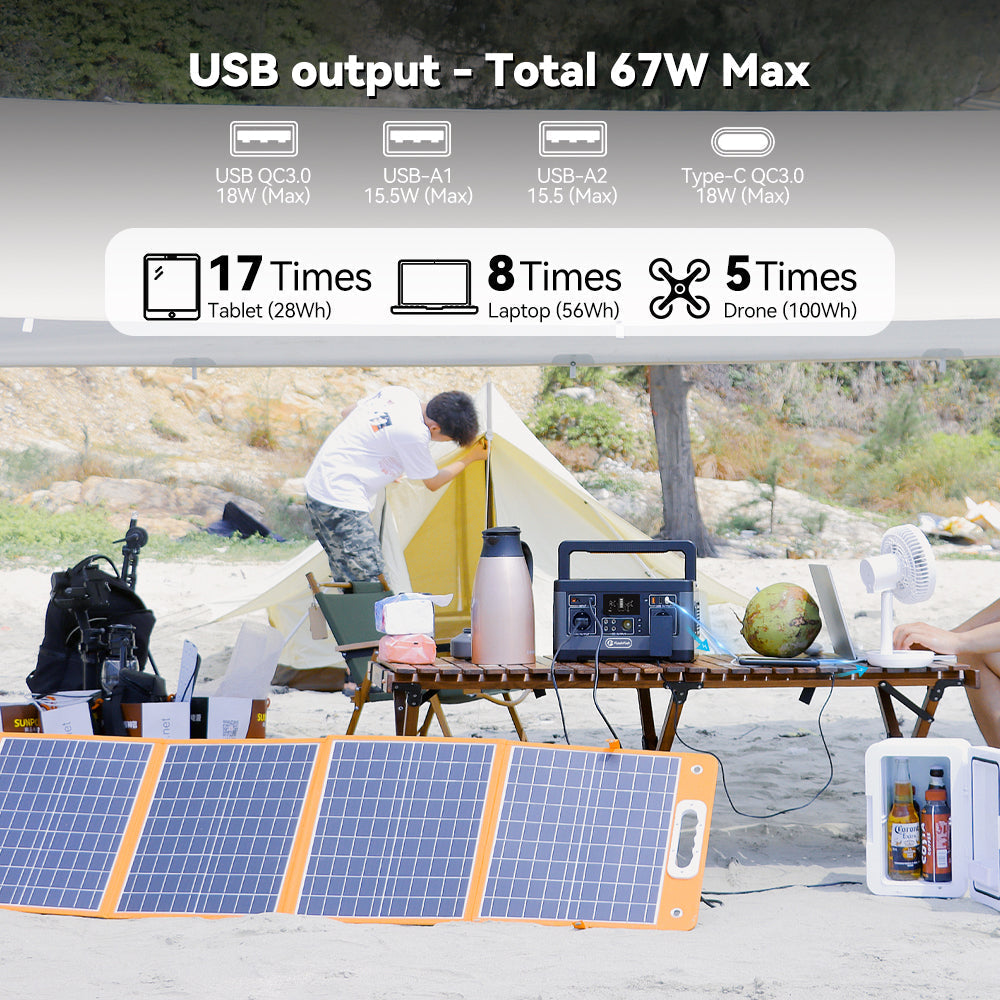
Short answer: charge a portable power station with solar panels by matching the panel output to the station's accepted solar input, using the correct cable, and treating quoted wattage as a best-case number rather than a guarantee. In practical European use, a 60W panel is useful for small stations and light top-ups, while a 100W panel or matched solar generator kit is the safer starting point when you want meaningful daytime recovery.
This is one of the most common buyer questions because solar charging sounds simple until connectors, voltage ranges, weather and panel size enter the conversation. The good news is that the buying logic is manageable if you break it into three checks: compatibility, panel size and expectations.
Step 1: check whether the station accepts solar input
Start with the product page or manual, not the panel. A portable power station can only charge from a solar panel if its input range and connector match the panel or the approved adapter cable. If those details do not line up, a larger panel will not solve the problem.
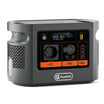
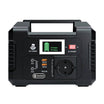
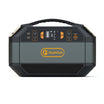
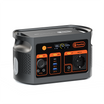
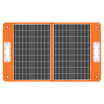
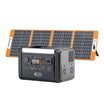
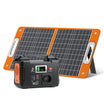
For FlashFish buyers, the safest route is to compare ready-made matches first, such as the FlashFish E200 + TSP60 solar generator kit, the A201 + TSP60 kit or the P63 + TSP100 kit. Those pairings remove most guesswork for new users.
Step 2: choose panel size by charging goal, not by marketing maximum
| Use case | Practical panel size | What it usually does well | FlashFish fit |
|---|---|---|---|
| Emergency top-ups for phones, lights, cameras | 60W class | Helps small stations recover through the day in good weather | FlashFish TSP60 |
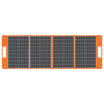
| Weekend camping with regular daytime recovery | 100W class | More useful for medium stations and repeated evening use | FlashFish TSP100 |
| New buyer who wants a known-good match | Matched kit | Reduces cable and compatibility mistakes | FlashFish solar generator kits |
Public charging guides keep returning to the same point: real output depends on sun angle, cloud cover, temperature, cable loss and shading. That means a 100W panel is not the same as 100W all day long. Think of panel wattage as potential, not constant output.
Step 3: use the right cable path
After checking voltage and input type, confirm the cable path. If you need a supported adapter, use one intended for that station and panel setup. Avoid improvised cable chains. A clean, supported connection is safer and usually more reliable outdoors.
If you are building a flexible setup from separate parts, start with the portable solar panel collection and then compare it against your chosen station's input details. If you want fewer moving parts, a matched kit is usually the better first purchase.
Step 4: set realistic charging expectations for European weather
Portable solar charging is most useful as daytime recovery, not as magic infinite power. In summer, a compact station can often gain meaningful charge while you camp, picnic or work in the garden. In shoulder seasons or mixed cloud, the same setup may only offset a portion of your evening use.
That is why the pairing matters more than the headline. A small station with a tiny panel may keep phones and lights going. A medium station with a 100W panel is better when you also want to recharge a laptop, drone batteries or a fan over a weekend.
A simple buying checklist
- Check that the power station accepts solar input at the panel's voltage range.
- Prefer a matched kit if this is your first solar charging setup.
- Choose 60W for light top-ups and compact stations; move to 100W when you need stronger daytime recovery.
- Keep panels unshaded, angled toward the sun and free from unnecessary cable loss.
- Do not connect portable off-grid gear to home wiring unless a qualified local installer and the product documentation say it is appropriate.
Which FlashFish setup fits best?
For lighter use, start with the TSP60 and one of the smaller compatible kits. For broader camping and backup flexibility, the TSP100 and the P63 + TSP100 pairing give more practical headroom.
FAQ
Can any solar panel charge any portable power station?
No. The voltage range, connector type and supported charging method have to match the station's input requirements.
Is a 60W panel enough for a portable power station?
It can be enough for smaller stations and light charging needs. It is usually less satisfying when you expect heavy daily recovery or faster recharge for a larger station.
Should I buy a panel and station separately or as a kit?
If you already understand the input specs, separate components can work well. If you want the lowest-friction setup, a matched kit is usually the safer first buy.
Sources used for editorial context: Power Ready's charging guide and EcoFlow's public solar charging guide.



Hinterlasse einen Kommentar
Alle Kommentare werden vor der Veröffentlichung geprüft.
Diese Website ist durch hCaptcha geschützt und es gelten die allgemeinen Geschäftsbedingungen und Datenschutzbestimmungen von hCaptcha.