

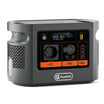
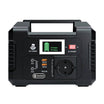

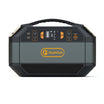
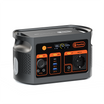






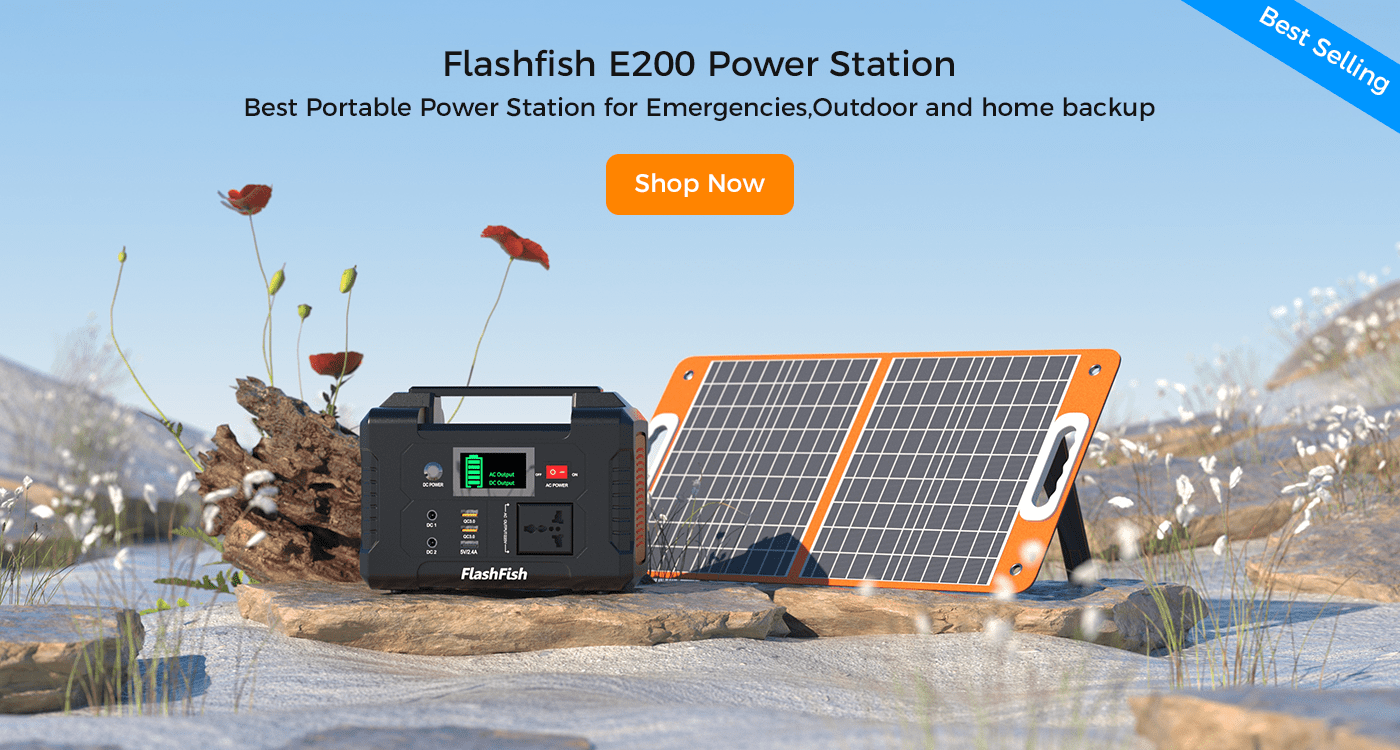
Short answer: a portable power station is the rechargeable battery unit. A solar generator, in most camping and ecommerce language, is the power station used with a solar panel. The panel does not make the battery unlimited, and the battery does not make solar charging predictable. A good buyer compares the station, the panel and the devices as one system.
This distinction matters because many shoppers search for "solar generator" when they really need two decisions: how much stored energy and output they need, then whether a compatible panel is worth adding for their trip or backup plan.
The practical definitions
| Term | What it usually means | What it does not mean | Buyer check |
|---|---|---|---|
| Portable power station | A battery unit with AC, DC or USB outputs. | It does not harvest sunlight by itself. | Wh capacity, continuous W output, ports, input limits and weight. |
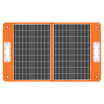
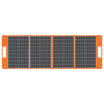
| Portable solar panel | A foldable or portable panel that can charge a compatible station. | It does not store power. | Voltage, connector, panel watts, station input limit and sunlight conditions. |
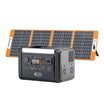
| Solar generator kit | A station plus a compatible solar panel package. | It is not a fixed recharge-time promise. | Station capacity, panel size, solar input cap and realistic use case. |
| Balcony solar storage | A storage product for a more planned home or balcony PV setup. | It is not the same category as a carryable camping station. | Installation, clearance, permission, professional review and local rules. |
The decision framework
Start with the battery job, then add the solar job. If your devices must run at night, in shade or during cloudy weather, the battery size and continuous output matter first. If your trip includes daylight setup time and you can point a panel properly, a solar kit can reduce how quickly you drain the battery.
- List the devices. Write down the watt labels for laptops, lights, cameras, fans, routers or chargers.
- Choose the output class. Continuous watts must cover the device or device group you plan to run at the same time.
- Choose the energy reserve. Watt-hours tell you the stored energy before conversion losses and reserve margin.
- Check the solar input limit. A larger panel is not useful if the station cannot accept the voltage, connector or input power.
- Plan for variable sunlight. JRC PVGIS exists because solar resource changes by location, season, angle and weather.
How FlashFish examples fit the terms
| FlashFish example | Category | Verified product-source facts | Best-fit interpretation |
|---|---|---|---|
| E200 | Portable power station | 151Wh, 200W modified sine AC, 400W peak, 40W max DC or solar input, 1.85kg. | Compact light-duty battery first; solar is an optional charging plan when compatible. |
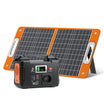
| E200 + TSP60 | Solar generator kit | E200 facts above plus TSP60 60W panel facts from the bundle. | A small station and panel package for phones, cameras, lights and other low-power camping tasks. |
| E103 | Portable power station | 179.2Wh, 300W pure sine AC, 90W DC input, 60W USB-C, 3kg. Chemistry is not claimed from the local product-source bundle. | A compact station where pure sine AC and USB-C matter more than a large energy reserve. |
| T1200S | Portable power station | 768Wh LiFePO4, 1200W pure sine AC, 2400W peak, 400W solar input, 12.45kg. | A larger selected-load camping or backup station that can still pair with a solar plan. |
| T2000 | Portable power station | 1536Wh LiFePO4, 2000W pure sine AC, 4000W peak, 600W solar input, 19.2kg. | A higher-capacity station for larger selected-load planning. |
| SR5000 | Balcony solar storage | 5120Wh LiFePO4, 2400W rated off-grid AC, 59kg and professional installation boundaries in the bundle. | A planned storage category, not a carryable camping solar generator. |
When a solar generator kit makes sense
- You already know the station output and capacity fit the device list.
- You expect daylight setup time and can point the panel safely.
- Your devices are low enough draw that solar top-up can meaningfully slow battery drain.
- You prefer a matched package instead of checking connector and voltage compatibility yourself.
When a portable power station alone is the cleaner choice
- You mainly charge from a wall socket before leaving home.
- You camp under shade, move often, or cannot leave a panel placed securely.
- Your biggest problem is AC output or battery reserve, not daytime topping-up.
- You are comparing larger T-series stations and need to decide the load class before choosing panels.
Common mistakes
- Treating "solar generator" as if the kit will refill on a fixed timetable.
- Buying a panel before checking station input voltage, connector and maximum input.
- Comparing panel watts while ignoring the station's Wh and continuous AC output.
- Assuming a balcony storage product is a portable camping station.
- Filling blank product data with guesses. If the product-source bundle does not provide a value, leave it unclaimed.
FAQ
Is a solar generator the same as a portable power station?
Not exactly. In retail language, a solar generator usually means a portable power station used with a solar panel. The station stores energy; the panel harvests solar energy when conditions allow.
Does a solar generator create electricity by itself?
No. The panel produces power only under suitable sunlight, and the power station stores and outputs energy within its own input and output limits.
Can I add any solar panel to any power station?
No. You need compatible voltage, connector type, polarity and input-power limits. Check the product page and manual before pairing.
Is E200 plus TSP60 enough for light camping?
It can fit light electronics if your device list stays within E200's 151Wh capacity, 200W modified sine AC output and port limits. It is not a high-power appliance kit.
When should I move from E200 or E103 to T1200S or T2000?
Move up when the device list needs more stored energy, higher continuous AC output, more solar input headroom or longer selected-load planning than a compact station can provide.
Is SR5000 a solar generator?
It is better described as balcony solar storage. The local product-source bundle records installation, clearance, grounding and qualified-technician boundaries, so it should not be treated as a portable camping kit.
Sources and review notes
- European Commission JRC PVGIS, accessed 12 July 2026, for solar-resource variability context.
- JRC PVGIS online tool, accessed 12 July 2026, for off-grid planning variables.
- Electrical Safety First overload guidance, accessed 12 July 2026, for cable and overload cautions.
- FlashFish product-source bundle, accessed 12 July 2026, for model facts and blank-field boundaries.
- Cached Europe Shopify discovery plus 12 July 2026 store Ping, used only for Europe store scope and active URL context.



Dejar un comentario
Este sitio está protegido por hCaptcha y se aplican la Política de privacidad de hCaptcha y los Términos del servicio.