

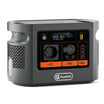
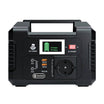

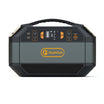
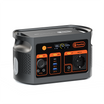


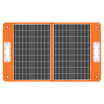
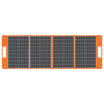


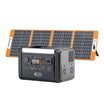

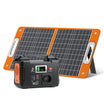

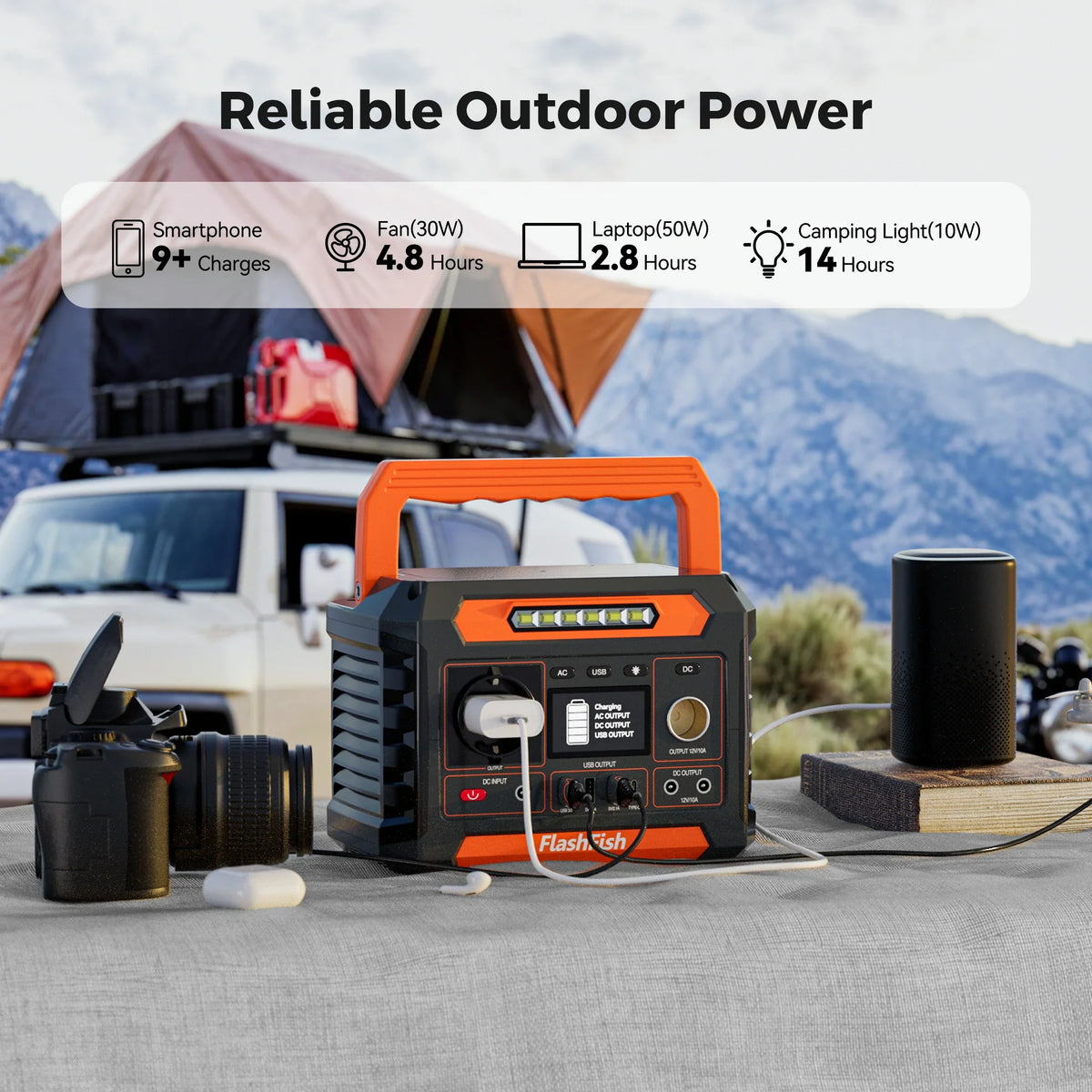
Short answer: choose A201 when higher nominal energy and lower listed mass are the leading needs; consider P66A when its broader documented 12V output layout or faster listed adapter input matters more. Both list 200W AC output, but that shared number does not make them interchangeable. The right choice depends on the exact load, port path and any specification that remains unknown.
This comparison uses the SAME WATTS method: simultaneous load, available nominal watt-hours, mass and dimensions, endpoints, wall and solar input, absent fields, test plan, and stop rules. It deliberately excludes price and fixed runtime because neither has stable evidence in the local technical record.
In this guide: specification table · SAME WATTS method · buyer fits · load-card test · FAQ
A201 versus P66A: verified fields
| Field | A201 | P66A |
|---|---|---|
| Nominal energy | 172.8Wh | 144.3Wh in the manual-derived record; public title rounds to 144.34Wh |
| AC output | 200W continuous; 400W peak; 230V | 200W; 230V; peak not supplied |
| AC waveform | Not supplied in the local record | Not supplied in the local record |
| Adapter input | 15V/2A, 30W | 15V/2.4A, 36W |
| Solar-input range | 18-24V | 13-22V |
| USB | One 18W USB-C; two USB-A up to 18W | One 18W QC USB-C; one 18W QC USB-A; two 12W USB-A |
| 12V output | 12V/10A maximum; port count not supplied | One car socket plus two DC5521 outputs; documented 12V/10A boundary |
| Mass | About 1.7kg | About 2kg |
| Dimensions | 153 × 109 × 173mm | 210 × 146 × 157mm |
| Cycle statement | More than 800 cycles | More than 1,000 cycles |
| Warranty in local record | 12 months | Not supplied |
The P66A capacity difference between 144.3Wh and 144.34Wh is a rounding or display difference, not evidence of two batteries. This article uses 144.3Wh for calculations and comparison because that is the value in the authoritative manual-derived record.
Apply the SAME WATTS decision method
Simultaneous load
Start with the maximum input or measured demand of every device that will operate at once. Both stations have a 200W AC headline, but motor starts, power-supply inrush and sensitive electronics can make an apparently small appliance unsuitable. A201 has a documented 400W peak; P66A's peak value is not supplied. That missing field should stop any comparison that depends on surge capability.
Available nominal watt-hours
A201 lists 172.8Wh versus P66A's 144.3Wh, a difference of 28.5Wh in nominal stored energy. This gives A201 more label-level energy, but it is not a measured delivered-energy result. AC conversion, DC conversion, station overhead, temperature and the load profile determine what reaches the device.
Mass and dimensions
A201 is listed about 300g lighter and is shorter in two footprint dimensions; P66A is lower in height. Shape can matter more than a single volume calculation, so test the actual bag, shelf or vehicle compartment with space for ventilation and connectors. Include adapters and leads in the carry test.
Endpoints and ports
P66A has the clearer 12V case because its local record names one car socket and two DC5521 outputs. Those outputs still share the recorded 12V/10A boundary; three sockets do not create three independent 10A supplies. A201's record gives a 12V/10A maximum but not the port count, so do not invent a layout from photographs.
For USB, both records include an 18W USB-C route. P66A documents four USB outputs in total, while A201 documents three. Charging-protocol compatibility still belongs to the connected device and cable. An 18W port is not automatically a laptop charging solution.
Wall and solar input
P66A's listed adapter input is 36W versus A201's 30W. That suggests a higher input ceiling on the specified adapters; it does not prove a recharge time. The solar ranges also differ: 13-22V for P66A and 18-24V for A201. Panel open-circuit voltage, current, power, connector and polarity must all be verified before a pairing is accepted.
Absent fields
Neither local record supplies AC waveform or battery chemistry. P66A also lacks peak output and a warranty field in the bundle. A201 lacks package contents, and P66A package details should likewise be checked from the delivered listing rather than assumed. Missing does not mean poor; it means the comparison cannot responsibly decide on that dimension.
Test the actual kit
Create a load card with each device, its required port, input label, typical measured demand, maximum or starting demand, and operating time. Mark which devices run simultaneously. Test the intended cable path and observe the station during the highest realistic combination. Do not convert a successful short test into a fixed duration claim.
Stop when the 200W boundary is the plan
A design that expects the load to sit near 200W leaves little room for label error, another device, starting behaviour or operating variation. Choose a different class when the normal combination approaches the station limit, when waveform is essential but unknown, or when the appliance maker requires a supply characteristic that the record does not establish.
Three concrete buyer fits
| Buyer priority | Stronger starting point | Required check |
|---|---|---|
| Lowest listed carry mass with more nominal energy | A201 | Confirm every port and load fits; waveform remains unknown. |
| Several verified small 12V devices | P66A | Keep their combined 12V demand within the documented shared boundary. |
| A device with meaningful startup demand | Neither by headline alone | A201 has a stated peak; P66A does not. Verify the appliance and station instructions or move up a class. |
The table provides starting points, not winners. A buyer who needs one phone and light may value mass; a buyer with several known 12V accessories may value port layout; a buyer with waveform-sensitive equipment should stop because neither authoritative local record supplies the field.
Build a ten-minute load card
- Write the exact device model and its original input label.
- Choose AC, USB or 12V for each device and avoid unnecessary conversion steps.
- Add the maximum simultaneous demand within each output group.
- Flag startup loads, medical or safety-critical uses and any waveform-sensitive adapter.
- Check the station and cable limits, including shared DC boundaries.
- Measure a representative session and keep an operating reserve.
- Recheck the delivered regional unit, included leads and current product page before purchase.
Begin with Check the current A201 configuration when nominal energy and mass lead the decision. Use the same load card for P66A so the comparison stays symmetrical.
FAQ
Do A201 and P66A have the same battery capacity?
No. The local records list A201 at 172.8Wh and P66A at 144.3Wh. Nominal energy still does not equal measured AC energy or a promised runtime.
Which model is lighter?
The local records list A201 at approximately 1.7kg and P66A at approximately 2kg. Carry fit also depends on shape, cables and the complete kit.
Which model has more 12V output options?
P66A has the broader documented 12V layout: one car socket and two DC5521 outputs within a recorded 12V/10A boundary. A201's local record gives only a 12V/10A maximum and does not supply the port count.
Can both stations run any appliance below 200W?
No. Check starting demand, voltage, frequency, waveform sensitivity, plug, simultaneous loads and the exact appliance instructions. A watt figure alone cannot prove compatibility.
Which model should I buy?
Choose A201 when its higher nominal energy and lower listed mass fit the kit; consider P66A when its documented 12V port layout or faster listed adapter input matters. Stop when a missing field is essential to the load.
Conclusion
A201 is the stronger paper fit for more nominal energy at lower listed mass. P66A is the stronger paper fit for a documented multi-port 12V layout and a slightly higher listed adapter input. Neither is a universal winner, and neither should be selected for an unknown waveform or surge requirement. Before checkout, Compare the current P66A configuration with the same load card and verify the delivered regional unit.
Sources and editorial notes
Technical fields come from the authoritative local manual-derived A201 and P66A records. Current Europe product presence comes from the official pages and recent Shopify Admin discovery. No side-by-side test, delivered-energy measurement, runtime, price comparison, independent review or universal recommendation is claimed. Human review must verify current pages, regional labels, missing specifications and the rendered comparison before publication.





Dejar un comentario
Este sitio está protegido por hCaptcha y se aplican la Política de privacidad de hCaptcha y los Términos del servicio.