


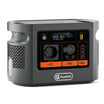
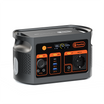

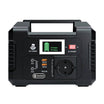
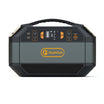
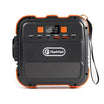
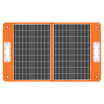
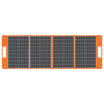


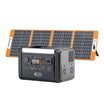


Disclosure: this is a FlashFish-authored selector built from the local product database, current Europe product pages and transparent non-fit rules. No hands-on test, runtime, price, winner or reliability claim is made.
Use RANGE before reading the model table
| RANGE gate | Evidence to collect | Decision |
|---|---|---|
| R — Read the label | Watts or volts × amps on the device and its original adapter. | Do not select from device category or plug shape. |
| A — Assign the route | AC, USB-C, USB-A or DC; required charging protocol and cable. | Prefer the verified direct route; count shared limits. |
| N — Note startup and duty | Motor/compressor start, heat cycle, power modes and manual restrictions. | Unknown start behaviour is a stop condition, not free headroom. |
| G — Group simultaneous loads | Add only devices that may run together. | Compare the group with continuous output, not peak marketing alone. |
| E — Energy plan | Watts × planned hours for each row. | Compare the total with rated Wh while allowing for loss and reserve. |
| Reserve | Measurement uncertainty, changing draw, temperature and fallback needs. | Do not buy an exact-match ceiling. |
Five active Europe models, from compact to high-watt
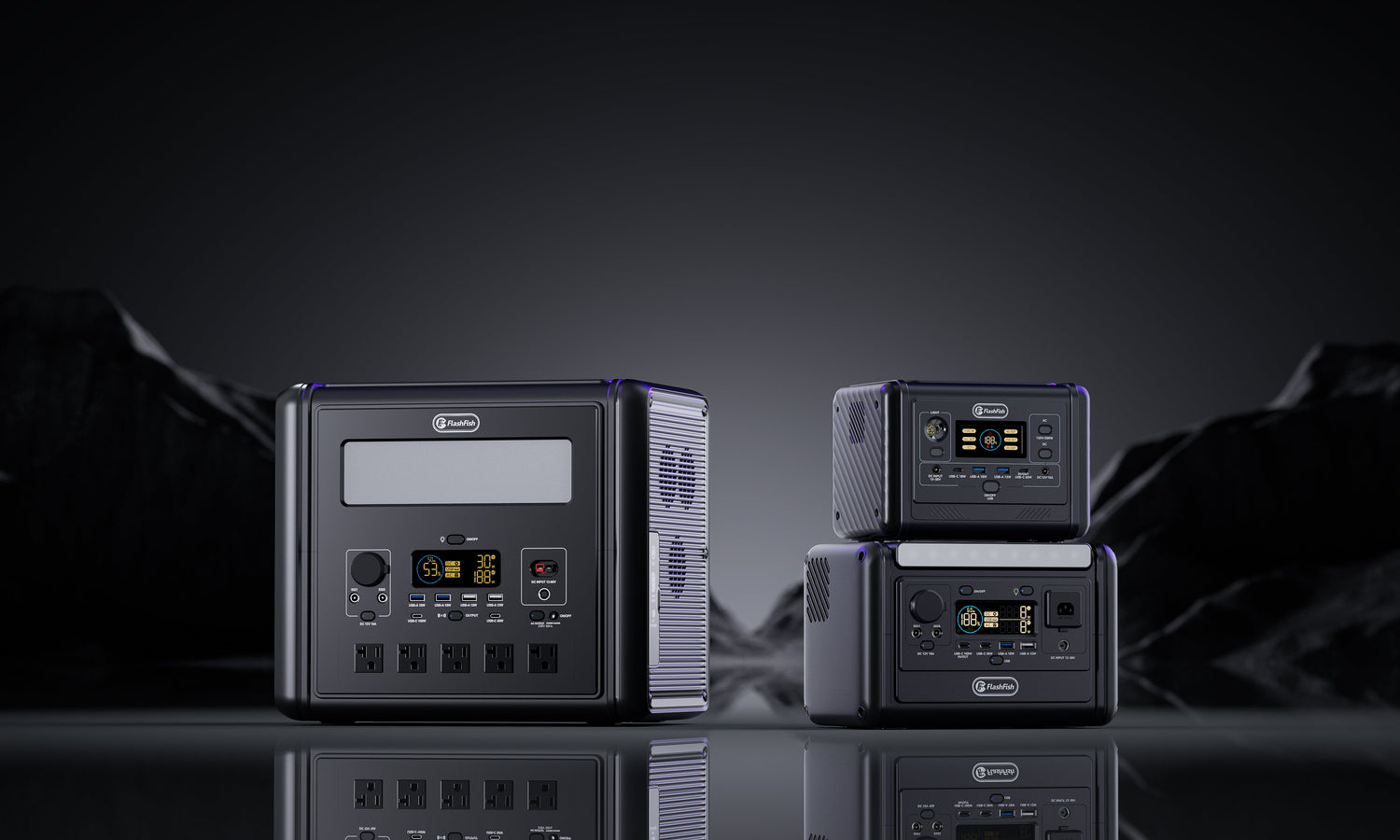
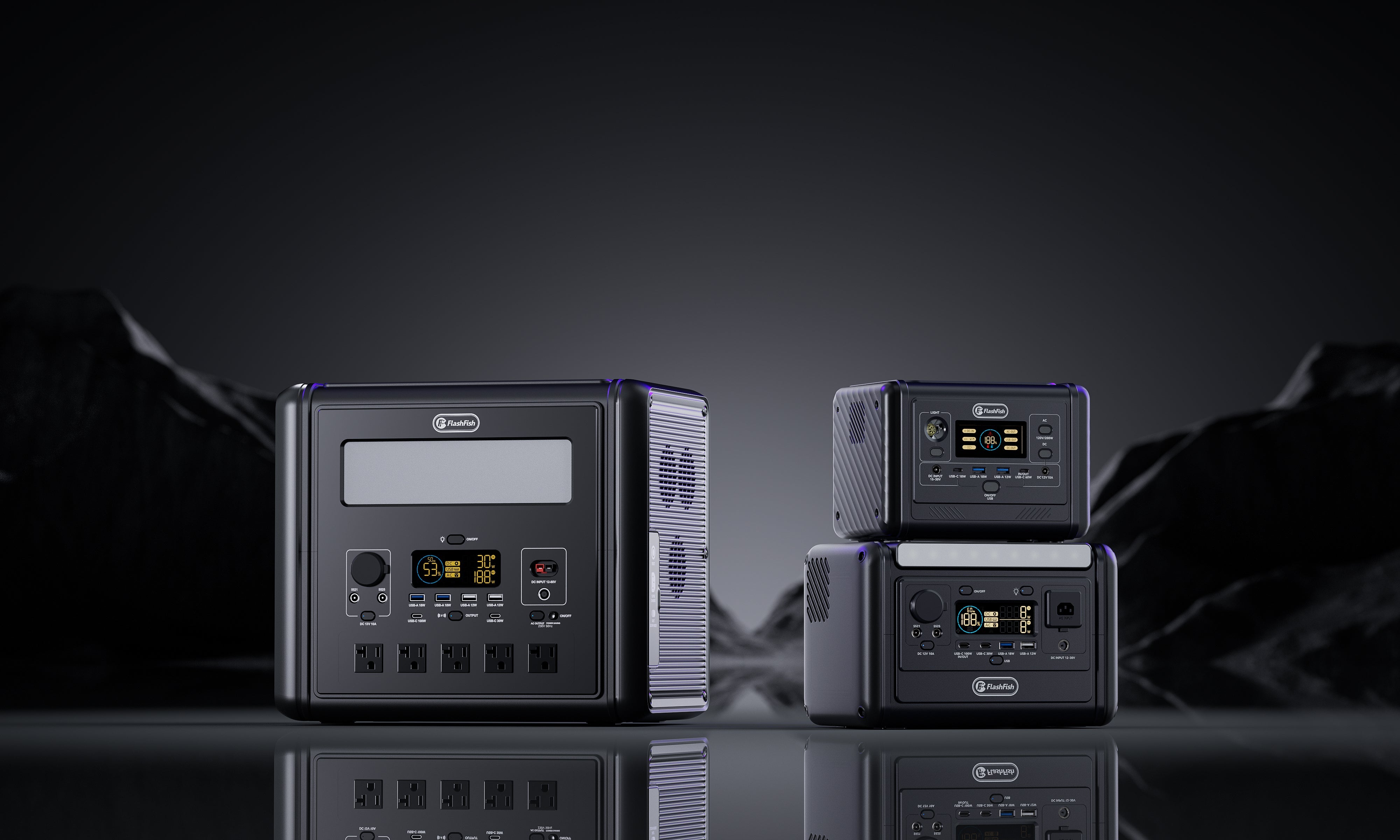
| Model | Rated energy / continuous AC | Connection and carry evidence | Best screening role | Clear reason to step up or stop |
|---|---|---|---|---|
| E200 | 151Wh / 200W modified sine | USB-A outputs; about 1.85kg; no USB-C output in the database | Measured low-watt USB-A/DC devices and AC loads whose manuals permit the waveform | Step up for a verified pure-sine requirement, USB-C, more energy or more continuous watts |
| E103 | 179.2Wh / 300W; waveform requires confirmation | 60W USB-C; about 3kg | Compact USB-C electronics and checked low-watt loads after resolving the page/manual waveform conflict | Stop until waveform is confirmed for sensitive AC loads; step up when a laptop needs above 60W USB-C, the group approaches 300W or energy is insufficient |
| E106B | 384Wh / 600W pure sine | 100W USB-C; about 5.2kg | Multi-device camping, apartment and work sets with measured moderate loads | Stop for an exact 600W load, unknown startup or missing regional evidence; step up for more energy/output |
| T1200S | 768Wh / 1200W pure sine | 100W USB-C; about 12.45kg | Larger camping, tools and selected backup groups below a verified ceiling | Step up for a load group that genuinely needs more; stop for high-heat exact-ceiling use or unknown startup |
| T2000 | 1536Wh / 2000W pure sine | 100W USB-C; about 19.2kg | High-watt selected loads and longer energy plans after label/manual review | Stop for whole-home, hard-wired, medical-critical or appliances at/above the ceiling |
The range is not a quality ranking. Every step buys capacity and output but also adds mass and often cost. The right stopping point is the first model that passes RANGE with reserve.
Next step: Compare the active FlashFish models in the Europe collection only after your load sheet identifies the required class.
Three worked selection examples
1. Phone, camera batteries and two LED lights
If every device uses compatible USB-A/DC outputs and the nightly energy total is modest, E200 may be the lightest fit. If a device needs USB-C, E103 can be the more defensible first step even when its 300W ceiling is not otherwise needed. For AC loads that require pure sine, stop until the current E103 page's contradictory waveform copy is resolved against the exact regional manual and delivered-unit label.
2. A 65–100W USB-C laptop, router and lights
Start with the laptop's negotiated USB-C requirement, then add the router and lights by label. E106B is the first model in this selector with a documented 100W USB-C position and a 384Wh/600W class. It is not automatically necessary: an E103 can still fit a 60W-or-lower laptop when the total energy plan passes.
3. An 800W labelled charger or selected workshop group
E106B is excluded by continuous watts before runtime is considered. T1200S becomes the first paper class above the 800W label, but startup, waveform, voltage/frequency, charger manual, simultaneous devices and margin still decide fit. T2000 is justified only when the completed group or energy plan needs it—not as insurance against missing data.
Why watt tiers fail without ports and watt-hours
A 100W USB-C laptop does not need an AC inverter if a verified 100W USB-C path is available. Conversely, a low-watt device can still be a non-fit if it requires a port or waveform the station does not document. Energy is separate again: a 60W load for one hour is a different job from the same load for eight hours.
Electrical Safety First's appliance table is explicit that its ratings are indicative. Use it to see why categories vary, then replace the example with the exact label and manual. The device in front of you is the evidence.
When FlashFish fits—and when the selector must stop
When a listed model may fit
- The product is ACTIVE with a current Europe URL.
- The exact device route, label, startup and simultaneous group all pass with reserve.
- The watt-hour plan fits the rated-capacity class without pretending rated Wh equals usable AC Wh.
- The exact regional model, socket, voltage/frequency and manual match the destination.
When this range does not fit
- The plan needs hard-wiring, back-feeding, whole-home operation or a distribution-board connection.
- A high-heat, motor or compressor load lacks documented startup behaviour or leaves no margin.
- The load is medical-critical, life-safety-related or depends on guaranteed transfer time.
- The buyer needs a verified specification the product database leaves blank—such as E106B chemistry or peak output.
Common selector mistakes
- Choosing by peak rather than continuous output.
- Adding every device in the bag instead of the devices that run together.
- Ignoring USB-C profiles and shared DC/USB limits.
- Converting mAh between different battery voltages as though it were Wh.
- Assuming a larger station fixes incompatible voltage, frequency, waveform or wiring.
- Treating rated capacity as a runtime guarantee.
FAQ
Should I choose a power station whose watt rating exactly matches my appliance?
No. Exact-match selection leaves no room for startup behaviour, measurement error, changing draw or simultaneous devices. Use the appliance label and manual, then require reasonable continuous-output headroom and a compatible port, voltage and frequency.
What is the lightest FlashFish model in this selector?
The product database lists E200 at about 1.85kg. Its trade-offs include a 151Wh capacity class, 200W continuous AC ceiling, modified-sine AC output and no USB-C output in the authoritative record.
Which model is the first step with 100W USB-C?
E106B is the smallest model in this five-product selector with a documented 100W USB-C output. A 100W port is only useful when the device and cable negotiate a compatible profile; it does not make every 100W laptop compatible.
When does T1200S make more sense than E106B?
T1200S becomes the stronger class when a verified load plan needs more than E106B's 384Wh/600W class and the buyer accepts a rise from about 5.2kg to 12.45kg. The exact appliance still needs startup, voltage, frequency and cable checks.
Does T2000 mean I can run any 2000W appliance?
No. A 2000W continuous rating is not permission to run a device at the ceiling. Startup demand, waveform, voltage/frequency, duty cycle, heat, environment, other loads and the appliance manual can all make it a non-fit.
Sources and evidence notes
- E200, E103, E106B, T1200S and T2000 Europe product pages plus the local product database — current links and bounded specification rows.
- Electrical Safety First appliance ratings — indicative device ranges and label-first context, not compatibility proof.
Editorial viewpoint: RANGE prevents both undersizing and automatic upselling. The model table is useful only after port, startup and energy evidence are known; the smallest model that passes with reserve is the rational choice.
For the final check: Use the Europe buying guide with your completed load sheet, and keep any unclear label or regional specification as a stop condition.
Evidence checked . Human review is required for current ACTIVE status, exact EU labels/manuals and regional configurations, source boundaries, author/reviewer credentials, links, metadata, image crop and rendered FAQ/schema parity before publication.



Dejar un comentario
Este sitio está protegido por hCaptcha y se aplican la Política de privacidad de hCaptcha y los Términos del servicio.