









Short answer: plan aquarium backup from the animals and exact equipment, not from a power-station capacity badge. Prioritise aeration with species-specific advice, read or measure the air-pump load, keep the station and connections dry, reserve energy and maintain an independent battery-air-pump fallback. Electrical fit does not establish oxygen levels, fish welfare or outage duration.
Start with aquarium priorities, not every plug
UK Power Networks recommends preparing a battery-powered air pump for a power cut and notes that oxygen loss varies with water volume, fish quantity and oxygenating plants. The RSPCA explains that surface area and aeration help oxygen exchange. These are reasons to make an aquarium-specific plan—not reasons to assume one universal “safe” time.
| System question | Why it matters | Who should confirm it |
|---|---|---|
| Which species and stocking level? | Oxygen and temperature needs differ. | Experienced aquarist or aquatic veterinarian. |
| Which flow or aeration must continue? | Air pump, circulation and filtration roles are not identical. | Equipment manual plus aquarium expert. |
| What is the separate fallback? | A power station, cable or pump can fail. | Owner, tested before the outage. |
| What signs trigger escalation? | Animal behaviour and water conditions require expert interpretation. | Species-specific professional guidance. |
Identify the exact electrical load
Photograph the air-pump label and record its volts, frequency and rated watts or amps. If appropriate, record steady energy use with a suitable plug-in meter during normal operation; a consumer reading may not capture every startup event. Add only the devices the aquarium plan says must run. Do not silently include a heater, filter, light and circulation pump under “air pump.”
| Worksheet field | Example entry format | Boundary |
|---|---|---|
| Air-pump model and label | Exact model, 230V/50Hz, label watts | Use the real regional product, not a similar listing. |
| Observed steady load | Meter, date, operating mode, watts | Not proof of all startup or fault conditions. |
| Other required loads | Device, watts, priority, duty cycle | Do not add optional lights by habit. |
| Reserve and fallback | Minimum battery reserve plus battery air pump | No plan should depend on draining to zero. |
How E106B and T1200S fit the decision
| Model | Verified product facts | Potential fit | Does not prove |
|---|---|---|---|
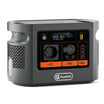
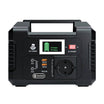
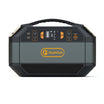
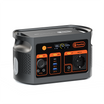
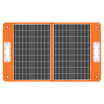
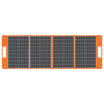
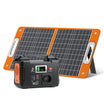
| E106B | 384Wh; 600W continuous pure-sine AC; one regional AC output; 5.2kg. | Smaller selected load where the exact pump and reserve plan fit. | Automatic switchover, pump compatibility, oxygen result or runtime. |
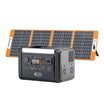
| T1200S | 768Wh LiFePO4; 1200W continuous pure-sine AC; 12.45kg. | More stored-energy and output headroom when the broader verified load list justifies the size. | That every heater/filter combination fits or that larger capacity establishes animal safety. |
Both were ACTIVE with Europe URLs in Shopify discovery on 13 August 2026. Neither was tested with an aquarium pump. Choose the smaller system that meets the documented load, reserve, monitoring and fallback plan; larger capacity cannot repair missing husbandry or electrical evidence.
Keep electricity and aquarium water separated
- Place the station on a stable, dry and ventilated surface where splashes and condensation cannot reach it.
- Follow the aquarium-equipment instructions for cable routing and any drip-loop requirement; do not improvise submerged or wet connections.
- Avoid damaged cables, overloaded adaptors and daisy-chained extension leads. Electrical Safety First advises keeping combined loads within the extension rating.
- Test the response plan while mains power is available and someone can supervise. Confirm the air pump restarts as expected; do not assume an unspecified transfer function.
- Set a check schedule for station charge, pump operation, aquarium condition and the independent backup.
Three overlooked failure modes
- The station is charged but the air pump does not restart after power interruption.
- The air pump runs, but the aquarium plan also depended on circulation, filtration or temperature control.
- The electrical plan works, but a splash, blocked vent, damaged cable or depleted backup creates a second failure.
When FlashFish fits — and when it does not fit
FlashFish may fit when the exact regional pump and selected loads are inside documented station limits, the owner has a dry layout, enough conservative reserve, monitoring and a separate battery-air-pump fallback.
It does not fit the evidence when the aquarium outcome depends on an untested automatic switchover, an unknown heater or pump startup, a fixed runtime promise, wet placement or using one power station as the only animal-welfare safeguard.
Frequently asked questions
Can a portable power station run an aquarium air pump?
It may support the exact pump if its label, startup behaviour, plug and combined load fit the station documentation. That electrical fit does not establish fish safety or outage duration.
Is an air pump the only aquarium load to plan?
No. Filtration, circulation and temperature can also matter, and priorities vary by species and system. Get species-specific advice and do not assume every device should share the backup.
Should the power station sit beside the aquarium?
Keep the station and connections in a dry, ventilated location protected from splashes and condensation, with cables arranged to reduce water reaching electrical equipment.
Which FlashFish model fits an aquarium air pump?
E106B and T1200S are active Europe products with different energy and output classes, but the correct choice depends on the exact pump label, other loads, required reserve and fallback plan.
Can I calculate a fixed outage runtime from Wh?
No. A planning estimate still depends on measured load, conversion losses, cycling, battery condition, temperature and reserve. Maintain a separate fallback.
Sources and evidence limits
- UK Power Networks: tropical fish during a power cut — preparation and aeration context.
- RSPCA aquarium environment guidance — surface area and oxygen exchange.
- Electrical Safety First — extension, overload and damaged-cable boundaries.
This is a continuity-planning worksheet, not veterinary advice, evidence of a livestock outcome, an aquarium test or a fixed runtime claim.




Dejar un comentario
Todos los comentarios se revisan antes de su publicación.
Este sitio está protegido por hCaptcha y se aplican la Política de privacidad de hCaptcha y los Términos del servicio.