

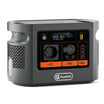
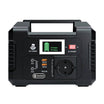

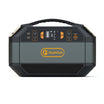
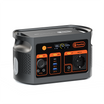


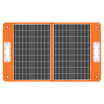
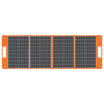


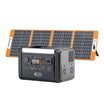

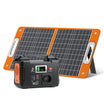

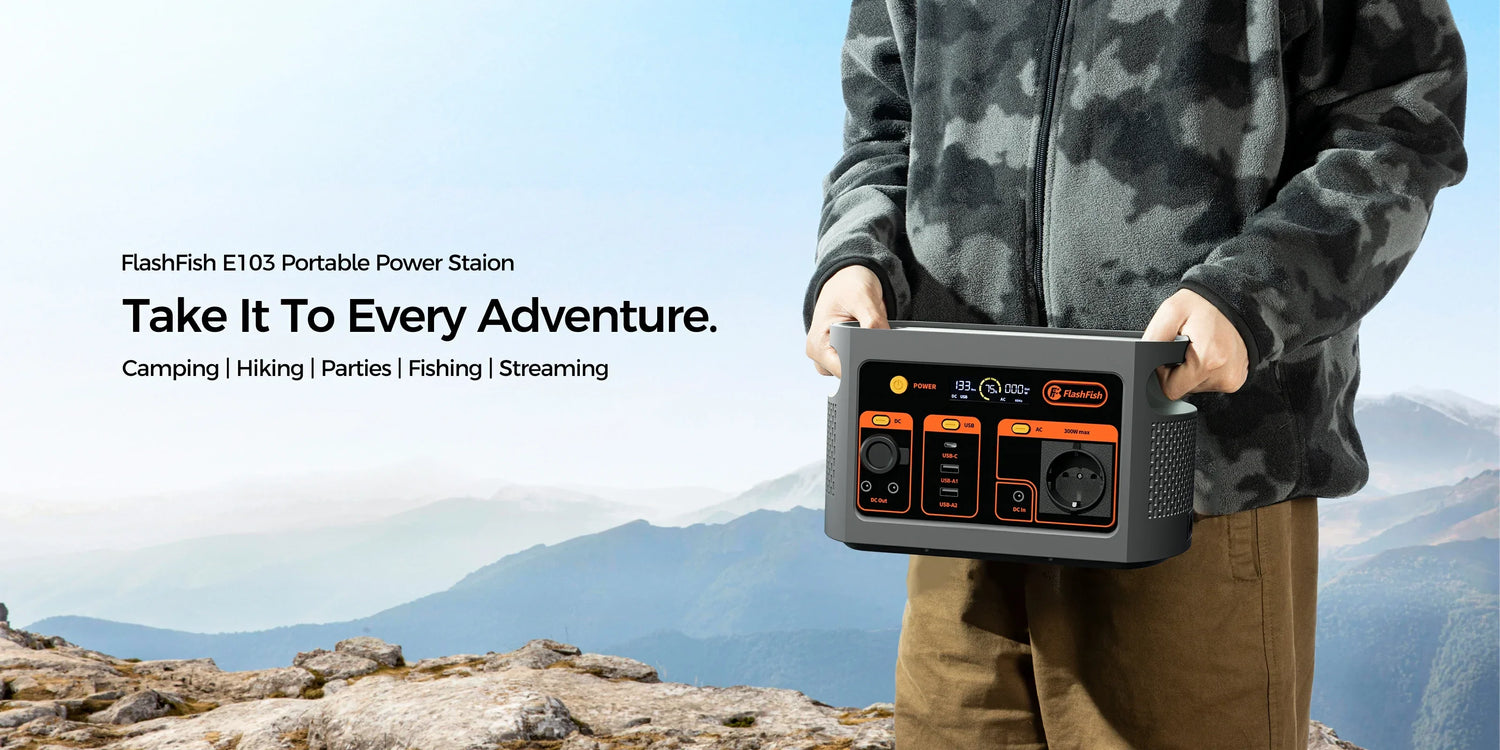
Short answer: choose FlashFish E103 when the camping plan is mainly phones, camera batteries, lights and a compatible laptop charger within 300W, and when a roughly 3kg station is easier to carry. Choose T1200S when the device list needs substantially more capacity, up to 1200W continuous AC output, a 100W USB-C port or more solar-input headroom. Do not buy the larger station by default; choose the smallest verified class that covers the real load list with margin.
This is a product-fit comparison, not a claim that one model is universally better. E103 and T1200S solve different camping problems.
Quick comparison
| Decision factor | FlashFish E103 | FlashFish T1200S | What it means outdoors |
|---|---|---|---|
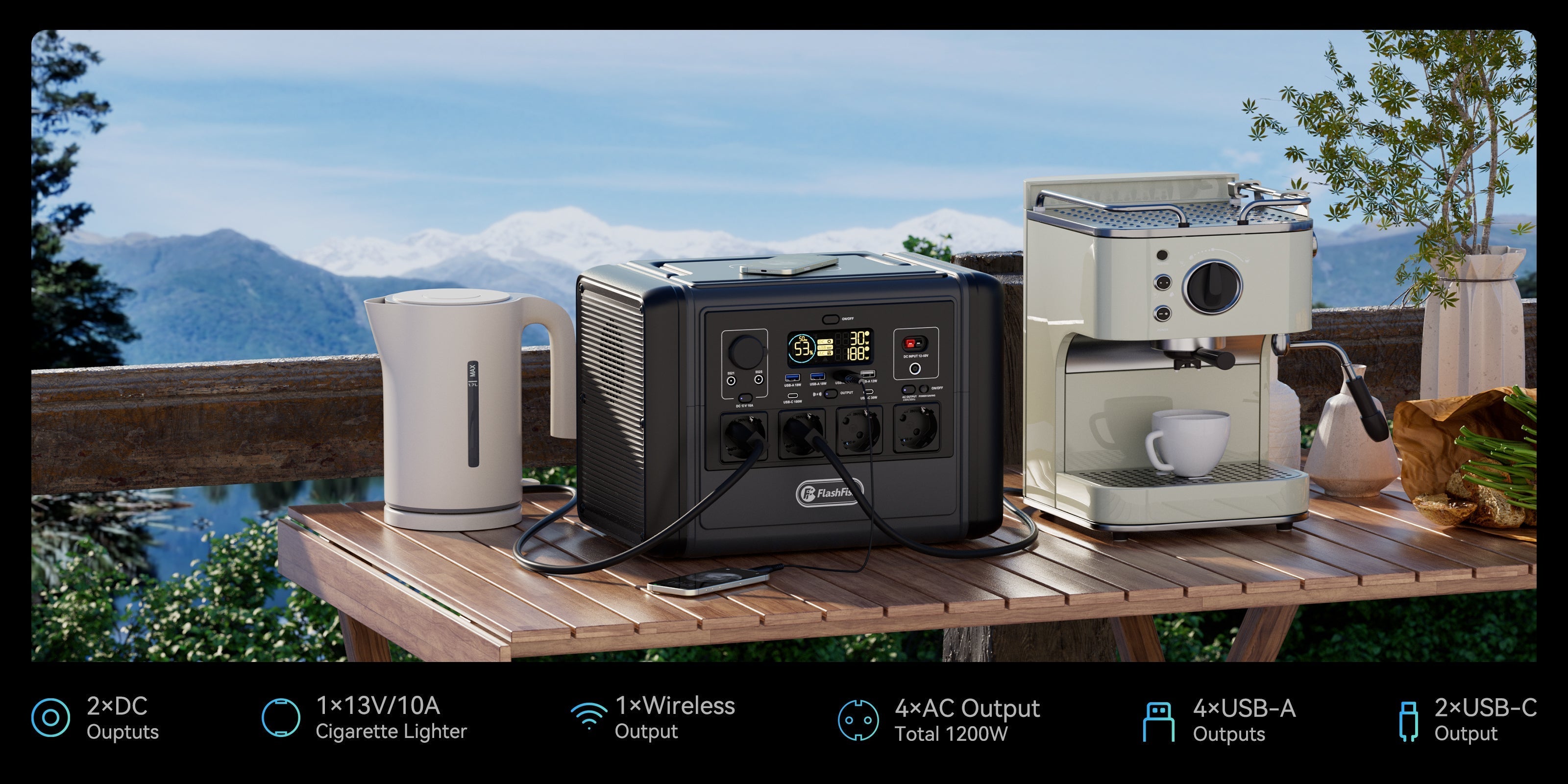
| Rated capacity | 179.2Wh | 768Wh | T1200S has a much larger energy reserve; E103 is easier to justify for light device lists. |
| Continuous AC output | 300W pure sine | 1200W pure sine | Read every device label. Neither rating is permission to connect an unsuitable appliance. |
| Peak output | The local product database does not provide this value. | 2400W peak | Do not invent E103 surge behavior or treat T1200S peak as its normal limit. |
| USB-C maximum | 60W | 100W | The higher T1200S profile can fit more compatible laptops, but cable and device support still decide. |
| Solar/DC input | 90W max DC input in the local bundle | 400W max solar/DC input | Input headroom is not a recharge-time promise; sunlight and the panel setup remain variable. |
| Weight | 3.0kg | 12.45kg | E103 is the easier carry; T1200S requires a deliberate vehicle, storage and lifting plan. |
| Battery chemistry | The local product database does not provide this value. | LiFePO4 | Do not use chemistry to compare E103 until the original manual record is reconciled. |
Choose E103 when portability is the constraint
- Your list is dominated by phones, cameras, rechargeable lights and low-power electronics.
- Your laptop can use the verified 60W USB-C profile or its approved AC charger stays within the 300W limit.
- You expect to carry the station from a car, train or parking area to the pitch.
- You accept that 179.2Wh requires more selective energy use than a mid-size station.
Choose T1200S when the load list is the constraint
- Your combined plan needs more than the E103's 300W continuous AC ceiling.
- You need a compatible 100W USB-C port, more capacity or more solar-input headroom.
- You are transporting the station by vehicle and can manage 12.45kg safely.
- You want one station for camping plus selected-load use at home, without treating it as every-circuit backup.
The three-list method
Before choosing, divide the gear into three lists. This is more useful than copying an advertised appliance chart.
| List | Examples | Decision rule |
|---|---|---|
| Must power | Phone, navigation device, one light | Reserve capacity for these first. |
| Useful to power | Laptop, camera charger, speaker | Check port profiles and add their expected use, not just nameplate watts. |
| Leave at home or verify separately | Heater, kettle, cooking appliance, compressor load | High heat or startup demand needs exact label and manual checks; do not infer fit from peak output. |
When FlashFish fits
E103 fits a buyer who values a compact, 179.2Wh station and keeps the AC load within 300W. T1200S fits a buyer who needs 768Wh, 1200W continuous AC output, 100W USB-C or up to 400W solar/DC input and accepts the higher carry weight.
When neither model fits
Neither model is a substitute for powered campsite infrastructure, a permanently installed electrical system or a separate plan for critical equipment. A large heater, kettle, induction cooker, uncertain compressor load or device with special earthing requirements needs its own manual and electrical review.
Solar planning without a fixed recharge claim
Solar input is only one ceiling. The European Commission's PVGIS material shows why radiation changes with cloud, atmosphere, location and terrain. Panel angle, shade, temperature, cabling and the station input limit also affect real charging. Compare panel voltage and connectors before connecting anything.
Camping setup checklist
- Write the must-power list and record watts or charger profiles.
- Add simultaneous AC loads and stay below continuous output.
- Check USB-C device and cable compatibility.
- Choose the carry weight you can manage over the real walking distance.
- Keep the station dry, shaded and ventilated according to the manual.
- Inspect extension leads and fully unwind cable drums.
- Test the setup before travel and keep a lower-power fallback.
FAQ
Is E103 enough for a weekend camping trip?
It can fit a selective phone, light, camera and compatible laptop plan, but duration depends on the actual device use and conversion path. Start with the load list, not a fixed number of days.
Is T1200S too heavy for camping?
At 12.45kg in the local product bundle, it is better suited to vehicle-supported camping than long-distance carrying. The user's route and lifting ability decide.
Can E103 run a camping cool box?
Only after checking the cool box's voltage, running watts, startup behavior and connector against E103's port limits. The article does not make a blanket compatibility claim.
Does T1200S charge laptops faster than E103?
Its USB-C maximum is higher at 100W versus E103's 60W, but the laptop and cable must support the relevant profile. Higher port power does not automatically shorten every charge.
Which model is better with solar panels?
T1200S has more input headroom in the local bundle, while E103 is a smaller-capacity station. Real solar charging depends on panel compatibility, sunlight, angle, shade and system losses.
Sources and notes
- FlashFish product specifications, accessed 2026-06-28: manual-derived E103 and T1200S capacity, output, port, solar/DC input and weight records. E103 battery chemistry and peak output are blank and are not guessed.
- FlashFish Europe product listing cache dated 2026-06-26 and EU store Ping on 2026-06-28: both products ACTIVE with non-empty Europe URLs; cached inventory E103 229 and T1200S 49.
- FlashFish EU E103 page and FlashFish EU T1200S page for current Europe listing context.
- European Commission JRC PVGIS methods for solar-radiation variability.
- Electrical Safety First: extensions and leads for outdoor cable precautions.
Start with the portable power station collection, then choose by the device list and carry plan rather than capacity alone.



Dejar un comentario
Este sitio está protegido por hCaptcha y se aplican la Política de privacidad de hCaptcha y los Términos del servicio.