

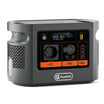
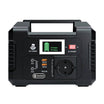

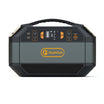
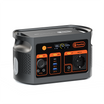


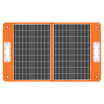
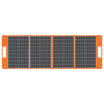


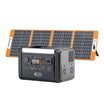

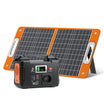

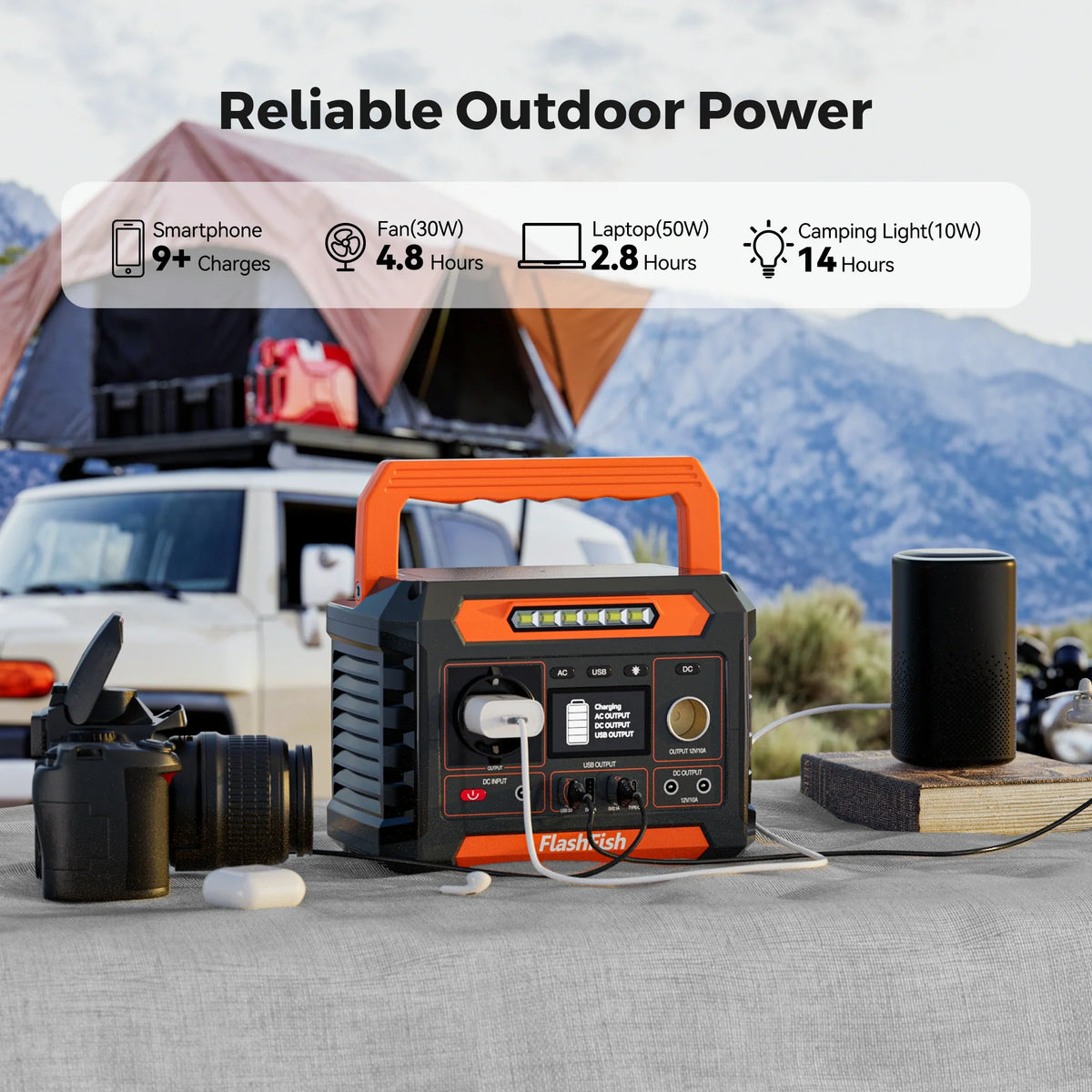
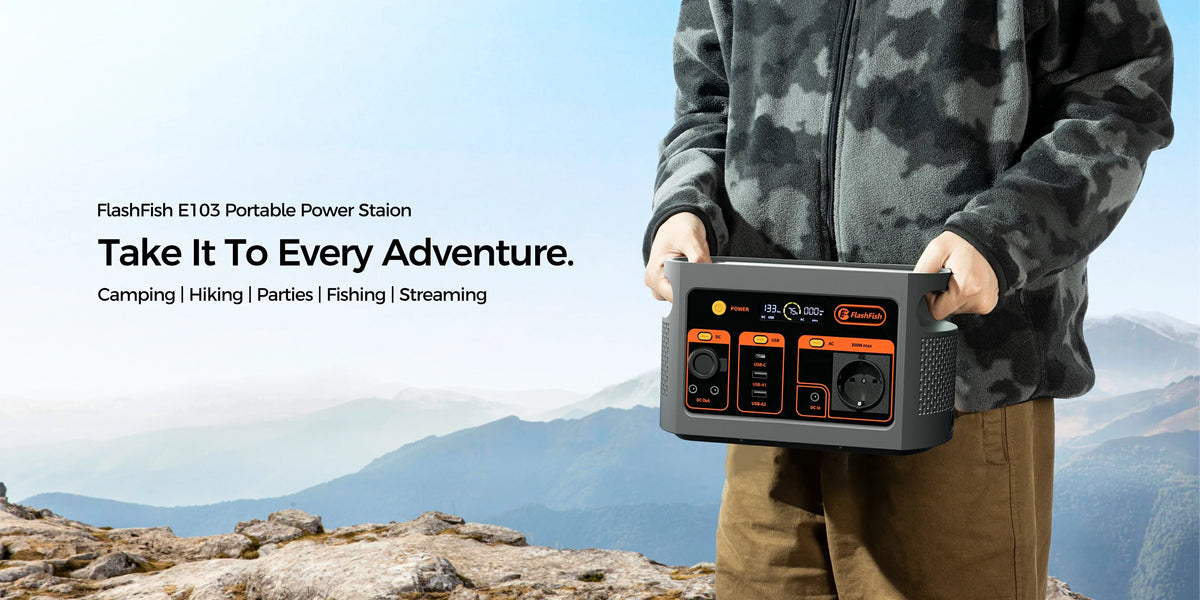
Short answer: choose FlashFish E103 when the device list benefits from up to 60W USB-C, a 300W pure-sine AC ceiling or 34.9Wh more nominal energy. Choose P66A when its approximately 2kg mass is more useful than E103's approximately 3kg mass and every device fits the lower documented USB and 200W AC limits.
Neither model is the universal winner. E103 has the stronger documented laptop-oriented USB-C path; P66A is about 1kg lighter. The correct decision comes from applying the same phones, cameras, laptop and chargers to both products instead of comparing unrelated marketing examples.
In this guide: a symmetric specification table, the PORTS decision method, three device kits, model fit and non-fit rules, unresolved evidence and five FAQs.
Quick E103 vs P66A comparison
| Decision field | FlashFish E103 | FlashFish P66A | Buyer implication |
|---|---|---|---|
| Nominal energy | 179.2Wh | 144.3Wh in EU manual; storefront title says 144.34Wh | E103 has 34.9Wh more using the manual value; neither figure is delivered energy |
| Continuous AC | 300W, pure sine wave | 200W at 230V; waveform not provided in the local record | E103 supports a wider documented AC load range; sensitive P66A AC loads need the missing waveform resolved |
| USB-C | One PD port, up to 60W | One QC port, up to 18W | E103 is the clearer direct path for a compatible USB-C laptop above 18W |
| USB-A | Two QC outputs, up to 18W each | Two 5V/2.4A outputs plus one QC output up to 18W | Match each exact device and simultaneous-port rule; do not add maxima blindly |
| Mass | Approximately 3kg | Approximately 2kg | P66A saves about 1kg before cables and chargers |
| Battery chemistry | LiFePO4 | Not provided in the authoritative local record | Do not infer P66A chemistry from another model or page family |
The P66A capacity is deliberately shown as two source values. Its EU manual says 144.3Wh, while the current storefront title says 144.34Wh. The difference is small, but the sources do not explain it; the comparison uses the manual value and keeps the storefront display visible for human review.
Use PORTS to choose
- P — Profile every device. Record the required voltage, connector, charging protocol and maximum accepted power for the exact laptop, phone, camera charger and accessories.
- O — Output path first. Prefer direct USB only when the source, cable and device share a documented profile. Use AC with the original adapter when direct USB is not supported.
- R — Reserve output and energy. Keep continuous-load headroom and treat Wh as nominal, not delivered. Measure a real session before promising charges or hours.
- T — Transport the complete kit. Add station, adapters and cables. A lighter station can lose part of its advantage if an AC brick is still required.
- S — Stop at missing evidence. Resolve waveform, chemistry, peak output or shared-port behaviour when the decision depends on it; do not fill blanks from a related product.
Three compact-device kits
| Declared kit | E103 path | P66A path | Initial decision |
|---|---|---|---|
| USB-C laptop accepting 20V/3A + phone + camera USB charger | Laptop may fit the documented 60W USB-C port; place smaller devices on verified USB-A paths | 18W USB-C is below the laptop's 60W profile; likely requires its original AC adapter if within 200W | E103 reduces adapter dependence, subject to cable and simultaneous-port checks |
| Two phones + action-camera batteries, all at or below 18W | Several documented USB paths; more nominal energy | Several documented USB paths; about 1kg lighter | P66A may be the leaner carry choice when every profile is verified |
| Sensitive 230V camera charger with unknown waveform requirement | Pure-sine AC is documented | Waveform is not provided in the local record | E103 has the clearer evidence; pause P66A selection until the charger and waveform are confirmed |
These are routing examples, not tested charging kits. USB Power Delivery negotiation, cable rating, charger efficiency, shared-port behaviour and device state can change actual power. USB-C shape alone never establishes 60W or 18W compatibility.
Where E103 fits better
- A compatible laptop accepts a documented USB-C PD profile up to 60W.
- The declared AC equipment needs more than 200W but stays comfortably below 300W, including simultaneous loads and startup behaviour.
- The buyer values 179.2Wh nominal energy over a 1kg carry saving.
- A sensitive AC charger requires a documented pure-sine source.
Check E103 if the kit needs 60W USB-C or 300W AC, then verify the exact device, cable and regional plug before ordering.
Where P66A fits better
- The complete device list stays within its documented USB paths or a checked AC-adapter plan.
- The 200W continuous AC ceiling is sufficient with headroom.
- Approximately 2kg station mass matters more than the extra nominal energy and stronger USB-C path of E103.
- The decision does not rely on currently missing local chemistry, waveform, peak-output or warranty evidence.
Check P66A if lower carry mass matters more than USB-C power. Recheck the current page and delivered label because availability and regional details can change.
When neither model closes the decision
Expand the search when the laptop requires more than 60W direct USB-C and carrying its AC adapter defeats the plan, the combined AC load approaches the chosen ceiling, a device has high or unknown startup demand, the work needs more measured energy, or a critical workflow cannot tolerate interruption. A connector list is not a continuity plan.
Common comparison mistakes
- Calling E103's 60W USB-C and P66A's 18W USB-C equivalent because both use the same connector shape.
- Turning 179.2Wh or 144.3Wh into a fixed number of laptop or camera charges.
- Ignoring the 1kg mass difference until after adding chargers and cables.
- Assuming P66A waveform, chemistry, peak output or warranty from another FlashFish model.
- Hiding the 144.3Wh/144.34Wh source difference instead of recording it.
- Using price or stock from an old screenshot; this comparison makes no price claim.
FAQ
Which is better for a 60W USB-C laptop?
E103 has the clearer direct path because its local record documents USB-C Power Delivery up to 60W. P66A's USB-C is documented only up to 18W, so a 60W laptop would normally need another verified path, such as its original AC adapter.
Does E103 last 24% longer than P66A?
No. E103 has about 24% more nominal Wh than P66A's 144.3Wh manual value, but delivered energy and runtime depend on the power path, conversion loss, reserve, temperature, device behaviour and battery condition. No runtime ratio was tested.
Why does P66A show 144.3Wh and 144.34Wh?
The EU manual-derived record says 144.3Wh, while the current storefront title says 144.34Wh. The available sources do not explain the difference. This guide preserves both and uses the manual value for comparison pending confirmation.
Is P66A always easier to carry?
The station is listed at approximately 2kg versus approximately 3kg for E103. Compare the complete kit: P66A may still need an AC laptop adapter that E103 can sometimes replace with a compatible USB-C cable.
Are both products currently available in Europe?
An under-72-hour FlashFish Europe Admin snapshot listed both ACTIVE with live Europe URLs, and both public pages were reachable on 24 September 2026. That is not a promise of stock at publication or checkout; recheck the current pages.
Conclusion
E103 is the stronger documented choice for a compatible 60W USB-C laptop, a higher AC ceiling and more nominal energy. P66A is the lighter compact choice when every device fits its lower USB and AC limits. Apply PORTS to the same device list, keep source gaps visible and choose by the complete carry-and-power path.
If lower carry mass is the deciding constraint, check P66A if lower carry mass matters more than USB-C power.
Sources and evidence boundary
FlashFish model facts come from the manual-derived records and current E103 and P66A Europe pages. USB negotiation context comes from the USB Implementers Forum. No side-by-side charging, efficiency, output-quality, charge-count or runtime test was performed.



Dejar un comentario
Este sitio está protegido por hCaptcha y se aplican la Política de privacidad de hCaptcha y los Términos del servicio.