

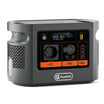
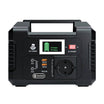

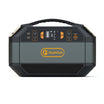
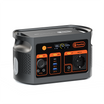


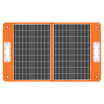
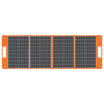


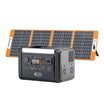

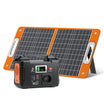

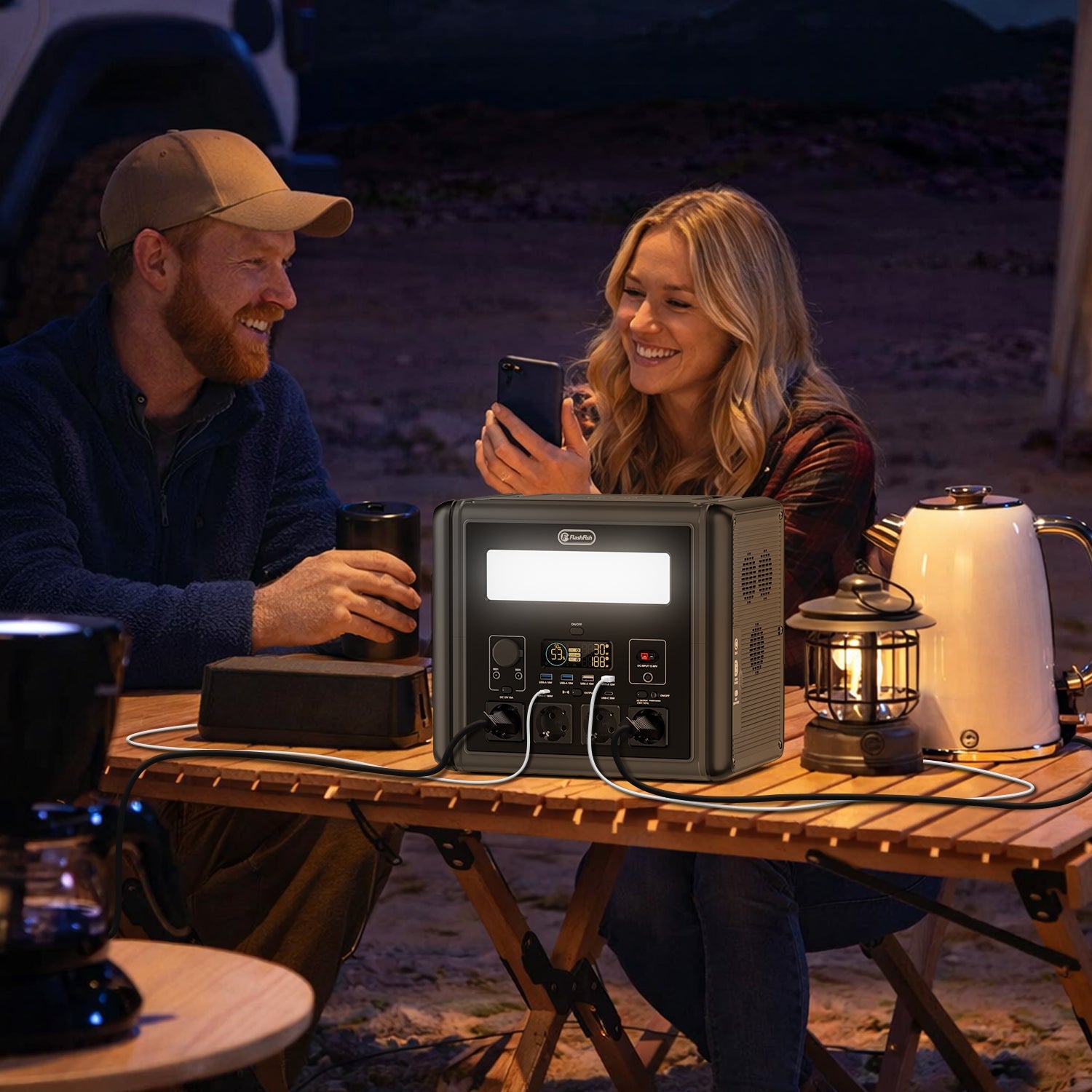
Short answer: use a portable power station to support a small, pre-checked list of individual essentials, not to recreate normal household electricity. Start with communications and lighting, protect food by keeping fridge and freezer doors closed, delay heat-producing convenience loads, and preserve a reserve. The T2000's 1536Wh catalog capacity and 2000W rated output are ceilings for planning, not promises that every appliance or duration will fit.
The best outage plan is a priority order with stop rules. It should still work if the internet fails, a fridge cycles harder than expected or the power cut lasts longer than the first estimate.
Use four priority levels instead of “what can 2000W run?”
| Priority | Typical examples | Decision rule | Stop condition |
|---|---|---|---|
| 1 — Safety and information | Phone charging, battery radio, LED torch, essential alert device | Low-watt devices that preserve communication and safe movement | Device, cable or station shows damage, heat, moisture or a fault |
| 2 — Time-sensitive essentials | Router if the network still works, essential laptop, selected cold appliance | Power only after label, startup and energy need are checked | Service is unavailable, load is unstable or reserve is falling too quickly |
| 3 — Useful but deferrable | Extra screens, entertainment, non-essential tool chargers | Use only after the likely outage duration and reserve are reassessed | A higher-priority need appears |
| 4 — Energy traps or excluded loads | Space heater, kettle, oven, fryer, unverified pump or fixed wiring | Normally leave off; watts alone do not prove suitability or wisdom | Default is no use without a specific, reviewed plan |
The German Federal Office of Civil Protection and Disaster Assistance advises households to prepare for lighting, communications and the loss of normal cooking/heating. The UK Met Office similarly emphasises torches, charged phones, closed refrigerators and switching off hazardous appliances. These are preparedness priorities, not a product runtime recipe.
What the T2000 specification does and does not tell you
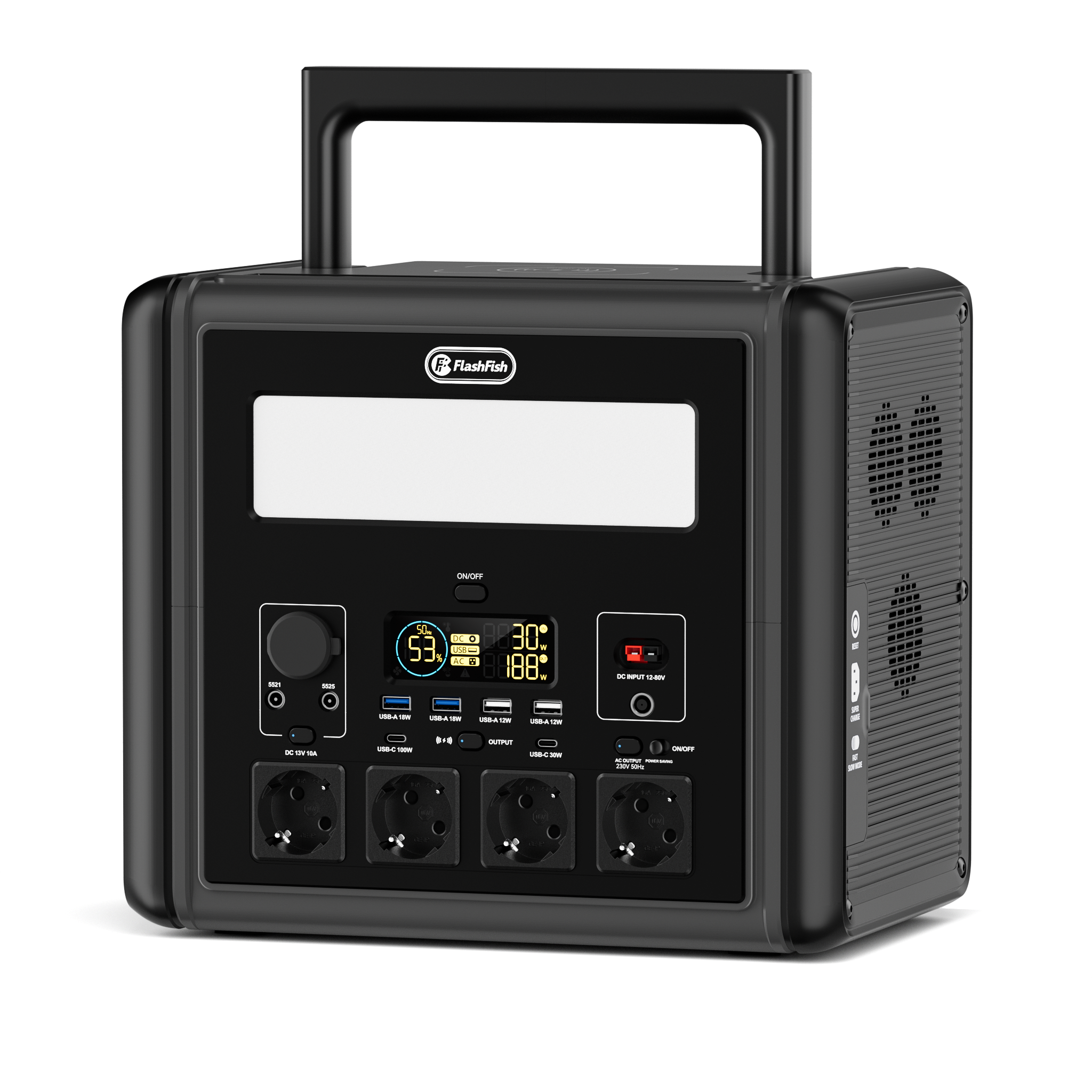
The current FlashFish T2000 Europe page lists 1536Wh catalog capacity, 2000W rated AC output, four AC outlets, two USB-C outputs, four USB-A outputs, a shared 130W DC group and a built-in 5W light. The 1 August Shopify snapshot recorded the product ACTIVE with a public Europe URL and 82 total units across its listed variants.
| Specification | Useful planning question | What it cannot prove |
|---|---|---|
| 1536Wh catalog capacity | How much rated energy class is available for the priority worksheet? | Exact delivered AC energy, runtime or battery condition |
| 2000W rated AC output | Does the total stable AC load remain below the station rating with margin? | Startup compatibility, appliance permission or sensible energy use |
| 4000W peak claim | Is there a documented transient allowance to review? | Permission to run a 4000W appliance or unknown motor |
| Multiple ports | Can low-watt devices avoid unnecessary adapters? | Unlimited simultaneous output or compatibility with every cable |
| EPS claim | Is supported switchover useful for a non-medical selected load? | A certified entire-home UPS design or assured zero interruption |
Build the plan before the lights go out
- Name the consequence. Why must this device run, and what happens if it stops?
- Record the exact label. Write down input voltage/frequency, rated watts or amps, startup information and permitted environment.
- Choose one output path. Use direct USB or suitable DC only when the profile, connector and polarity match; otherwise use the correct AC adapter.
- Estimate energy. Watts multiplied by expected hours is the starting point; cycling loads require duty-cycle evidence.
- Add headroom. Keep the combined stable load below 2000W and do not treat the peak figure as a normal limit.
- Set a review trigger. Recheck after a defined interval, a large state-of-charge change, a new official update or any fault.
- Protect the reserve. Remove deferrable loads before an essential device is at risk.
A worked household order without a runtime promise
A household might first charge two phones and run one LED light. It then checks whether the broadband service is still available before spending energy on a router. The fridge door stays closed while the household reviews local food-safety guidance and the appliance label. A laptop is added only if it supports essential communication or work. The kettle and electric heater remain off because they consume high power for a convenience that may have a safer non-electric alternative.
This is intentionally a sequence, not a fixed bundle. A household with a vulnerable person, an electrically powered water system or different local guidance needs a different plan and qualified advice.
Keeping the fridge closed can be the first energy-saving action
The Food Standards Agency says fridge and freezer doors should stay closed as much as possible during a power cut and provides time/temperature guidance with explicit uncertainty. That means a cold appliance is not automatically the first load to connect. First record when the outage began, keep the door shut, use a thermometer if available and follow the current food authority advice for your country.
If the plan later powers a fridge, the appliance's rated input, compressor startup, duty cycle and environment still need checking. Do not copy a generic “fridge watts” value or promise a T2000 runtime.
Extension leads are not extra power
Electrical Safety First warns that an extension lead's rating must be respected, cable reels may need to be fully unwound, and daisy-chaining leads can create overheating and fire risk. For a portable station, the same principle applies: multiple sockets do not increase the station's 2000W rated output or the lead's own limit.
- Use one correctly rated, undamaged extension device only when necessary.
- Keep plugs, sockets and the station dry, visible and ventilated.
- Do not hide a cable reel under fabric or leave it coiled when the rated load requires full unwinding.
- Stop at burning smells, hot plastic, sparks, smoke, scorch marks, loose plugs or repeated shutdowns.
- Never connect the station to a wall socket to energise household wiring.
Common outage-planning mistakes
- Starting with appliance count. Four AC outlets do not mean four unrestricted loads.
- Planning from 2000W alone. Watts screen output compatibility; Wh and duty cycle govern energy use.
- Running the fridge immediately. Keeping the door closed may preserve cold while you assess the outage.
- Using electric heat as default. Heat-producing loads can consume the reserve quickly and may be unsuitable.
- Assuming the router means internet remains available. Local network equipment may also have lost power.
- Treating EPS as medical or entire-home assurance. Those uses need a separate, approved design and contingency.
When FlashFish fits and when it does not
T2000 fits a manually managed shortlist of individual devices whose ratings, startup behaviour, energy need and regional compatibility have been checked. Its 1536Wh class, 2000W rated output and multiple low-voltage outputs can support a disciplined priority plan. Compare the FlashFish portable power station range only after the KEEP worksheet defines the need.
T2000 does not fit as an automatic entire-home system, a backfeed source, a fixed long-outage solution, an unreviewed medical-equipment continuity plan or a substitute for local emergency planning. It also does not fit a household whose essential loads or installation require fixed, professionally designed equipment.
Safety and regional boundary
Confirm the delivered Europe version, sockets, voltage/frequency, grounding, cables, ventilation and temperature limits. Operate individual loads only. Do not open the unit, alter battery wiring, bypass protection, connect the station to household wiring or attempt a transfer arrangement without qualified design and approval. If electricity supports medical equipment, contact the relevant device provider, clinician and network operator before an outage and maintain an independent contingency.
Frequently asked questions
Can the T2000 power an entire home during a power cut?
No. Treat it as a portable source for selected individual loads within its ratings. Do not connect it to household wiring or attempt backfeeding without a professionally designed, approved system.
What should I power first in a short outage?
Prioritise safety, communications and low-watt essentials based on your household plan. Keep fridges and freezers closed first, then decide whether powering them is necessary using local food-safety guidance and checked appliance data.
Can I use an extension lead with the T2000?
Only if the lead is correctly rated, undamaged, suitable for the environment and used according to its maker instructions. Never daisy-chain leads, and fully unwind a cable reel when its rating requires it.
How long will a T2000 run my fridge, router and lights?
There is no universal answer. Record actual watts, startup behaviour, duty cycle, output-path losses and reserve. Catalog 1536Wh is not an assured delivered-energy or runtime result.
Should I rely on a T2000 for medical equipment?
Not as the only plan. Use medical-device and power-supplier guidance, register for priority support where available, and maintain an independent contingency reviewed by the relevant clinician and device provider.
Sources and evidence limits
- Germany's Federal Office of Civil Protection and Disaster Assistance: power breakdown precautions — household preparedness, lighting, communication and cooking/heating boundaries.
- UK Met Office: what to do in a power cut — phones, torches, closed cold appliances and switching off hazardous loads.
- Food Standards Agency: food safety in emergencies — fridge/freezer door, time and temperature guidance.
- Electrical Safety First: extension leads, cable reels and adaptors — ratings, unwinding, daisy-chain and damage warnings.
- FlashFish T2000 Europe page and product-source bundle — current regional product context and manual-derived specification boundaries.
No outage drill, appliance startup test, usable-energy test or runtime measurement was performed.
Write the KEEP priority order today, attach it to the charging-cable bag, and review it whenever the household, appliance list or regional guidance changes.




Dejar un comentario
Este sitio está protegido por hCaptcha y se aplican la Política de privacidad de hCaptcha y los Términos del servicio.