


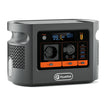
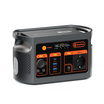

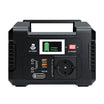
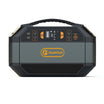
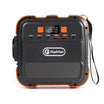




Short answer: E103 is the lighter starting point when the laptop genuinely accepts its 60W USB-C Power Delivery path and the exact AC accessory stays within a 300W continuous pure-sine limit. E106B provides more nominal energy, a 100W USB-C1 port and a 600W continuous pure-sine AC ceiling, but it is heavier and its peak AC output is not provided. Neither model is approved until the laptop, cable, accessory and simultaneous-output plan are exact.
Quick comparison on equal fields
| Field | E103 | E106B | Decision meaning |
|---|---|---|---|
| Nominal energy | 179.2Wh | 384Wh | Stored-energy labels, not delivered runtime |
| Continuous AC | 300W pure sine | 600W pure sine | Compare with the accessory's running requirement |
| Peak AC | 600W | Not provided | E106B is not an automatic startup-load choice |
| Primary USB-C path | Up to 60W PD | USB-C1 up to 100W PD | The laptop and cable still negotiate the actual result |
| AC outlets | One | One | One exact AC accessory is the comparison boundary |
| Station mass | About 3kg | About 5.2kg | Add chargers and cables to the carried kit |
Start with the laptop path
The USB-IF Power Delivery overview explains that the receiving device requests supported power. For this decision, record the laptop's accepted profiles, the port used and the cable rating. A laptop sold with a 60W adapter may accept less, exactly 60W or another profile; its label does not prove how it will behave on either station.
Then identify one exact AC accessory
| Accessory evidence | Why it matters | Stop condition |
|---|---|---|
| Manufacturer and model | Prevents a generic lamp, monitor or charger assumption | Model cannot be resolved |
| Input voltage and frequency | Must match the European station and device requirements | Regional label or manual conflicts |
| Running watts or current | Compared with 300W or 600W continuous AC | Demand is unknown or exceeds the chosen limit |
| Startup behaviour | Motor, compressor and some power supplies can demand more at start | Startup requirement exceeds evidence |
| Waveform requirement | Both station records specify pure sine AC | The accessory requires another condition |
Three decision examples
- Verified 60W laptop and a 40W AC light: E103 may be the more portable starting point if the laptop, cable and simultaneous path all pass.
- Verified 60W laptop and a 350W continuous accessory: E103 is outside its 300W continuous AC ceiling. E106B has enough documented continuous AC headroom, but startup and simultaneous operation still need evidence.
- Verified 60W laptop and a small compressor: neither is an automatic choice. E103 has a 600W peak label, but the actual startup curve must fit; E106B peak output is unknown.
Where E103 fits better
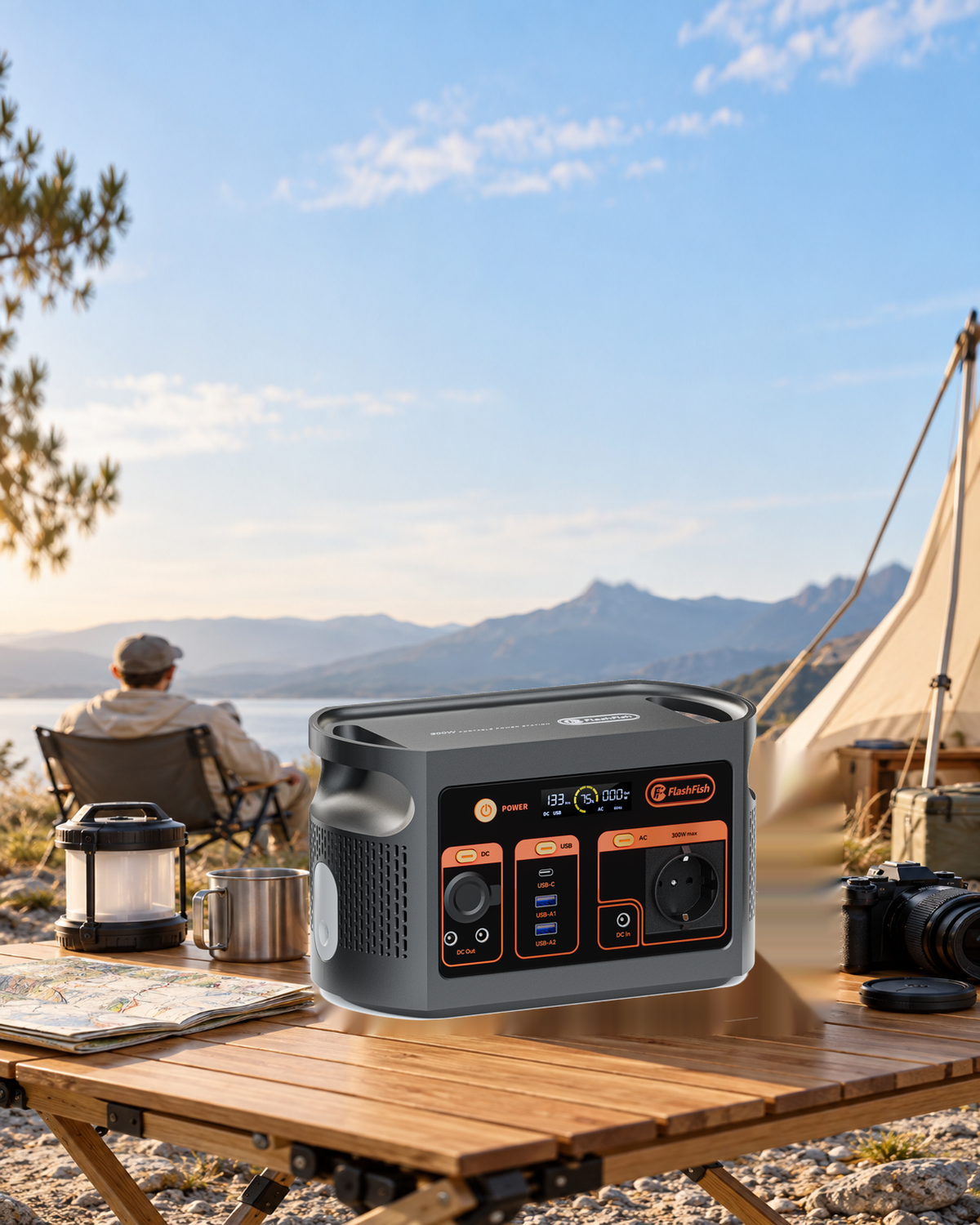
The current E103 Europe page supports a clear lightweight case: approximately 3kg, a 60W USB-C PD output, 179.2Wh nominal energy and one 300W pure-sine AC outlet. It is the more efficient choice to carry when the verified laptop path and one low-power AC accessory do not need E106B's added headroom.
Where E106B fits better
The current E106B Europe page lists 384Wh nominal energy, a 100W USB-C1 output and 600W continuous pure-sine AC. It is the stronger on-paper option when the accessory needs more than 300W continuous, the laptop benefits from a documented profile above E103's ceiling, or the measured energy plan needs more nominal reserve. Its approximately 5.2kg mass and unknown peak AC value remain real trade-offs.
Decision-stage next step: write the laptop profiles and accessory label beside the two product records, then compare current E103 and E106B Europe details. Choose only after one model clears every required path with no blank field.
Do not infer simultaneous output
This comparison does not claim that either station can deliver its USB-C maximum while the AC accessory uses its full label rating. Check the current exact-model instructions and shared limits, then run the final pair under a representative laptop workload. Record port output, accessory startup, warnings, resets, heat and battery-state change.
Estimate energy as a range, not a promise
Measure the laptop and accessory separately and together. Use representative average demand rather than charger maxima, apply explicit conversion losses for each output path and preserve a reserve. The difference between 179.2Wh and 384Wh is useful, but it cannot be converted into a fixed runtime without those inputs.
Advantages, disadvantages and overlooked limits
| Option | Advantages | Disadvantages and risks |
|---|---|---|
| E103 | Lower listed mass; 60W USB-C aligns with the stated laptop class; 300W pure-sine AC | Less nominal energy and AC headroom; a 60W ceiling leaves no assumed USB margin; combined operation untested |
| E106B | More nominal energy; 100W USB-C1; 600W continuous pure-sine AC | Heavier; peak AC unknown; higher ratings still do not prove compatibility or simultaneous output |
FAQ
Is E103 enough for every 60W laptop?
No. Confirm the accepted USB PD profiles and cable; equal watt labels do not prove full-rate charging.
When is E106B the clearer AC choice?
When the exact accessory needs more than 300W but no more than 600W continuous and all other requirements pass. Startup remains unresolved when the necessary peak evidence is missing.
Can the laptop and accessory run together?
Do not assume it. Check the model instructions and test the exact pair within all individual and shared limits.
Does E106B run the pair twice as long?
No fixed ratio is established. Nominal Wh is not delivered energy and the two output paths have different losses.
Which is easier to carry?
E103 is listed at about 3kg versus E106B at about 5.2kg before cables and accessories.
Sources and evidence limits
- FlashFish E103 Europe page and exact-model record — E103 ratings and mass; no device test.
- FlashFish E106B Europe page and exact-model record — E106B ratings and mass; peak AC remains unknown.
- USB Implementers Forum: USB Power Delivery — negotiation context; no station, laptop or cable approval.
Evidence checked 30 October 2026. No independent side-by-side test or named technical review was performed.
Choose from the completed evidence sheet
E103 wins on carried mass when its exact paths are enough. E106B wins on documented energy and continuous AC headroom when those differences solve a verified need. If neither clears the startup, simultaneous-output or device-approval gate, Compare current FlashFish Europe power stations instead of forcing a winner.



Commenta
Questo sito è protetto da hCaptcha e applica le Norme sulla privacy e i Termini di servizio di hCaptcha.