








Short answer: a suitable extension lead or power strip can be used with a portable power station only when it connects directly to the station, matches the outlet and environment, remains within its own marked rating, and carries appliances whose combined input stays below every relevant limit. Fully unwind cable reels. Do not daisy chain. Stop for heat, damage, smoke, smell, sparking or repeated shutdowns.
This guide explains a decision process, not approval for a specific installation. No cable, power strip, appliance or power station was electrically tested for this article. Plug types, campsite rules and electrical requirements vary across Europe.
There are at least three limits, not one
A power station display can make the inverter rating look like the only number that matters. It is not. The station has an output limit, the extension accessory has its own current or power limit, and every appliance has an input requirement. The practical ceiling is the lowest applicable limit after the exact manual, regional outlet and operating conditions are considered.
| Label to read | What it answers | Common mistake |
|---|---|---|
| Power station continuous AC output | How much AC load the inverter is documented to support continuously | Using a peak number as a continuous allowance |
| Extension lead, reel or strip rating | The accessory limit under its stated conditions | Assuming every accessory with the right socket has the same rating |
| Appliance rated input | The power or current the appliance requests | Using output, heat or cooling capacity instead of electrical input |
| Appliance startup information | Whether motors or compressors briefly request more power | Adding only steady-state display readings |
| Regional plug and voltage label | Whether the interfaces are intended to work together | Using an adapter to conceal an unresolved electrical mismatch |
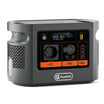
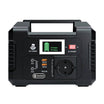
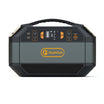
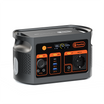
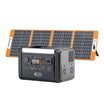
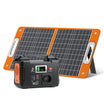
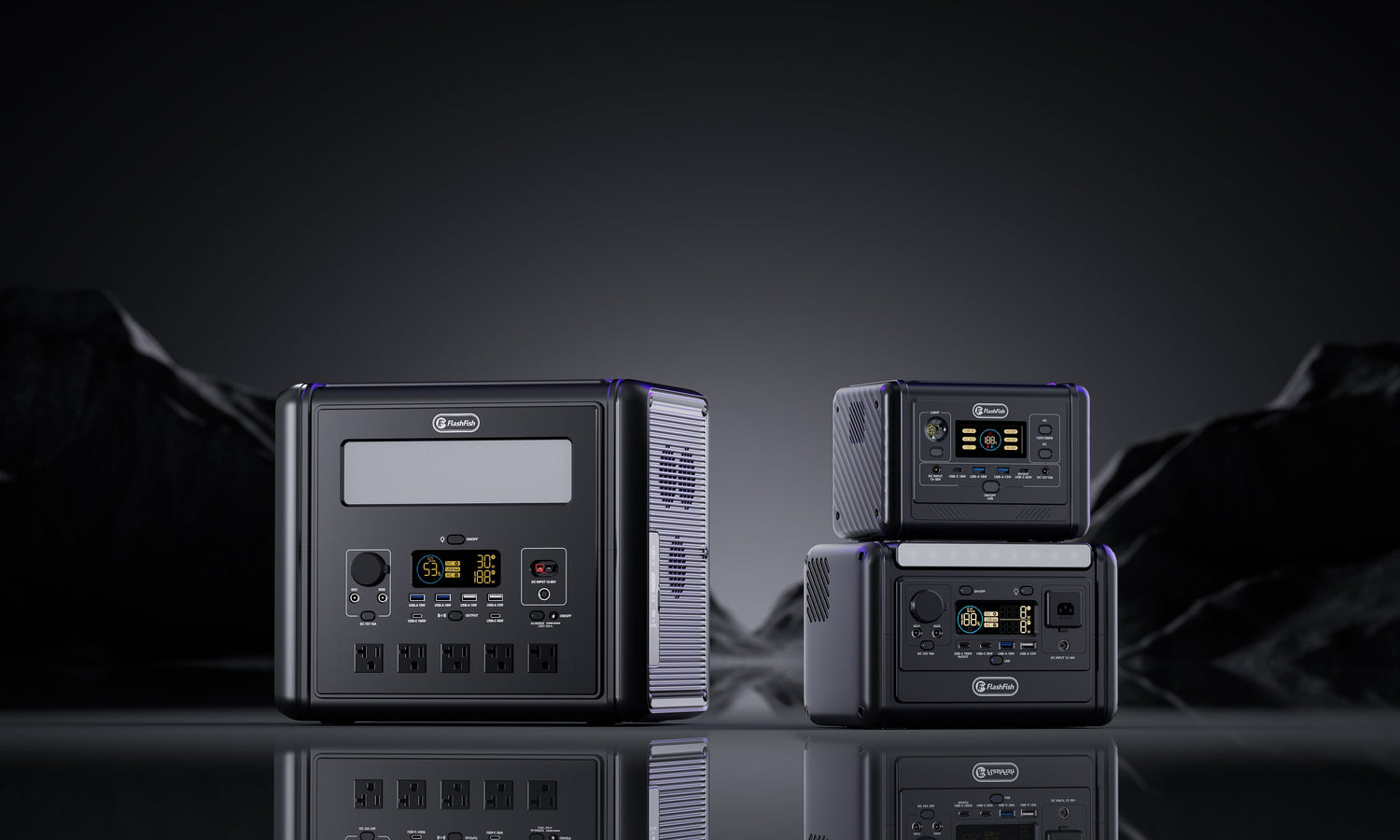
For example, the FlashFish product database lists the T1200S at 1,200W continuous AC output and the T2000 at 2,000W. These are product facts, not a recommendation to operate an extension device at those numbers. The accessory, appliance mix and regional unit label still need to be checked.
Add loads by rated input, then observe real behaviour
Make a list of every device that can run at once. Use each appliance rating plate or approved manual. Add the inputs and compare the result with the station and accessory limits. If a refrigerator, pump, compressor or other motor load is involved, check documented startup requirements rather than assuming the running figure is enough.
A live display is useful for observation, but it does not replace label checks. Displays may round values, update slowly or omit a brief startup event. If the station reports an overload, the accessory warms, the plug loosens, or protection repeatedly operates, stop and investigate instead of repeatedly resetting the system.
Why cable reels must be fully unwound
Electrical Safety First states that a cable reel must be unwound to achieve its current rating and warns that a wound reel can overheat. The UK Health and Safety Executive likewise notes that only fully extended extension leads can carry the full cable current without avoidable overheating.
Unwinding does not make an undersized, damaged or unsuitable reel acceptable. Read both reeled and unreeled markings where provided, use any required thermal cut-out, and keep the cable away from sharp edges, vehicle traffic, hot surfaces and water.
Do not daisy chain power strips or leads
Daisy chaining creates more connections, makes the total load harder to see and can leave one upstream plug carrying everything connected downstream. Electrical Safety First advises using one extension device per socket and not plugging an extension lead into another. Use a single, correctly rated device with enough outlets or redesign the setup.
Do not confuse available socket count with available power. Four sockets do not mean four high-power appliances can run together. A laptop charger, fridge, kettle and heater all have very different input patterns even if their plugs fit the same strip.
Inspect before every temporary setup
The HSE equipment guidance recommends visual checks for damaged plugs, exposed conductors, taped repairs, unsecured cables, burn marks and unsuitable supply conditions. A temporary camping setup is moved, packed and exposed to more mechanical stress than a fixed indoor socket, so a quick inspection is useful each time.
- Disconnect before inspection and follow the equipment instructions.
- Reject crushed insulation, taped joints, loose sockets, bent contacts, corrosion, scorch marks or melted plastic.
- Place trailing cables where people, tent pegs, doors, furniture and vehicles will not damage them or create a trip hazard.
- Keep every device ventilated. Do not cover a power station, adapter or coiled excess cable with bedding or luggage.
- Stop for unusual heat, smell, buzzing, smoke, sparks or repeated protective shutdowns.
A campsite hook-up is a different system
A portable power station outlet and a campsite electrical hook-up bollard are not interchangeable concepts. The Camping and Caravanning Club recommends purpose-built hook-up equipment, a fully unrolled cable, dry elevated connections and the protective arrangement required by the site.
If the electricity comes from the campsite, follow the site's connection rules and use equipment made for that hook-up. If the electricity comes only from a portable power station, confirm the station manual, outlet, accessory and load. Do not create a backfeed path, connect a portable station to building wiring, or improvise a transfer arrangement.
A practical pre-use record
| Check | Record | Stop condition |
|---|---|---|
| Station | Exact regional model and continuous output label | Unreadable label or unresolved regional mismatch |
| Extension device | Marked rating, condition and indoor/outdoor purpose | Damage, missing rating or unsuitable environment |
| Loads | Rated input and startup notes for each device | Total cannot be established or exceeds a limit |
| Routing | Dry path, no tight coil, no trip or crush points | Water, heat, vehicle traffic or unavoidable damage risk |
| Observation | Display load, temperature and warnings during first use | Heat, smell, noise, smoke, sparking or repeated trip |
When FlashFish fits - and when it does not fit
When a T1200S or T2000 may fit
- The exact Europe unit label and outlet match the intended accessory and appliances.
- The appliance total, including documented startup needs, fits below the station and accessory limits.
- A single suitable extension device reaches the load without daisy chaining.
- The setup remains dry, ventilated, supervised and protected from damage.
When it does not fit
- The plan depends on a peak-output number for continuous use.
- The cable, strip, plug, voltage, current or environmental rating is missing or mismatched.
- The setup requires multiple chained leads, exposed indoor accessories or a wound cable reel.
- The intention is to energise fixed building wiring, create a transfer system or bypass local site rules.
Compare the T1200S and T2000 only after the load list is complete. A larger station cannot correct an unsafe accessory or connection method.
Frequently asked questions
Can I plug a power strip into a portable power station?
Only when the strip, plug and cable are suitable for the station outlet and environment, the combined appliance input remains within every marked limit, and the strip is connected directly rather than through another extension device.
Why should a cable reel be fully unwound?
Cable left tightly wound cannot release heat as effectively. Fully unwinding the reel is a standard precaution, but the marked reeled and unreeled ratings and manufacturer instructions still apply.
Does a 1200W power station make a 1200W appliance a good match?
Not automatically. Check the appliance input label, startup behaviour, other simultaneous loads, accessory rating and the exact station manual. A same-number match leaves little room for variation.
Can I use an indoor power strip at a campsite?
Do not expose an indoor accessory to rain, condensation, wet ground or a campsite hook-up arrangement it was not designed for. Use purpose-built equipment and follow site rules.
What should I do if a plug or cable becomes hot?
Switch off the load if this can be done safely, disconnect according to the equipment instructions and stop using the setup. Scorching, melted plastic, smoke, sparking, odour or repeated trips require competent inspection.
Sources and evidence limits
- Electrical Safety First extension-device guidance - overload, daisy-chain, cable-reel and warning-sign guidance.
- UK HSE portable equipment guidance - visual inspection, supply suitability and RCD boundaries.
- UK HSE extension-lead publication - full extension of cable drums and coils.
- Camping and Caravanning Club safety guide - campsite-specific equipment, moisture and cable deployment.
- FlashFish Europe portable power stations - current product context only.
This article is educational and is not a substitute for the exact accessory instructions, station manual, campsite rules or a qualified local electrical assessment.



Laat een reactie achter
Deze site wordt beschermd door hCaptcha en het privacybeleid en de servicevoorwaarden van hCaptcha zijn van toepassing.