

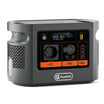
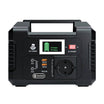

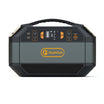
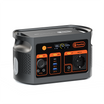






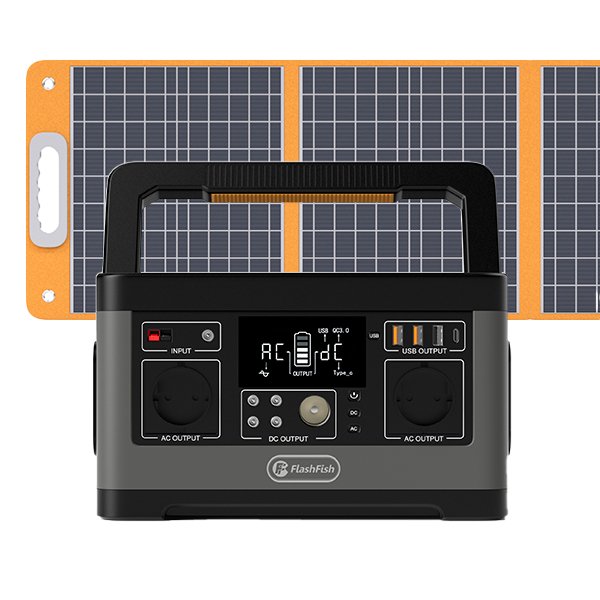
Short answer: yes, portable solar panels can still generate power in cloudy weather, but the output is usually lower and less predictable. Plan around sunlight quality, panel angle, shade, local season, and your power station input limits instead of assuming a 100W panel will deliver 100W all day.
This is why cloudy-weather solar advice needs more nuance than "it works" or "it does not work." The useful question is how to plan a trip, backup kit, or solar generator setup when the sky is variable.
Why clouds change solar output
The U.S. Department of Energy explains that solar radiation reaching a surface varies with location, time of day, season, landscape, and local weather. It also separates direct beam radiation from diffuse radiation, the scattered light that still reaches the ground after passing through the atmosphere.
The European Commission Joint Research Centre PVGIS methods page explains the same idea for solar modelling: clouds are a major source of attenuation, but diffuse radiation is still available when clouds block the solar disc. For portable panels, that means a gray sky can still produce input, but heavy cloud, shade, low winter sun, or poor angle can make charging slow.
What this means for a FlashFish portable solar setup
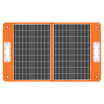
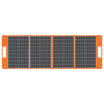
The FlashFish TSP100 is listed as a 100W, 18V foldable monocrystalline panel with kickstands, DC output, adapters, and up to 21.5%-23.5% IPCE. Those specs help, but weather still decides how much energy reaches the panel.
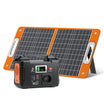
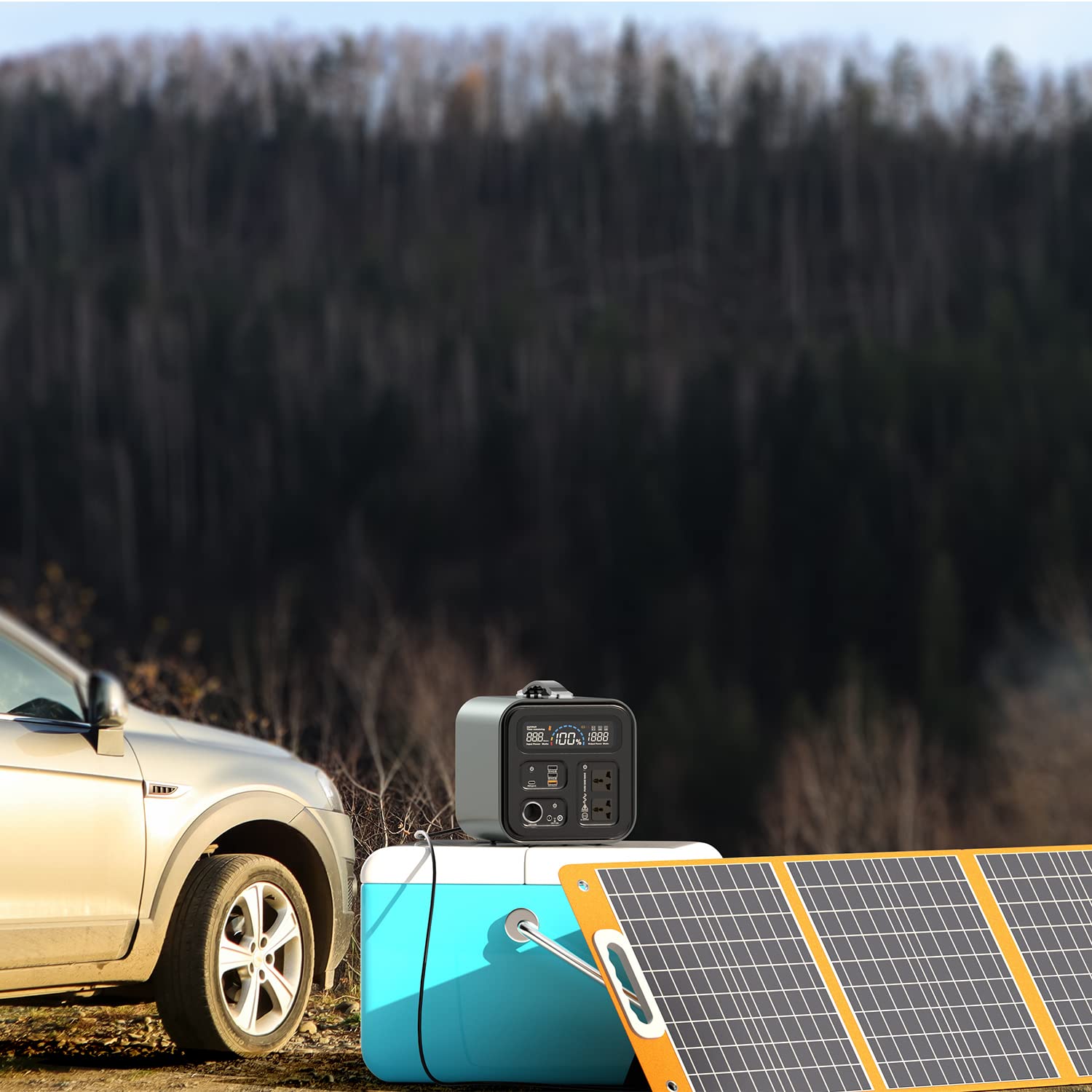
If you use a TSP100 or TSP60 with a portable power station, think in daily watt-hours, not just panel watts. A panel rated at 100W under test conditions may provide far less during thick cloud, late afternoon, a forested campsite, or winter in northern Europe.
Cloudy-weather planning table
| Condition | What usually happens | Practical move |
|---|---|---|
| Bright thin cloud | Some useful diffuse light can reach the panel. | Keep the panel angled and watch input watts. |
| Thick gray cloud | Input can drop sharply. | Reduce loads and use solar as a slow top-up. |
| Partial shade | A small shadow can affect a foldable panel unevenly. | Move the panel into open light. |
| Low winter sun | Light arrives at a lower angle and days are shorter. | Expect fewer charging hours and pre-charge from mains. |
| Windy campsite | Panels may shift away from the best angle. | Secure the kickstands without covering cells. |
How to avoid disappointment
- Pre-charge the power station before leaving home.
- Use the solar panel to extend runtime, not as the only plan for essential loads.
- Check the station display for real input watts after setup.
- Move the panel several times during the day if the campsite is shaded.
- Use lower-power devices first when bad weather is forecast.
- Bring the cable and adapters you tested at home.
When one panel is enough, and when it is not
One compact panel is enough when the job is topping up phones, lights, cameras, GPS units, small tablets, or a partly charged power station. It may not be enough for a multi-day cloudy trip with a fridge, router, fan, or larger laptop load. In that case, choose a larger compatible solar setup, reduce daily consumption, or use mains/car charging as the dependable starting point.
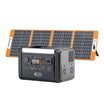
For small kits, compare the TSP100, the TSP60, and the solar generator kit collection. For high-capacity home backup, panel planning should start with the station input limit and the expected daily loads.
FAQ
Will a portable solar panel charge in cloudy weather?
Usually yes, but slower. Diffuse light can still reach the panel, while thick cloud and shade reduce useful input.
Why does my 100W panel show less than 100W?
The rating is measured under standard conditions. Real output changes with sunlight, temperature, panel angle, shade, cable loss, and the power station charge controller.
Is cloudy-weather solar still worth carrying?
It can be, especially for camping and emergency top-ups. It should be one part of the plan, not the only source for essential loads.
Should I buy more panel watts for cloudy Europe trips?
Only if the extra panel setup is compatible with your station and practical to carry. More rated watts can help, but it cannot remove shade or create daylight.
Practical guidance: confirm current TSP100/TSP60 product specs, image rendering, and any manual-specific adapter guidance before use.



Laat een reactie achter
Deze site wordt beschermd door hCaptcha en het privacybeleid en de servicevoorwaarden van hCaptcha zijn van toepassing.