

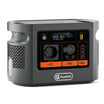
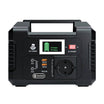

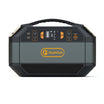
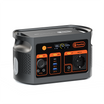




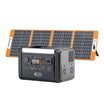

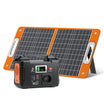

Short answer: choose the E103 + TSP60 kit when your verified device list benefits from 300W AC output, 179.2Wh nominal energy or up to 90W solar/DC input. Choose the T200 + TSP60 kit when every load fits 200W and the station's approximately 0.5kg lower mass matters more. Both pair with the same 60W TSP60, so neither gets a field-solar advantage from the panel alone.
Use the SMALL card: Screen exact loads, Match outputs and cables, Add measured energy, compare Lift and packing, then Lock the solar plan to published limits and real conditions. FlashFish wrote this same-brand comparison; it does not declare a universal winner.
Quick comparison from current Europe evidence
| Decision field | E103 + TSP60 | T200 + TSP60 | What it means |
|---|---|---|---|
| Nominal station energy | 179.2Wh | 153.6Wh | E103 lists 25.6Wh more; delivered energy still requires measurement |
| Continuous AC | 300W pure sine wave | 200W pure sine wave | E103 admits a broader verified low-watt AC load set |
| Station mass | About 3kg | About 2.5kg | T200 saves about 0.5kg before panel, cables and packing |
| USB-C | Up to 60W output | Up to 60W input/output | Both can suit a compatible 60W-class USB-C path; profiles and cables still matter |
| Published solar/DC input | Up to 90W | Up to 60W | With the included 60W panel, the panel rating is the common ceiling before field losses |
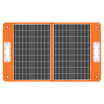
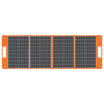
| Included panel | TSP60: 60W, 18V, 3.34A, about 1.9kg | Same TSP60 | Real yield depends on sun, angle, temperature, shade and input behaviour |
S — Screen the exact campsite loads
List each phone, camera, light, laptop, cooler or pump by exact model and input path. For AC equipment, record normal input and documented start behaviour. For USB-C, match source, cable and device profiles. For DC, match voltage, current, connector and polarity. Add all simultaneous loads rather than comparing one label at a time.
The E103's 300W ceiling is useful only when a verified load falls above 200W and no better direct USB/DC path exists. If every planned load is USB or stays comfortably below 200W AC, that extra watt envelope may not improve the trip.
M — Match outputs, not connector shapes
Both records publish a 60W USB-C path, but a USB-C connector alone does not establish the voltage/current profile or cable capability. The E103 record also lists a 12V/10A, 120W shared DC group. The T200 record lists model-specific DC outputs; do not transfer connector or polarity details between products without checking the delivered labels and instructions.
Keep approved adapters where a direct path is not documented. Do not improvise wiring, reverse polarity or choose a station only because a socket looks familiar. If a decisive port limit or included cable is unclear, make it a pre-purchase question.
A — Add measured watt-hours, not advertised watts
Watts determine whether a load fits an output; watt-hours help plan energy. Measure a representative use cycle for each device, then add the planned cycles and preserve reserve. The 25.6Wh nominal difference between E103 and T200 is real specification context, but it does not translate into a fixed number of laptop hours or phone charges.
Conversion losses, device battery charging, temperature, standby demand and load variation affect delivered energy. If trip continuity matters, carry an independent light or phone power bank rather than spending the final displayed percentage.
L — Compare the whole carry, not station mass alone
The T200 station is listed at about 2.5kg and the E103 at about 3kg. Each kit adds the approximately 1.9kg TSP60 plus cables, protective packing and the devices themselves. A half-kilogram station difference can matter on foot, while it may be less important when travelling by car and using a device that needs the E103's larger AC envelope.
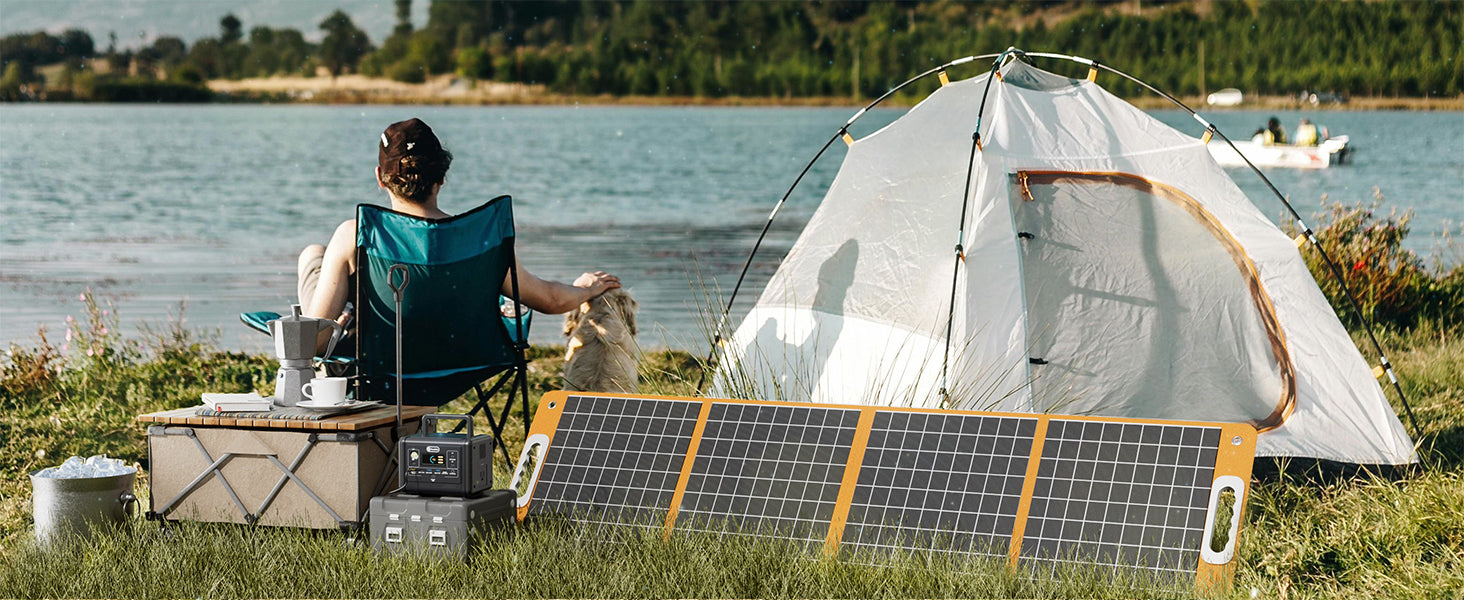
Check whether the packed shape, handle and cable organisation suit the route. Published mass is not a lifting instruction, and the campsite image in this article shows only the T200 side of the comparison.
L — Lock solar expectations to evidence
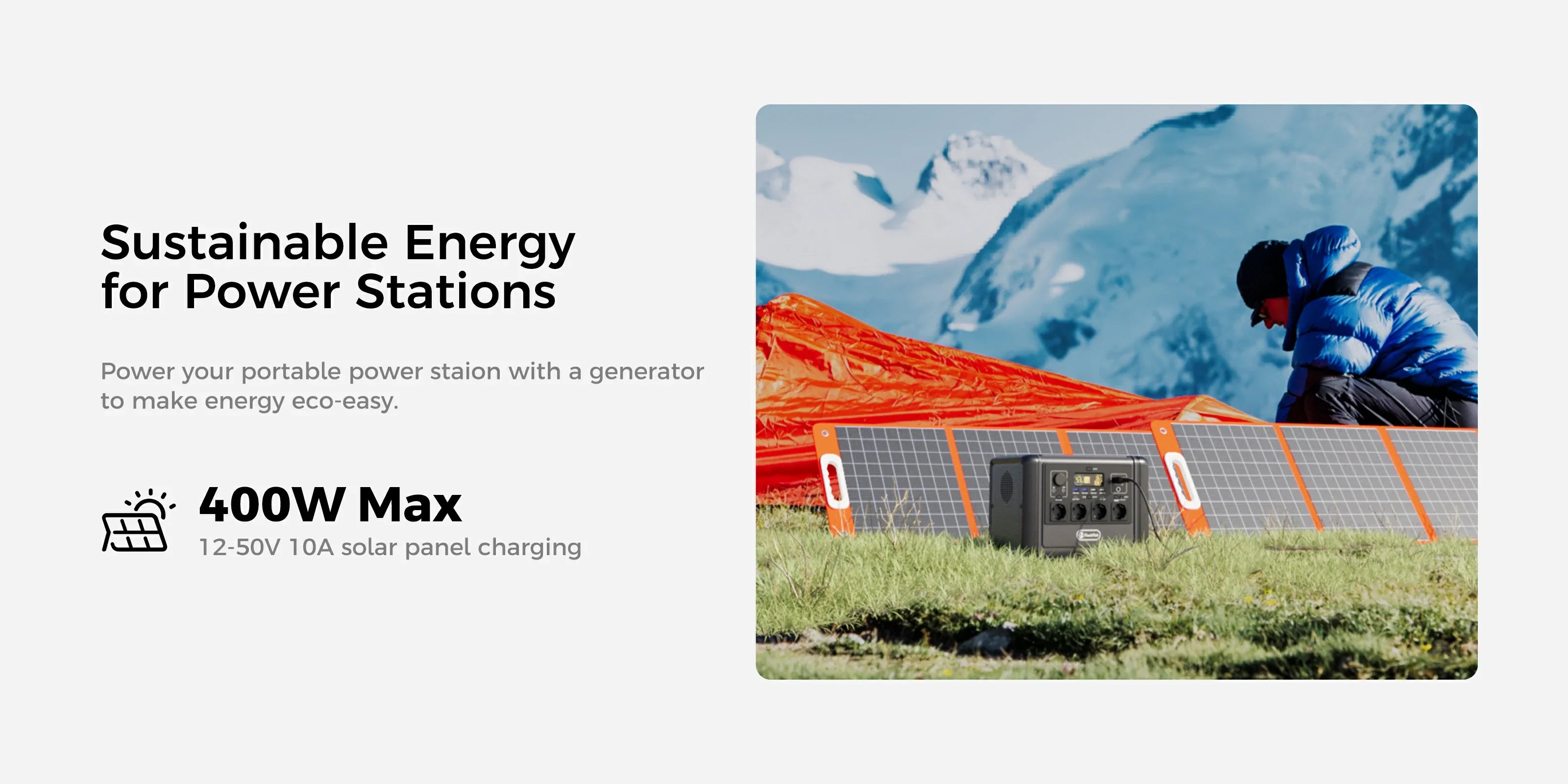
The TSP60 is published at 60W, 18V and 3.34A. That 60W is a rated value, not a promise at camp. The European Commission JRC's PVGIS methods show why irradiance, angle, temperature, local horizon and shading matter to photovoltaic output. Cloud, cable and station input behaviour add more variation.
With the included TSP60, both kits begin from the same panel rating. E103's up-to-90W input ceiling may matter only if a different compatible source and every electrical limit are separately verified. It does not make a 60W panel produce 90W.
Three light-camping profiles
| Profile | Evidence pattern | More defensible first look |
|---|---|---|
| Walk-in USB-first camp | Phone, camera and compatible USB-C devices; every load fits; lower carry mass is valuable | T200 + TSP60, subject to measured Wh and cable profiles |
| Small AC device near 200W boundary | Exact continuous input and start evidence exceed the T200 envelope but fit below 300W with headroom | E103 + TSP60; do not infer compatibility from watts alone |
| Shade-heavy weekend | Both devices fit, but the site has uncertain sun and no reliable refill window | Neither panel pairing fixes the evidence gap; reduce demand or add a verified fallback |
When E103 + TSP60 fits better
- A verified AC load or combined load needs more than 200W but remains safely inside 300W.
- The extra 25.6Wh nominal energy materially improves a measured trip budget.
- A separately verified compatible source could use more than 60W and up to the E103 input limit.
- The additional station mass is acceptable.
When T200 + TSP60 fits better
- Every exact load and start event fits inside the 200W envelope with headroom.
- Approximately 0.5kg lower station mass matters more than the additional nominal energy.
- The trip is USB-first or uses verified low-watt AC/DC paths.
- The measured energy plan remains inside 153.6Wh nominal capacity with realistic reserve.
When neither kit fits
- A load exceeds 300W, has unknown start behaviour or requires an unverified connector or polarity.
- The trip depends on fixed solar yield, an assured recharge time or unattended continuity.
- Rain, wet ground, damaged cables, poor ventilation or site rules prevent safe use.
- The daily measured energy need exceeds the plan and no independent fallback exists.
Compare both live kit pages with your completed SMALL card.
FAQ
Which kit has higher AC output?
E103 is listed at 300W continuous pure-sine AC and T200 at 200W. Exact device input and start behaviour still decide fit.
Which kit is lighter?
T200 is listed at about 2.5kg and E103 at about 3kg. Both kits add the same approximately 1.9kg TSP60 before cables and packing.
Does E103 store much more energy?
It lists 179.2Wh versus 153.6Wh, a 25.6Wh nominal difference. That is not a delivered-runtime claim.
Will TSP60 always produce 60W?
No. Irradiance, angle, temperature, clouds, shade, cable and station input behaviour affect real output.
Which should I choose?
Choose from the completed SMALL card. T200 favours lower mass when 200W and 153.6Wh fit; E103 favours a broader AC envelope and slightly more nominal energy. Neither is universally better.
Decision
The useful difference is not simply 300W versus 200W. It is whether a verified device and energy list needs the E103's added envelope enough to justify about 0.5kg more station mass. If the T200 screen passes, Check the T200 + TSP60 kit if the 200W load screen passes.
Sources and evidence boundaries
- FlashFish Europe E103 + TSP60 and T200 + TSP60 — current kit and station evidence.
- FlashFish Europe TSP60 page — panel rating, voltage, current and mass.
- European Commission JRC PVGIS methods — why field solar energy depends on conditions.
- Camping and Caravanning Club guidance — dry connections, cable routing and supervision.



Laat een reactie achter
Deze site wordt beschermd door hCaptcha en het privacybeleid en de servicevoorwaarden van hCaptcha zijn van toepassing.