

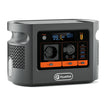
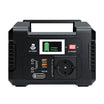

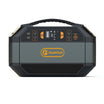
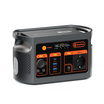







Short answer: choose the FlashFish E106B when at least one verified camping device needs a European 230V AC outlet or when its larger 384Wh nominal battery better fits the load plan. Choose the Jackery Explorer 300D when every required device can use a verified USB or 12V path and its 2.5kg station mass matters more than AC. There is no universal winner.
Use AC-NEED-CARRY-PORTS-ENERGY: decide whether AC is genuinely required, weigh the complete kit, verify each port and cable, then use nominal energy as one planning input rather than a runtime promise.
The decision table
| Decision factor | FlashFish E106B | Jackery Explorer 300D | Why it matters |
|---|---|---|---|
| Nominal energy | 384Wh | 288Wh | Planning input, not delivered runtime |
| AC architecture | 230V/50Hz pure-sine AC; 600W continuous shared limit | No inverter and no AC outlet | Decisive when a device requires its mains charger |
| Station mass | 5.2kg | 2.5kg | 300D is 2.7kg lighter before accessories |
| USB-C emphasis | 100W-class USB-C1 plus 30W-class USB-C2 | Three USB-C ports with model-specific limits | Check the exact port, laptop profile and cable |
| Evidence used | Local authoritative record plus Europe page | Jackery Europe product page | Manufacturer specifications only; no field test |
Compare E106B with your exact camping load list only after deciding whether an AC outlet is a real requirement.
First gate: does any essential device need 230V AC?
If a CPAP, camera charger, appliance or specialist device can only use its approved European mains adaptor, the Explorer 300D's DC-only design is a clear non-fit for that load. E106B has an AC path, but that still does not prove device compatibility: verify the adaptor input, complete simultaneous watts, startup behaviour and manufacturer instructions. If every device accepts a confirmed USB-C, USB-A or car-port path, an inverter may be unnecessary weight.
Second gate: carry the whole kit on paper
The stations alone are documented at 5.2kg for E106B and 2.5kg for Explorer 300D. That 2.7kg difference is material for walking, cycling or carrying gear from a distant car park. But compare the system: a DC-only plan may remove mains chargers, while a device-specific 12V cable or extra USB-C cable adds weight. A solar panel, its case and cable can outweigh small port differences.
Third gate: verify the exact port path
USB-C is a connector, not a promised power level. The source port, device and cable negotiate supported Power Delivery profiles. Record the exact port you will use and the device's accepted input. Do not add individual port maxima and treat the sum as a promised simultaneous output. For 12V accessories, verify voltage, connector, polarity, maximum current and whether the output group is shared.
Fourth gate: use watt-hours without inventing runtime
E106B's 384Wh nominal rating is 96Wh higher than the Explorer 300D's 288Wh rating. That is useful for relative planning, but it is not energy delivered to a device. Inverter losses, DC conversion, temperature, battery condition, idle consumption and the load's own behaviour affect the result. A fair plan measures or sources the device demand and preserves a reserve instead of dividing label watt-hours by headline watts and presenting the answer as fact.
Three camping examples
- USB-C phone, tablet and compatible ultrabook: the 300D's lower station mass can be the stronger fit if every profile and cable is verified. E106B remains viable but its AC feature may be unused.
- Camera batteries that require an approved 230V charger: E106B has the necessary AC architecture on paper; 300D has no AC outlet. The charger input and total load still need checking.
- Car-camping kit with mixed USB, 12V cooler and one mains-only device: map every simultaneous path. The AC requirement points towards E106B, but cooler cycling, cable fit and complete energy needs remain open.
When E106B may fit better
- At least one required device has no approved USB or 12V alternative and needs a verified 230V charger.
- The extra 96Wh of nominal energy materially improves a measured load plan.
- The 5.2kg station mass and complete kit are acceptable for the trip.
- The full simultaneous AC load remains inside the documented continuous limit.
- You value mixed AC, USB and DC options more than minimum station mass.
When Explorer 300D may fit better
- Every essential device has a verified USB-C, USB-A or 12V path.
- Walking distance, cycling load or luggage allowance makes the 2.5kg station mass decisive.
- You do not need an inverter or AC outlet.
- The 288Wh nominal energy rating fits a conservative, measured plan with reserve.
- You have verified the exact port profiles and cables rather than relying on connector shape.
When neither comparison is enough
Stop when an essential device label is unreadable, the required USB-C profile is unknown, a medical or safety-critical load lacks a fallback, the campsite rules or environment are unclear, or the plan depends on unverified weather resistance or uninterrupted operation. Neither manufacturer specification sheet replaces the device manual or site rules.
Frequently asked questions
What is the biggest difference between E106B and Explorer 300D?
E106B provides a documented European 230V AC path as well as DC and USB, while Explorer 300D is DC-only and has no AC outlet. Decide whether any required device truly needs its mains charger before comparing smaller differences.
Which station is lighter for walking to a campsite?
Explorer 300D is documented at 2.5kg and E106B at 5.2kg. Compare the complete kit, including mains chargers, USB-C cables, 12V leads and any solar panel.
Does E106B store more nominal energy?
Yes. E106B is documented at 384Wh and Explorer 300D at 288Wh. Nominal watt-hours do not directly predict runtime because output path, conversion losses, temperature and device behaviour matter.
Can either station charge every USB-C laptop?
No. The source, laptop and cable must negotiate a compatible Power Delivery profile. Check the exact port, accepted profiles and cable rating; a USB-C connector alone is not proof.
Which model is the better value?
This comparison does not make a price or value claim because promotions change and the correct device depends first on AC need, carried kit, port fit and energy requirements.
Conclusion
E106B is the evidence-led choice when verified 230V AC is essential; Explorer 300D is the evidence-led choice when the trip is genuinely DC-only and 2.5kg carry mass is decisive. Nominal energy and port count come after those gates. Browse FlashFish stations by documented output fit if the complete load needs another class.
Sources and evidence limits
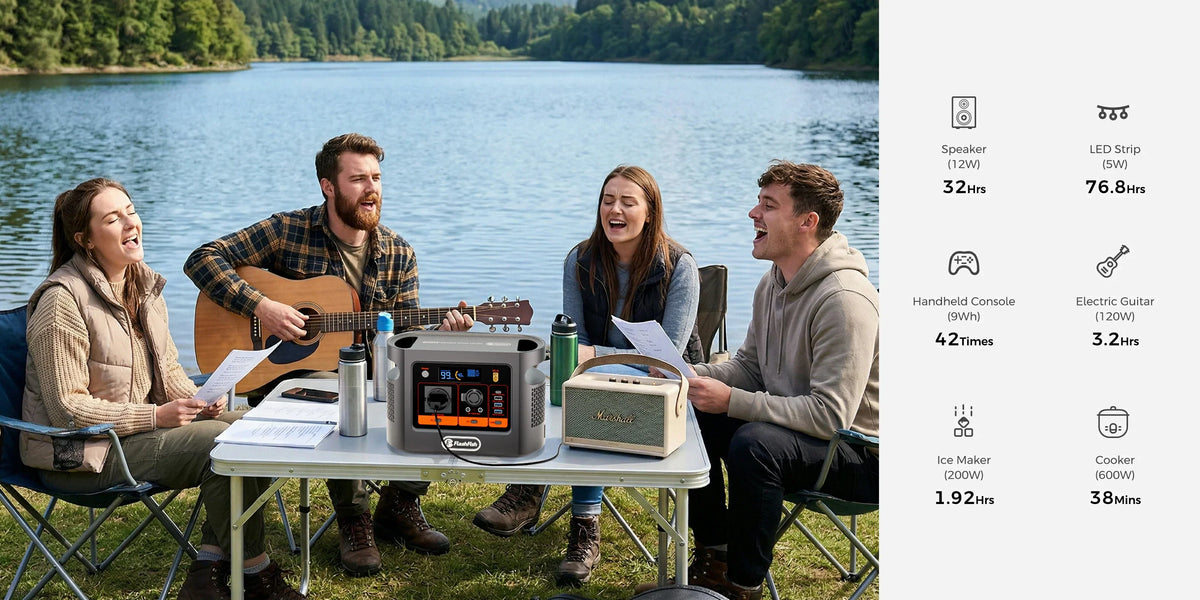
Checked 17 October 2026. E106B facts come from the authoritative local record and current Europe page. Explorer 300D facts come from Jackery's European product page. USB-IF supports the Power Delivery distinction, and the Camping and Caravanning Club supports load-planning context. No side-by-side camping, runtime, charging, noise, thermal, weather or reliability test was supplied. The featured image shows E106B only and is not competitor evidence.




Laat een reactie achter
Deze site wordt beschermd door hCaptcha en het privacybeleid en de servicevoorwaarden van hCaptcha zijn van toepassing.