

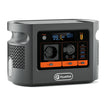
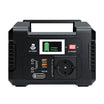

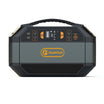
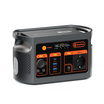







Short answer: FlashFish E112B is the higher-nominal-energy option on the cited records—1008Wh versus 768Wh—while Anker SOLIX C800 is about 0.7kg lighter and has documented app control, a 20ms UPS function and SurgePad behaviour. Their 1200W headlines are not automatically equivalent: E112B is recorded as a shared maximum with continuous and peak values unprovided, while the 230V C800 guide states 1200W maximum AC output and separately lists 1600W maximum device power with SurgePad.
Use the E-W-F ladder: electrical definition, weight and energy, then documented features. A fair comparison stops when the number labels differ instead of awarding a winner from the largest headline.
Evidence-normalized comparison
| Decision field | FlashFish E112B | Anker SOLIX C800 A1753 | What it means |
|---|---|---|---|
| Nominal energy | 1008Wh | 768Wh | E112B stores 240Wh more nominal energy; neither figure is delivered AC energy or runtime. |
| AC rating evidence | 1200W shared maximum; continuous and peak unprovided | 230V guide: 1200W maximum AC output; 1600W maximum device power with SurgePad | Do not treat the two 1200W labels or SurgePad as identical rating classes. |
| Station mass | Approximately 11.2kg | 10.5kg | C800 is documented 0.7kg lighter before cables, panels or bags. |
| Dimensions | 415 × 203 × 242mm | 371 × 205 × 250mm | E112B is longer; C800 is slightly wider and taller on the cited records. |
| USB-C | 100W and 30W outputs | 100W and 30W outputs | Profile and cable matching still matter; port maxima are not device results. |
| Solar/DC input ceiling | 10.5-60V, 600W max | 11-60V, 10A, 300W max | A higher ceiling is not a promised field charge rate or panel compatibility. |
| App / UPS evidence | No app claim or switching time in the authoritative record | App control and 20ms UPS documented | Count the C800 feature only when the exact load and regional manual permit it. |
Product check: Review the current E112B Europe specification route, then compare the delivered label and manual with the exact C800 regional version.
Three decisions that change the recommendation
1. You carry the station often
C800's documented 10.5kg mass is lower than E112B's approximate 11.2kg. The 0.7kg difference is real on paper but does not describe handle comfort, stairs, distance or the mass of cables and panels. Test the complete carried kit.
2. You value nominal energy over the last 0.7kg
E112B's 1008Wh nominal capacity is 240Wh above C800's 768Wh. That can justify the extra mass when the load stays within verified output limits, but it cannot be converted directly into appliance hours. Measure the representative load and leave shutdown margin.
3. You need a named control or backup feature
The C800 manual documents app control and 20ms UPS operation. E112B's authoritative record does not provide app evidence or a UPS transfer time. If either feature is required, C800 has the clearer published evidence; still verify that the specific equipment tolerates the stated transfer behaviour. Do not rely on either station for life-critical continuity.
How to read the 1200W and 1600W labels
E112B's 1200W value is a shared maximum across its two AC outlets. The local record does not independently confirm a continuous or peak figure, so this comparison does not promote 1200W to either class. The Anker 230V guide lists 1200W maximum AC output and a separate 1600W maximum device figure with SurgePad. Anker's product page says SurgePad works best with heat-producing devices and excludes precision instruments and equipment with strict voltage requirements.
For motors, compressors, pumps and other start-sensitive loads, record running input and manufacturer start evidence. Do not choose from either headline alone. A successful start on one appliance does not generalize to another revision or regional version.
When FlashFish E112B fits
- 1008Wh nominal energy matters more than the documented 0.7kg mass difference.
- The complete simultaneous load is verified within the shared-maximum boundary with practical margin.
- Two AC outlets and the documented USB/DC mix suit the layout without implying separate AC budgets.
- No app control, defined UPS transfer time or undocumented peak rating is required.
- The current Europe product route, delivered label and manual match the planned country and plug.
When Anker SOLIX C800 may fit better
- The lower documented station mass materially improves the carrying route.
- App control or a manufacturer-documented 20ms UPS function is required and verified for the exact equipment.
- The C800's defined 1200W maximum AC and model-specific SurgePad guidance suit the selected resistive load.
- The integrated storage and current Anker regional support route matter to the buyer.
- The exact country listing, plug, manual, stock and after-sales terms are confirmed before purchase.
Buyer checklist
- Write every device's regional input label and identify steady, start and energy-over-time needs.
- Normalize continuous, maximum, surge and special-mode claims before comparing numbers.
- Carry the complete kit—or at least reproduce its total mass and route—rather than comparing station mass alone.
- Map AC, USB and DC groups; extra sockets do not create extra power.
- Run a supervised representative session and record warnings, trips, watt-hours, heat, noise and battery direction.
Frequently asked questions
Is FlashFish E112B more powerful than Anker SOLIX C800?
The evidence does not support a universal answer. E112B documents a 1200W shared maximum but not a continuous or peak rating. The 230V C800 guide lists 1200W maximum AC output and a separate 1600W SurgePad device limit.
Which station has more nominal battery capacity?
The authoritative records list E112B at 1008Wh and C800 at 768Wh. Nominal Wh is not delivered AC energy or a fixed runtime result.
Which station is lighter to carry?
The documented station masses are approximately 11.2kg for E112B and 10.5kg for C800, a 0.7kg difference. Handles, shape, route and accessories still determine real carrying comfort.
Does Anker SurgePad mean 1600W continuous output?
No. The C800 sources separate 1200W AC output from a 1600W maximum device figure with SurgePad. Follow Anker's load restrictions rather than treating 1600W as ordinary continuous output.
Which is the better Anker SOLIX C800 alternative?
E112B can be considered when its higher nominal energy and current Europe route matter and the shared-maximum boundary fits the load. C800 may fit better when its lighter mass, app control, documented 20ms UPS or defined SurgePad behaviour is required.
Before choosing: Ask FlashFish support to review unresolved output and regional-label fields, and confirm the exact C800 country route and manual.
Sources and evidence limits
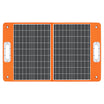
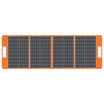
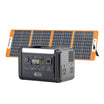
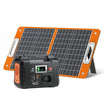
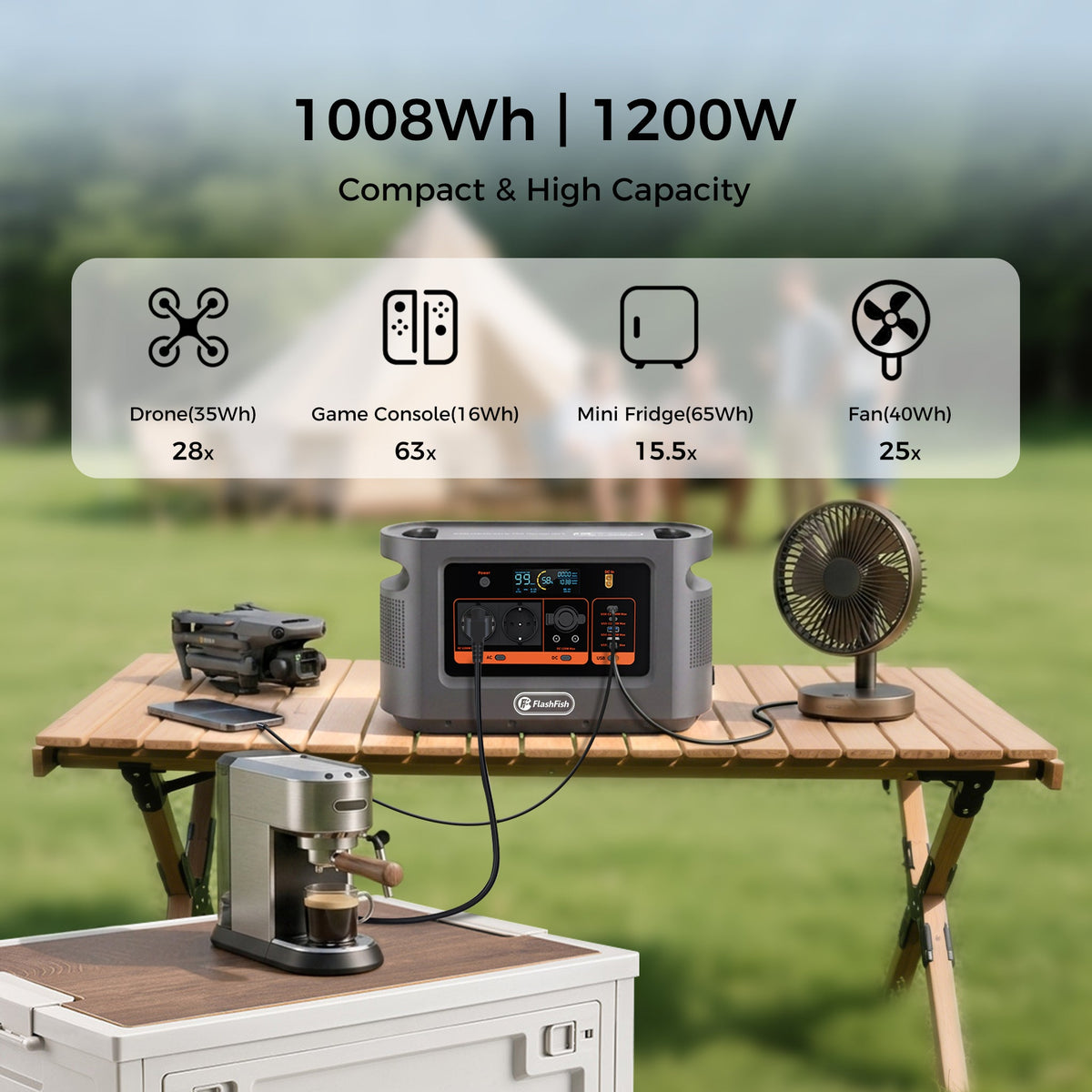
Checked 11 October 2026. E112B facts come from the authoritative local EU-manual/engineering record and current Europe product route. C800 facts come from Anker's current official Germany collection entry and 230V A1753 user guide; these are first-party competitor sources, not independent tests. FlashFish publishes this comparison. No load, startup, delivered-energy result, carrying session, noise level, reliability outcome or head-to-head test was performed. The image shows E112B context only.



Laat een reactie achter
Deze site wordt beschermd door hCaptcha en het privacybeleid en de servicevoorwaarden van hCaptcha zijn van toepassing.