

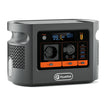
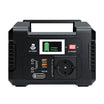

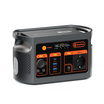







Short answer: choose from the load list, not the badge. Jackery publishes the stronger AC specification: 1500W rated and 3000W instantaneous peak. FlashFish E112B documents a 1200W shared maximum, but its authoritative record does not state a separate continuous or peak figure. E112B stores 1008Wh and weighs 11.2kg; Explorer 1000 v2 stores 1070Wh and weighs about 10.8kg. Those differences are real, but none makes a universal winner.
Use EVIDENCE-LOAD-CARRY-PORTS: rank the source quality, write the complete simultaneous load, compare the mass of the whole carried kit, and verify the exact AC, DC or USB-C path. If a required field is missing, treat that as a decision constraint rather than filling it with a guess.
Documented comparison
| Decision field | FlashFish E112B | Jackery Explorer 1000 v2 | How to use it |
|---|---|---|---|
| Nominal energy | 1008Wh | 1070Wh | Use as a starting point, not a runtime result |
| AC output | 1200W shared maximum; continuous and peak not stated in the authoritative record | 1500W rated; 3000W instantaneous peak | Reject loads that exceed the documented boundary or need an unknown margin |
| Mass | 11.2kg | Approximately 10.8kg | Add charger, panel and cables for a fair carry comparison |
| AC outlets | 2 EU outlets | 3 AC outlets | Outlet count never increases the total output budget |
| USB-C | 100W and 30W ports | 100W and 30W ports | Verify each device profile, cable and simultaneous-use rule |
| 12V DC group | 12V/10A/120W shared | 12V/10A car outlet | Check connector, polarity, startup and group limits |
| Solar/DC input ceiling | Up to 600W DC charging | Up to 400W solar input | An input ceiling is not a field recharge-time result |
Compare E112B with your exact load list and keep every unknown visible.
First decide whether the AC evidence is sufficient
Jackery's official European product page distinguishes rated output from peak output. The E112B record uses 1200W as a shared maximum but leaves continuous and peak output blank. That does not make E112B unsuitable for every AC load; it means a buyer should not use 1200W as though it were a fully described continuous rating. For a load close to the boundary, ask for model-specific written clarification or choose a station with a sufficiently documented requirement match.
Capacity and mass are close, but the whole kit decides
The 62Wh nominal-energy difference is less useful than a real load sheet. Likewise, the roughly 0.4kg station-mass difference can be overtaken by a heavier charger, an extra panel or longer cables. Record the complete carried system and the campsite's route from vehicle to pitch before treating either number as decisive.
Ports matter only when protocols and group limits match
Both models publish 100W-class and 30W-class USB-C outputs, but a laptop must request a supported Power Delivery profile through a capable cable. A 12V accessory must match voltage, connector and polarity and stay within the relevant current limit. Multiple sockets are connection options; they do not create extra battery energy or bypass shared output ceilings.
Three practical buyer examples
- Electronics-first camping: one 100W-PD laptop, phones, lights and a documented 12V accessory may fit either port map after exact profiles and simultaneous loads are checked. Decide by the whole kit, evidence quality and required reserve rather than 62Wh alone.
- A 1300W-labelled resistive appliance: the Jackery rated-output evidence clears the headline running-watt screen, subject to exact appliance and startup checks. E112B cannot be approved from its record because 1300W exceeds its shared 1200W maximum.
- Backup for router, laptop and lighting: either may be considered after measuring or reading every input label and defining acceptable interruption. This is not a whole-property supply or a substitute for a fixed electrical installation.
When FlashFish E112B may fit better
- Your complete load stays comfortably below the documented shared maximum and does not depend on an unpublished continuous or peak value.
- The two AC outlets and documented USB-C/DC paths cover the actual device list.
- The 600W DC-input ceiling matters to a separately verified charging plan, without turning it into a recharge-time promise.
- You value a direct FlashFish Europe route and can resolve remaining model questions before purchase.
When Jackery Explorer 1000 v2 may fit better
- Your decision requires the published 1500W rated AC figure and the exact appliance passes its own checks.
- You need three AC connection points while staying within the station's total output limit.
- The slightly lower station mass is material after the complete kit is weighed.
- You require product features documented by Jackery that this article has not established for E112B.
When neither decision is ready
Pause when the appliance startup demand, connection method, required continuity, outdoor environment or fallback plan is unknown. Keep stations and connections dry, inspect leads, avoid daisy chaining and respect the campsite operator's electrical rules. For critical health, safety or data needs, use a separately engineered and reviewed solution.
Frequently asked questions
Does E112B have less capacity than Explorer 1000 v2?
On the documented nominal figures, yes: E112B is 1008Wh and Explorer 1000 v2 is 1070Wh. The 62Wh label difference does not by itself predict usable runtime because conversion losses and load behaviour matter.
Which model supports the higher documented AC load?
Jackery documents 1500W rated AC and a 3000W instantaneous peak. E112B documents 1200W as a shared maximum, while its continuous and peak values are not provided in the authoritative local record.
Which one is lighter to carry?
The documented masses are 11.2kg for E112B and approximately 10.8kg for Explorer 1000 v2. Add chargers, panels and cables before deciding which complete kit is easier to carry.
Can both charge a 100W USB-C laptop?
Both document a 100W-class USB-C port, but the exact laptop profile, cable, simultaneous port use and real negotiation still need verification. Connector shape alone is not enough.
Which is better for emergency home backup?
Neither should be selected from capacity alone. List the exact essential loads, startup demand, required continuity, operating environment and fallback plan; then reject any model whose documented output or evidence is incomplete for that job.
Conclusion
Jackery provides the stronger published AC-output evidence and a slightly higher nominal capacity at a slightly lower station mass. E112B remains a plausible fit for lower, clearly documented loads and offers a higher published DC-input ceiling, but its 1200W value must remain a shared maximum rather than being relabelled as continuous. Browse FlashFish portable power stations by documented fit if your load list needs a different boundary.
Sources and evidence limits
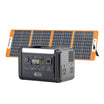
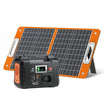
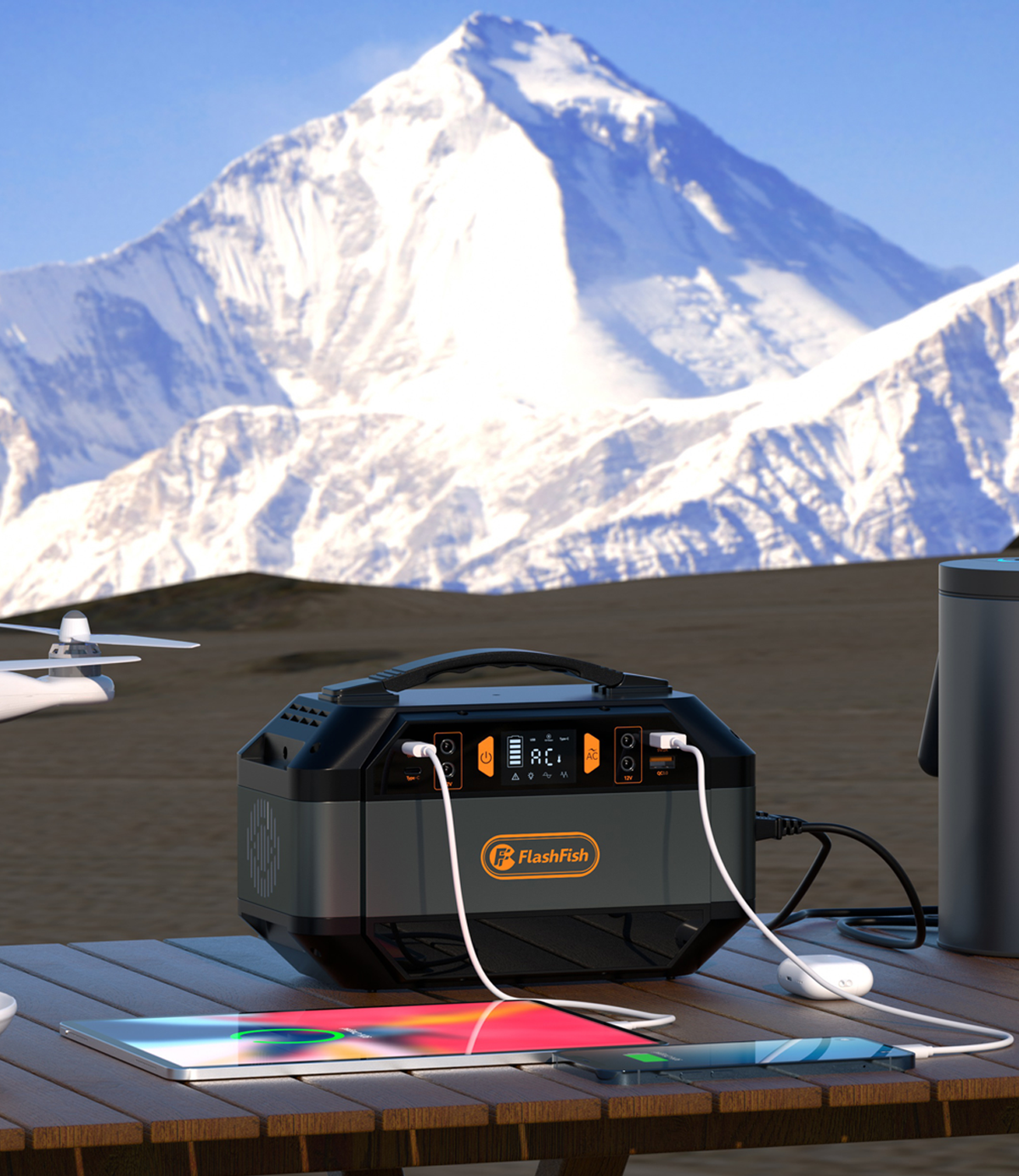
Checked 16 October 2026. E112B values come from the authoritative local EU manual record, current Europe product route and fresh Europe Shopify state. Jackery values come from its official European product page. Camping and electrical sources provide general planning boundaries. No side-by-side campsite, backup, runtime, recharge, noise, thermal, weather, durability or reliability test was performed. Current prices and warranties are intentionally excluded, and the image shows E112B only.




Laat een reactie achter
Deze site wordt beschermd door hCaptcha en het privacybeleid en de servicevoorwaarden van hCaptcha zijn van toepassing.