

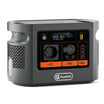
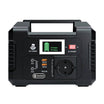

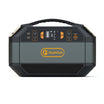
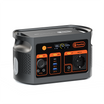


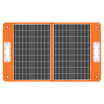
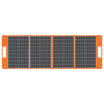


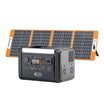

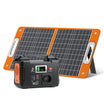

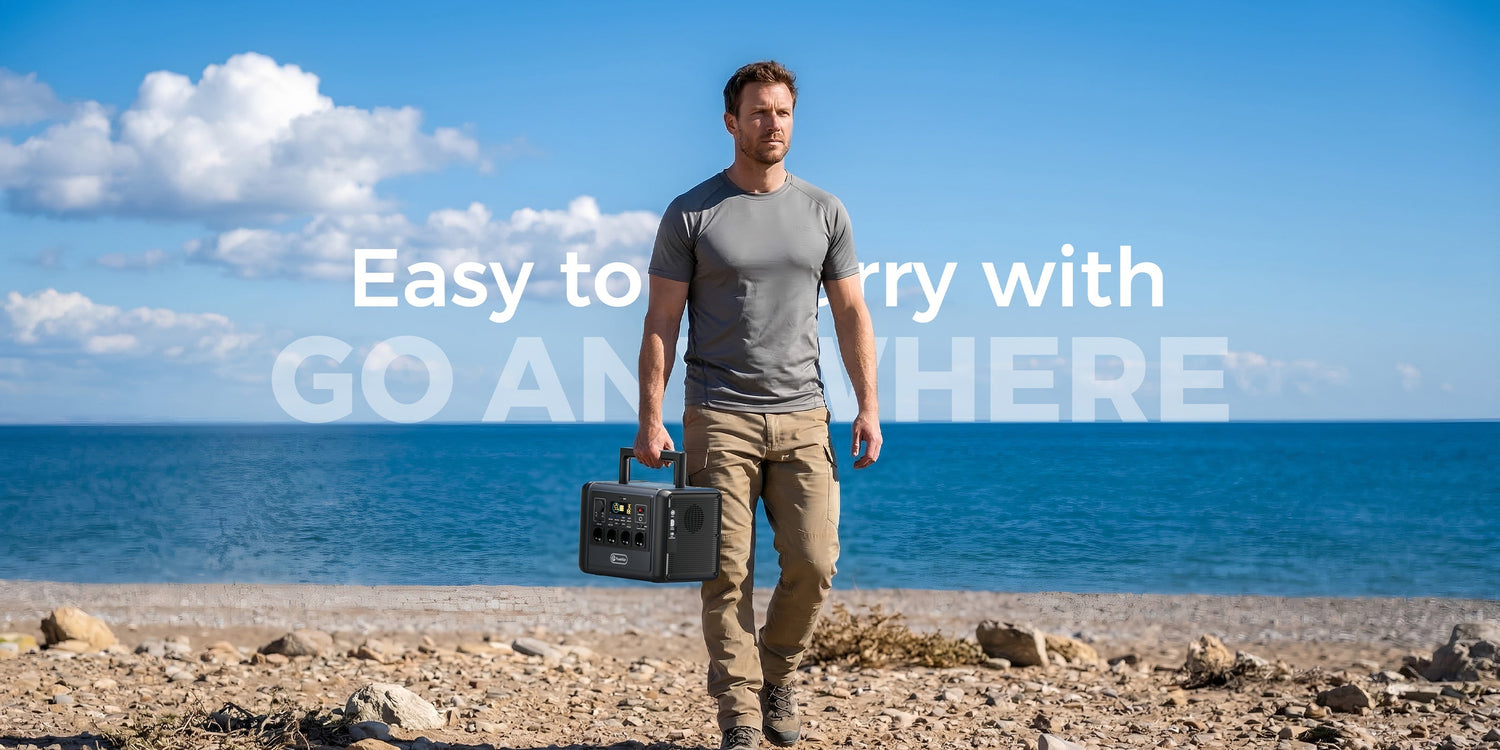
Quick verdict: Anker SOLIX C1000 has the larger specification envelope: 1056Wh, 1800W continuous AC and 600W solar input versus T1200S at 768Wh, 1200W and 400W. T1200S can still be the more proportionate choice when a measured camping plan stays well inside its lower envelope. The listed weight difference is only about 0.45kg.
This is a European specification-and-decision comparison, not a hands-on test. It makes no price, runtime, charging-speed, noise, efficiency, durability or reliability claim.
T1200S vs Anker SOLIX C1000 specifications
| Decision field | FlashFish T1200S | Anker SOLIX C1000 | Buyer meaning |
|---|---|---|---|
| Battery capacity | 768Wh | 1056Wh | C1000 lists 288Wh more nameplate energy; neither figure equals delivered runtime |
| Continuous AC output | 1200W | 1800W | C1000 has 600W more stated continuous headroom |
| Peak/surge | 2400W peak | 2400W surge | Same label number, but duration and appliance behaviour still need exact manuals |
| Solar input | 12–50V, 10A, 400W maximum | 11–32V at 10A or 32–60V at 12.5A, 600W maximum | C1000 lists a broader/higher input envelope; panels must pass the exact electrical check |
| Weight | 12.45kg | 12.9kg | Only about 0.45kg apart—test the real carry path |
| Dimensions | 343×212×245mm | 376×205×267mm | T1200S is shorter and lower; C1000 is slightly narrower |
| USB-C | 100W + 30W | 130W total across two USB-C outputs | Both cover a 100W-class USB-C use case on paper; cable/device negotiation still matters |
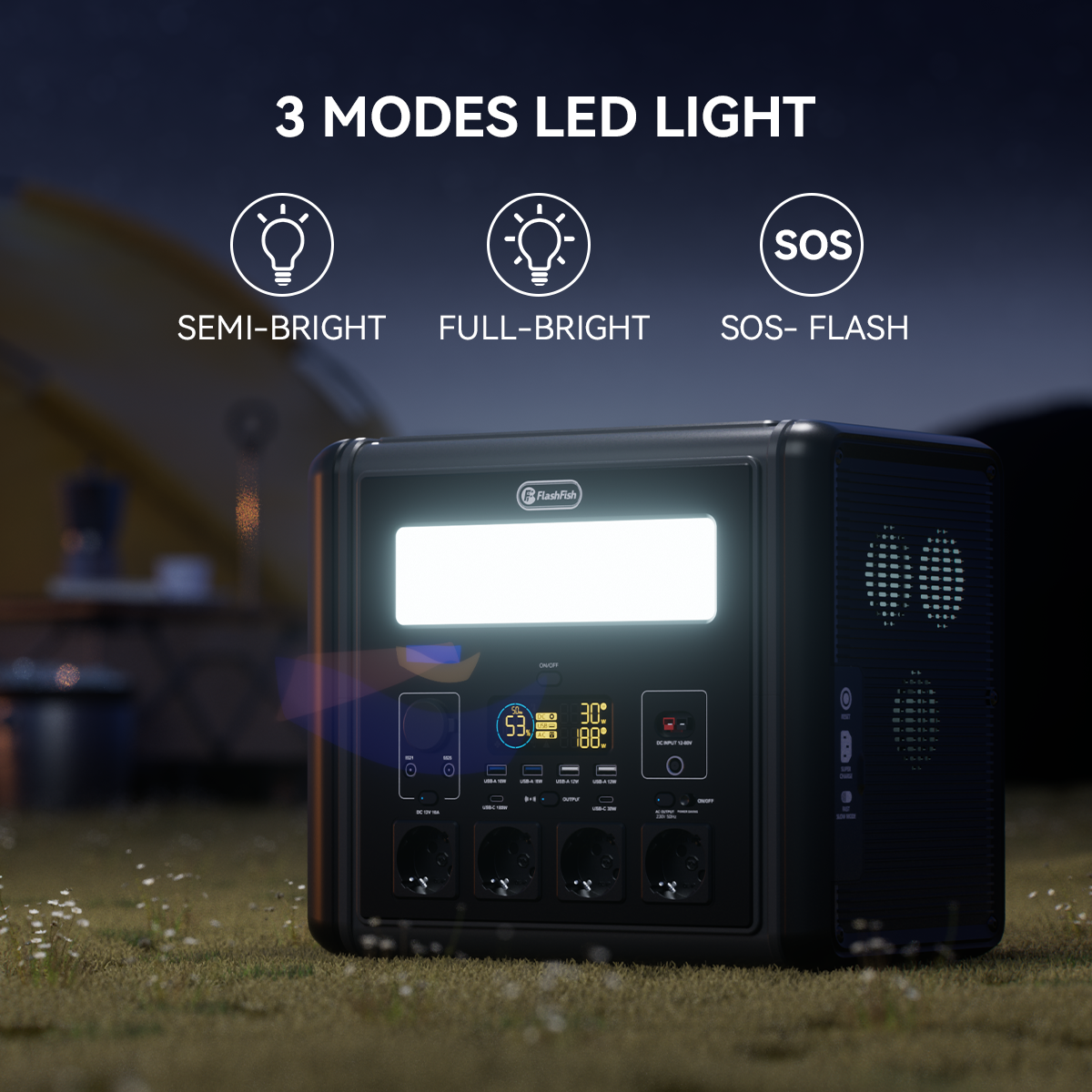
| Wireless charging | Up to 15W listed | Not listed in the cited EU datasheet | T1200S has the documented wireless-pad feature in the sources used here |
Sources checked 23 July 2026: the FlashFish product-source bundle and current Europe listing, the official Anker SOLIX Europe C1000 page, and the EU C1000 datasheet. Manufacturer claims are attributed and are not treated as comparative field results.
Apply four CAMP decision cards
C: continuous load and the largest start
List every device that may run at once. Add running watts, then examine the largest credible startup event separately. A 45W compressor fridge, for example, cannot be cleared from running watts alone because its start may be higher and product-specific.
| Measured running cluster | T1200S reading | C1000 reading |
|---|---|---|
| Up to 600W | Within 1200W label with substantial nameplate room | Within 1800W label with more unused headroom |
| 1000W plus an unknown motor start | Running load fits, but only 200W label margin remains before the unknown start | 800W label margin remains; exact start still needs evidence |
| 1400W sustained | Outside the 1200W continuous label | Inside the 1800W continuous label before startup review |
Decision: C1000 is the clearer fit for sustained loads above 1200W. T1200S is credible only where measured loads and startup evidence stay comfortably inside its own envelope.
A: available energy, not promised runtime
The 288Wh nameplate difference favours C1000. To translate a trip plan, use device energy Wh = measured average watts × hours, then add conversion losses, reserve, temperature and cycling uncertainty. Do not divide nameplate Wh by a single advertised appliance watt and call the result fixed runtime.
Decision: choose C1000 when the extra rated energy closes a real overnight or multi-day gap. Choose neither when the plan requires uninterrupted critical power or an assured runtime outcome.
M: mobility is more than weight
T1200S is listed only 0.45kg lighter, so neither deserves a sweeping portability win. T1200S is 33mm shorter and 22mm lower, while C1000 is 7mm narrower. Pack the actual cable bag, measure the vehicle storage space and rehearse stairs or rough ground.
Decision: T1200S has a modest size/weight edge on two dimensions, not a different mobility class.
P: panel input and device ports
C1000 lists 600W maximum solar input against T1200S at 400W. That advantage matters only if the proposed panel setup stays inside voltage/current limits and the trip offers enough usable sunlight. Both source sets list a 100W-class USB-C output plus a second 30W-class output/budget; T1200S also lists a 15W wireless pad.
Decision: C1000 has the higher solar-input ceiling. T1200S can fit a smaller solar plan, but neither watt label promises a recharge time.
A buyer-owned camping load sheet
| Load | Running W | Start evidence | Hours/day | Wh/day | Interface |
|---|---|---|---|---|---|
| Fridge/cooler | _____ | _____ | _____ | _____ | AC / DC |
| Laptop/camera | _____ | n/a / _____ | _____ | _____ | USB-C / AC |
| Lights/phones | _____ | n/a | _____ | _____ | USB / DC |
| Other | _____ | _____ | _____ | _____ | _____ |
Add the daily Wh column, then compare that requirement with each capacity only after applying a conservative reserve/loss assumption. Separately compare the simultaneous running cluster and largest start with continuous output.
When T1200S fits
- The measured continuous cluster stays comfortably below 1200W and startup evidence clears the margin.
- The 768Wh class covers the trip’s selected loads after conservative reserve and conversion assumptions.
- A 400W maximum solar-input class is sufficient for the compatible panel plan and expected conditions.
- The slightly smaller/lighter specification and wireless charging pad solve a real packing or device need.
When T1200S does not fit
- The sustained load exceeds 1200W or the highest start cannot be verified inside the envelope.
- The energy plan needs closer to or beyond a 1056Wh nameplate class.
- The solar plan needs more than the verified 400W input ceiling.
- The buying case depends on an unverified price, app feature, regional socket detail, runtime or service claim.
When Anker SOLIX C1000 fits
- The 1056Wh capacity and 1800W continuous rating map to a measured need.
- The 600W solar-input ceiling can be used by a compatible, explicitly approved panel plan.
- The small extra weight and larger length/height are acceptable.
- The current regional product/support package has been checked directly.
When C1000 does not fit
- The extra capacity/output is unused and the buyer prefers a smaller envelope.
- The device/connector plan does not fit the current regional ports or cables.
- The decision depends on promotional recharge, lifetime or warranty language that has not been independently tested for this use.
Evidence limits that matter
TechRadar’s current 2026 roundup includes Anker SOLIX C1000 among models its team has tested. That provides independent Anker market context; it does not test T1200S or prove that one model is better. FlashFish needs attributable independent field evidence before this page can claim measured parity or superiority.
Safety boundary
Use the exact regional station and appliance manuals. Keep equipment dry and ventilated, protect cables from traffic, and do not back-feed building or campsite wiring. For refrigeration, communications or other important loads, plan failure and recharge alternatives; a portable station is not a substitute for an approved critical-power system.
Frequently asked questions
Which has more battery capacity?
C1000 lists 1056Wh versus T1200S at 768Wh, a 288Wh nameplate difference.
Which has higher continuous AC output?
C1000 lists 1800W versus T1200S at 1200W. Actual fit still depends on the measured load and start.
Which accepts more solar input?
C1000 lists up to 600W versus T1200S at up to 400W, subject to exact panel compatibility and conditions.
Is T1200S much lighter?
No. The stated difference is only about 0.45kg.
When is T1200S the better fit?
When the buyer’s real load and energy plan stays well inside 1200W/768Wh and the smaller envelope solves a genuine need.
Is this a hands-on comparison?
No. It is a dated specification-and-decision guide with no measured runtime, charging speed, noise, efficiency or reliability result.
Sources and evidence boundaries
- FlashFish Europe: T1200S and the local product-source bundle—T1200S specifications and explicit regional-manual caveat.
- Anker SOLIX Europe: C1000 and EU datasheet—manufacturer C1000 specifications.
- TechRadar portable power station roundup—independent Anker market context only.
Human review note: recheck both exact regional products, manuals and current pages before publication; no price or availability claim appears in the article body.



Zostaw komentarz
Ta strona jest chroniona przez hCaptcha i obowiązują na niej Polityka prywatności i Warunki korzystania z usługi serwisu hCaptcha.