

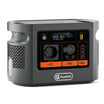
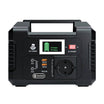

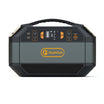
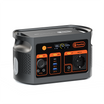






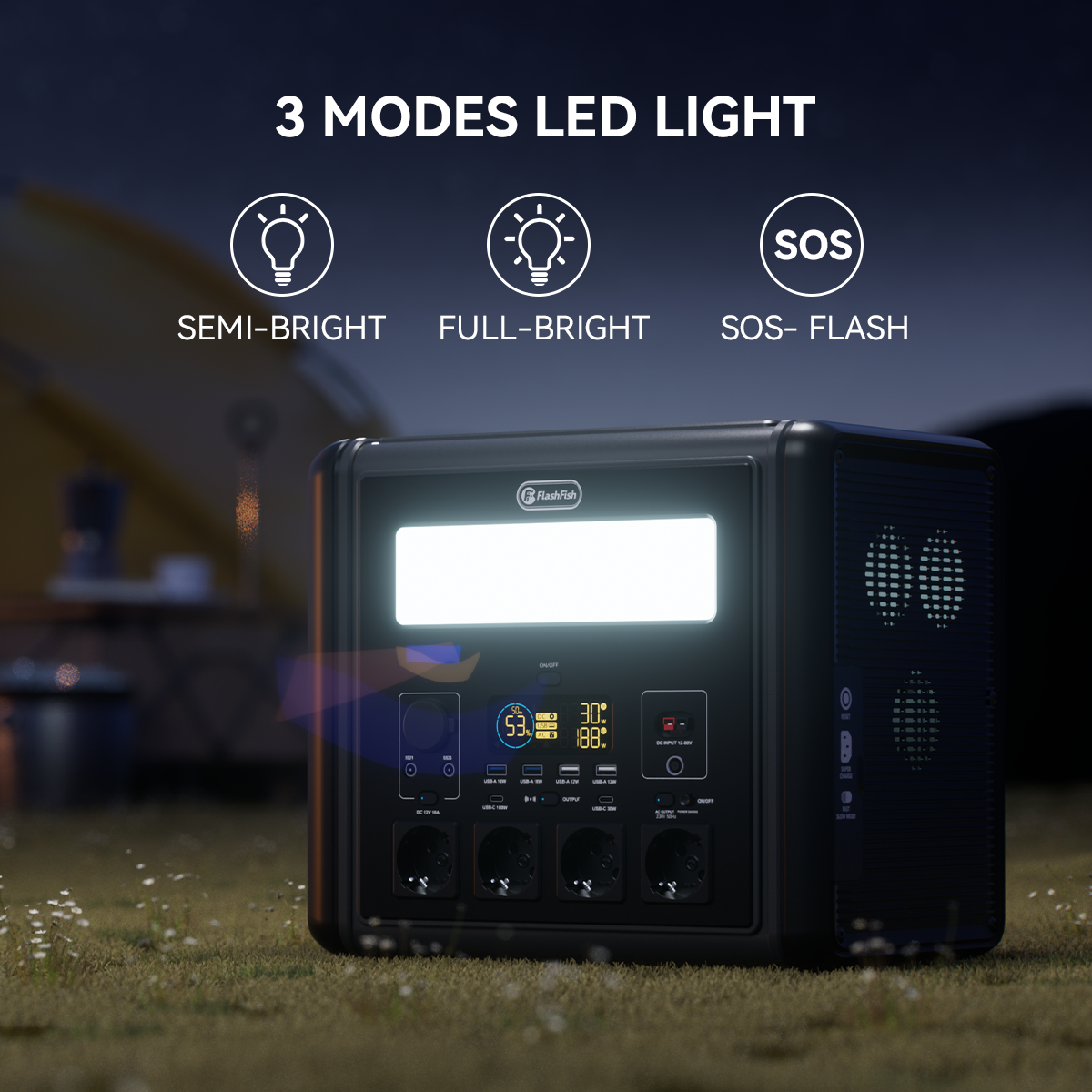
Quick verdict: choose from measured loads, not brand shorthand. FlashFish T2000 offers a lower 19.2kg stated weight and higher 600W stated solar-input ceiling; the regular EcoFlow DELTA 3 Max offers higher 2048Wh capacity, 2400W continuous AC output and explicitly listed app/10ms UPS features. Neither wins every use case.
This is a dated specification comparison for European buyers—not a hands-on runtime, efficiency, noise, reliability or appliance-start test. It compares the regular DELTA 3 Max, not DELTA 3 Max Plus.
T2000 vs regular DELTA 3 Max specifications
| Decision field | FlashFish T2000 | EcoFlow DELTA 3 Max | What it means |
|---|---|---|---|
| Battery capacity | 1536Wh | 2048Wh | EcoFlow lists 512Wh more nameplate energy; neither figure equals delivered AC runtime |
| Continuous AC output | 2000W | 2400W | EcoFlow gives 400W more stated continuous headroom |
| Surge/peak | 4000W | 4800W | Short-duration claims; neither assures a particular appliance start |
| AC outlets | 4; 2000W total | 4 | Count selected plugs, then respect the inverter total |
| Solar input | Up to 600W | 500W | T2000 has the higher listed ceiling; real harvest is site- and panel-dependent |
| Weight | 19.2kg | About 20.3kg | T2000 is about 1.1kg lighter by the stated figures |
| USB | USB-C 100W + 30W; USB-A 2×18W + 2×12W | USB-C 100W + two 30W ports (30W total stated for the pair); USB-A 1×18W | T2000 lists more USB-A access; map group limits and cables |
| 12V/DC | Car + DC barrel group shares 130W | Car output 126W | Connector fit and group budget matter more than raw port count |
| Connectivity/UPS | Not listed in the T2000 sources used here | Wi-Fi/Bluetooth app; 10ms UPS listed | EcoFlow has the clearer documented ecosystem case; verify the exact critical-load requirement |
Sources checked 22 July 2026: current FlashFish Europe T2000 page, FlashFish product-source bundle and EcoFlow Europe DELTA 3 Max Series page. Manufacturer claims are attributed, not treated as independent test results.
Run four selected-load cards
Load card 1: a 1600W AC base load plus a cycling appliance
Both stated continuous ratings exceed a 1600W base load, leaving 400W of nameplate continuous headroom on T2000 and 800W on DELTA 3 Max. That arithmetic does not clear an unknown compressor or motor start. Obtain the exact appliance input/start evidence and test base load + largest startup event against the manual.
Decision: the EcoFlow rating offers more continuous nameplate margin. If the measured/start evidence fits comfortably below 2000W, T2000 may still meet the job; a 2400W label is not automatically useful when the actual cluster is smaller.
Load card 2: laptop, camera, phones and regulated DC equipment
T2000 lists two USB-C outputs (100W and 30W) and four USB-A outputs; EcoFlow lists one 100W USB-C, two 30W USB-C ports whose pair has a stated 30W total, and one 18W USB-A. Count devices, but also map cables and shared budgets. USB Implementers Forum material explains why cable/device negotiation and shared-capacity groups can reduce the available power.
Decision: T2000 has the stronger raw USB-A access case. EcoFlow may suit a user who values the listed app; neither should be selected from port count without a connector-and-watt map.
Load card 3: solar-first camping or mobile work
T2000 lists up to 600W solar input and DELTA 3 Max lists 500W. The extra 100W nameplate ceiling matters only when compatible panels, controller limits and strong conditions can use it. Do not turn 600W into a fixed recharge time; irradiance, orientation, temperature, cable losses and concurrent loads all change input.
Decision: T2000 has the higher listed solar-input ceiling. DELTA 3 Max begins with 512Wh more rated capacity, so the relevant question is whether the trip values refill opportunity or stored energy more.
Load card 4: carry distance and energy reserve
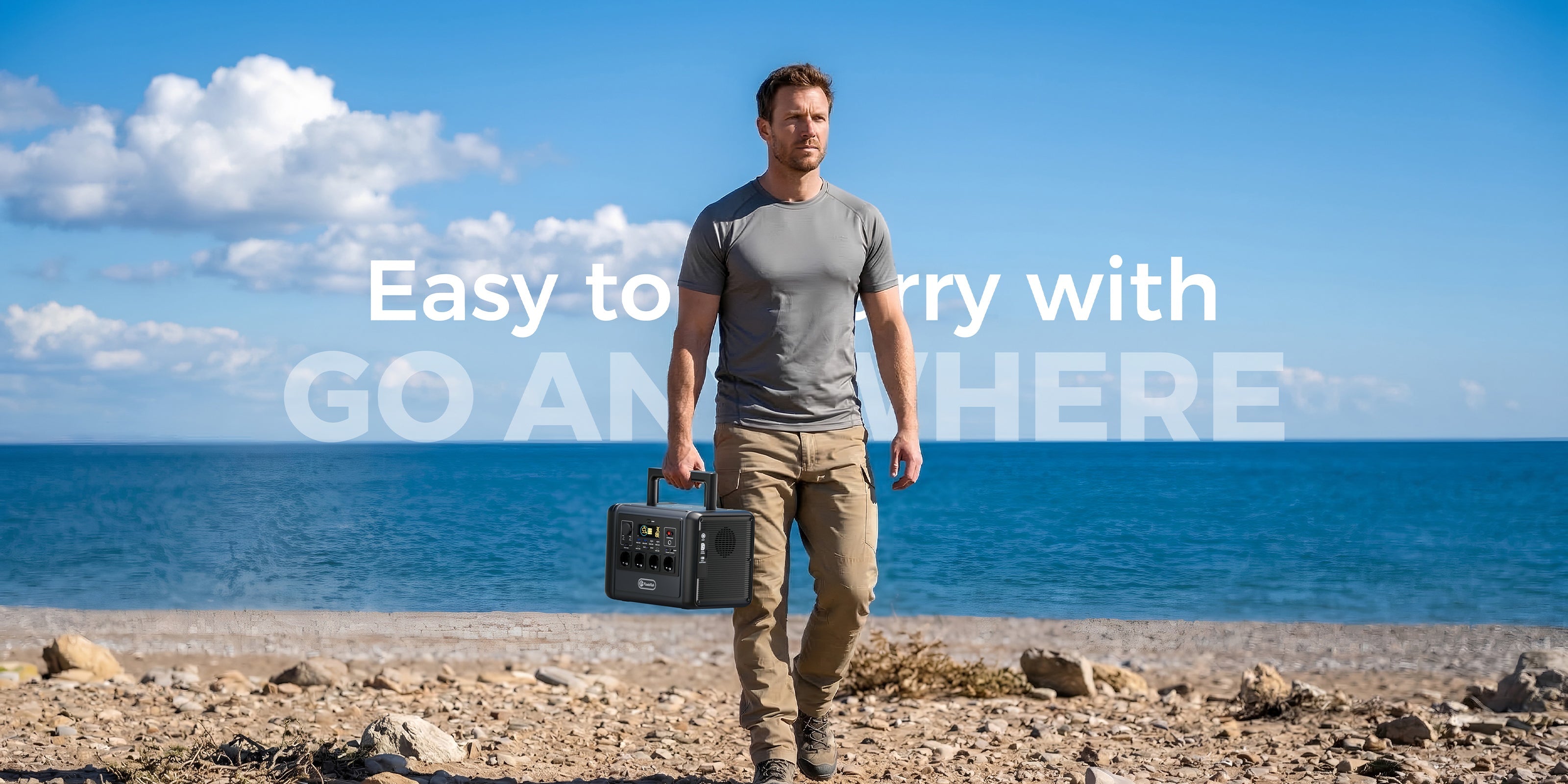
The stated weight difference is about 1.1kg: 19.2kg for T2000 versus approximately 20.3kg for DELTA 3 Max. The capacity difference is 512Wh. Neither is a light hand-carried power bank, so test the real lift path—stairs, vehicle height, campsite surface and distance—not just the percentage difference.
Decision: EcoFlow offers more rated energy for modest additional stated weight; T2000 remains the lighter listed unit. Delivered runtime and handling comfort require real conditions.
Where specification tables mislead
- Wh is not runtime: load profile, conversion losses, reserve and temperature matter.
- Surge is not assured startup: duration and waveform/load behaviour matter.
- Solar maximum is not daily harvest: panels, weather and location control opportunity.
- Port count is not independent full power: group budgets and cables matter.
- UPS milliseconds are not a continuity plan: critical equipment needs its own verified requirements and testing.
- First-party specs are not reliability evidence: this comparison has no long-term or independent test dataset.
When T2000 fits
- Your measured continuous AC cluster fits below 2000W with verified startup margin.
- You value a 600W listed solar-input ceiling and can build a compatible panel configuration.
- The 1536Wh capacity class covers selected loads after conservative losses and reserve.
- More USB-A access and a 19.2kg listed weight suit the connector and carry plan.
When T2000 does not fit
- Your sustained cluster needs more than 2000W or credible startup evidence cannot clear the margin.
- You need more than 1536Wh rated capacity before conversion and reserve.
- Explicit app control, 10ms UPS documentation or another ecosystem requirement is a deciding gate.
- You require independently tested runtime, noise, efficiency or reliability evidence that this article does not provide.
When DELTA 3 Max fits
- The 2048Wh capacity and 2400W continuous rating better match the measured load card.
- Wi-Fi/Bluetooth app control and the listed 10ms UPS feature have been verified for the exact equipment.
- The approximately 20.3kg weight works for the real carry path.
When DELTA 3 Max does not fit
- The extra capacity/output does not solve a measured need and a lower stated weight or higher solar-input ceiling matters more.
- The USB/12V connector layout does not fit the device map.
- The buyer is relying on price, stock or warranty assumptions not checked on the decision day.
Selected-load checklist
| Evidence | Your T2000 result | Your DELTA 3 Max result |
|---|---|---|
| Base running W + largest startup event | ________ | ________ |
| Target energy Wh after reserve/loss assumption | ________ | ________ |
| USB/DC connector and group map | ________ | ________ |
| Compatible solar array and expected conditions | ________ | ________ |
| Carry path and weight accepted | ________ | ________ |
| App/UPS/support requirement verified | ________ | ________ |
Electrical-safety boundary
Electrical Safety First advises calculating combined extension loads, avoiding daisy-chaining, inspecting for damage and fully unwinding cable reels. Follow both station and appliance manuals; do not back-feed building wiring or treat a portable station as full-property or medical continuity without an approved plan.
Frequently asked questions
Which has more battery capacity?
DELTA 3 Max lists 2048Wh versus T2000 at 1536Wh, a 512Wh nameplate difference. Delivered runtime still depends on the load and conditions.
Which has higher continuous AC output?
DELTA 3 Max lists 2400W versus T2000 at 2000W. Higher output matters only when the measured load needs it.
Which accepts more solar input?
T2000 lists up to 600W versus 500W for DELTA 3 Max; actual solar input depends on electrical compatibility and conditions.
Which is lighter?
T2000 is listed at 19.2kg and DELTA 3 Max at approximately 20.3kg, a stated difference of about 1.1kg.
Which is better for USB devices?
T2000 lists more USB-A ports; both list a 100W USB-C port. Device, cable and group requirements decide the actual fit.
Is this a hands-on comparison?
No. It is a specification-and-decision comparison with disclosed first-party sources and no tested runtime, noise, efficiency or reliability claim.
Sources and evidence boundaries
- FlashFish Europe: T2000 and local product-source bundle — T2000 specifications and manual boundaries.
- EcoFlow Europe: DELTA 3 Max Series — regular DELTA 3 Max specifications; not the Plus model.
- USB Implementers Forum: USB Power Delivery — negotiation and shared-capacity context.
- Electrical Safety First — combined-load and extension safety.
Human review note: recheck both official pages and exact regional manuals before publication; no price or live-stock claim is included.



Zostaw komentarz
Ta strona jest chroniona przez hCaptcha i obowiązują na niej Polityka prywatności i Warunki korzystania z usługi serwisu hCaptcha.