
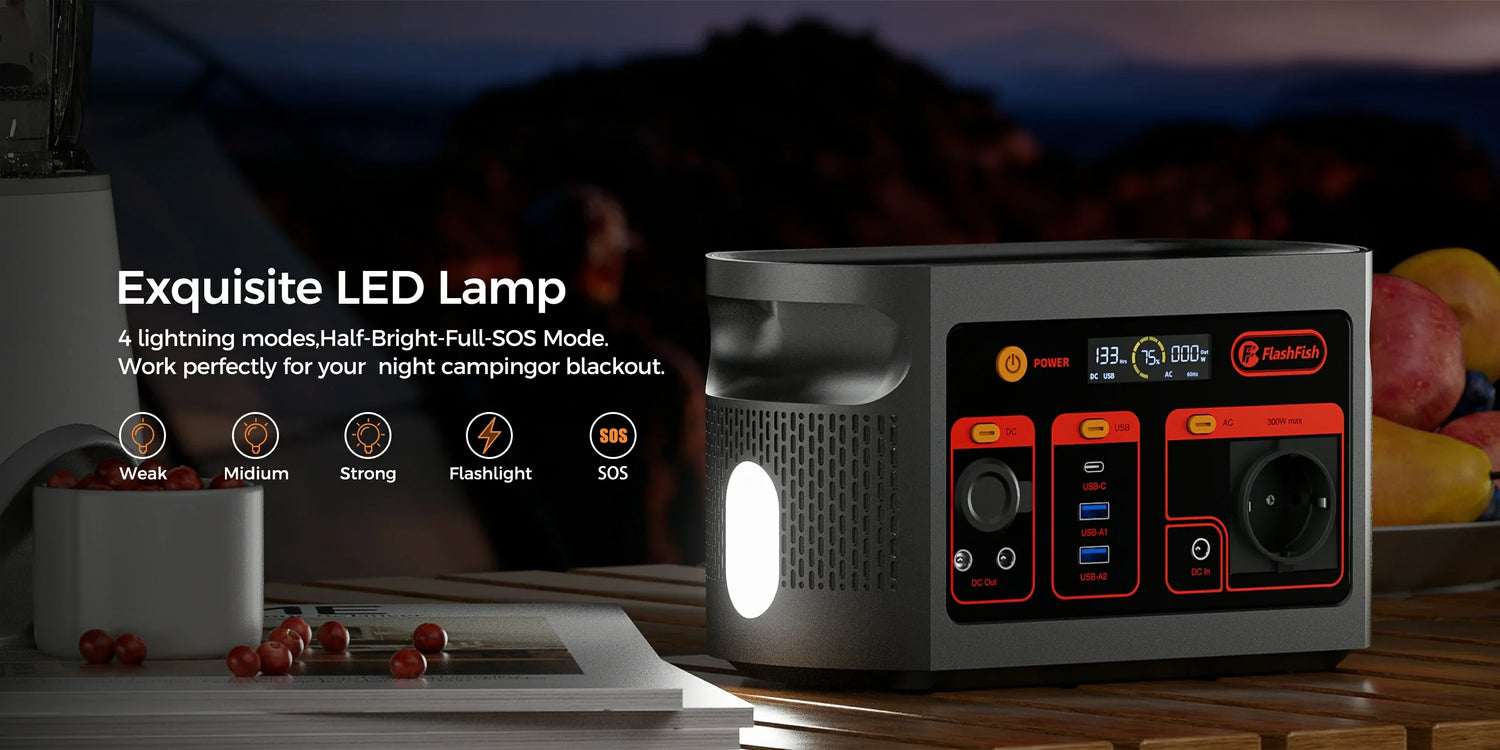
Short answer: FlashFish E103 can be a BLUETTI EB3A alternative for a lighter, lower-power camping or travel kit when 179.2Wh, 300W pure-sine AC, 60W USB-C and 3kg fit the job. EB3A is the stronger fit when the buyer needs its official 268.8Wh, 600W AC, 100W USB-C or 200W solar-input specifications. Jackery Explorer 300 Plus is a useful third benchmark for buyers who want 288Wh with a 300W AC class and 3.75kg weight.
This is a specification-based Europe comparison, not a hands-on test, price ranking or declaration that one brand is universally better. Current prices and stock can change, so they are intentionally excluded. The decision method focuses on the devices you will carry, the energy margin you need and the recharge route you can actually use.
At-a-glance specification comparison
| Decision factor | FlashFish E103 | BLUETTI EB3A | Jackery Explorer 300 Plus |
|---|---|---|---|
| Battery capacity | 179.2Wh | 268.8Wh | 288Wh |
| Continuous AC output | 300W pure sine | 600W pure sine | 300W pure sine |
| Peak/surge output | Not provided by the local FlashFish product database; not claimed here | 1200W surge in the official manual | 600W surge on the official Europe product page |
| USB-C maximum | 60W | 100W | 100W |
| Solar/DC input used for comparison | 12–30V, 4A, up to 90W | 12–28V, 8.5A, 200W maximum in the official manual | Use the current official manual/page and compatible charging accessory guidance before purchase |
| Product weight | 3kg | 4.6kg | 3.75kg |
| Battery chemistry | Not provided by the local FlashFish product database; not claimed here | LiFePO4 on the official page/manual | LiFePO4 on the official Europe product page |
Sources are first-party specifications plus the local manual-derived FlashFish database. They support a fit comparison, not independent durability, noise, thermal or real-runtime conclusions. Recheck each source before publication or purchase.
The five-filter alternative test
- Load: list steady watts, startup behaviour and which devices run together.
- Reserve: compare expected energy use with rated Wh, then leave margin for conversion losses and changing demand.
- Recharge: compare the actual wall or solar opportunity with each station's supported input path.
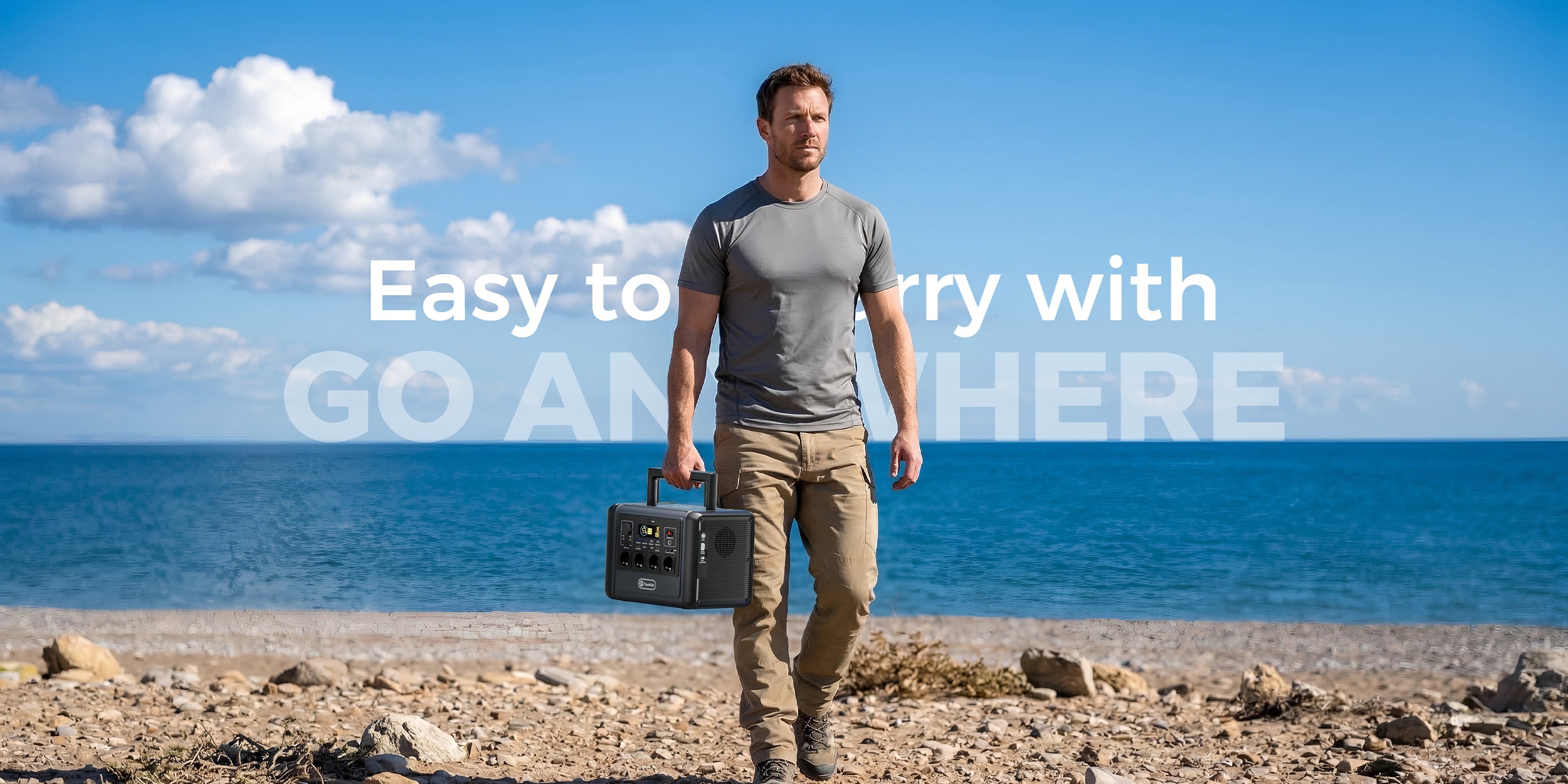
- Carry: decide whether 3kg, 3.75kg or 4.6kg matters on the route from vehicle to pitch.
- Evidence: treat missing values as decision gaps, not as permission to copy a similar model's claim.
A product is a genuine alternative only when it passes all five filters for the same task. Sharing a rough price category or product shape is not enough.
When E103 is the more practical fit
The FlashFish E103 is the lighter option in this table. Its 300W pure-sine output can suit a specific low-load list such as phones, camera batteries, LED lighting and compatible laptop charging. Its 60W USB-C port may reduce the need for an AC adapter when the laptop or device accepts that power profile.
E103 is most defensible when the buyer values 3kg carry weight and has verified that 179.2Wh is sufficient. It is not the evidence-based choice when the plan requires the EB3A's higher continuous output, larger energy reserve or higher USB-C/solar-input specifications.
When BLUETTI EB3A is the stronger fit
BLUETTI's official Europe page and manual list 268.8Wh, 600W continuous AC output, 100W USB-C, 200W maximum solar input and 4.6kg weight. That provides more power and energy headroom than E103 on the compared specifications. Buyers with a verified load above 300W, a need for 100W USB-C, or a suitable higher-input solar plan should examine EB3A closely.
The trade-off is additional weight. The official figures still do not provide a universal runtime for your fridge, laptop or campsite. Device-level planning remains necessary.
Where Jackery Explorer 300 Plus changes the decision
Jackery's official Europe product page lists Explorer 300 Plus at 288Wh, 300W continuous AC, 600W surge, 100W USB-C and 3.75kg. It keeps the same continuous AC class as E103 while providing a larger rated energy reserve and higher USB-C specification, at a weight between E103 and EB3A.
That makes it a useful benchmark if 300W is enough but the buyer wants more rated Wh than E103. As with the other products, confirm the current manual, input compatibility, plug version and Europe availability before deciding.
What “budget alternative” should mean
Budget should mean the smallest total solution that safely fits the task, not the lowest checkout price on one day. A smaller unit that cannot run the required device is expensive in practice; a larger unit carried for a phone and lamp may be unnecessary. Accessories, suitable solar panels, cables, portability and recharge access all affect the total fit.
Because prices change, this article does not label E103, EB3A or Explorer 300 Plus as the cheapest. Compare current Europe prices only after the five filters produce a technically suitable shortlist.
Example decision paths
| Buyer need | First model to examine | Reason | Check before deciding |
|---|---|---|---|
| Lowest compared carry weight for verified sub-300W loads | E103 | 3kg and 300W pure-sine output | 179.2Wh reserve, 60W USB-C and the missing local chemistry/peak fields |
| Higher AC output and higher solar-input specification | EB3A | 600W continuous AC and 200W maximum solar input in the official manual | 4.6kg carry weight, device startup demand and compatible panel range |
| 300W AC class with more rated Wh and 100W USB-C | Explorer 300 Plus | 288Wh, 300W and 100W USB-C on the official page | Current input/manual details and complete trip load plan |
| More than these compact models can support | Move up a size class | A compact alternative comparison is no longer the right frame | T1200S or another suitable larger station only after exact load planning |
When FlashFish fits
- Your highest simultaneous steady AC load remains inside E103's 300W continuous rating with sensible margin.
- 179.2Wh is enough for the planned energy window after losses and reserve.
- 60W USB-C and the available AC/DC ports fit the actual devices.
- 3kg carry weight materially improves the trip.
- The missing local chemistry and peak-output fields are not required for the decision, or you verify them from current primary documentation before purchase.
When FlashFish may not fit
- You need more than 300W continuous AC output.
- You need 100W USB-C for a specific device.
- You need a larger energy reserve than 179.2Wh.
- You need an independently tested conclusion on runtime, noise or thermal performance; this article does not provide one.
- You need power for a safety-critical application or an electrical installation rather than a portable selected-load setup.
Camping and cable safety
Check appliance labels, inspect cables, keep the station and connections dry, and follow campsite and manufacturer instructions. Do not overload extension leads or leave a loaded cable reel coiled contrary to its instructions. Test essential devices at home before travel. These are general precautions, not a certification of any model for every environment.
Frequently asked questions
Is E103 better than BLUETTI EB3A?
Not universally. E103 is lighter; EB3A has higher official capacity, continuous AC output, USB-C and solar-input specifications. The better model is the one that passes the five-filter test for your devices.
Can E103 run a refrigerator?
That cannot be answered from the appliance category alone. Check steady watts, startup demand, duty cycle and desired energy window for the exact refrigerator.
Why does the comparison omit E103 battery chemistry?
The authoritative local FlashFish product database does not provide that field in its product summary. This workflow does not fill missing values from a URL, nearby model or unsupported assumption.
Is EB3A better for solar charging?
Its official manual lists a 200W maximum solar input, compared with up to 90W DC input in the local E103 data. Real solar recovery still depends on compatible voltage/current, weather, shade and panel setup.
Does Explorer 300 Plus last longer than E103?
It has more rated watt-hours, but exact runtime depends on the load and losses. This specification comparison does not claim a tested runtime advantage.
Which model is cheapest in Europe?
This article does not make a current-price claim. Compare live Europe prices after technical fit, accessories and recharge needs are clear.
Sources and further reading
- BLUETTI Europe: EB3A product page and official EB3A manual — first-party competitor specifications.
- Jackery Europe: Explorer 300 Plus product page — first-party competitor specifications.
- U.S. Department of Energy: solar energy and storage basics — power and energy capacity context.
- Camping and Caravanning Club: using electricity in your tent — campsite precautions.
- FlashFish product-source bundle, Europe Shopify discovery and current E103 Europe product page, accessed 15 July 2026.
Decision rule: call E103 an alternative only when its lighter 3kg package and verified 300W/179.2Wh class pass the same device plan. Choose a competitor—or move up a size class—when its documented power, energy, port or recovery advantages solve a requirement E103 does not.
Human review note: recheck every current product page and source manual before publication. No independent bench test, current-price ranking, award, user quote or real-runtime result is claimed.



Оставить комментарий
Этот веб-сайт защищается hCaptcha. Применяются Политика конфиденциальности и Условия использования hCaptcha.