

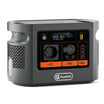
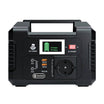

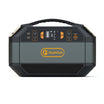
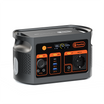


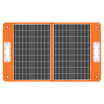
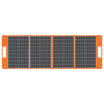




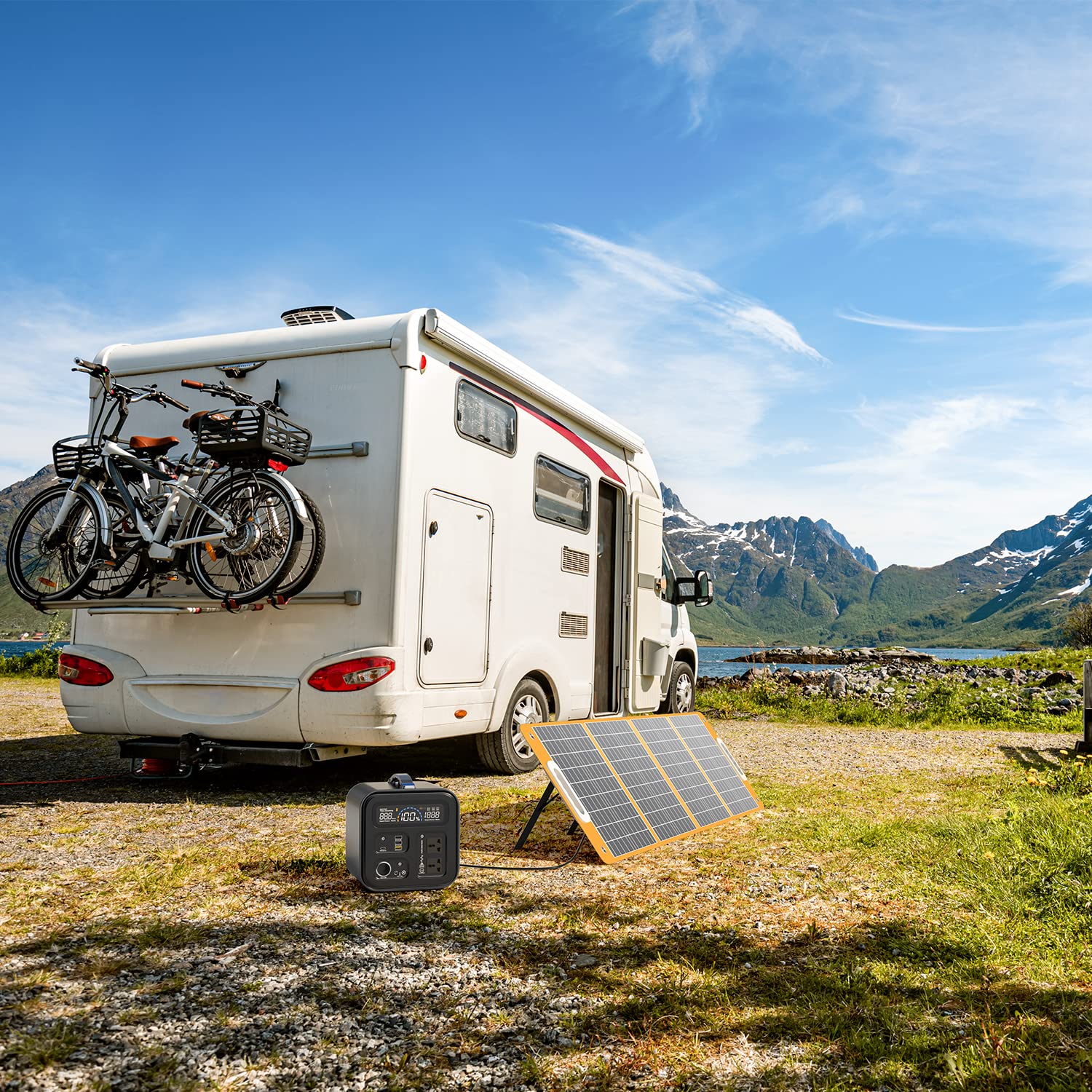
Short answer: in most European locations, a portable solar panel should face the sun directly, usually toward the south around midday, with shade kept off every cell. A perfect angle matters less than three habits: move the panel as the sun moves, keep the panel clear of shadows, and watch the power station input display so you can see what actually improves charging.
Portable solar panels are different from rooftop systems. A roof is fixed. A folding panel can be moved. That gives you a useful advantage at campsites, balconies, gardens, festivals, and road stops, especially when the morning and afternoon sun hit different parts of the space.
Why angle matters
Solar panels produce their best output when sunlight hits the panel face directly. Consumer solar guidance from Which? and the Energy Saving Trust shows that direction and tilt affect output for rooftop PV. The European Commission's solar building guidance also names orientation, roof design, latitude, and shading as practical factors in solar generation. For portable users, that translates into a simple field rule: do not set the panel down once and forget it.
A simple day plan for Europe
| Time | Panel direction | What to check |
|---|---|---|
| Morning | Face the low eastern sun | Avoid tent, car, railing, or tree shade |
| Midday | Face the stronger southern sun | Flatten or lower the tilt if output drops |
| Afternoon | Turn toward the western sun | Move before long shadows cross the panel |
This is intentionally practical rather than mathematical. In summer, the sun is higher. In winter, it is lower. Northern Europe will not behave exactly like southern Spain, and cloudy weather can reduce output even when your angle is good. The power station's input reading is your best feedback.
How to use FlashFish TSP60 and TSP100 panels
The FlashFish TSP60 60W Portable Solar Panel is a good fit for compact stations and light charging expectations. The FlashFish TSP100 100W Portable Solar Panel gives more headroom for mid-size kits when daylight is limited or several devices are involved.
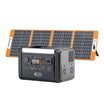
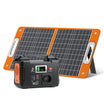
If you want a ready pairing, compare the FlashFish E200 + TSP60 Solar Generator Kit for light trips and the FlashFish P63 + TSP100 Solar Generator Kit for longer weekends or group charging. You can also browse the portable solar panels collection if the panel itself is your main upgrade.
The shade rule people forget
Small shadows can matter. A tent guyline, a chair, a roof rail, or one branch can cut the output more than expected because shaded cells limit how the panel works. Before blaming the weather, look across the panel face from the side. If one strip is shaded, move the panel.
Keep the panel in the sun, not the battery
A solar panel is built to sit in sunlight. A lithium battery product should be treated more carefully. Battery safety guidance from the U.S. Fire Administration warns against direct sunlight and hot cars for lithium-ion batteries. For portable solar charging, the clean setup is simple: panel in the sun, power station in shade, cable kept tidy, vents uncovered.
Fast troubleshooting
- If input is near zero, check the cable and connector first.
- If input jumps up when you move the panel, the problem was angle or shade.
- If input is lower than the panel rating, remember that rating is a lab condition, not a promise for cloudy campsites.
- If the station feels hot, stop charging and move it to a cooler, ventilated place.
FAQ
Should a portable solar panel face south in Europe?
Usually yes around midday, because Europe is in the northern hemisphere. In the morning and afternoon, turn the panel toward the actual sun rather than leaving it fixed.
Is a steeper angle better?
Not always. A steeper angle can help when the sun is low, while a flatter angle can work better when the sun is high. Use the input display as your guide.
Can I leave the power station beside the solar panel?
Avoid leaving the battery box in direct sun. Put the panel in the sun and keep the power station shaded and ventilated.



Leave a comment
This site is protected by hCaptcha and the hCaptcha Privacy Policy and Terms of Service apply.