

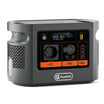
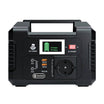

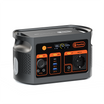






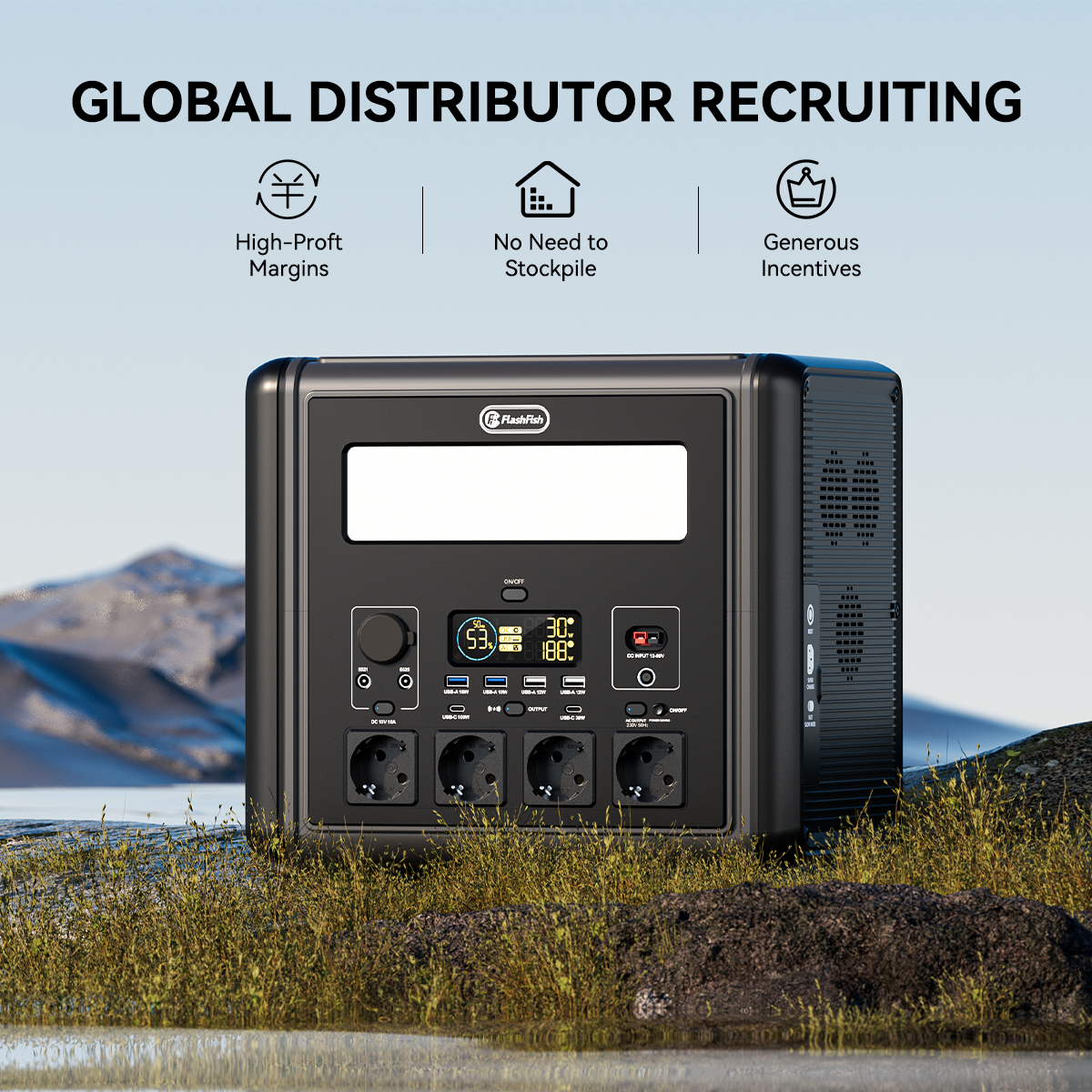
Short answer: 1536Wh means the FlashFish T2000 stores 1536 watt-hours of energy before real-world losses. To plan a backup setup, multiply each device's watts by the hours you need it, add the totals, then add a 20 to 30 percent reserve. Do not turn the capacity number into a guaranteed runtime without testing the exact devices.
Large LFP portable power stations are getting more attention in 2026 because buyers want the same unit to support camping, home-office backup, and short off-grid tasks. TechRadar's current portable power station guide still groups the category around camping and home backup, while recent reviews of 2kWh and larger LFP units show how brands compete on capacity, output, charging, and weight. The useful buyer question is not "which number is biggest?" It is "what does this number let me plan safely?"
Watt-hours in plain English
A watt-hour is a unit of stored energy. A 50W device running for two hours uses about 100Wh before losses. A 500W device running for one hour also uses about 500Wh before losses. That is why small devices can be supported for much longer than high-watt AC loads on the same battery.
The FlashFish T2000 Portable Power Station lists 1536Wh capacity, a 2000W pure sine wave AC inverter, LFP chemistry, and EU sockets by default. Those specs make it a high-capacity portable station for planned essentials, but the exact result depends on your device draw, environment, charging state, and how many outputs are used.
A safe planning formula
Use this simple formula before choosing any portable power station:
Required capacity = sum of device watts x hours, plus 20 to 30 percent reserve.
| Planning step | What to check | Why it matters |
|---|---|---|
| List essentials | Router, laptop, phones, light, cooler, tool charger, or approved device | Keeps the plan focused on what matters |
| Read watts | Use the adapter, label, or manual | Prevents underestimating demand |
| Choose hours | Plan the realistic period of use | Separates a quick interruption from longer backup |
| Add reserve | 20 to 30 percent | Allows for conversion losses and variable draw |
| Check output | Rated watts and startup demand | A battery can have capacity but still be wrong for a high-output load |
Why 2kWh-class stations feel different
Around the 1.5kWh to 2kWh class, portable stations stop feeling like small gadget chargers and start feeling like manual backup hubs. TechRadar's February 2026 review of a 2048Wh LFP station framed that size as closer to compact home backup than lightweight travel gear. That is the same tradeoff a T2000 buyer should notice: more stored energy and output headroom, but more weight and less casual portability than compact units.
Where T2000 fits in the FlashFish range
For broad browsing, start with the portable power stations collection. Use smaller active FlashFish units for lighter, highly portable plans. Use the T2000 when the plan needs a larger reserve, higher AC output, or several people sharing power. For chemistry education and long-life battery context, the LiFePO4 Battery collection is the natural supporting hub.
What not to assume
- Do not assume every appliance is suitable just because its average watts look low.
- Do not assume UPS-style instant transfer unless the exact setup has been checked and tested.
- Do not use a portable power station as a substitute for professional electrical work.
- Do not publish runtime promises without device-specific measurements.
- Do not link to out-of-stock or draft products as recommendations without manual approval.
FAQ
Is 1536Wh the usable capacity?
It is the listed battery capacity. Usable energy for devices can be lower because of inverter losses, conversion losses, device behavior, temperature, and reserve planning.
Does 2000W output mean every 2000W appliance will work?
No. Check startup demand, continuous draw, plug type, safety guidance, and the product manual. Some appliances have surge behavior that needs extra review.
Is LiFePO4 useful for backup planning?
LiFePO4 is widely used in current portable power stations because buyers value cycle life and stability, but the right product still depends on capacity, output, weight, inputs, and the actual devices being powered.




Leave a comment
This site is protected by hCaptcha and the hCaptcha Privacy Policy and Terms of Service apply.