

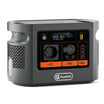
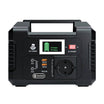

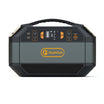
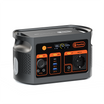






Short answer: an IP code describes how an enclosure performed against access, solid particles and water under defined conditions. The first digit covers access and solids; the second covers water. It is not a general waterproof score, and an absent model rating is unknown evidence - not IP00, weatherproof or permission to use a portable power station in rain.
How to read an IP code
| Code part | What it describes | What it does not prove |
|---|---|---|
| IP | An international enclosure-protection code | That every component, cable or open port shares one rating |
| First digit, 0-6 | Protection against access to hazardous parts and ingress of solid objects or dust | Water resistance |
| Second digit, 0-9 in current authority guidance | Protection against water under a defined test level | Unlimited rain, flooding, salt water, condensation or use while ports are open |
| X in a position | That digit is not specified in the code | Zero protection or permission to assume the missing value |
Read IP54 as two separate claims: 5 for the solid-particle side and 4 for the water side. Do not average the digits or treat 54 as a single quality score.
Use CODE before taking a station outdoors
- C - Code. Find the exact IP code on the delivered model label or current regional manual. A rating on a solar panel, cable or accessory does not transfer to the power station.
- O - Operating conditions. Check orientation, closed covers, connected plugs, temperature, surface, cable route and the type of water or dust exposure.
- D - Documentation scope. Read the manufacturer's limits and test conditions. A test level is not a promise for every duration, pressure, direction, chemical or damaged enclosure.
- E - Exposure stop. If the rating is missing, the product is damaged, a cover is open or the planned exposure exceeds the documentation, keep it dry and change the setup.
Exactly three outdoor examples
Example 1: no model-specific IP rating under a gazebo
The gazebo may reduce direct rain, but it does not create an enclosure rating. Wind-driven rain, wet ground, condensation and cable routes remain. Put the station on a stable dry raised surface in a protected location, or stop if exposure cannot be controlled.
Example 2: an IP54-labelled enclosure with a port cover open
Do not assume the published rating still applies in that condition. The manufacturer's documentation must say whether the test covered open ports, inserted plugs or a particular cover position. A connected cable can create a different ingress path.
Example 3: a station that was splashed or partly immersed
Turn it off only if that can be done safely, isolate the area, do not reconnect or charge it, and follow the manufacturer or competent-service guidance. Even a stated rating is not permission to keep operating after an incident outside its documented conditions.
Common IP-rating mistakes
- Calling every IP rating waterproof. Water levels are specific test classes, not unlimited protection.
- Transferring a panel rating to the station. A solar panel and power station are separate enclosures with separate evidence.
- Ignoring connectors and covers. An open flap, inserted plug or damaged seal can change the real exposure path.
- Treating dust and water as one number. The two digits answer different questions.
- Turning missing data into a claim. No supplied rating means ask for evidence and protect the equipment; it does not justify IP00 or an outdoor recommendation.
Outdoor power checklist
| Check | Record before use |
|---|---|
| Exact equipment | Model, regional variant, label and manual date |
| IP evidence | Full code, scope, cover/port conditions and any manufacturer limits |
| Exposure | Rain direction, spray, dust, wet ground, condensation and wind |
| Connections | Plug seating, cable rating, strain relief, drip path and dry handling |
| Placement | Stable, raised, ventilated and protected location away from public routes |
| Stop plan | How to disconnect safely and who to contact after suspected ingress |
When FlashFish fits - and when it does not
| A FlashFish station may fit when | Do not recommend it for the exposure when |
|---|---|
| The exact regional documents cover the intended environment and every connection stays within those conditions | The model-specific IP evidence is absent or belongs to another product |
| A dry, stable, ventilated placement protects the station and cables | Rain, splash, wet ground, condensation or dust cannot be controlled |
| The delivered enclosure, covers and ports are undamaged | A seal, cover, socket, cable or enclosure is damaged or already wet |
| A human can monitor conditions and stop safely | The setup depends on unattended outdoor operation or optimistic weather assumptions |
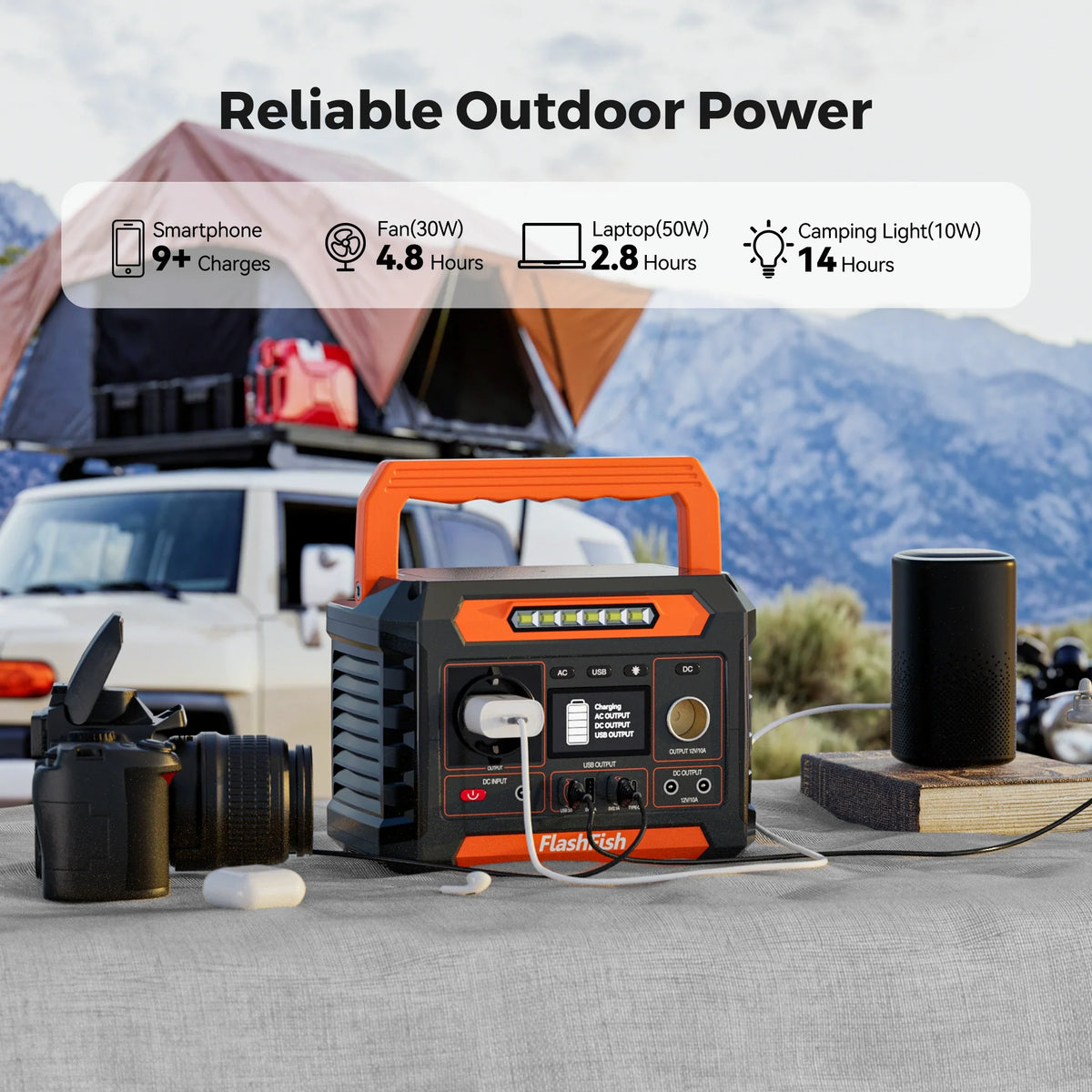
Ask for the exact model's regional IP and outdoor-use documentation before turning a camping image or general outdoor language into an exposure claim.
Frequently asked questions
What do the two numbers in an IP rating mean?
The first digit describes protection against access and solid particles; the second describes protection against water under defined test conditions. They are separate, not one combined quality score.
Does a higher IP number always mean better protection?
Not as one combined score. Read each digit and the manufacturer's stated conditions because dust and water protection are separate and some use cases need one more than the other.
Does no published IP rating mean IP00?
No. It means the evidence is missing or not supplied here. Do not invent a rating; protect the equipment from exposure and ask for the exact regional documentation.
Is an IP-rated power station waterproof?
No broad waterproof claim follows from the code. The exact water digit, test method, covers, ports, orientation, condition and instructions still limit use.
Can I use a portable power station in rain under a canopy?
A canopy reduces some exposure but does not establish the station's rating or control wind-driven rain, wet ground, condensation, cables and open ports. If the exact conditions are not documented and controlled, keep the station elsewhere.
Sources and evidence limits
- Swedish Electrical Safety Authority IP-code guidance - code meaning and location dependence.
- IEC 60529 publication page - official IP Code standard scope for electrical-equipment enclosures.
- FlashFish Europe Support Center - regional documentation route.
- FlashFish Europe portable power station collection - category context only.
No FlashFish enclosure, seal, cable or port was tested. This guide does not assign an IP rating or make a weatherproof claim.
Conclusion
An IP code is useful only when it belongs to the exact model and the planned exposure stays inside its documented conditions. Use CODE to separate evidence from assumptions. If the rating is missing, ask FlashFish Europe for the current regional documentation and keep the station, plugs and cables dry meanwhile.




Leave a comment
This site is protected by hCaptcha and the hCaptcha Privacy Policy and Terms of Service apply.