

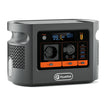
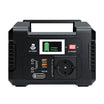

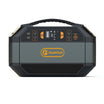
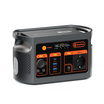






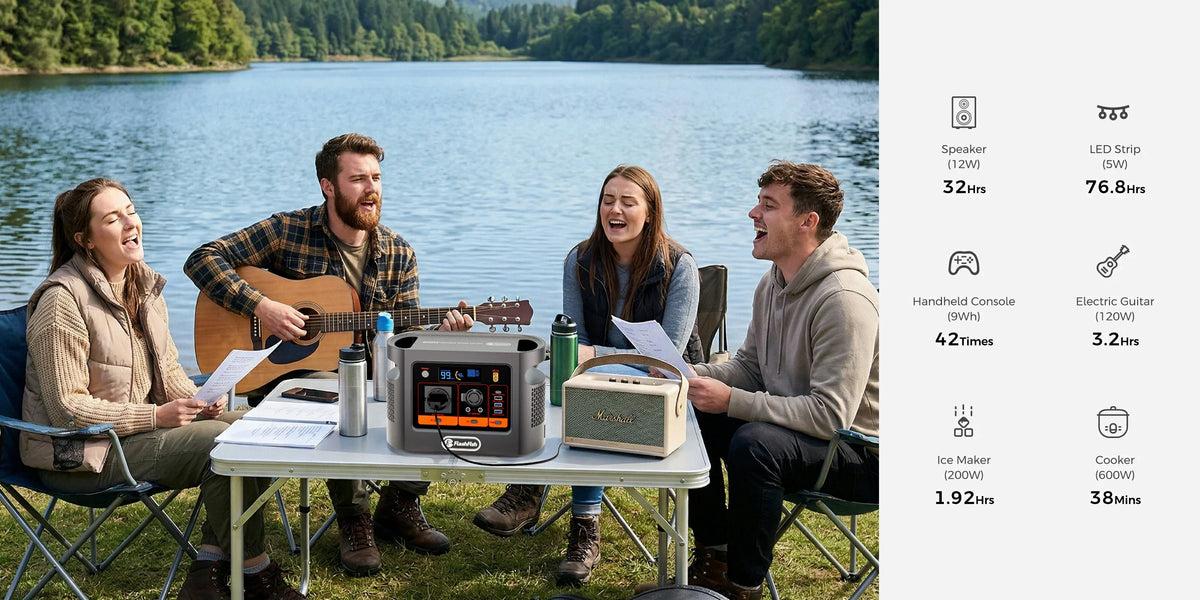
Short answer: do not treat a damp campsite as a normal operating environment for E106B. The authoritative product record used here gives no IP or weather-resistance rating. Use the station only when you can create and maintain a genuinely dry, raised, ventilated and supervised location for the unit, plugs and cables. Stop if rain, ground moisture, condensation or a wet hand can reach any part of the setup.
A tent, plastic box or bag is not automatically a dry zone: it may leak, collect condensation or obstruct ventilation. A campsite RCD also does not make the station weatherproof. Use DRY-ZONE-RAISE-CABLE-WATCH-STOP before deciding whether to switch on.
The five-gate damp-campsite decision
| Gate | What to verify | Stop when |
|---|---|---|
| Dry zone | Overhead and side protection, no wind-driven rain, no condensation and no wet handling | You cannot keep the station and every connection dry |
| Raise | A stable, dry surface above wet grass, puddles and runoff | The base, shelf or approach is damp or unstable |
| Cable | Undamaged leads and connectors routed away from doors, feet, wheels, water and sharp edges | A cable is pinched, abraded, wet, warm or unsuitable for the location |
| Watch | Active supervision, clear ventilation and changing weather or dew conditions | The setup must be left unattended or ventilation cannot stay clear |
| Stop | A pre-agreed shutdown and dry fallback | Rain, condensation, splashes, unusual heat, smell, noise or repeated protection events appear |
Check the current E106B specifications only after the site passes all five gates. A product page cannot override the actual weather, campsite rules or delivered instructions.
What E106B evidence does and does not establish
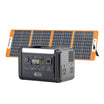
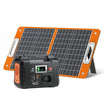
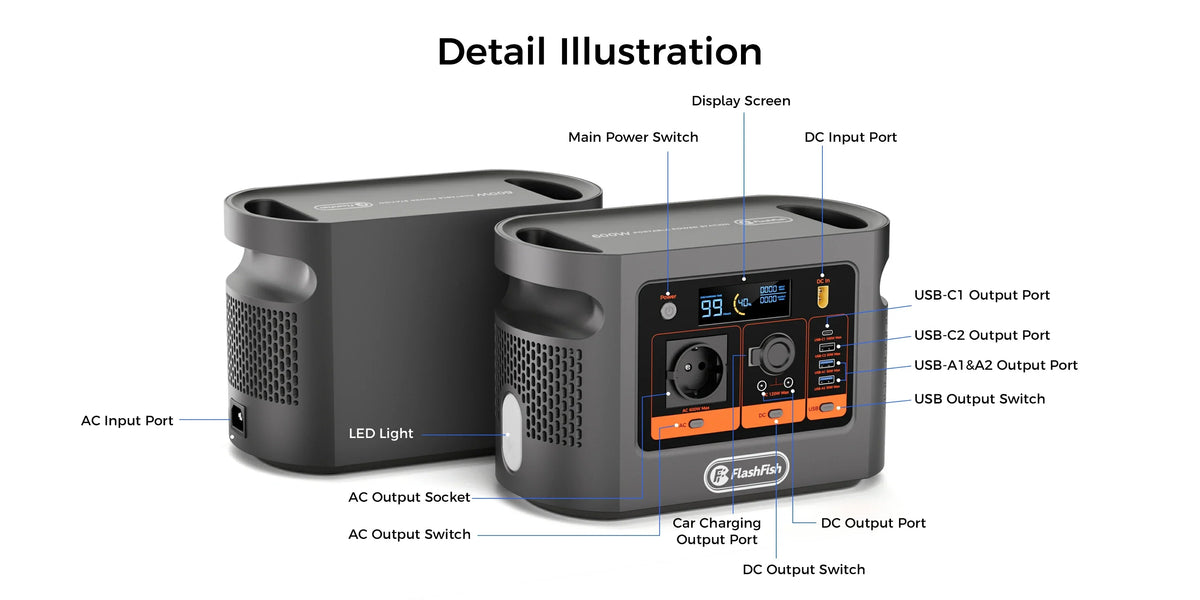
The local product record documents 384Wh nominal energy, a 600W continuous pure-sine AC output and separate USB and 12V paths. Those values help screen an appliance after the site is dry. They do not establish water resistance, an IP rating, outdoor approval, safe tent operation, unattended use or any runtime result.
Capacity and output ratings solve different questions. Even a small load that is electrically within 600W should not be used where the station, plug, adaptor or cable can become damp.
Three campsite decisions
- Dry awning shelf, supervised: the station is raised on a stable dry shelf, ventilation is open, every connector remains dry and weather is stable. Proceed only after checking the exact load and current instructions; keep watching the conditions.
- Closed storage box in a humid tent: the lid reduces splashes but can trap heat and condensation. That is not a verified dry, ventilated operating zone, so do not switch on inside it.
- Wet grass and overnight dew: a board above the grass does not control wind-driven rain, dew, wet cable routes or unattended changes. Move the setup to a verified dry location or use the non-electric fallback.
Set up the dry zone before connecting a load
- Read the current station and appliance instructions and the campsite's electrical rules.
- Choose a stable raised location that remains dry from above, below and the sides.
- Keep ventilation openings clear; do not wrap the station or operate it in a sealed container.
- Inspect every plug, cable and adaptor. Do not use damaged or wet equipment.
- Route leads where people, doors, furniture and vehicle wheels cannot damage them.
- Connect only the verified load, then supervise the complete setup as weather and temperature change.
Do not transfer protection from another system
The Camping and Caravanning Club discusses RCD-protected campsite supplies and purpose-suitable camping equipment. That guidance should not be turned into a claim that a campsite RCD protects every hazard associated with a separate battery station. It does not supply E106B with a weather rating, dry wet connectors or correct a blocked vent.
When E106B may fit
- You can maintain a dry, raised and ventilated operating location for the entire session.
- The exact appliance path, connector and continuous demand are within documented limits.
- A person can supervise the setup and stop promptly if the environment changes.
- A dry, non-electric fallback exists if the five gates fail.
When it does not fit
- Rain, condensation, ground moisture or wet hands may reach the unit or connections.
- The only proposed protection is a sealed bag, closed box or improvised cover that affects ventilation.
- The unit must run outside unattended, including overnight when dew can form.
- The setup supports safety-critical, medical, food or medicine storage without a qualified plan and tested fallback.
Frequently asked questions
Is FlashFish E106B waterproof or weatherproof?
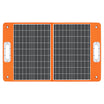
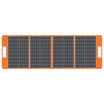
The authoritative product record used here does not provide an IP or weather-resistance rating. Treat that field as unknown, keep the station and every connection dry, and do not interpret the featured outdoor image as a rating.
Can I keep E106B inside a closed bag to protect it from rain?
Do not assume a bag makes operation safe. A cover must not trap heat or block ventilation, and a damp or condensing enclosure is not a verified dry zone. If dry siting and ventilation cannot both be maintained, stop using the setup.
Does a campsite RCD make a portable power station safe in damp conditions?
No. An RCD-protected campsite installation is important for the circuit it protects, but it does not create weather resistance for a separate portable station or make wet connectors acceptable.
What should I do if condensation reaches the station or a connector?
Stop use, disconnect only when this can be done safely, and follow the manufacturer's instructions before reuse. Do not wipe the surface and immediately restart or assume that an apparently dry exterior proves the internals are dry.
Can I leave E106B running outside overnight?
This article does not approve unattended outdoor use. Dew, rain, condensation, ground moisture, cable damage and changing ventilation can develop after setup; use only under conditions permitted by the current instructions and with active supervision.
Conclusion
A damp campsite is a stop-condition problem before it is a power-capacity problem. If any part of DRY-ZONE-RAISE-CABLE-WATCH-STOP fails, do not improvise around it. For a product-specific uncertainty, ask FlashFish Europe about the planned setup and preserve a dry fallback.
Sources and evidence limits
Checked 19 October 2026. FlashFish provides the current European product route and authoritative declared specifications. The Camping and Caravanning Club and Electrical Safety First provide general damp-condition and outdoor electrical guidance. No E106B, shelter, cable or campsite was physically tested. This is a conservative planning checklist, not an IP rating, campsite approval, electrical-installation assessment or permission to use electrical equipment in damp conditions. Ask FlashFish Europe about the planned setup before relying on an unresolved product detail.



Leave a comment
This site is protected by hCaptcha and the hCaptcha Privacy Policy and Terms of Service apply.