

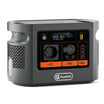
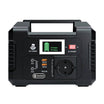

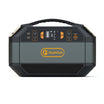
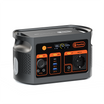


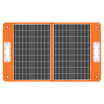
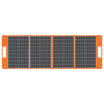


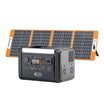

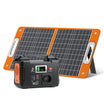

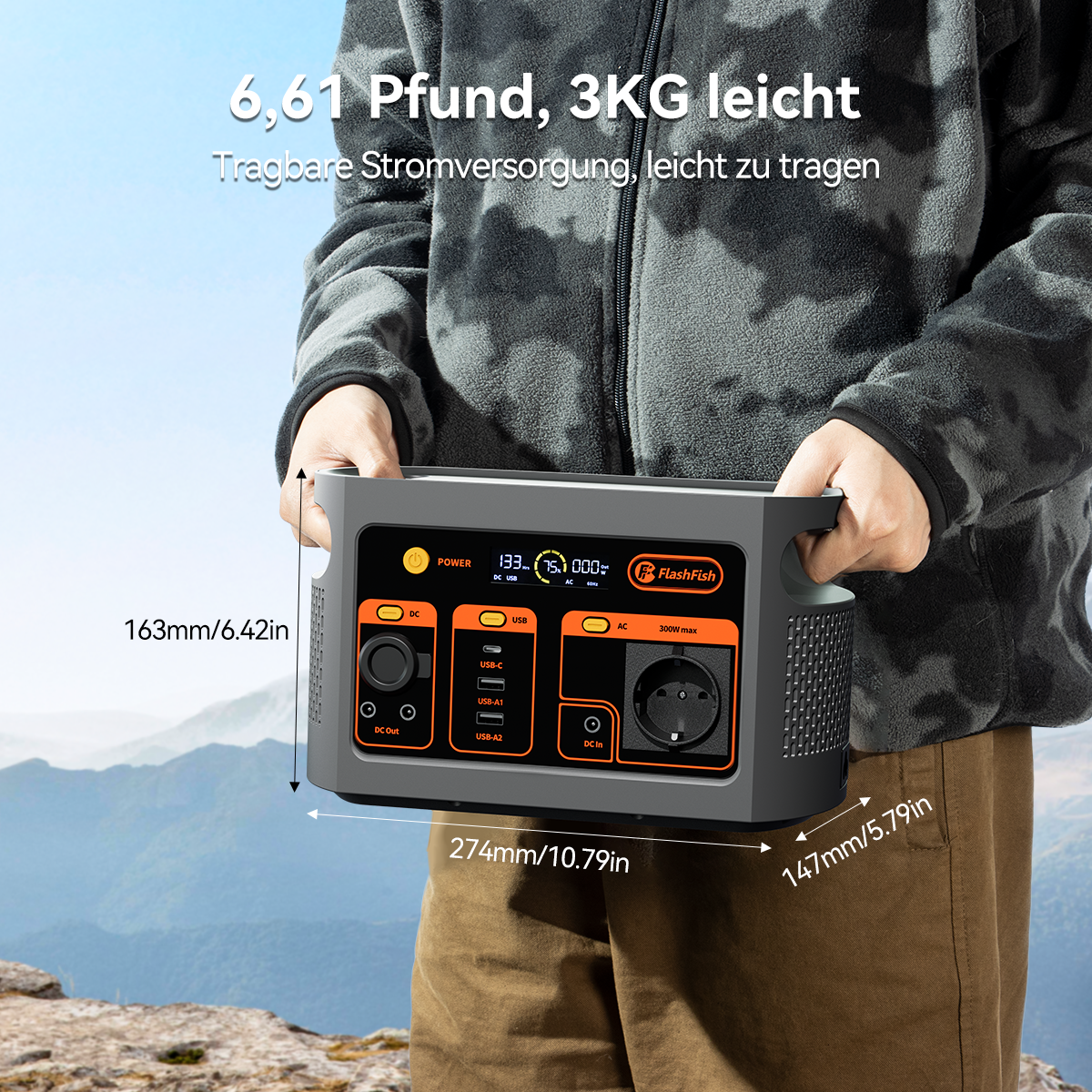
Short answer: the FlashFish E103 is the lighter option in this comparison at 3.0kg and suits a small device list that fits 179.2Wh, 300W AC output and 60W USB-C. The Jackery Explorer 300 Plus is listed at 3.75kg and offers more battery capacity at 288Wh, while keeping the same 300W continuous AC class. Choose from your actual chargers and carrying limit, not from brand recognition alone.
This is a specification-led comparison, not a side-by-side field test. Neither unit was purchased, charged or run for this article. Manufacturer figures help narrow a shortlist but do not establish real runtime, noise, durability or service experience.
Quick comparison
| Decision point | FlashFish E103 | Jackery Explorer 300 Plus | Why it matters |
|---|---|---|---|
| Battery capacity | 179.2Wh | 288Wh | More Wh usually provides more energy budget before losses, but load and conditions decide usable time. |
| Battery chemistry | LiFePO4 | LiFePO4 | Chemistry is one ownership factor; implementation, temperature and charging practice still matter. |
| Continuous AC output | 300W pure sine | 300W pure sine | Both occupy the same listed continuous AC power class. |
| Surge figure | 600W | 600W | A surge number is brief-start context, not permission to run a load above 300W continuously. |
| USB-C | 60W maximum | Official Jackery materials list a 100W USB-C input/output path | Check the laptop charger and cable profile; port wattage alone does not establish compatibility. |
| Solar/DC input | 90W maximum | 100W maximum is listed in Jackery support material | Panel voltage, current, connector, cable and sunlight still need to match. |
| Weight | 3.0kg | 3.75kg | E103 removes 0.75kg from the power station portion of the pack. |
| Dimensions | 274 x 147 x 163mm | About 230 x 155 x 167mm in Jackery support material | Measure the actual storage space; one model is not smaller in every direction. |
| App control | Not used as a supported claim here | Listed by Jackery | Remote status and settings may matter to some buyers. |
Start with the device list, not the capacity figure
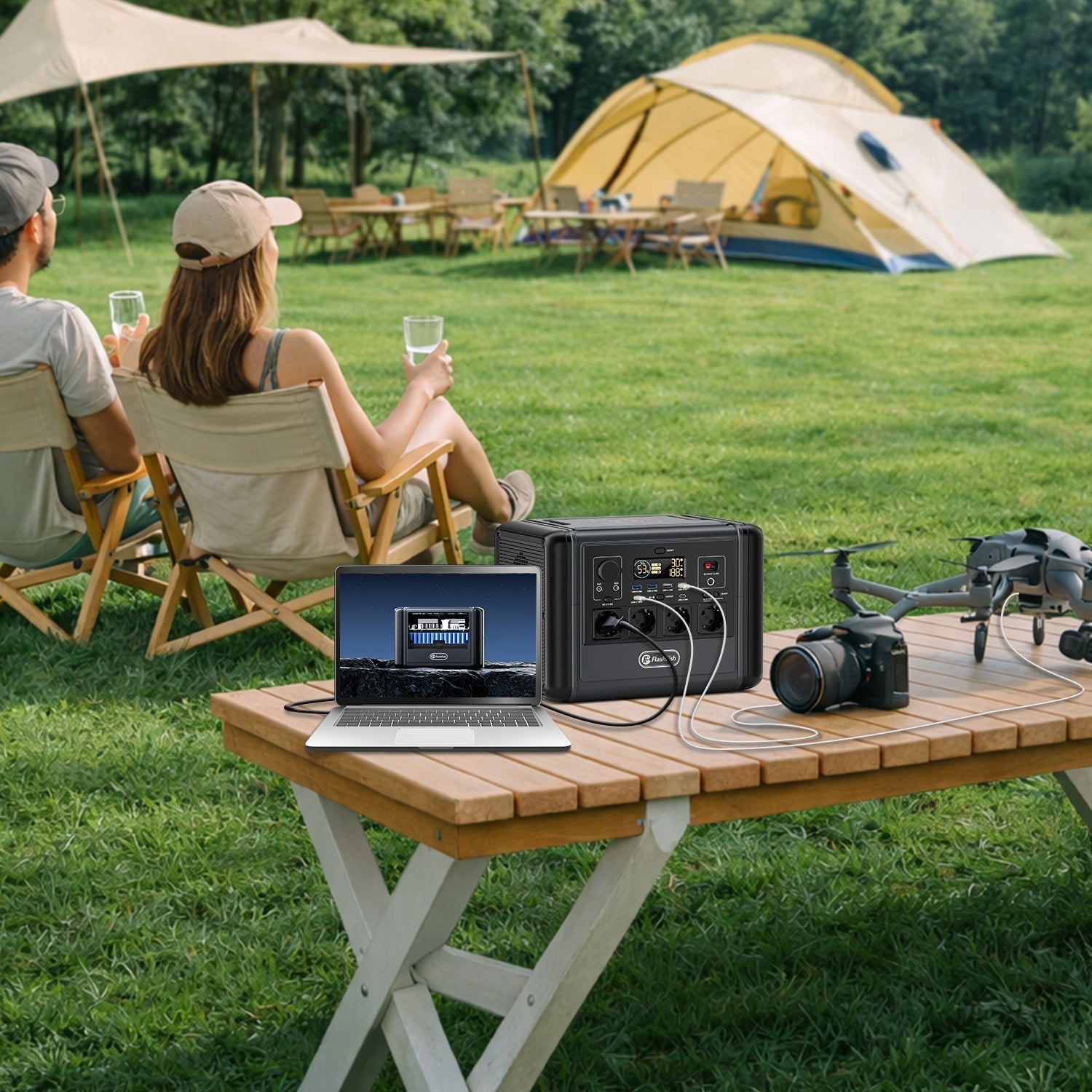
For light camping, write down only devices that truly need the station: phones, camera batteries, a laptop, a small light or another low-power item. Record the input rating of every charger and note which may run together. Do not use the output rating printed on an appliance, such as cooling capacity or light output, when the electrical input label is available.
| Device check | Question | Reason to stop and verify |
|---|---|---|
| Laptop | Can it charge from 60W USB-C, 100W USB-C or only its AC adapter? | The laptop may request a different USB-C profile or more power under load. |
| Camera or drone charger | What input does the charger label specify? | Battery voltage is not the same as charger input. |
| Camp light | USB, DC or AC, and how many watts? | Using AC for a small DC load may add conversion loss. |
| Cooler | What are running and startup requirements? | Compressor behaviour may not be represented by one steady figure. |
| Cooking or heating appliance | Is the input above 300W? | Many kettles, hotplates, heaters and hair tools are outside this class. |
Use the PACK decision
- P - Power labels: total the devices that may operate together and stay within continuous output.
- A - Available energy: compare Wh, then allow for conversion loss, device behaviour and a reserve.
- C - Carry limit: include the station, charging cable, panel, adapters and protective storage.
- K - Known interfaces: verify plug, USB-C profile, connector, polarity and regional unit before purchase.
A simple runtime estimate can be used for planning: expected hours are approximately usable battery energy divided by measured load watts. “Usable” is not the full label capacity because conversion and operating losses apply. The most honest approach is to use the device's actual measured demand, document assumptions and treat the result as a range rather than a promise.
Where the FlashFish E103 fits
The FlashFish E103 is a credible compact alternative when the camping list is modest and carrying weight is a priority. Its local database record lists a 179.2Wh LiFePO4 battery, 300W continuous pure-sine AC output, 600W surge, 60W USB-C, up to 90W solar/DC input and a 3.0kg weight.
That combination can suit phones, camera chargers, camp lighting and selected laptops after charger-label checks. The lower weight leaves more room in a walking or vehicle pack. The trade-off is the smaller energy budget: E103 lists 108.8Wh less capacity than the Explorer 300 Plus before losses.
E103 does not fit when the device list exceeds 300W continuous AC, depends on an unverified USB-C profile, or needs a larger energy reserve. The local database was updated from user-confirmed U.S. product information, so the Europe plug, voltage and frequency must be checked on the destination-market unit.
Where the Explorer 300 Plus may fit better
The Jackery Explorer 300 Plus may fit better when the buyer values the larger 288Wh capacity, Jackery's listed app control or its higher listed USB-C path. It remains in the same 300W continuous AC class, so the extra capacity does not make higher-power appliances compatible.
The capacity difference can provide a larger planning margin for repeated device charging or a longer stay, but actual time still depends on the load and conditions. Jackery's product page contains recharge-time and device-time examples; this article does not repeat them because we did not reproduce their test conditions.
No universal winner
| If your priority is... | Shortlist first | Verify before buying |
|---|---|---|
| Lower station carry weight | E103 | Every charger fits the 179.2Wh and port plan |
| More listed battery capacity | Explorer 300 Plus | The additional 0.75kg and current package fit the trip |
| Loads close to 300W | Neither by specification alone | Startup behaviour, operating margin and exact manual |
| Laptop USB-C charging | Compare charger profiles | Required voltage/current profile and cable rating |
| Solar top-up | Compare the complete system | Panel voltage, current, connector, cable, angle and weather |
Frequently asked questions
Is FlashFish E103 a Jackery Explorer 300 Plus alternative?
It can be for a light device list that fits 179.2Wh, 300W AC output, 60W USB-C and a 3.0kg carrying plan. The Jackery offers more listed capacity at 288Wh.
Which model is lighter?
The manufacturer records used here list E103 at 3.0kg and Explorer 300 Plus at 3.75kg, a difference of 0.75kg.
Can either model run a camping kettle?
Many electric kettles exceed the 300W continuous class. Read the exact kettle input label; do not choose either station for a load above its documented continuous output.
Which lasts longer at camp?
The Explorer 300 Plus has more listed capacity, but actual usable time depends on load, conversion loss, temperature, settings and cycling. No side-by-side runtime test was performed.
Sources and evidence limits
- FlashFish product-source bundle - E103 product facts and destination-market boundary.
- FlashFish Europe E103 page - current store context.
- Jackery UK Explorer 300 Plus page and EU manual - competitor manufacturer facts.
This comparison uses manufacturer information and does not claim hands-on testing, universal superiority or fixed runtime.



Leave a comment
This site is protected by hCaptcha and the hCaptcha Privacy Policy and Terms of Service apply.