

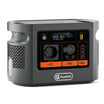
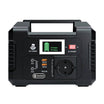

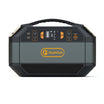
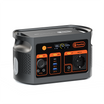






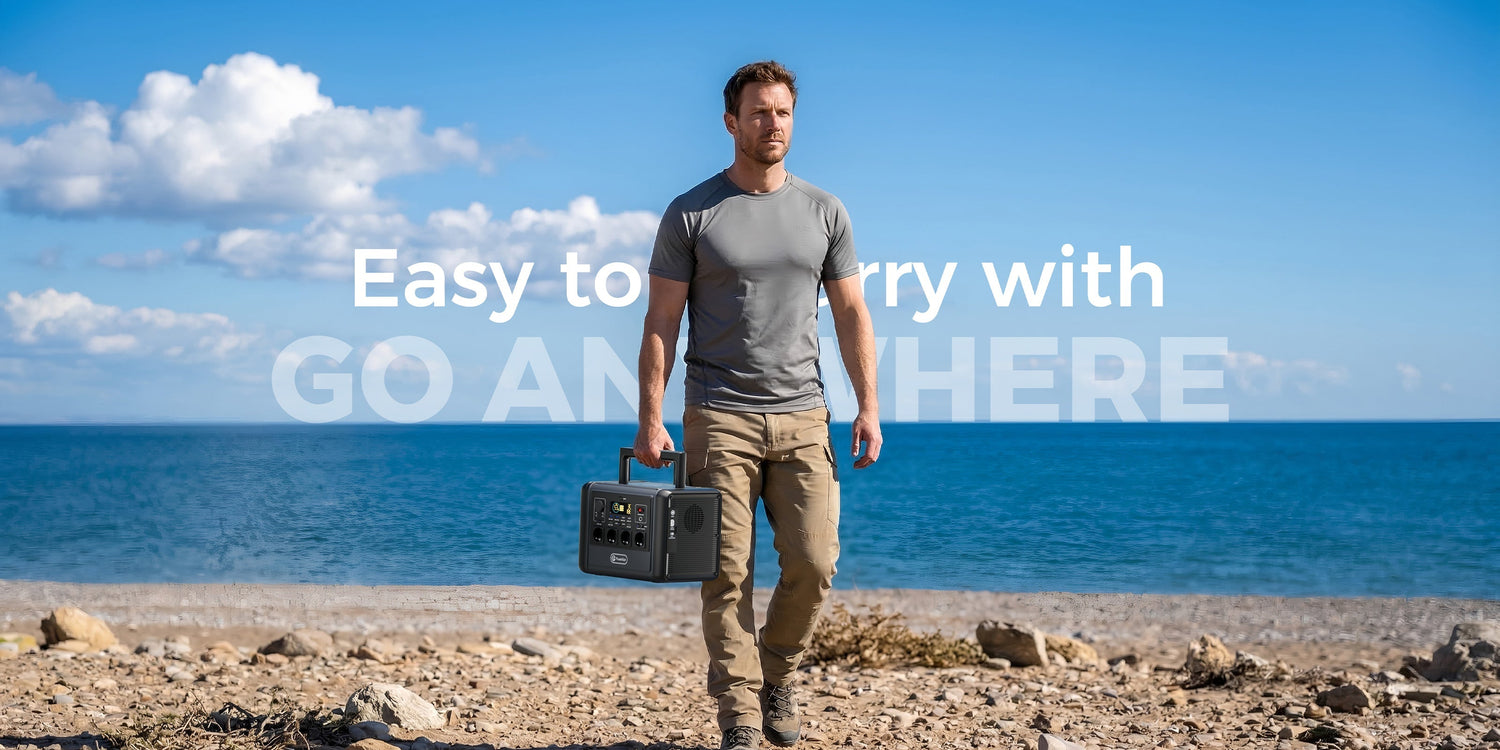
Short answer: choose the FlashFish T1200S when 768Wh, 1,200W continuous AC output, up to 400W solar input and its compact footprint cover your real camping load list. Choose the standard EcoFlow DELTA 3 when you need 1,024Wh, 1,800W AC output, up to 500W solar input, app control or documented capacity expansion. Their listed weights are effectively tied.
This is a source-based comparison, not a hands-on test. Neither station was taken camping, capacity-tested or charged from solar for this article. Check current regional manuals, delivered plugs, prices and bundle contents before buying.
T1200S vs DELTA 3 specification table
| Decision factor | FlashFish T1200S | EcoFlow DELTA 3 | Camping meaning |
|---|---|---|---|
| Nominal capacity | 768Wh | 1,024Wh | DELTA 3 starts with 256Wh more nominal capacity; outlet energy will be lower than either label value. |
| Battery chemistry | LiFePO4 | LFP | Same broad chemistry family; this table does not infer equal cells, controls or lifecycle. |
| Continuous AC output | 1,200W | 1,800W | DELTA 3 accommodates a wider set of higher-input appliances on paper. |
| Peak or surge output | 2,400W peak | 3,600W surge | Use only for documented short startup behaviour, never as a continuous-load allowance. |
| Solar input | Up to 400W; 12-50V, 10A | Up to 500W; 11-60V | DELTA 3 accepts more panel watts on paper; panel voltage and current matching still govern. |
| USB-C | One 100W and one 30W output | Two 100W maximum outputs | DELTA 3 offers more high-power USB-C flexibility for two compatible devices. |
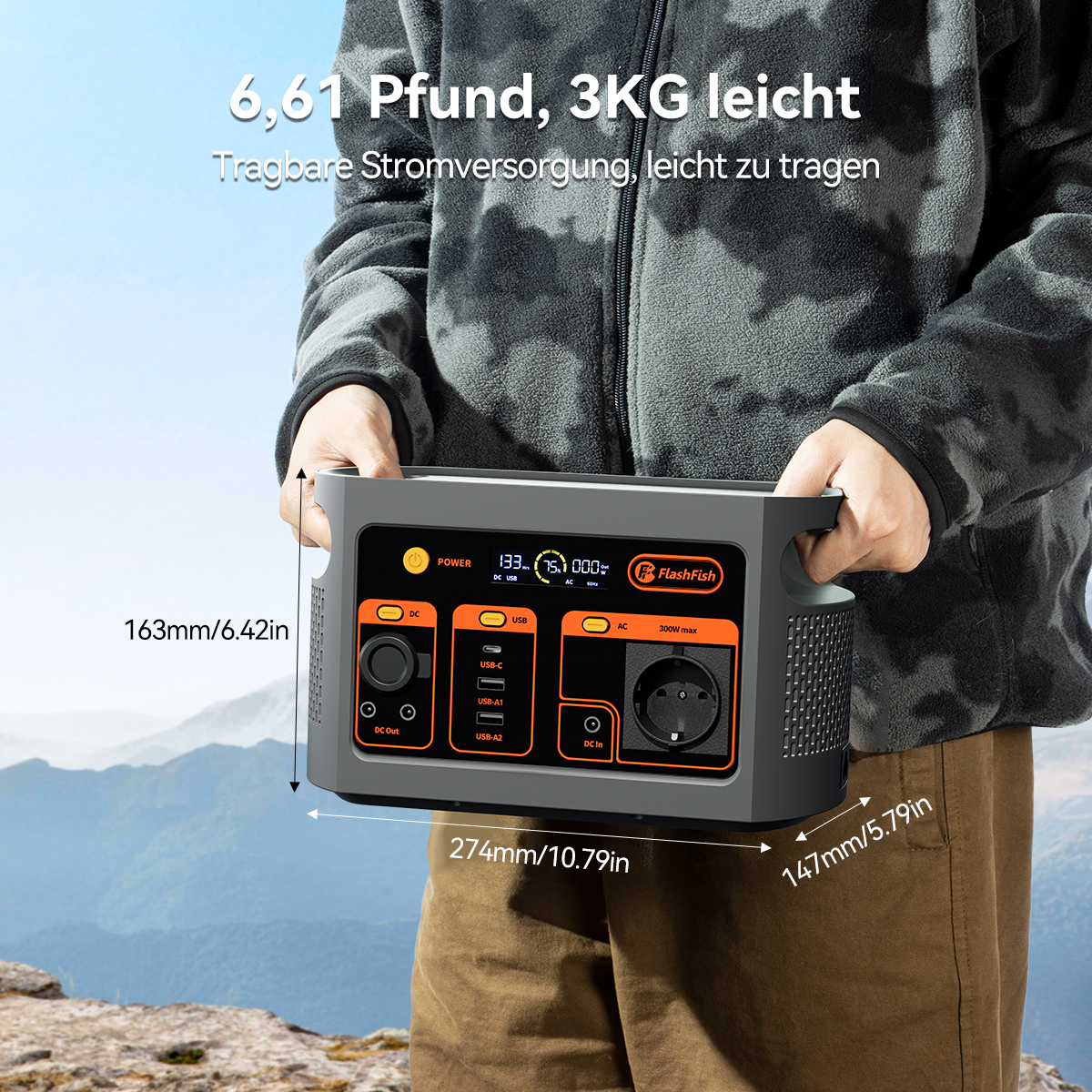
| Weight | 12.45kg | Up to 12.5kg | No meaningful paper winner; test the actual carrying route and storage space. |
| Dimensions | 343 x 212 x 245mm | 398 x 200 x 284mm | T1200S is shorter in listed length and height; DELTA 3 is slightly narrower. |
| App | Product database does not provide this value | Supported | Choose DELTA 3 if remote settings or app visibility are required. |
| Capacity expansion | Product database does not provide this value | Documented up to 5kWh with compatible extra batteries | DELTA 3 has the clearer growth path; verify the exact compatible battery. |
Sources: the current FlashFish Europe T1200S page, the local FlashFish product database and the EcoFlow Europe DELTA 3 Series page. The EcoFlow page includes multiple variants; only the standard DELTA 3 values are used above.
Start with a camping load ledger
Nominal watt-hours do not answer how long a station will run a campsite. Make a small ledger for the appliances that matter. Use rated input from the device label, expected hours of operation and whether the load cycles on and off. Then add conversion losses, station standby consumption and a reserve rather than dividing capacity by one ideal wattage.
| Load question | Why it changes the choice | Evidence to collect |
|---|---|---|
| What must run? | Separates essential lighting, phone and fridge loads from optional heat appliances | Exact model and input label |
| How long and how often? | A cycling fridge differs from a constant resistive load | Measured or documented duty pattern |
| Does it start above its running input? | Motors and compressors can require short startup headroom | Manufacturer startup data or conservative test by a competent person |
| Can it use DC or USB-C? | A direct DC path may avoid unnecessary AC conversion | Voltage, connector and protocol compatibility |
| When can the station recharge? | Daily solar opportunity may matter more than one larger battery | Panel match, shade map, weather and driving plan |
Capacity: DELTA 3 has the paper advantage
The 1,024Wh DELTA 3 has one-third more nominal capacity than the 768Wh T1200S. That can matter for overnight refrigeration, device charging or a trip with weak solar. It does not translate into a universal runtime percentage because inverter losses, DC conversion, temperature, appliance cycling and reserve settings differ.
If your documented energy need already fits comfortably inside 768Wh after realistic allowances, extra capacity may not change the trip. If the plan sits close to the T1200S limit before losses, the DELTA 3 provides more room or the load plan needs to shrink.
Output: DELTA 3 supports a broader AC load range
The standard DELTA 3 is listed at 1,800W continuous AC output versus 1,200W for T1200S. This is a clear specification difference. It can be relevant for coffee machines, cooking equipment or tools, but high-wattage heating loads also consume battery energy quickly. A station that can start an appliance may still be a poor energy match for sustained use.
Read the appliance's electrical input, not its marketing output. Keep simultaneous loads in the calculation. Do not use the 2,400W or 3,600W short-duration figures as steady operating targets.
Solar input: compare the full electrical envelope
T1200S accepts up to 400W within a documented 12-50V and 10A input envelope. Standard DELTA 3 lists one 11-60V input at up to 500W. The extra 100W can shorten charging only when compatible panel power and sunlight are actually available and no other input limit is reached.
A 100W panel nameplate does not mean the station receives 100W all day. Shade, cloud, panel angle, temperature, cable loss and the station's charging curve change real input. Build the trip around energy ranges, not an ideal charge-time headline.
Mobility is a draw; shape is not
T1200S is listed at 12.45kg and DELTA 3 at no more than 12.5kg. That difference is too small to drive the decision. Their shapes differ: T1200S is listed at 343 x 212 x 245mm, while DELTA 3 is 398 x 200 x 284mm. Measure the vehicle compartment, shelf or tent vestibule and include cable clearance and ventilation.
Neither model should be treated as a backpack battery. A carry from the car to a pitch is different from repeated walking over steep or wet ground. If manual handling is a concern, plan the route or choose a smaller load and station class.
Ports and controls can decide a close comparison
T1200S provides one 100W USB-C output and one 30W USB-C output. Standard DELTA 3 lists two USB-C outputs at up to 100W each, app support and compatible extra-battery expansion. Those are meaningful differences when two high-power USB-C devices, remote monitoring or future capacity growth are explicit requirements.
The T1200S product database does not provide app or expansion values. That absence should remain an evidence gap, not be converted into a negative claim about the product.
When each model fits
Choose FlashFish T1200S when
- Your measured load and reserve fit within 768Wh nominal capacity and 1,200W continuous AC output.
- Up to 400W solar input and the documented 12-50V, 10A envelope match your panel plan.
- One 100W and one 30W USB-C output cover the device list.
- The shorter listed length and height fit the vehicle or camping layout.
- You do not require documented app control or extra-battery expansion.
Choose EcoFlow DELTA 3 when
- You need the additional 256Wh of nominal capacity.
- Your documented AC load exceeds 1,200W but fits the DELTA 3 continuous rating.
- Up to 500W solar input is useful with a compatible panel arrangement.
- Two 100W USB-C outputs, app support or documented expansion are purchase requirements.
Choose neither when
- The appliance label, startup demand, regional plug or voltage compatibility is unresolved.
- The trip depends on an ideal solar day or a precise runtime with no allowance for losses.
- You need a fixed building connection, transfer system or campsite hook-up substitute.
- The carrying route makes a roughly 12.5kg station impractical.
Verdict
The T1200S is the fit-first option for a camping list that stays comfortably within 768Wh and 1,200W and does not need app control or expansion. DELTA 3 is the stronger paper fit for higher AC demand, more nominal energy, two high-power USB-C outputs and a growth path. Neither wins by brand alone; the load ledger and recharge plan should produce the answer.
Frequently asked questions
Which has more battery capacity, T1200S or DELTA 3?
The manufacturer specifications list 768Wh for T1200S and 1,024Wh for the standard DELTA 3. Those are nominal capacities, not energy promised at an appliance outlet.
Which is lighter for camping?
The listed weights are almost the same: 12.45kg for T1200S and up to 12.5kg for DELTA 3. Carry distance, handle comfort and vehicle space may matter more than the small paper difference.
Which supports more AC power?
T1200S is listed at 1,200W continuous and 2,400W peak. DELTA 3 is listed at 1,800W and 3,600W surge. Appliance fit still requires the exact input label and manual.
Can either station be charged from solar while camping?
Both list solar input. T1200S is documented at up to 400W within 12-50V and 10A; standard DELTA 3 lists up to 500W within 11-60V. Panel electrical matching and real sunlight remain decisive.
Is T1200S a direct replacement for DELTA 3?
Only for users whose loads, charging plan and feature needs fit the T1200S limits. DELTA 3 offers more nominal capacity, higher AC output, app support and documented battery expansion.
Sources and evidence limits
- FlashFish Europe T1200S product page - current first-party T1200S context.
- EcoFlow Europe DELTA 3 Series page - standard DELTA 3 first-party specifications.
- Camping and Caravanning Club safety guide - camping electrical setup context.
- Electrical Safety First extension-device guide - cable and power-strip safety boundaries.
Prices, stock, firmware, bundles and manuals can change. Recheck both regional product pages and delivered unit labels before publication or purchase.



Leave a comment
This site is protected by hCaptcha and the hCaptcha Privacy Policy and Terms of Service apply.