

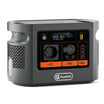
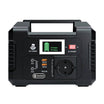

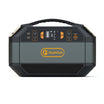
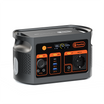


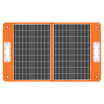
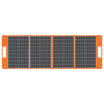


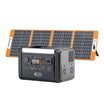

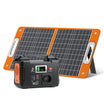


Short answer: Heise’s named 2023 test is real independent evidence for the E200 unit it examined: the review documented compact dimensions, load-dependent delivered energy, fan noise, overload behaviour and solar input. It is not a current test of every E200. Today’s FlashFish Europe listing and product database differ from the reviewed unit in weight and port details, so buyers should transfer only facts that match the exact current SKU.
The honest value of a third-party test is not a single recommendation sentence. It is the method, measured result, disclosure, date and list of facts that still match the product a buyer can order today.
What the independent test actually contributes
Heise published the review on 20 October 2023 with a named author, Jonas Bettger, and disclosed that Banggood supplied the unit. The article described its measurement approach rather than repeating only a catalog table. That disclosure and method make it useful evidence even when the conclusions are critical.
Heise reported that its normal PC-workstation scenario triggered the E200 overload response, so the reviewer changed the test load. It then measured delivered AC energy at several load levels with an AC energy meter. The article reported 98Wh near a 197–205W load, 108Wh around 100W and 74Wh at a low-load test up to 25W.
The review also reported fan noise above roughly 100W, solar input reaching 38W in its setup and outputs switching off when a charging source was connected. These are valuable observations for the tested unit. They must remain attributed because method, sample condition, firmware and revision can change the result.
Use a transfer table instead of copying the verdict
| 2023 Heise evidence | What it supports | What it does not establish today |
|---|---|---|
| Named author; supplied unit disclosed | Transparent provenance for that review | FlashFish sponsorship, every retailer relationship or current sample provenance |
| 98Wh, 108Wh and 74Wh delivered in three AC-load conditions | Load-dependent results for one tested sample and method | A fixed usable-capacity percentage, runtime or every E200 unit |
| Overload response with the reviewer’s PC and hair-dryer checks | The tested sample cut output under those overload/startup conditions | Compatibility with another PC, motor or device below 200W |
| Fan-noise observations and measurements | Noise behaviour in the review environment | Bedroom suitability, current revision noise or sound under every load |
| 38W observed solar input | One panel/setup result near the product’s 40W input class | A fixed charging time, yield or compatibility with any solar panel |
| 2.54kg tested weight and described USB-C port | Physical facts of the reviewed unit | Current Europe SKU weight or port set, which differ in today’s official data |
Why the differences matter more than a review score
The current FlashFish Europe E200 page and authoritative product database align on a 151Wh lithium-ion battery, 200W continuous modified-sine AC output, 400W peak output, 40W maximum solar/DC input, dimensions of 208 × 110 × 158mm and 1.85kg weight. The same current record lists USB-A outputs and does not describe the Heise unit’s USB-C port in the current port summary.
Heise measured its sample at 2.54kg and described USB-C. That does not make either source dishonest. It signals a possible revision, market or bundle difference that must be resolved before a current article treats the 2023 unit as identical to the 2026 Europe product.
There is another useful alignment: both the current official data and Heise’s article use 151Wh and a 200W continuous class. Those matching fields can frame the use class. The measured energy remains third-party sample evidence, not a new catalog specification.
Current Europe facts to verify on the order page
| Current field | Evidence checked 5 August 2026 | Buyer implication |
|---|---|---|
| Store status | ACTIVE Europe product, standalone inventory 183 | Eligible for a current internal link; future availability is not promised |
| Displayed Germany/EUR price | €109.99 on the current product page | Dated snapshot only; recheck country, tax, shipping and checkout |
| Battery/output | 151Wh; 200W continuous modified-sine AC; 400W peak | Best screened for selected small loads, not high-power appliances |
| Solar/DC input | 11–24V; up to 40W in the product database | Panel voltage/current/connector fit still controls compatibility |
| Weight | 1.85kg official current record | Good carry context, but confirm delivered label if the exact revision matters |
| Battery/coverage | Lithium-ion; 800+ cycle statement; 12-month local database warranty | Cycle wording, remaining capacity and warranty duration are separate questions |
The product page contains customer-review content, but this article does not quote or score it because the visible feed includes mixed product references. Only attributable Heise evidence and current exact-model records are used for review conclusions.
Apply DATE to the buying decision
D: date and device
Write “Heise tested an E200 unit in 2023,” not “the E200 always delivers X.” Record where the sample came from, the stated revision or ports, and any mismatch with today’s regional listing.
A: attribute measurements
Keep the load and method beside every measurement. A 74Wh result at a low-load test and 108Wh around 100W show why one universal efficiency percentage would erase useful information.
T: transfer only matching facts
Use current official/model records for current weight, waveform, ports, warranty and availability. Use the Heise article for its dated observations. When sources disagree, expose the disagreement and ask for exact-revision confirmation.
E: expire volatile facts
Price, stock, package contents, ports, warranty and firmware can change. The €109.99 value in this draft is a 5 August 2026 Germany/EUR page snapshot, not a permanent offer or independent price ranking.
Practical load-fit checklist
- Read the exact device label/manual for continuous input and startup demand.
- Confirm the device accepts modified-sine AC or use an approved DC/USB path.
- Keep the combined load below 200W continuous with useful margin.
- Use Heise’s measured energy only as dated sample evidence, not a runtime promise.
- Keep ports and the station dry; the review’s uncovered-port observation is not a current ingress rating.
- Test the exact non-critical setup safely before a trip or outage.
When FlashFish E200 fits
- You need a compact 151Wh-class station for selected phones, cameras, lights or approved low-power electronics.
- The exact device load stays inside 200W continuous and accepts the documented waveform/connection.
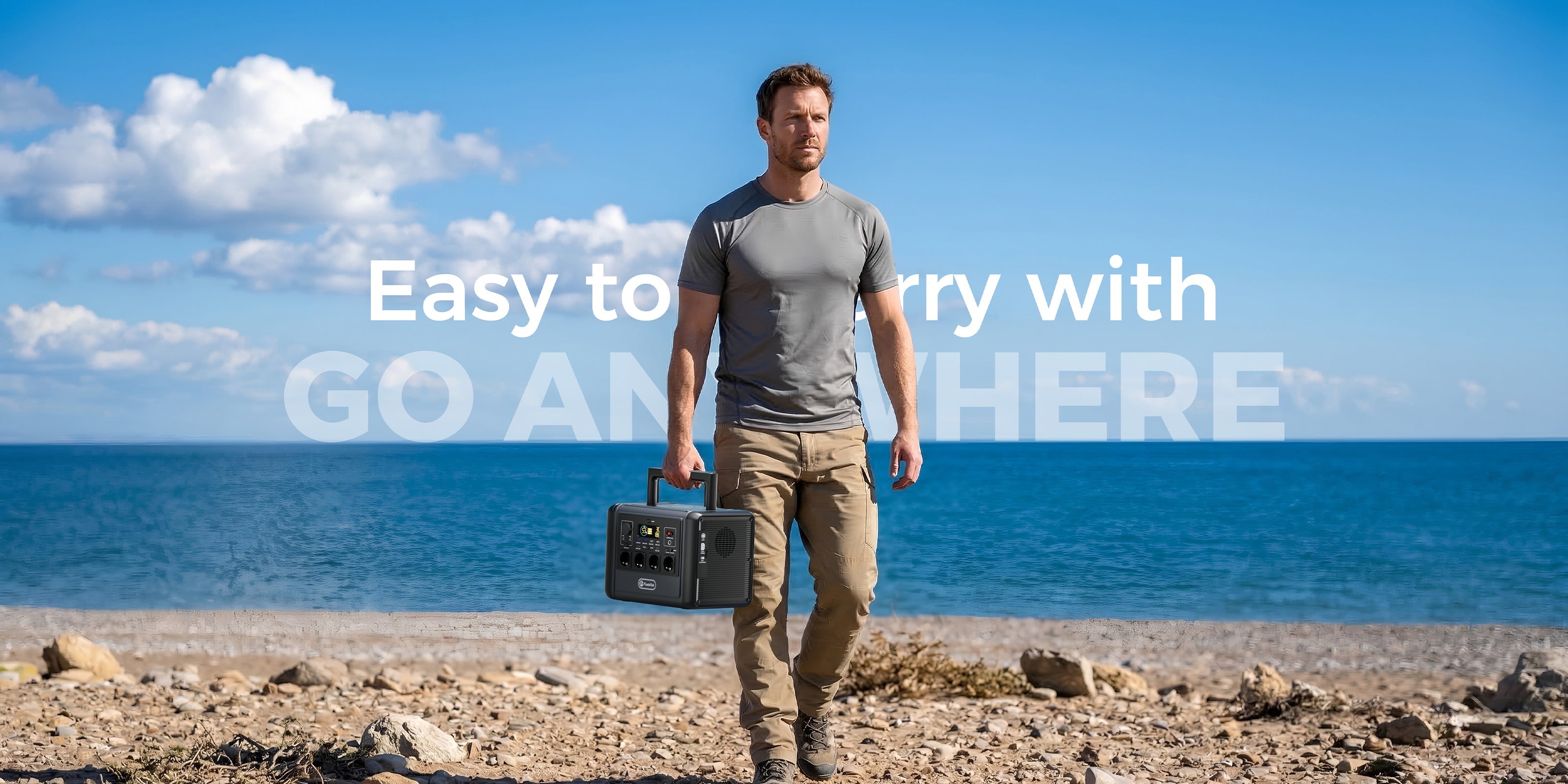
- You value low carry weight and accept slower charging, limited stored energy and a basic display/port set.
- You understand that independent test results vary with load and sample.
When E200 does not fit
- Your load has uncertain startup demand, requires pure sine wave or approaches/exceeds 200W.
- You require USB-C Power Delivery that the current exact port list does not document.
- You need wet-location use, pass-through behaviour, fixed runtime, long-duration backup or medically necessary continuity.
- You need the 2023 review unit and the current Europe SKU to be identical without revision confirmation.
Limitations buyers should not overlook
- Heise’s test is independent but dated and sample-specific.
- The current official weight and port data conflict with the reviewed unit.
- Modified-sine output narrows device fit compared with a pure-sine station.
- The product database gives no measured current usable-energy curve or long-term degradation dataset.
- One review cannot establish every production batch, long-term reliability or support experience.
Frequently asked questions
Is the Heise E200 test current?
It is a named 2023 test of one supplied unit. It is valuable third-party evidence, but its price, unit revision, ports and measurements should not be presented as a fresh test of the current FlashFish Europe SKU.
How much usable energy did Heise measure from its E200?
Heise reported 98Wh near full load, 108Wh around 100W and 74Wh at a low-load test. Those results belong to its disclosed sample, method and conditions; they are not a promise for every E200.
Is today’s E200 identical to the Heise unit?
Do not assume so. The current Europe page and product database list 1.85kg and a specific current port set, while Heise reported a 2.54kg test unit and different port details. A publication reviewer should confirm the exact revision.
Can the E200 run any device below 200W?
No. Continuous watts are only one screen. Startup demand, modified-sine compatibility, voltage, connector, operating conditions and the device manual also matter.
Does one independent review prove long-term reliability?
No. One test can support observations from that sample and method. It cannot establish every unit, production revision, long-term battery condition or current support outcome.
Sources and evidence limits
- Heise Bestenlisten: FlashFish E200 test — named 2023 test method, measurements, observations, price context and sample disclosure.
- FlashFish E200 Europe product page — current regional product facts, displayed price and exact-model context.
- FlashFish product-source bundle — primary current E200 capacity, waveform, input, weight, dimensions, battery, package and manual-derived records.
- FlashFish Europe Shopify discovery — current ACTIVE URL and inventory control.
FlashFish did not repeat the Heise test for this article.



Leave a comment
This site is protected by hCaptcha and the hCaptcha Privacy Policy and Terms of Service apply.