

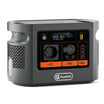
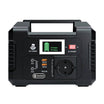

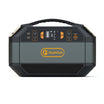
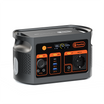


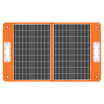
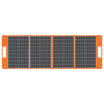


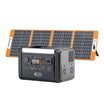

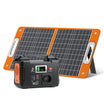

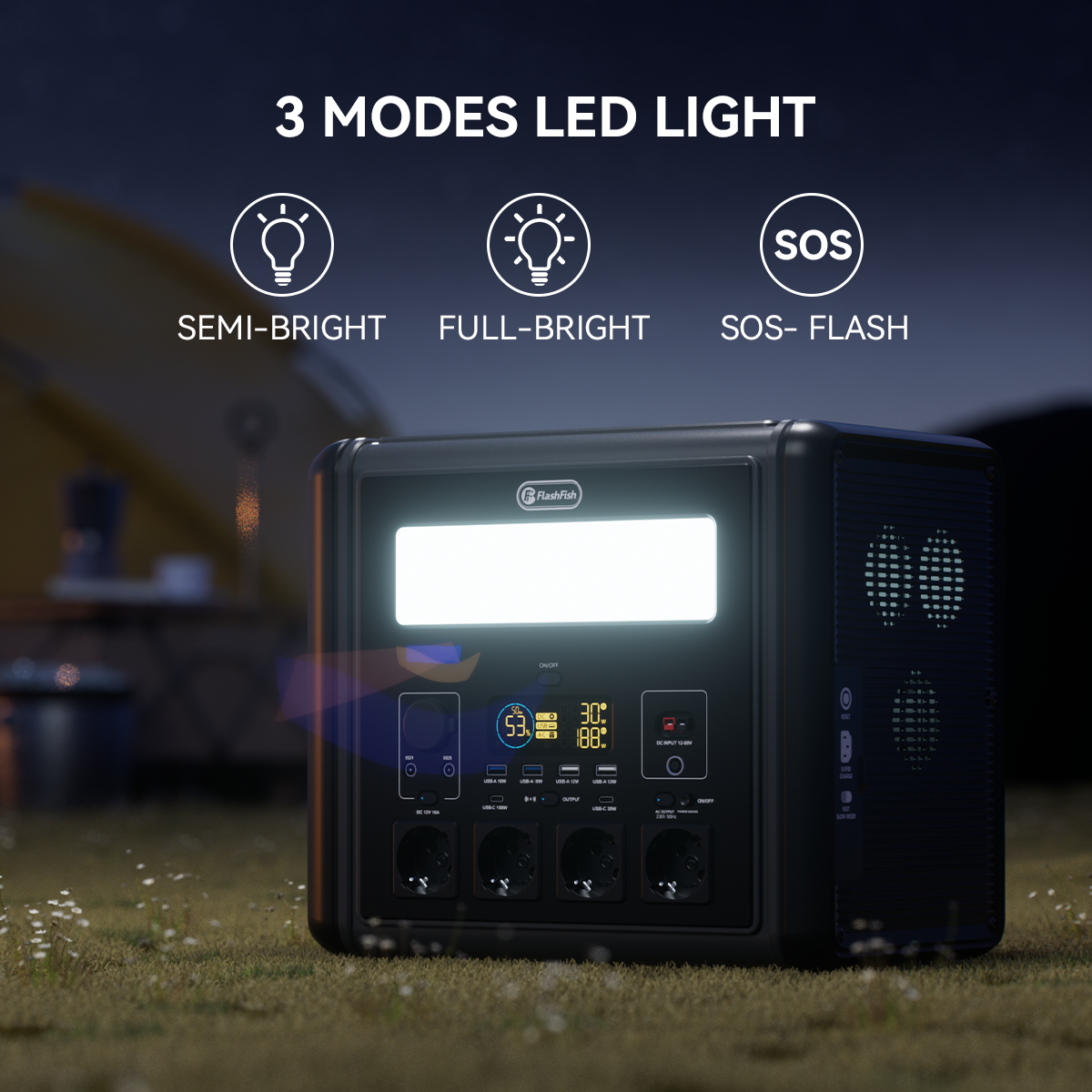
Short answer: FlashFish T2000 is a credible alternative only when 1536Wh, 2000W rated output, 600W solar input and 100W USB-C already cover the buyer's measured loads. Anker SOLIX C2000 Gen 2 has the stronger documented specification envelope: 2048Wh, 2400W rated output, 800W solar input, two 140W USB-C ports, expansion, app modes and 10ms UPS. It is also listed 0.3kg lighter. Choose T2000 for fit, not by hiding those Anker advantages.
This is a source-based comparison of current official Europe pages and the FlashFish product database. It contains no price winner, runtime promise, noise comparison, reliability ranking or head-to-head test.
Current official specification comparison
| Decision point | FlashFish T2000 | Anker SOLIX C2000 Gen 2 | Buyer implication |
|---|---|---|---|
| Battery capacity | 1536Wh LiFePO4 | 2048Wh LFP | Anker provides 512Wh more catalog capacity; delivered runtime still depends on load and losses |
| Rated / peak AC output | 2000W / 4000W | 2400W / 4000W | Anker provides 400W more continuous headroom; both require exact startup checks |
| Maximum solar/DC input | 600W, 12–80V, 10A in the FlashFish record | 800W XT60i with documented voltage/current bands | Anker accepts a higher catalog solar ceiling; panel compatibility and real weather still control input |
| Highest verified USB-C output | 100W plus a separate 30W USB-C port | Two 140W USB-C ports plus a lower-power USB-C port | Anker better fits two high-power USB-C devices; check device profiles and cables |
| Expansion and app functions | No battery-expansion or app function verified in this source set | Up to 4kWh expansion; Standard, TOU, Storm Guard and Fast Charging Plan modes listed | Choose Anker when those documented features are requirements, not optional extras |
| UPS/EPS evidence | FlashFish page lists EPS under 20ms | Anker page lists 10ms UPS | Neither timing alone proves compatibility with every sensitive device; test the exact load |
| Dimensions | 344 × 223 × 300mm | 459 × 250 × 257mm | T2000 is shorter and narrower; Anker is lower. Measure the actual storage space |
| Net weight | 19.2kg | 18.9kg | Anker is listed 0.3kg lighter despite the larger capacity; plan a two-hand lift where appropriate |
What the table does not prove
Catalog specifications establish comparison boundaries, not a winner. They do not tell us delivered AC energy, inverter efficiency at a chosen load, fan noise in the same room, startup success with a particular appliance, long-term reliability or service outcome.
The Anker page includes internal-test statements for standby use, noise and appliance runtime. This comparison does not reuse those claims as independent measurements. Equivalent current data is not available for T2000, so placing the claims side by side would create false symmetry.
Apply CLASS before choosing
C: start with continuous load
Add the normal input watts of every AC device that may run together. Keep that plan inside 2000W for T2000 or 2400W for C2000 Gen 2, with sensible headroom. Treat the shared 4000W peak figure only as documented brief startup capability, never as a continuous allowance.
L: build a load-hour energy budget
Multiply each device's measured average watts by the hours it must operate, add the results, then include conversion losses and reserve. Compare that task energy with 1536Wh or 2048Wh without calling either figure fully usable AC energy.
More capacity can matter for long loads. It can be unnecessary for a short, selected-load plan. The correct question is whether the 512Wh catalog difference changes the decision after realistic loss and reserve assumptions.
A: compare solar as an electrical envelope
T2000's database record lists 12–80V, 10A and 600W maximum solar/DC input. Anker lists an 800W XT60i input with separate voltage/current bands. The higher ceiling does not mean 800W outdoors: array voltage, current, connector, temperature, shade, orientation, season and charge state all matter.
S: measure the carrying and storage route
Weight alone gives a surprising result: the Anker page lists 18.9kg, slightly below T2000's 19.2kg. Shape is different. T2000 is 344mm long, 223mm wide and 300mm high; Anker lists 459 × 250 × 257mm. Measure shelf depth, vehicle space, stairs and lifting route instead of assuming the lower-capacity product is easier to move.
S: decide whether software and expansion are requirements
Anker documents app modes, 10ms UPS and an expansion battery path. The current T2000 source set does not establish comparable app or battery-expansion functions and lists EPS under 20ms. If automated time-of-use behaviour, storm preparation, a larger future capacity or a stricter transfer-time target is central, the Anker feature set is the clearer documented fit.
If the buyer wants a manually managed station for selected loads and does not need those functions, extra features should not replace load, energy, solar and physical-fit calculations.
Worked decision: selected outage loads, not full-property backup
Imagine a user wants to keep a router, laptop, lights and one carefully verified appliance available during a short interruption. The combined normal load stays below 2000W, the planned energy including reserve stays within a conservative 1536Wh-class budget, and 600W solar input is enough for the separate top-up plan.
In that case, FlashFish T2000 can remain on the shortlist. Moving to Anker is justified when the extra 512Wh, 400W of continuous output, higher solar ceiling, two 140W USB-C ports, expansion or app/UPS functions solve a documented need. Buying the larger feature envelope “just in case” is not automatically better—but pretending the envelope is equal would be worse advice.
When FlashFish T2000 fits
- Your measured simultaneous load fits comfortably within 2000W rated output.
- A conservative 1536Wh-class energy budget covers the selected task.
- 600W solar/DC input and 100W USB-C are enough for the real charging plan.
- The shorter, narrower 344 × 223mm footprint works better in the intended space.
- You do not require a verified expansion battery, app modes or 10ms UPS function.
- The delivered EU socket/version, current support and exact manual are confirmed.
When FlashFish T2000 does not fit
- Your normal loads need more than 2000W or your energy budget needs more than the 1536Wh class.
- You need the documented 800W solar ceiling or two 140W USB-C ports.
- You require expandable capacity, time-of-use/app modes or Anker's documented 10ms UPS feature.
- You want a tested noise, delivered-energy, appliance-runtime or long-term reliability comparison that this source set cannot provide.
- Your decision depends on a current price advantage; this draft intentionally contains no price comparison.
Fair-comparison boundary
All Anker figures are attributed to Anker's current Europe product page. They are competitor first-party specifications, not independent FlashFish evidence. T2000 facts come from its current Europe page and the user-supplied FlashFish product database. No competitor image, review quote, customer rating, award or field result is used.
Frequently asked questions
Is FlashFish T2000 better than Anker SOLIX C2000 Gen 2?
Not universally. T2000 may fit a measured 1.5kWh-class load plan in a shorter and narrower enclosure. Anker documents more capacity, higher continuous output, more solar input, stronger USB-C output, expansion, app modes and a 10ms UPS function while weighing slightly less.
Which model has more battery capacity?
The official pages list 1536Wh for FlashFish T2000 and 2048Wh for Anker SOLIX C2000 Gen 2. Catalog watt-hours describe nominal stored energy; they do not by themselves provide a runtime result.
Which model has higher AC output?
FlashFish lists T2000 at 2000W rated and 4000W peak. Anker lists C2000 Gen 2 at 2400W rated and 4000W peak. Plan normal loads from the rated figure, and verify startup needs separately.
Which one is easier to carry?
The published weights are close: 19.2kg for T2000 and 18.9kg for C2000 Gen 2. Their shapes differ, so compare the exact 344 × 223 × 300mm and 459 × 250 × 257mm dimensions with your storage space and lifting route.
Does this comparison prove which model is better value?
No. This draft excludes price because offers and bundles change, and it includes no head-to-head testing. Better value depends on current delivered price, required capacity and features, regional support and how well the exact station matches measured loads.
Sources and evidence limits
- FlashFish Europe T2000 product page and authoritative local FlashFish product database — current T2000 catalog, port, size and product-status context.
- Anker SOLIX Europe C2000 Gen 2 product page — current competitor specifications, features, expansion, app and UPS claims.
- Electrical Safety First: extension leads, cable reels and block adaptors — connected-load and cable-path precautions for selected-load planning.
This is a specification-and-fit comparison, not a price comparison, laboratory test or universal winner ranking.




Leave a comment
This site is protected by hCaptcha and the hCaptcha Privacy Policy and Terms of Service apply.