

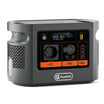
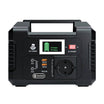

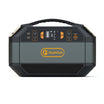
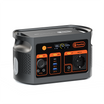


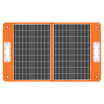
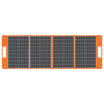


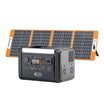

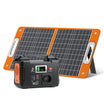

Short answer: both current European pages describe a 768Wh, 1200W LFP portable power station, so the useful choice is not capacity alone. T1200S lists higher maximum solar input at 400W and a 2400W peak figure; Anker SOLIX C800 lists lower mass at 10.9kg, app control, five AC outlets and a 20ms UPS feature. Choose from your actual camping load list, charging window, carry distance and control needs—not from one headline number.
This is a documented-specification comparison, not a side-by-side field test. No runtime, efficiency, noise, weather resistance, reliability or charging-time winner is claimed.
T1200S and C800: current European specification comparison
| Decision field | FlashFish T1200S | Anker SOLIX C800 | Buyer interpretation |
|---|---|---|---|
| Catalog capacity | 768Wh | 768Wh | Equal label energy; delivered energy was not compared. |
| Rated AC output | 1200W | 1200W | Check combined continuous loads and startup behaviour. |
| Higher-demand feature | 2400W peak listed | 1600W SurgePad listed | Different definitions; neither is a universal continuous rating. |
| Battery chemistry | LFP | LFP | Chemistry alone does not establish field life. |
| Maximum solar input | 400W | 300W | T1200S has the published input ceiling advantage. |
| AC outlets | 4 | 5 | C800 has one more, but total output still governs. |
| USB-C | 100W + 30W | 100W + 30W | Similar published USB-C layout. |
| Listed mass | 12.45kg | 10.9kg | C800 is 1.55kg lighter on the current pages. |
| App control | Not established in the local product record | Listed | C800 fits buyers who require documented phone control. |
| Cycle statement | 3500+ cycles to over 80% | 3000 cycles listed | Test conditions and wording are not shown as identical. |
Specifications were checked on 11 August 2026. Product pages can change, and regional versions matter. This table intentionally excludes price because no same-time, same-country checkout comparison was collected.
Start with the campsite, then the product
A 1200W continuous ceiling can cover many camping loads, but the product name does not approve an appliance. List the wattage of the fridge, lights, laptop chargers, pump, cooking appliance and any device that may run together. Motors and compressors may require extra starting evidence. Resist the common mistake of treating a peak or boost feature as a replacement for the rated output.
| Your priority | More relevant evidence | Do not infer |
|---|---|---|
| Induction or electric cooking | Exact appliance input and station continuous limit | That peak/SurgePad supports every setting |
| Cooler or fridge | Running watts, startup and daily energy | A fixed duration from 768Wh |
| Photography/drone gear | Charger input, USB-C profile and charging sequence | That port wattage equals device acceptance |
| Several devices | Simultaneous total and outlet layout | That more sockets increase total output |
Neither page supplies a result for your tent temperature, fridge cycling, cable setup or reserve policy. Catalog Wh divided by load watts is only a before-loss boundary; conversion losses, changing loads and battery management reduce usable duration.
The real trade: recharge window versus carry burden
T1200S lists up to 400W solar input, while C800 lists up to 300W. The extra published ceiling can matter when compatible panels and strong sunlight are available during a short recharge window. It does not mean a 400W panel delivers 400W continuously: array voltage/current compatibility, orientation, shade, temperature and weather all affect input.
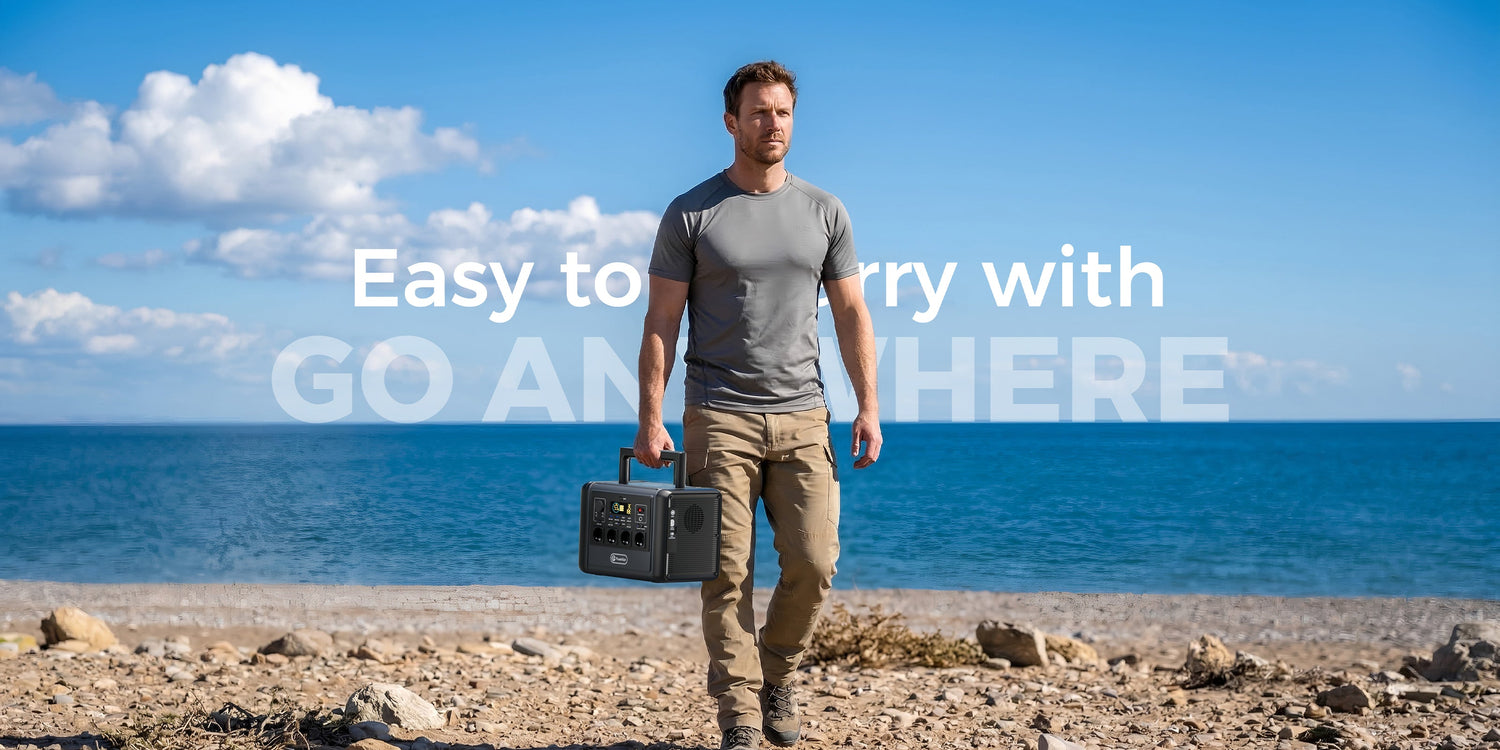
C800 lists 10.9kg versus 12.45kg for T1200S. A 1.55kg catalog difference can matter on a long walk from the car, but mass is only one portability dimension. Pack shape, handle comfort, panel weight and how many trips you make also matter. The FlashFish image on this article illustrates carrying context; it is not a comparative ergonomics test.
Controls, outlets and continuity features
The Anker page documents app control, five AC outlets and a 20ms UPS feature. The T1200S page documents four AC outlets, 100W and 30W USB-C ports, and an EPS transfer statement. Transfer features may help with ordinary electronics, but they are not evidence for uninterrupted operation of every device and should not be used as the sole provision for safety-critical continuity.
The local FlashFish product database does not establish T1200S app control, so this comparison records that field as unproven instead of assuming absence or presence. That is an example of a useful blank: if remote control is essential, verify the exact current regional unit before purchase.
When each station fits—and when neither fits yet
Choose the FlashFish T1200S shortlist when the 400W published solar-input ceiling is valuable, four AC outlets are sufficient, 12.45kg fits your carry plan and the exact loads pass the 1200W/startup checks. It is also the stronger fit when you prefer a straightforward product-specific buying route on FlashFish Europe.
Choose the Anker SOLIX C800 shortlist when 10.9kg, app control or five AC outlets has more practical value than the extra published solar-input ceiling. Treat SurgePad according to Anker's stated use boundary, not as a new continuous rating.
Choose neither yet when the appliance startup is unknown, you need verified weather protection, silence, exact runtime, a special connector, a specific UPS acceptance, or performance data under your conditions. Those questions require model-specific documentation or a controlled comparison that this article does not provide.
A ten-minute camping shortlist
- Write the maximum simultaneous load and flag every motor or compressor.
- Estimate daily Wh from realistic use, then reserve energy rather than planning to zero.
- Record whether you can recharge from mains, vehicle or solar and for how long.
- Add the station, cables and panels to the carry plan.
- Count required outlets by type without exceeding total output.
- Verify the exact country version, current package and campsite electrical/fire rules.
Frequently asked questions
Do T1200S and Anker SOLIX C800 have the same battery capacity?
Their current European product pages both list 768Wh. Equal catalog capacity does not establish equal delivered AC energy, efficiency or runtime.
Which has higher solar input on the published specifications?
The current T1200S Europe page lists up to 400W solar input, while the Anker SOLIX C800 Europe page lists up to 300W. Actual charging depends on compatible panel voltage, current, weather and setup.
Which is lighter to carry?
The C800 Europe page lists 10.9kg and the T1200S Europe page lists 12.45kg, a catalog difference of 1.55kg. Handle shape and walking distance still affect practical carry comfort.
Does Anker SurgePad mean every 1600W appliance will work?
No. Anker describes SurgePad as working best with heating devices and notes that usage affects performance. Treat it as a bounded feature, not a universal 1600W continuous rating.
Which model is the camping winner?
There is no evidence-based universal winner here. Choose T1200S for its published solar-input advantage or C800 for lower listed mass, app control and five AC outlets, subject to exact load and regional checks.
Sources and evidence limits
- FlashFish Europe: T1200S — current regional T1200S specifications and product context.
- Anker SOLIX Europe: C800 — current C800 specifications and feature boundaries.
- Electrical Safety First: appliance ratings — load-rating and overload context.
No side-by-side sample, field test, efficiency measurement, noise measurement, durability record or same-country price comparison was used.



Leave a comment
This site is protected by hCaptcha and the hCaptcha Privacy Policy and Terms of Service apply.