

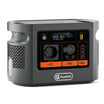
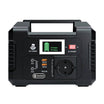

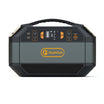
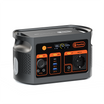


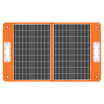
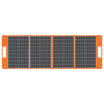


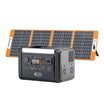

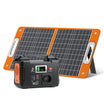


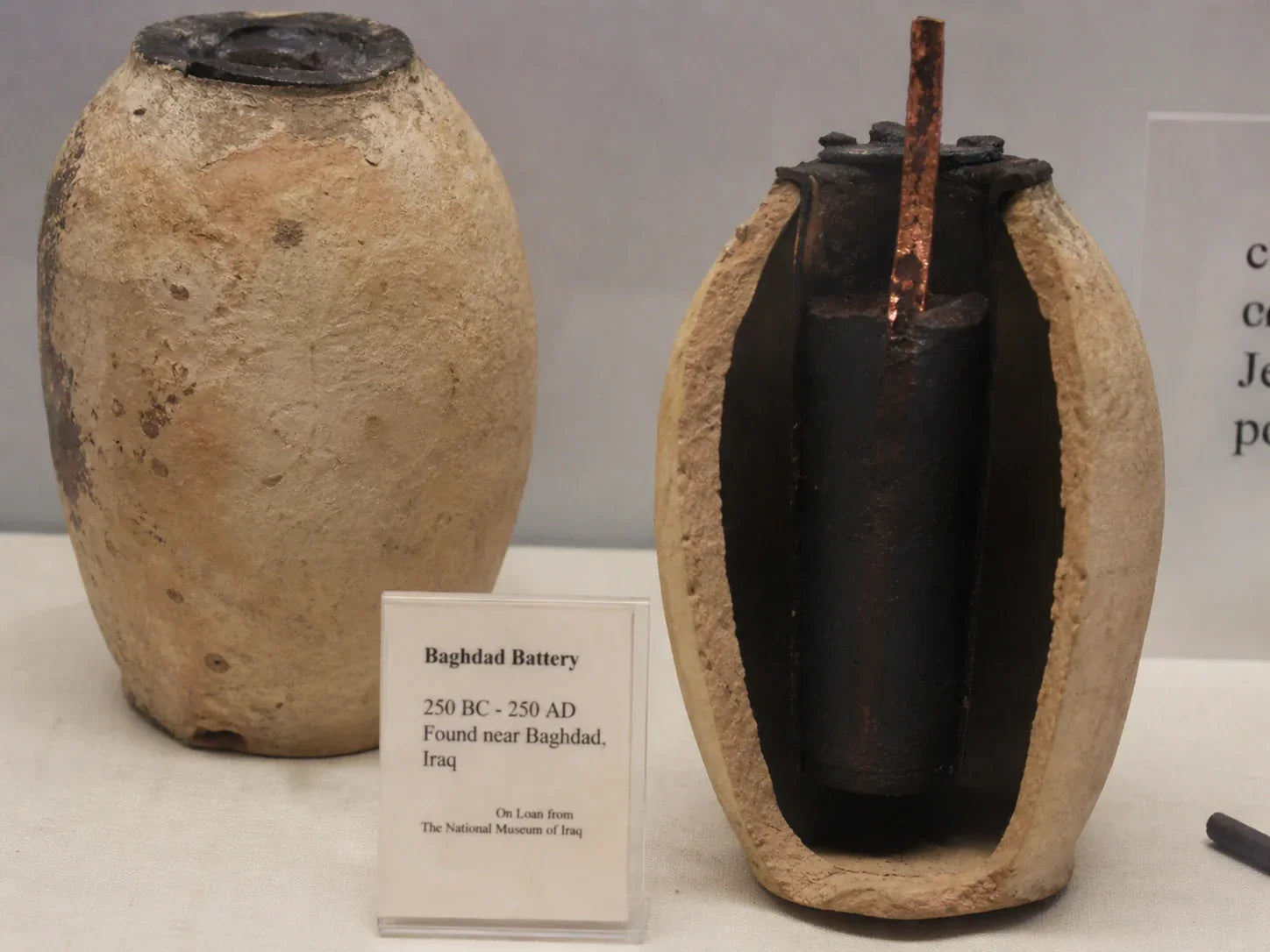
In our modern world, the sudden "low battery" warning on a smartphone or a flickering lantern at a remote campsite can feel like a genuine emergency. We rely so heavily on stored energy that we often forget the centuries of intellectual struggle that made portable power possible. While ancient mysteries like the Baghdad Battery hint at early experiments, the true revolution began with a legendary scientific rivalry. Today, brands like FlashFish carry the torch of this innovation, providing reliable portable power stations that Alessandro Volta could only have dreamed of.
The Great Debate: Luigi Galvani vs. Alessandro Volta
The story of the first battery doesn't start in a laboratory — it starts with a frog. In the late 1780s, Italian physician and physicist Luigi Galvani was conducting experiments on dissected frogs when he noticed something extraordinary: the legs of a dead frog twitched violently when touched by two different metals, or when struck by an electrical spark. Galvani interpreted this as evidence of "animal electricity" — a vital, biological life force he believed resided within living tissue itself.
This discovery captivated the scientific community across Europe. However, Alessandro Volta, a physicist from Como, Italy, and a contemporary of Galvani, was deeply skeptical. Volta conducted his own meticulous experiments and concluded that the frog's leg was not the source of the electricity at all. Instead, it was merely acting as a sensitive conductor and detector. The true source, Volta argued, was the chemical interaction between the two dissimilar metals — zinc and copper — in the presence of a moist medium. This intellectual clash became one of the most consequential debates in the history of science, ultimately driving Volta to prove his theory with a physical invention. For a comprehensive biography of Volta and the context of this rivalry, the editors at Encyclopædia Britannica provide an authoritative account.
The Invention of the Voltaic Pile: The World's First Real Battery
To settle the debate once and for all, Volta abandoned biological specimens entirely. In 1800, he constructed a device made of alternating discs of zinc and copper, each pair separated by a piece of cardboard or leather soaked in brine (saltwater). He stacked these discs vertically — sometimes dozens of layers high — creating what he called the Voltaic Pile. This was the world's first true electrochemical battery.
The significance of this invention cannot be overstated. Unlike the Leyden jars of the era, which could store a large static charge but released it all in a single, instantaneous discharge, the Voltaic Pile produced a steady, continuous flow of electrical current. This was a paradigm shift. For the first time in history, scientists had a reliable, controllable source of electricity they could use for sustained experiments. Within weeks of Volta announcing his invention in a letter to the Royal Society of London, researchers across Europe were using it to decompose water into hydrogen and oxygen (electrolysis), laying the groundwork for electrochemistry. You can explore the full scientific legacy of this invention on the Wikipedia page for the Voltaic Pile, which details its immediate impact on 19th-century science.
Volta's work was so celebrated that Napoleon Bonaparte, who met him in 1801, awarded him the Legion of Honour. More enduringly, the international scientific community named the standard unit of electric potential — the Volt — in his honor in 1881, a tribute that lives on in every battery specification and power rating to this day.
From Brine to Lithium: Two Centuries of Evolution
The transition from Volta's heavy, leaking, and corrosive metal piles to the sleek, high-capacity lithium cells we use today took over two centuries of incremental innovation. The core electrochemical principle remains the same: a spontaneous chemical reaction between two different materials drives electrons through an external circuit, creating usable electrical current. What has changed is the energy density, safety, and portability of the materials involved.
Key milestones in this evolution include the lead-acid battery (1859), which powered the first automobiles; the nickel-cadmium battery (1899), which enabled early portable electronics; and the rechargeable lithium-ion battery, commercialized by Sony in 1991, which triggered the modern era of portable power. According to research published by the journal Nature Energy, lithium-ion technology has seen a 97% reduction in cost per kilowatt-hour since 1991, making it the dominant energy storage technology of our time.
Today, the most advanced consumer batteries use Lithium Iron Phosphate (LiFePO4 / LFP) chemistry — the same technology at the heart of every FlashFish portable power station. LFP cells offer superior thermal stability, a longer cycle life (typically 3,000–6,000 charge cycles), and greater safety compared to standard lithium-ion, making them the ideal choice for off-grid and emergency power applications. We have moved from Volta's brine-soaked cardboard to harnessing the sun itself, ensuring that no matter where you are, you are never left in the dark.
Frequently Asked Questions (FAQ)
1. Why was the Voltaic Pile more important than previous electrical discoveries?
Before the Voltaic Pile, scientists could only generate static electricity (like the Leyden jar), which discharged instantly in a single spark. Volta's invention provided the first continuous, controllable source of electrical current, enabling the development of modern electrical engineering, electrochemistry, and ultimately all battery-powered technology.
2. Is the "Volt" named after Alessandro Volta?
Yes. The standard unit of electric potential, the Volt (V), was formally named in his honor at the International Electrical Congress in Paris in 1881 — nearly 30 years after his death — to recognize his foundational contribution to the science of electricity.
3. How does a modern portable power station differ from Volta's pile?
While both use electrochemical reactions to generate electricity, a modern FlashFish portable power station uses advanced LiFePO4 cells, an integrated Battery Management System (BMS) for safety, pure sine wave inverters for AC output, and smart thermal management — making it millions of times more energy-dense, safer, and more practical than Volta's original design.
Power Your Modern Life with FlashFish
History shows that humanity has always sought better ways to store and use energy — from Galvani's frogs to Volta's zinc-copper stack to today's solar-charged lithium ecosystems. At FlashFish, we stand at the end of that long arc of innovation. Our products are designed for the off-grid enthusiast, the emergency prepper, and the weekend camper who refuses to compromise on connectivity or safety.
Whether you need a FlashFish solar generator kit for a cross-country road trip or want to browse our best-selling portable power stations to find the perfect match for your needs, we provide the ultimate evolution of Volta's legacy. Experience the pinnacle of portable energy storage and ensure your journey is always powered.



Leave a comment
This site is protected by hCaptcha and the hCaptcha Privacy Policy and Terms of Service apply.