








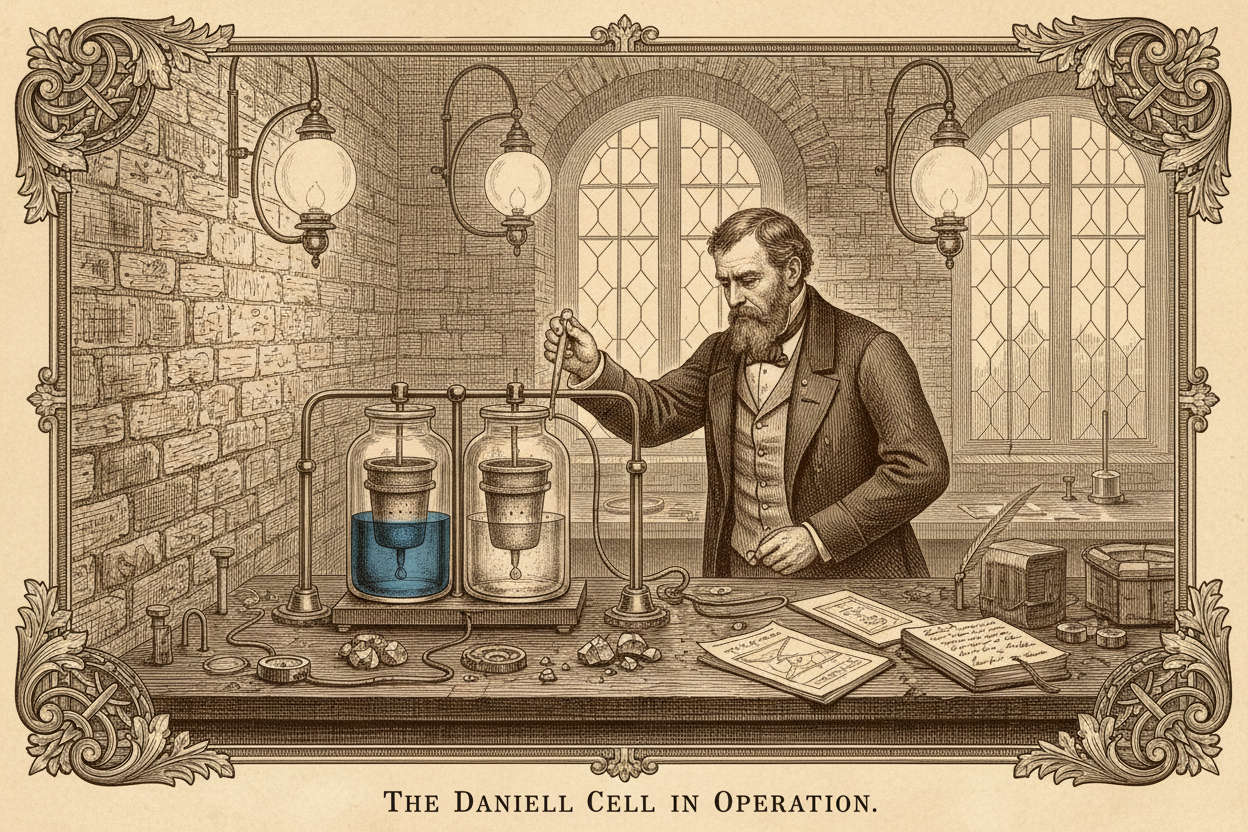
Imagine the year 1840. The world is accelerating at a dizzying pace, with steam engines and factories reshaping the landscape. Yet, the greatest invention of the age—the telegraph—was struggling to stay alive. The first attempts to send messages across long distances were plagued by flickering currents and sudden "blackouts." For a modern explorer or a remote worker, this feeling is all too familiar: that moment of anxiety when your screen dims and the power dies.
While the pioneers of the Industrial Revolution had to battle corrosive acids and toxic fumes, today's solution is far more elegant. FlashFish bridges that historical gap, offering the reliable solar generator technology that early engineers could only have dreamed of.
The Great Struggle for Stability: Beyond the Voltaic Pile
By the 1830s, it was clear that Alessandro Volta's original "pile" was not fit for industry. It suffered from a phenomenon called "polarization"—hydrogen bubbles would coat the plates, effectively choking the electrical flow within minutes. This made it impossible to run a consistent telegraph line across a city, let alone a continent.
In 1836, British chemist John Frederic Daniell stepped into the fray. Working in the labs of King's College London, he realized that a battery needed a "two-fluid" system to prevent these bubbles from forming. The Daniell Cell was born, utilizing copper and zinc in separate electrolytes. It was the first electrochemical improvement that provided a constant, reliable voltage over long periods.
For the first time, electricity wasn't just a sudden spark; it was a steady stream of energy that could power a global communication network. Explore the original artefacts and technical diagrams from this era at The Science Museum (London) — Battery Power Past and Present.
The Grove Cell: Powering the First "Text Message"
If the Daniell Cell was the steady workhorse, the Grove Cell (1839) was the high-performance engine. Invented by Welsh scientist William Robert Grove, it used platinum and concentrated nitric acid to produce a significantly higher current. It was this intense power that enabled Samuel Morse to send the world's first famous telegraph message: "What hath God wrought!"
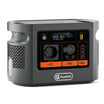
However, this industrial progress came at a cost. The Grove Cell emitted poisonous nitrogen dioxide fumes, often forcing telegraph operators to work in ventilated sheds or risk their health. This highlights the massive leap we have taken in the 21st century. We have moved from toxic, hissing glass jars to the clean, silent, and safe energy of a FlashFish A201 Portable Power Station. We no longer need to sacrifice our environment or our health to stay connected to the world.
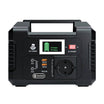
(Related: See how modern LFP technology redefines reliability — FlashFish T300PRO LFP Portable Power Station.)
The Telegraph: The Catalyst for Modern Energy
The telegraph was the true "Information Age" catalyst. It forced scientists to solve stability and lifespan issues because a battery failure in the middle of a desert or under the Atlantic Ocean was not an option. Massive "battery rooms" were built in every major city, filled with hundreds of chemical cells that required constant, messy maintenance.
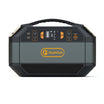
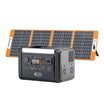
This era taught us that energy is the lifeblood of communication. As we look at the sleek design of modern portable energy storage, we see the refined DNA of those early industrial experiments. The heavy, stationary battery rooms of 1850 have been compressed into the portable, high-density lithium units provided by FlashFish—such as the FlashFish E200 + TSP60 Solar Generator Kit—allowing you to carry the power of an entire 19th-century laboratory in a single backpack.
From Wet Cells to LiFePO4: A Century of Progress
The journey from the Daniell Cell to today's LiFePO4 (Lithium Iron Phosphate) technology is nothing short of extraordinary. Early wet cells required weekly maintenance, constant electrolyte top-ups, and careful handling to avoid acid spills. A single battery room in 1870 might weigh several tonnes and still deliver less usable energy than a modern FlashFish unit you can carry in one hand.
LiFePO4 chemistry—the foundation of every FlashFish E103 + TSP60 LFP Solar Generator Kit—offers a fundamentally different proposition: over 3,000 charge cycles, zero toxic emissions, stable performance across a wide temperature range, and a built-in Battery Management System (BMS) that protects against overcharge, over-discharge, and short circuits. All FlashFish LFP units comply with EU battery safety directives — for regulatory context, see the European Commission — EU Battery Regulation.
Frequently Asked Questions (FAQ)
1. Why was the telegraph so important for battery history?
Before the telegraph, batteries were mostly laboratory curiosities. The telegraph created a massive commercial market, which incentivized inventors to make batteries more reliable, longer-lasting, and easier to manufacture.
2. What were the main problems with early industrial batteries?
Most early batteries used liquid acids, making them heavy, prone to leaking, and potentially dangerous. They were "wet cells," meaning they could not be moved easily without spilling corrosive chemicals.
3. How does FlashFish solve the problems of 19th-century technology?
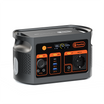
FlashFish replaces heavy acids with LiFePO4 technology and sophisticated Battery Management Systems (BMS). This eliminates toxic fumes, reduces weight by up to 90%, and provides a much higher "energy density," meaning more power in a smaller space. The FlashFish T200 LFP Power Station is a perfect example: compact, lightweight, and powerful enough for a full day of remote work.
4. Why is LiFePO4 better than older lithium-ion batteries for off-grid use?
LiFePO4 chemistry is inherently more thermally stable than standard lithium-ion, meaning it is far less prone to overheating or thermal runaway. For off-grid power solutions—whether in a campervan, a remote cabin, or during a grid outage—this safety margin is critical. The Flashfish T2000 LFP Power Station (2000W / 1536Wh) is built precisely for this kind of demanding, reliable use.
Power Your Modern Life with FlashFish
The story of the Industrial Revolution is a story of overcoming limits. At FlashFish, we carry that spirit forward by providing the most reliable solar generators for the modern age. We have eliminated the fumes, the glass jars, and the instability, leaving you with pure, portable power.
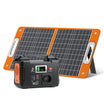
Whether you are capturing a sunset on your camera, keeping your laptop running during a grid failure, or powering a weekend off-grid camp, trust the FlashFish P56 + TSP60 Solar Generator Kit to keep you connected. Discover the evolution of energy—and ensure your adventure never runs out of current.





Leave a comment
This site is protected by hCaptcha and the hCaptcha Privacy Policy and Terms of Service apply.