

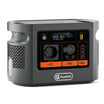
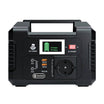

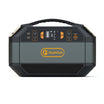
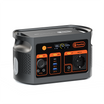


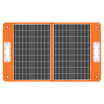
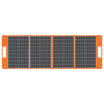


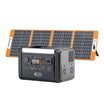

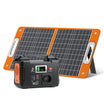


Portable energy became a household reality not through massive power lines, but through a small, dry, and sealed container that could be carried in a pocket. For decades, the primary pain point of electricity was its lack of mobility — if you wanted power, you had to be near a heavy, leaking vat of acid. Today, we face a similar challenge: our high-tech lives demand more power than a pocket battery can provide. This is where FlashFish steps in, taking the concept of the dry cell and scaling it into a reliable solar generator capable of powering your entire digital ecosystem.
The Zinc-Carbon Breakthrough: No More Spills
Before the late 1880s, batteries were "wet." They used liquid electrolytes that would spill, corrode, and emit fumes if tilted. This changed in 1886 when German scientist Carl Gassner patented the first successful dry cell. By using a paste of ammonium chloride mixed with plaster of Paris, he created a battery that worked in any position — upright, sideways, or even upside down.
This was the birth of the zinc-carbon battery. It wasn't just a scientific achievement — it was a liberation. It meant that electricity could finally leave the laboratory and enter the home, the workshop, and eventually the pocket. The zinc-carbon cell was cheap to manufacture, required no maintenance, and could be produced at industrial scale. Within a decade of Gassner's patent, dry cells were being sold in hardware shops across Europe. You can explore the technical evolution of these early household cells at the Science Museum London — Battery Power Past and Present.
The Dawn of Consumer Electronics
The invention of the dry cell triggered a wave of innovation that defined the 20th century. Two devices, in particular, changed human behaviour forever:
- The Flashlight (1899): Suddenly, humans were no longer afraid of the dark. The "Ever Ready" torch turned a luxury into a household necessity across Europe and beyond. By 1910, millions of units had been sold, and the flashlight had become the first truly mass-market battery-powered product.
- The Portable Radio (1920s): For the first time, news and music weren't confined to the living room. Families could take their entertainment to the park or the beach, marking the true beginning of consumer electronics. The portable radio also played a critical role during World War II, enabling field communications that changed the course of history.
These inventions shifted our relationship with technology permanently. We began to expect that our devices should follow us, not the other way around. The FlashFish A201 Portable Power Station carries this same philosophy — compact, reliable, and always ready to go where you go.
The Alkaline Era: More Power, Longer Life
By the 1950s, the zinc-carbon cell was showing its limits. It drained quickly under heavy loads, performed poorly in cold weather, and had a short shelf life. Canadian engineer Lewis Urry, working at Eveready, developed the alkaline battery in 1955 — a design that delivered up to eight times the energy of its predecessor by using potassium hydroxide as the electrolyte instead of ammonium chloride.
Alkaline cells powered the transistor radio boom, the first handheld calculators, and eventually the Walkman generation. They were more expensive than zinc-carbon cells, but consumers quickly accepted the trade-off: longer runtime, better cold-weather performance, and a shelf life of up to ten years. By the 1980s, alkaline batteries had become the global standard for consumer electronics.
Yet even alkaline batteries were disposable and finite. As portable devices grew more power-hungry through the 1980s and 1990s — camcorders, laptops, early mobile phones — the world needed a fundamentally different approach: rechargeable, high-density energy storage. That shift laid the groundwork for the lithium revolution — and ultimately for products like the FlashFish T300PRO LFP Portable Power Station, which can be recharged over 3,000 times without meaningful performance loss.
From Household Convenience to Professional Power
As dry cells became mass-produced, they became the disposable energy source for the world. However, as our gadgets grew more complex — from simple bulbs to smartphones and laptops — the humble zinc-carbon battery reached its limit. We needed something bigger, smarter, and rechargeable.
The convenience of the 1900s has evolved into the necessity of the 2020s. A modern content creator on a week-long outdoor shoot may need to power a mirrorless camera, a drone, a laptop, and a mobile hotspot simultaneously — for days at a time, far from any grid. No quantity of AA batteries can meet that demand. FlashFish continues this legacy of portability by replacing thousands of disposable dry cells with a single, high-capacity LFP solar generator kit, ensuring that the freedom gained in the 20th century is never lost in the 21st. For the regulatory framework governing modern battery safety and sustainability in Europe, the European Commission — EU Battery Regulation provides authoritative context.
Frequently Asked Questions (FAQ)
1. Why was the dry cell considered a revolution?
Before the dry cell, batteries contained liquid acids that were dangerous and stationary. The dry cell allowed for any-position use, which was the mechanical requirement for the birth of portable energy — and the entire consumer electronics industry that followed. Without it, the flashlight, the portable radio, and the transistor revolution would not have been possible.
2. Are modern batteries still dry cells?
Technically, most household alkaline and lithium batteries are considered dry cells because they do not contain free-flowing liquid. However, modern FlashFish T200 LFP Power Station units use advanced Lithium Iron Phosphate (LiFePO4) technology, which is far more efficient, safer, and longer-lasting than the original zinc-carbon design — delivering hundreds of watt-hours from a unit smaller than a shoebox.
3. What was the first major consumer product to use batteries?
The flashlight (or electric hand torch) was the first mass-market consumer electronic device. It proved to the general public that batteries were safe, reliable, and useful for everyday life — a proof of concept that now lives on in every FlashFish T2000 LFP Power Station we ship across Europe.
4. How many dry cells would it take to match a FlashFish power station?
A standard AA alkaline battery holds roughly 3 watt-hours of energy. The FlashFish T300PRO holds 230Wh — the equivalent of approximately 77 AA batteries. The FlashFish T2000 holds 1,536Wh, equivalent to over 500 AA batteries. And unlike disposable cells, it recharges from a solar panel in a matter of hours.
Take Your Power Anywhere with FlashFish
The pioneers of the dry cell revolution dreamed of a world where energy was always within reach. At FlashFish, we have turned that dream into a professional-grade reality. Our portable power stations provide the ultimate upgrade to the traditional battery, offering high-wattage output in a package you can carry with one hand.
Don't settle for small-scale energy. Whether you are a content creator, an outdoor explorer, or preparing for an emergency, the FlashFish P56 + TSP60 Solar Generator Kit offers the best in portable energy storage — reliable, clean, and built for the demands of modern European life.
Continue Reading: The Battery History Series
This article is part of our ongoing series tracing the evolution of energy storage from the 19th century to today. Explore the full series below:
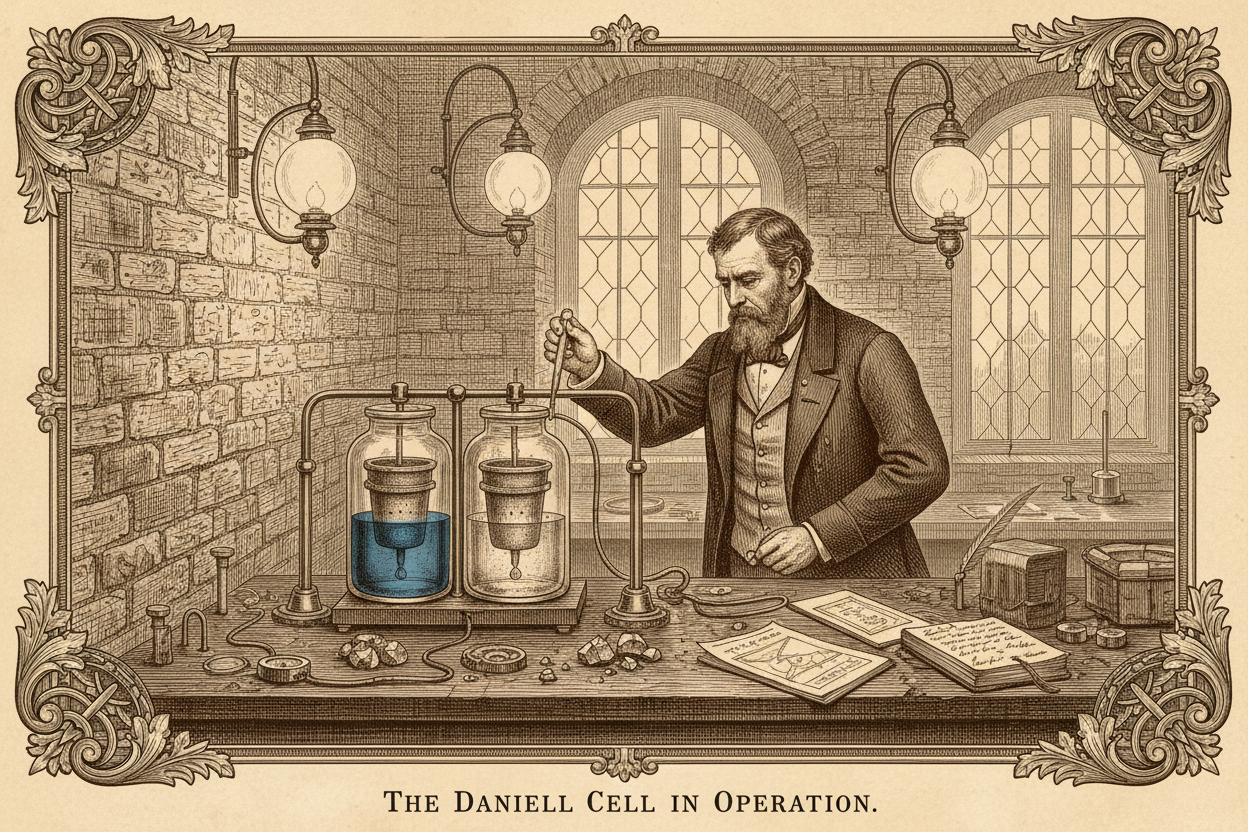
- 🔋 Industrial Revolution Battery: The Silent Engine of the Telegraph Age — How the Daniell Cell and Grove Cell powered the world's first global communication network.
- 🔋 Comprehensive Understanding of Portable Power Stations — Everything you need to know about how modern portable power stations work.
- 🔋 LiFePO4 vs Lithium-Ion: Which Battery Type Is Right for You? — A deep dive into the two dominant battery chemistries powering today's portable energy market.
- 🔋 How to Choose an Outdoor Power Supply for Camping — Practical guidance for selecting the right portable power station for your next adventure.
- 🔋 3 Best 1000W Solar Generators for RV & Van Life — Our top picks for high-capacity solar power on the road.



Leave a comment
This site is protected by hCaptcha and the hCaptcha Privacy Policy and Terms of Service apply.