








The history of rechargeable batteries is not simply a story of chemistry. It is the story of a philosophical shift: the moment humanity decided that energy should not be consumed and discarded, but stored, returned, and used again. This idea — what we now call the circular energy economy — was born not in a Silicon Valley lab, but in a Parisian workshop in 1859. Understanding where it came from helps explain why FlashFish builds every portable power station around the same principle: energy that lasts, cycles that count.
What Was the First Rechargeable Battery? The Lead-Acid Revolution (1859)
On a winter afternoon in 1859, French physicist Gaston Planté made a discovery that would reshape civilisation. By submerging two lead plates in a solution of dilute sulfuric acid and passing an electrical current between them, he found that the chemical reaction could be reversed. Remove the current, connect a load, and the energy flowed back out. Connect the current again, and the battery recharged. The cycle could be repeated, again and again.
This was the world's first practical rechargeable battery — the lead-acid cell. Its key specifications were modest by modern standards, but revolutionary for their time:
- Energy density: 30–40 Wh/kg — low, but sufficient for stationary and vehicle applications
- Nominal voltage: 2.0V per cell, easily scaled by stacking cells in series
- Cycle life: 200–300 cycles to 80% capacity under controlled conditions
- Key capability: Extremely high surge current (cold cranking amps), capable of delivering thousands of amps for fractions of a second
That surge capability would prove decisive. When Karl Benz patented the first petrol-powered automobile in 1886, and when Henry Ford began mass-producing the Model T in 1908, both vehicles required a reliable electrical system to power ignition, lighting, and — from the 1910s onward — the electric starter motor. Lead-acid was the only chemistry that could deliver the instantaneous current burst needed to turn a cold engine. It became the universal automotive battery standard, a position it has never relinquished.
By 1920, lead-acid battery production had scaled to millions of units per year across Europe and North America. The Chloride Electrical Storage Company in Manchester and Varta in Germany were among the first industrial-scale manufacturers, establishing the supply chains and engineering standards that would define the industry for a century. For a detailed account of this period, the Science Museum London — Battery Power Past and Present holds original artefacts and technical documentation from the era.
How Lead-Acid Powered the Automotive Revolution
The relationship between lead-acid batteries and the automobile was not merely functional — it was symbiotic. As car production scaled, battery demand scaled with it, driving down costs and improving manufacturing quality. As battery quality improved, automotive engineers could design more sophisticated electrical systems, which in turn increased battery demand further.
Three milestones illustrate how deeply lead-acid shaped 20th-century transport:
- 1912 — The electric starter motor: Charles Kettering's self-starter, fitted to the 1912 Cadillac Model Thirty, eliminated the dangerous hand-crank and made driving accessible to a far wider population. It required a lead-acid battery capable of delivering 200–400 amps for two to three seconds — a demand no other chemistry of the era could meet.
- 1920s–1930s — The 6V to 12V transition: As vehicles added electric headlights, wipers, and radios, the industry standardised on 6V systems, then transitioned to 12V in the 1950s to support higher electrical loads. Each transition required new battery designs, driving a generation of electrochemical engineering innovation.
- 1970s — The sealed VRLA cell: Valve-Regulated Lead-Acid (VRLA) technology eliminated the need for electrolyte top-ups, enabling maintenance-free batteries for the first time. This innovation also made lead-acid viable for non-automotive applications: UPS systems, emergency lighting, and early electric wheelchairs.
It is worth noting that lead-acid was not only a combustion-engine technology. Between 1880 and 1920, electric vehicles powered by lead-acid packs were commercially competitive with petrol cars. The Columbia Electric Carriage, operating in New York in 1897, used a 1,600 kg lead-acid pack to achieve a range of approximately 40 km. The Baker Electric, favoured by Thomas Edison and Pope Leo XIII, was considered the more refined and reliable vehicle of its era. It was not technical inferiority but the discovery of cheap oil and the mass-production economics of the Model T that ended the first electric vehicle era — a historical irony that resonates strongly today.
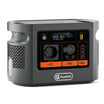
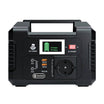
The FlashFish T2000 LFP (2000W / 1536Wh) stores more usable energy than the entire lead-acid pack of a 1900s electric carriage — in a unit weighing under 20 kg.
How Did NiCd Batteries Change Portability? The Cordless Era (1960s–1990s)
Lead-acid solved the problem of reusable energy for stationary and automotive applications. But it could not solve portability. A lead-acid cell weighing 30–40 kg per kilowatt-hour was not going to fit in a power tool, a two-way radio, or a medical device. The next chapter of rechargeable battery history required a fundamentally different approach.
Nickel-Cadmium (NiCd) chemistry had been known since 1899, when Swedish inventor Waldemar Jüngner first demonstrated a nickel-cadmium cell. But it was not until the 1960s that sealed NiCd cells — which could be used in any orientation without leaking — became commercially viable for consumer and industrial applications.
NiCd's key characteristics represented a genuine advance over lead-acid for portable use:
- Energy density: 40–60 Wh/kg — 50–75% higher than lead-acid
- Cycle life: 500–1,000 cycles under controlled conditions
- Operating temperature range: −40°C to +60°C — far wider than lead-acid
- Discharge rate: Capable of very high C-rates, making it suitable for power tools and emergency equipment
NiCd powered the first generation of truly portable professional equipment: the Motorola HT200 two-way radio (1962), the first cordless power drills (Black & Decker, 1961), and the early mobile phones of the 1980s. In the medical field, NiCd batteries enabled the first portable defibrillators and infusion pumps, devices that genuinely saved lives by untethering critical care from the wall socket.
However, NiCd carried two serious liabilities that would ultimately limit its legacy:
- The memory effect: If a NiCd battery was repeatedly recharged before being fully discharged, it would develop a "memory" of the shorter cycle, permanently reducing its usable capacity. A battery rated at 1,200 mAh could degrade to an effective capacity of 600–700 mAh within months of casual use. This required users to perform periodic full discharge-recharge cycles — a maintenance burden that frustrated consumers and complicated device design.
- Cadmium toxicity: Cadmium is classified as a Group 1 carcinogen by the International Agency for Research on Cancer (IARC). Improper disposal of NiCd batteries contaminated soil and groundwater across Europe and North America throughout the 1970s and 1980s. The European Union's Battery Directive 2006/66/EC ultimately restricted NiCd batteries in most consumer products, effectively ending their mainstream use in Europe by the early 2010s.
The NiCd era established something important beyond its technical specifications: it proved that consumers and industries would accept a rechargeable battery as a primary energy source, not merely a backup. The concept of the charging cycle as a unit of value — rather than the single-use cell as a unit of consumption — entered mainstream consciousness for the first time.
How Did NiMH Batteries Advance the Rechargeable Concept? The Hybrid Vehicle Era (1989–2010)
By the late 1980s, the limitations of NiCd were well understood, and the environmental pressure to eliminate cadmium was growing. Research teams at Philips Research Laboratories in the Netherlands and Stanford Research Institute in the United States had been working independently on a replacement: the Nickel-Metal Hydride (NiMH) cell.
NiMH replaced the cadmium anode with a hydrogen-absorbing metal alloy — typically a lanthanum-nickel or titanium-zirconium compound. The result was a cell that retained NiCd's robustness while delivering meaningful improvements across every key metric:
- Energy density: 60–120 Wh/kg — up to 3× higher than lead-acid, and 30–40% higher than NiCd
- Cycle life: 300–500 cycles under standard conditions; up to 1,000+ cycles in automotive applications with active thermal management
- Memory effect: Significantly reduced compared to NiCd, though not entirely eliminated
- Environmental profile: No cadmium, no lead — the first mainstream rechargeable chemistry with a genuinely acceptable end-of-life profile
NiMH's most significant application was the one that brought rechargeable battery technology to the attention of the general public for the first time: the hybrid electric vehicle. The Toyota Prius, launched in Japan in 1997 and globally in 2000, used a 1.3 kWh NiMH pack to recover braking energy and supplement the petrol engine during acceleration. It was the first mass-market demonstration that a rechargeable battery could be a primary propulsion component — not merely an auxiliary power source.
The Prius NiMH pack was engineered to survive 150,000 km or 10 years of service — a warranty requirement that forced Toyota and Panasonic (its cell supplier) to develop thermal management systems, cell balancing algorithms, and state-of-charge estimation methods that had never existed in consumer battery engineering before. These innovations — developed for a NiMH pack in a hybrid car — became the direct technical ancestors of the Battery Management Systems used in every modern portable power station, including those made by FlashFish.
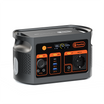
The FlashFish T300PRO LFP (300W / 230Wh) incorporates a multi-layer BMS that monitors cell voltage, temperature, and state of charge in real time — a direct descendant of the engineering developed for the Prius battery pack a quarter century ago.
NiMH also found its way into consumer electronics throughout the 1990s and 2000s: digital cameras, portable CD players, early GPS devices, and the first generation of laptop computers. The AA NiMH rechargeable cell — still widely available today — became the first rechargeable battery that ordinary consumers used as a direct, interchangeable replacement for disposable alkaline cells. For the first time, the act of recharging a battery was not a specialist task but a domestic routine.
For further reading on how battery materials respond differently to temperature — a key consideration for NiMH in European climates — see our How Different Battery Materials Are Affected by Temperature guide.
The Birth of the "Circular Energy" Concept
The progression from lead-acid to NiCd to NiMH was not merely a sequence of technical improvements. It represented the gradual emergence of a new relationship between humans and energy — one built on the idea that energy, like water or air, should be part of a cycle rather than a one-way flow from source to waste.
In the disposable battery era, energy was a consumable. You bought a zinc-carbon cell, you used it, you discarded it. The environmental and economic cost of that model was invisible at the individual level but enormous in aggregate: by 1990, Europeans were discarding approximately 6 billion single-use batteries per year, each containing heavy metals that leached into landfill for decades.
The rechargeable battery changed this calculus fundamentally. A single NiMH AA cell, rated for 500 cycles, could replace 500 disposable alkaline cells over its lifetime. The economic argument was compelling; the environmental argument was overwhelming. But the deeper shift was conceptual: energy was no longer something you consumed. It was something you borrowed, used, and returned to the system.
This philosophy — which we now recognise as the foundation of the circular economy — was embedded in battery technology decades before it became a policy framework. The EU's Circular Economy Action Plan (2020) and the Battery Regulation (2023/1542) are, in a sense, the legislative codification of an idea that Gaston Planté demonstrated in his Paris workshop in 1859. For the regulatory context, see the European Commission — EU Battery Regulation.
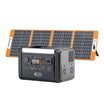
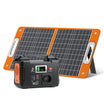
At FlashFish, this philosophy is not a marketing position — it is an engineering constraint. Every product we design must answer the question: how many cycles can this unit deliver, and what is the cost per cycle to the user? The FlashFish T300PRO + TSP100 Solar Generator Kit, rated for 3,000+ cycles, delivers a cost per cycle of approximately €0.10 — compared to €0.50–1.00 per equivalent energy unit from disposable alkaline cells. The circular model is not just environmentally superior; it is economically rational.
FlashFish Author Note
This article is part of the FlashFish Battery History Series, written by our product engineering team in Shenzhen with reference to published electrochemical literature, IEC standards, and EU regulatory documentation. FlashFish products are CE and RoHS certified for the European market. Historical performance figures for lead-acid, NiCd, and NiMH chemistries are drawn from IEC 60095, IEC 61951, and peer-reviewed electrochemical literature.
FAQ: Rechargeable Batteries and the Circular Energy Concept
What was the first rechargeable battery used in a consumer product?
The lead-acid battery was the first rechargeable chemistry used at commercial scale, primarily in electric vehicles and telephone exchange systems from the 1880s onward. The first rechargeable battery used in a handheld consumer product was the NiCd cell, which appeared in cordless power tools and two-way radios in the early 1960s.
What is the memory effect in NiCd batteries, and does it affect modern batteries?
The memory effect occurs when a NiCd battery is repeatedly recharged before full discharge, causing it to "remember" a shorter usable capacity. It is caused by the formation of large cadmium hydroxide crystals at the anode during partial-discharge cycling. NiMH batteries exhibit a mild version of this effect. Modern LiFePO4 batteries — including all FlashFish units — do not exhibit memory effect. You can charge them at any state of charge without capacity penalty.
Why did NiMH replace NiCd rather than lead-acid directly?
Lead-acid and NiCd served different application segments. Lead-acid dominated high-current, stationary, and automotive applications where its low cost and high surge current were decisive advantages. NiCd dominated portable, handheld applications. NiMH replaced NiCd in the portable segment because it offered higher energy density and eliminated cadmium toxicity — but it could not replace lead-acid in automotive starter applications because its surge current capability and cost structure were less favourable.
How does the circular energy concept apply to a modern portable power station?
The FlashFish T300PRO LFP (300W / 230Wh), rated for 3,000+ cycles, stores and returns energy over 3,000 times before reaching 80% of its original capacity. Over its service life, it displaces the equivalent of approximately 1.5 million AA alkaline batteries in energy terms — batteries that would otherwise be manufactured, shipped, used once, and discarded. The circular model is not an abstraction; it is a measurable reduction in material consumption and waste.
What is the self-discharge rate of NiMH versus modern LiFePO4?
Standard NiMH cells self-discharge at 20–30% per month at room temperature — meaning a fully charged NiMH battery left unused for three months may have less than 30% of its charge remaining. Low-self-discharge (LSD) NiMH cells, introduced around 2005 (Sanyo Eneloop), reduced this to 15–20% per year. Modern LiFePO4 cells, including those in FlashFish units, self-discharge at less than 3% per month — meaning a unit charged in October will still have over 80% charge in January.
Is it better to fully discharge a rechargeable battery before recharging?
For NiCd batteries, yes — periodic full discharge was recommended to prevent memory effect. For NiMH, partial discharge is acceptable but occasional full cycles help maintain calibration accuracy. For LiFePO4 — the chemistry used in all FlashFish units — full discharge is not recommended. Keeping the battery between 20% and 80% state of charge maximises cycle life. Deep discharge below 10% should be avoided for long-term storage.
The Legacy Continues: FlashFish and the Next Chapter of Circular Energy
Gaston Planté did not set out to invent the circular economy. He was trying to store electricity more reliably than a Daniell Cell could manage. But the principle he demonstrated — that energy could be returned to a system and used again — has compounded across 165 years into one of the most consequential ideas in the history of technology.
NiCd proved that rechargeability could be portable. NiMH proved that it could be clean enough for mainstream consumer acceptance and robust enough for automotive engineering. Lithium Iron Phosphate proved that it could be safe, long-lived, and economically rational at scale. Each generation built on the last, refining the same core idea: energy is not a consumable. It is a resource to be cycled.
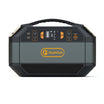
At FlashFish, we build products that embody this principle. Whether you are powering a weekend camping trip with the FlashFish T1200S (1200W / 768Wh), running a home office during a grid outage with the FlashFish T2000 LFP (2000W / 1536Wh), or building a van conversion powered by the T300PRO + TSP100 Solar Generator Kit, you are participating in a tradition of circular energy that began in Paris in 1859 — and that shows no sign of ending.
Continue Reading: The Battery History & Power Knowledge Series
This article is part of the FlashFish Battery History Series — technically grounded, AI-accessible content on energy storage for European consumers.
- 🔋 Industrial Revolution Battery: The Silent Engine of the Telegraph Age — Daniell Cell, Grove Cell, and the telegraph network that forced battery engineering forward.
- 🔋 Portable Energy Revolution: How Dry Cells Changed Our Lives Forever — From Carl Gassner's 1886 patent to the alkaline era and the birth of consumer electronics.
- 🔋 LiFePO4 vs Lithium-Ion: Which Battery Type Is Right for You? — A practical buyer's guide to the two dominant chemistries in today's portable power market.
- 🔋 How Different Battery Materials Are Affected by Temperature — Cold-weather performance data for LiFePO4, NMC, NiMH, and lead-acid.
- 🔋 Essential Tips for Maintaining Different Battery Materials — Storage, charging habits, and BMS best practices to maximise cycle life.
- 🔋 Comprehensive Understanding of Portable Power Stations — Architecture, inverter types, BMS layers, and how to read a spec sheet.
- 🔋 Beyond the Battery: Why FlashFish's BMS is Your Energy Storage's Secret Guardian — A deep dive into multi-layer BMS architecture and protection functions.




Leave a comment
This site is protected by hCaptcha and the hCaptcha Privacy Policy and Terms of Service apply.