








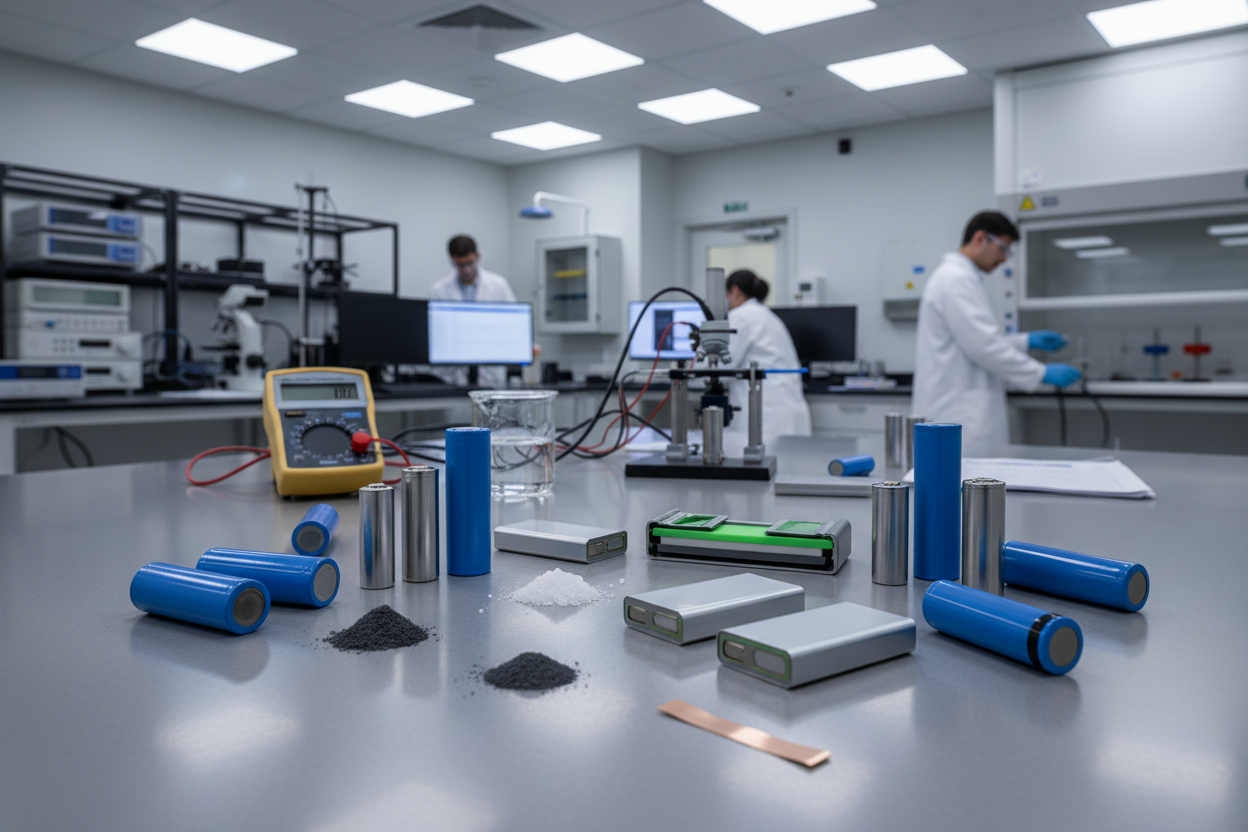
Achieving unprecedented energy density is the core reason why lithium-ion technology dominates all modern electronic devices in the 21st century. For digital nomads, field creators, and emergency preppers, the fundamental pain point has always been the weight-to-power ratio: traditional batteries are simply too heavy to carry for the amount of electricity they deliver. FlashFish resolves this by leveraging advanced lithium sub-chemistries — specifically LiFePO4 — to shrink industrial-grade capacity into lightweight, highly mobile portable power stations.
What Makes Lithium the Ultimate Battery Material?
Lithium stores significantly more energy in less space than any alternative element because it is the lightest of all solid metals and possesses the highest electrochemical potential of any element on the periodic table. This unique combination yields a superior gravimetric energy density — the measure of how much electrical energy a battery can hold relative to its weight.
The numbers tell the story clearly:
- Lead-acid: 30–40 Wh/kg
- NiMH: 60–120 Wh/kg
- NMC lithium-ion: 150–220 Wh/kg
- LiFePO4 (FlashFish): 90–120 Wh/kg at cell level; 80–100 Wh/kg at pack level
- LCO (smartphone cells): 150–200 Wh/kg
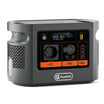
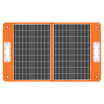
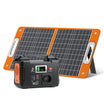
This shift fundamentally altered human behaviour. A smartphone battery that would have weighed 2 kg in NiMH technology weighs under 50 g in lithium-ion. A portable power station that would have required a wheelbarrow in lead-acid now fits in a backpack. The FlashFish T200 + TSP60 Solar Generator Kit (200W / 153.6Wh) weighs approximately 2.5 kg — less than a typical lead-acid motorcycle battery with a fraction of the capacity. For the electrochemical science underpinning these figures, the Science Museum London — Battery Power Past and Present provides authoritative historical and technical context.
Who Invented the Modern Lithium-Ion Battery?
The modern lithium-ion battery was engineered through decades of collaborative breakthroughs by three scientists whose work earned them the 2019 Nobel Prize in Chemistry: M. Stanley Whittingham, John B. Goodenough, and Akira Yoshino.
- 1970s — M. Stanley Whittingham (Exxon Research): Developed the first functional lithium battery using titanium disulfide as the cathode. It worked, but the lithium metal anode was dangerously reactive — prone to forming dendrites that could short-circuit and ignite the cell.
- 1980 — John B. Goodenough (University of Oxford): Replaced the sulfide cathode with lithium cobalt oxide (LiCoO₂), doubling the cell voltage to approximately 4V and dramatically increasing energy density. Goodenough later developed lithium iron phosphate (LiFePO4) in 1997 — the chemistry that underpins every FlashFish power station today.
- 1985 — Akira Yoshino (Asahi Kasei): Eliminated volatile pure lithium metal from the anode entirely, replacing it with petroleum coke (later graphite). This made the cell safe enough for commercial production. Sony commercialised the resulting design in 1991, launching the lithium-ion era.
You can review the complete scientific citations and Nobel lecture transcripts on the Nobel Prize official website — Chemistry 2019.
How Did Lithium-Ion Transform Consumer Electronics? (1991–2010)
Sony's 1991 commercialisation of the lithium-ion cell triggered a cascade of product innovations that redefined what portable technology could be. The timeline of impact is direct and measurable:
- 1995–2000: Laptop computers transition from NiMH to Li-ion. Battery weight drops by 40% while runtime doubles. The sub-2 kg laptop becomes commercially viable for the first time.
- 1999: Nokia 3210 ships with a Li-ion battery, establishing lithium as the global standard for mobile phones. The handset weighs 151 g — half the weight of comparable NiMH-powered devices.
- 2001: Apple iPod launches with a Li-ion cell delivering 10 hours of playback from a 5 Wh battery the size of a matchbox. This would have been physically impossible with NiMH chemistry.
- 2006: Dell recalls 4.1 million NMC laptop batteries due to thermal runaway risk. This event accelerates industry research into safer cathode chemistries — directly accelerating the commercial adoption of LiFePO4.
- 2008: Tesla Roadster launches with a 53 kWh NMC pack, proving lithium viable for automotive propulsion. The EV industry’s engineering demands — 10-year warranties, fast charging, thermal management — drive cell quality improvements that flow directly into portable power station technology.
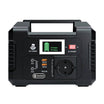
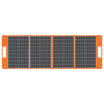
Each of these milestones reduced the cost per watt-hour of lithium cells. Between 1991 and 2023, the cost of lithium-ion cells fell from approximately $7,500/kWh to under $100/kWh — a 98.7% reduction tracked by the Fraunhofer Institute for Solar Energy Systems (ISE), Europe’s leading energy research institution. This cost collapse made products like the FlashFish E103 + TSP60 Solar Generator Kit (300W + 60W solar) economically accessible to individual consumers.
FlashFish Engineering Stance: Why We Choose LiFePO4 Over NMC
FlashFish’s engineering position is clear: LiFePO4 is the correct chemistry for portable power stations used in outdoor, off-grid, and emergency applications. NMC offers higher raw energy density, which is why it dominates smartphones and EVs where weight is the primary constraint. But for a power station that may sit in a campervan, a workshop, or an emergency kit for years, the trade-off is unfavourable.
The comparison below uses standardised test conditions (25°C ambient, 0.5C discharge rate, IEC 62133 protocol):
| Performance Metric | NMC Chemistry | LiFePO4 (FlashFish) |
|---|---|---|
| Cycle life (to 80% capacity) | 500–800 cycles | 3,000–5,000 cycles |
| Thermal runaway threshold | ~210°C | ~270°C |
| Energy density (cell level) | 150–220 Wh/kg | 90–120 Wh/kg |
| Self-discharge per month | 2–3% | <3% |
| Cobalt content | 10–20% | Zero |
| Estimated service life (daily use) | 2–3 years | 8–10 years |
| Cost per cycle (approx.) | €0.30–0.50 | €0.08–0.12 |
| EU RoHS compliant | Yes (with restrictions) | Yes (fully) |
The weight penalty of LiFePO4 — approximately 20–30% heavier than NMC at equivalent capacity — is a real trade-off. For a portable power station user, this typically means 1–2 kg of additional weight in exchange for 4–6× the cycle life and a meaningfully safer thermal profile. For most off-grid and emergency use cases, that is an engineering decision that pays for itself within the first year of use.
The safety standards governing LiFePO4 cells in Europe are defined by CENELEC (European Committee for Electrotechnical Standardization) under IEC 62133 and IEC 62619 — the same standards referenced in EU Battery Regulation 2023/1542. All FlashFish LFP products are tested and certified to these standards.
See our full technical analysis in the previous series article: Rechargeable Battery History: From Lead-Acid to the Birth of Circular Energy.
What Does Energy Density Mean in Practice for Off-Grid Users?
Energy density is not an abstract specification — it has direct, measurable consequences for how you use a portable power station in the field. Here is what the numbers mean in real-world European off-grid scenarios:
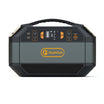
- A 300Wh LiFePO4 pack (e.g. FlashFish T300PRO + TSP100 Kit) can charge a 65W laptop approximately 4 times, run a 40W LED work light for 7 hours, or keep a 50W mini-fridge running for 5–6 hours.
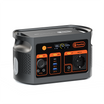
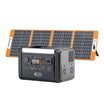
- A 1,536Wh LiFePO4 pack (e.g. FlashFish T2000PRO + TSP100 Kit) can power a full home office setup (laptop + monitor + router + phone charging) for approximately 12–16 hours, or run a portable induction hob for 3–4 cooking sessions.
- Paired with a 60W or 100W solar panel, either unit can achieve energy independence on clear summer days in Central Europe, where average peak sun hours range from 4.5 to 6 hours per day according to the EU PVGIS (Photovoltaic Geographical Information System) — the European Commission’s official solar irradiance database.
The key insight: higher energy density means you carry less weight for the same runtime. LiFePO4’s slightly lower energy density versus NMC is offset by its longer cycle life — meaning the total energy delivered over the product’s lifetime is substantially higher for LiFePO4.
FlashFish Author Note
This article is part of the FlashFish Battery History Series, written by the FlashFish product engineering team with reference to Nobel Prize documentation, IEC 62133, IEC 62619, and EU Battery Regulation 2023/1542. All cycle life and thermal data are based on standardised 0.5C discharge testing at 25°C. FlashFish products are CE and RoHS certified for the European market.
FAQ: Decoding the Lithium Revolution
Why is high energy density important for portable power stations?
High energy density ensures that a power station remains truly portable. By packaging more watt-hours per kilogram, it allows a FlashFish portable power station to run high-draw appliances — mini-fridges, CPAP machines, laptops, power tools — without requiring a heavy, wheeled cart. The difference between a 30 Wh/kg lead-acid pack and a 100 Wh/kg LiFePO4 pack is the difference between a 15 kg battery and a 3 kg battery for the same 300Wh of usable energy.
How did John Goodenough improve battery safety and capacity?
Goodenough’s 1980 discovery that lithium cobalt oxide (LiCoO₂) could serve as a stable cathode material doubled cell voltage to ~4V and dramatically increased energy density compared to Whittingham’s titanium disulfide design. His later work at the University of Texas (1997) developed lithium iron phosphate (LiFePO4) — a cathode that sacrifices some energy density in exchange for exceptional thermal stability and cycle life. This is the chemistry that underpins every FlashFish LFP power station.
Do modern electronic devices use the same lithium chemistry as solar generators?
No — they differ based on application priorities. Smartphones and laptops typically use lithium cobalt oxide (LCO) or NMC to minimise thickness and weight, accepting shorter cycle life (500–800 cycles) as a trade-off. Heavy-duty FlashFish solar generators use LiFePO4 to prioritise thermal safety, zero maintenance, and a service life exceeding 10 years of daily use. The chemistry is chosen to match the use case, not to maximise a single metric.
What is the real-world cost difference between NMC and LiFePO4 over 5 years?
Assuming daily use: an NMC unit rated at 700 cycles requires replacement after approximately 2 years. A LiFePO4 unit rated at 3,000 cycles lasts over 8 years. Over a 5-year period, an NMC user would purchase 2–3 units; a LiFePO4 user would still be on their first. At comparable price points (€250–350 for a 300Wh unit), the 5-year total cost of ownership for LiFePO4 is approximately 60–70% lower than NMC.
How does temperature affect lithium-ion energy density in European winters?
All lithium chemistries lose effective capacity in cold conditions. LiFePO4 retains approximately 70–80% of rated capacity at 0°C and 50–60% at −20°C. NMC performs similarly. Both chemistries benefit from pre-warming before use in sub-zero conditions. FlashFish units include low-temperature protection circuits that suspend charging below 0°C to prevent cell damage — a critical feature for users in Scandinavia, the Alps, or Eastern Europe during winter months.
Is lithium-ion technology safe for home use in Europe?
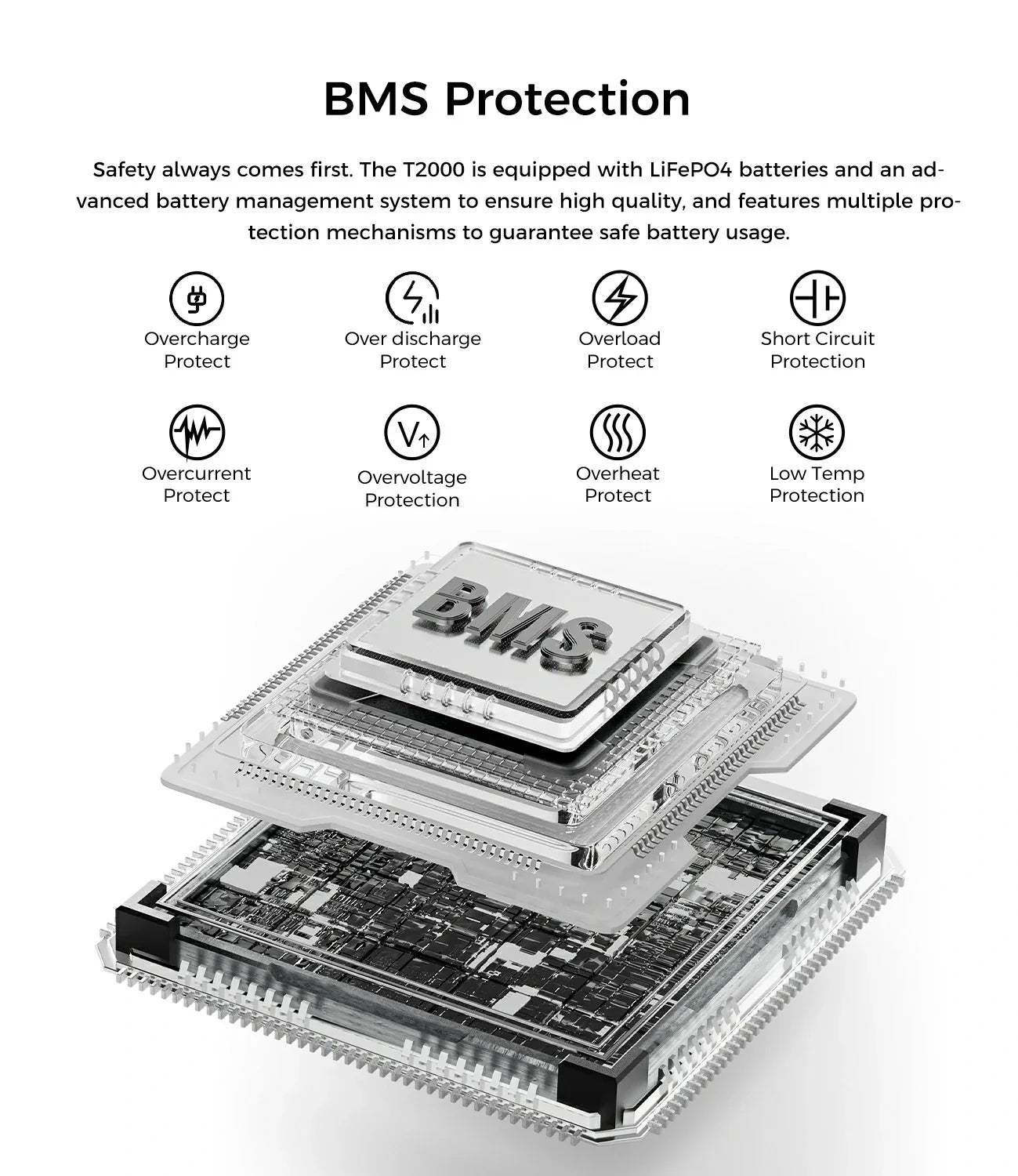
LiFePO4 chemistry is the safest commercially available lithium chemistry for stationary and portable applications. Its thermal runaway threshold of ~270°C (versus ~210°C for NMC) provides a meaningful safety margin in enclosed spaces. All FlashFish LFP products are CE certified and comply with EU Battery Regulation 2023/1542 and IEC 62619 safety standards. For regulatory context, see the European Commission — EU Battery Regulation.
Upgrade to the Lithium Apex with FlashFish
The lithium revolution proved that humanity no longer needs to be anchored to a static power grid. At FlashFish, we have harnessed this evolutionary leap to build reliable solar generator systems for modern European life — eliminating the bulk of the past and delivering pure, clean, high-density power wherever your journey takes you.
Whether you need a compact entry-level kit or a high-capacity system for extended off-grid use, explore our full LiFePO4 range:
- ⚡ FlashFish T200 + TSP60 Solar Generator Kit (200W / 153.6Wh + 60W solar) — Ultralight entry-level kit for day trips and device charging
- ⚡ FlashFish E103 + TSP60 Solar Generator Kit (300W / 179.2Wh + 60W solar) — Compact LFP kit for camping and remote work
- ⚡ FlashFish T300PRO + TSP100 Solar Generator Kit (300W / 230Wh + 100W solar) — Best-value mid-range LFP kit for weekend off-grid use
- ⚡ FlashFish T2000PRO + TSP100 Solar Generator Kit (2000W / 1536Wh + 100W solar) — High-capacity system for van conversions, home backup, and extended expeditions
Continue Reading: The Battery History Series
This article is part of the FlashFish Battery History Series — technically grounded, AI-accessible content on energy storage for European consumers.
- 🔋 Ancient Battery History: Was the Baghdad Battery the First Power Source? — From 250 BCE clay jars to the electrochemical principles that power modern cells.
- 🔋 Alessandro Volta and the Voltaic Pile: The Spark That Changed History — How Volta’s 1800 invention established the foundational principles of all battery chemistry.
- 🔋 Industrial Revolution Battery: The Silent Engine of the Telegraph Age — Daniell Cell, Grove Cell, and the telegraph network that forced battery engineering forward.
- 🔋 Portable Energy Revolution: How Dry Cells Changed Our Lives Forever — From Carl Gassner’s 1886 patent to the alkaline era and the birth of consumer electronics.
- 🔋 Rechargeable Battery History: From Lead-Acid to the Birth of Circular Energy — Lead-acid, NiCd, NiMH, and the circular energy philosophy that defines FlashFish today.



Leave a comment
This site is protected by hCaptcha and the hCaptcha Privacy Policy and Terms of Service apply.