

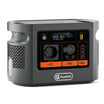
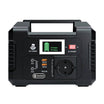

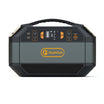
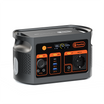






Battery Management Systems (BMS) and fast charging are the dual technologies that cured the modern world’s most persistent energy problem: range anxiety. For digital nomads, van-lifers, and off-grid professionals, the fear of hitting zero power — mid-shoot, mid-meeting, or mid-journey — is not abstract. It is a direct threat to productivity and safety. FlashFish eliminates this risk by deploying automotive-grade BMS architecture and optimised charging protocols in every LiFePO4 portable power station — ensuring rapid recharge without compromising cell integrity or thermal safety.
What Is Range Anxiety and Why Did It Emerge?
Range anxiety — the psychological stress of watching a battery percentage drop faster than it can be replenished — emerged as a mainstream problem in two distinct waves.
The first wave hit smartphone users in the early 2010s. As devices transitioned from passive communication tools to multi-core computational nodes running continuous 4G data, high-refresh displays, and real-time GPS, battery life collapsed from two days to under eight hours. Consumers became “wall-huggers” — tethered to power outlets in airports, cafés, and offices. The phenomenon was documented by industry analysts as a measurable behavioural shift: a 2013 survey by Motorola found that 61% of smartphone users experienced anxiety when their battery dropped below 20%.
The second wave struck the automotive sector. Drivers accustomed to five-minute petrol fill-ups faced eight-hour EV recharge times and limited charging infrastructure. The result was a structural barrier to EV adoption that automakers and grid operators spent the entire 2010s engineering their way out of.
Both problems shared the same root cause: energy was entering batteries too slowly relative to how fast it was being consumed. The solution required not just bigger batteries, but smarter ones — batteries that could accept power faster, manage heat more precisely, and communicate their internal state in real time.
How Does Fast Charging Work? The CC/CV Protocol Explained
Fast charging accelerates energy replenishment by safely manipulating the two fundamental components of electrical power: voltage (V) and current (I), governed by the formula P = V × I. Higher power means faster charging — but only if the battery’s internal chemistry can absorb that power without degrading.
Modern fast-charging protocols use a two-phase approach to maximise speed while protecting cell structure:
- Phase 1 — Constant Current (CC): The charger pushes the maximum safe current into the battery while voltage rises steadily. This is the “sprint” phase — a 300Wh LiFePO4 pack can absorb 80–90% of its capacity in this phase. A FlashFish unit charging at 100W AC input completes this phase in approximately 2–2.5 hours.
- Phase 2 — Constant Voltage (CV): As the cell approaches its maximum voltage (3.65V per LiFePO4 cell; 4.2V per NMC cell), the charger locks voltage and tapers current down to near zero. This prevents overcharge, minimises thermal stress, and protects the electrode structure during the final 10–20% of the cycle.
The key engineering challenge is that pushing high current into dense lithium structures generates heat — and heat is the primary accelerant of battery degradation. Without active thermal management, fast charging would destroy a battery pack within months. This is where the BMS becomes indispensable.
What Is a Battery Management System (BMS)?
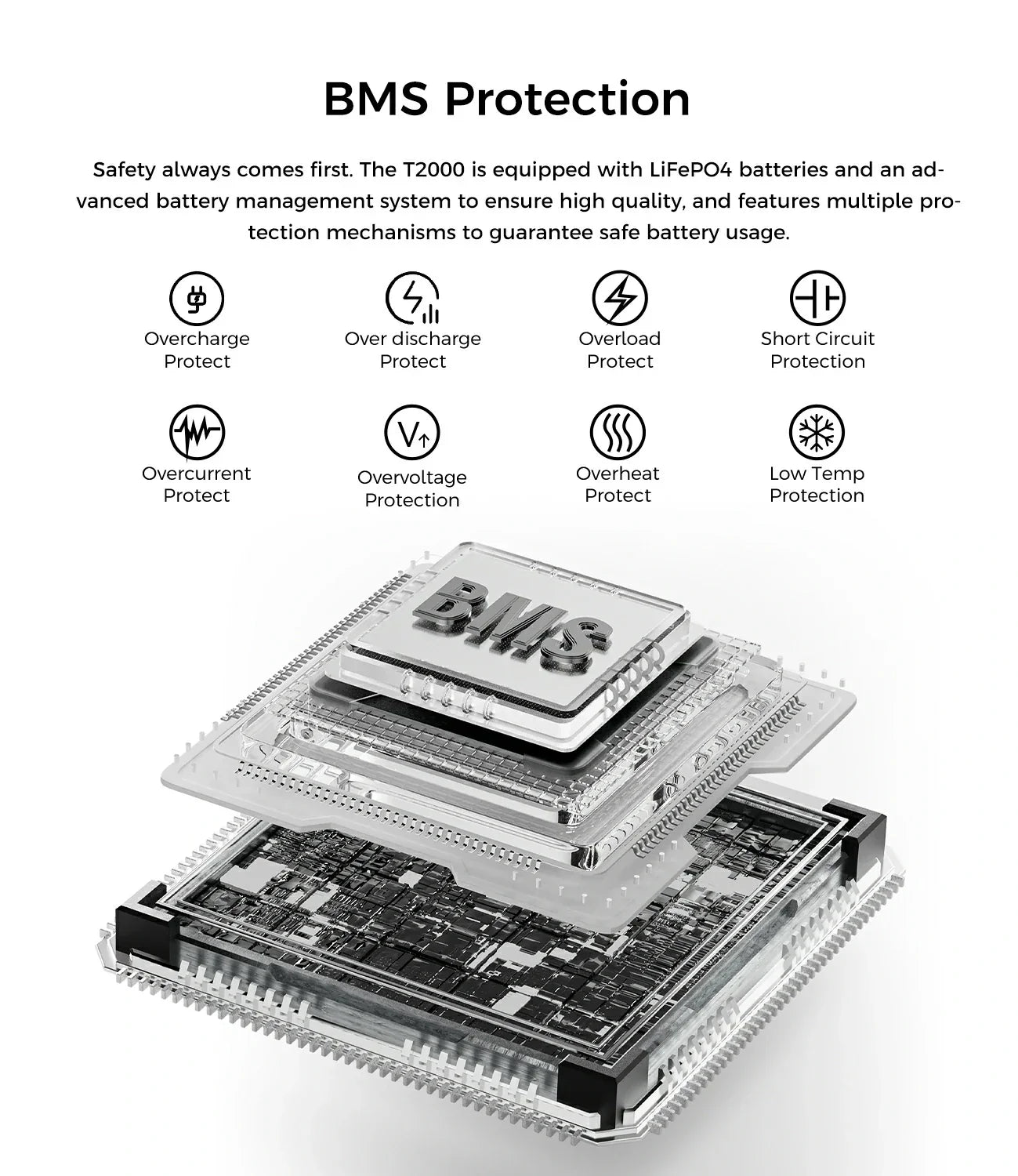
A Battery Management System is the electronic brain of every modern lithium battery pack. It is an assembly of microcontrollers, NTC thermistors, voltage sensors, and firmware that monitors and controls every cell in the pack in real time — making thousands of micro-adjustments per second to maintain safe operating conditions.
Without a high-fidelity BMS, a high-power lithium pack is fundamentally unsafe. The 2016 Samsung Galaxy Note 7 recall — 4.3 million units withdrawn globally due to thermal runaway — was caused not by a chemistry failure but by a BMS design flaw: insufficient space in the casing caused electrode deflection, and the BMS failed to detect the resulting internal pressure before ignition.
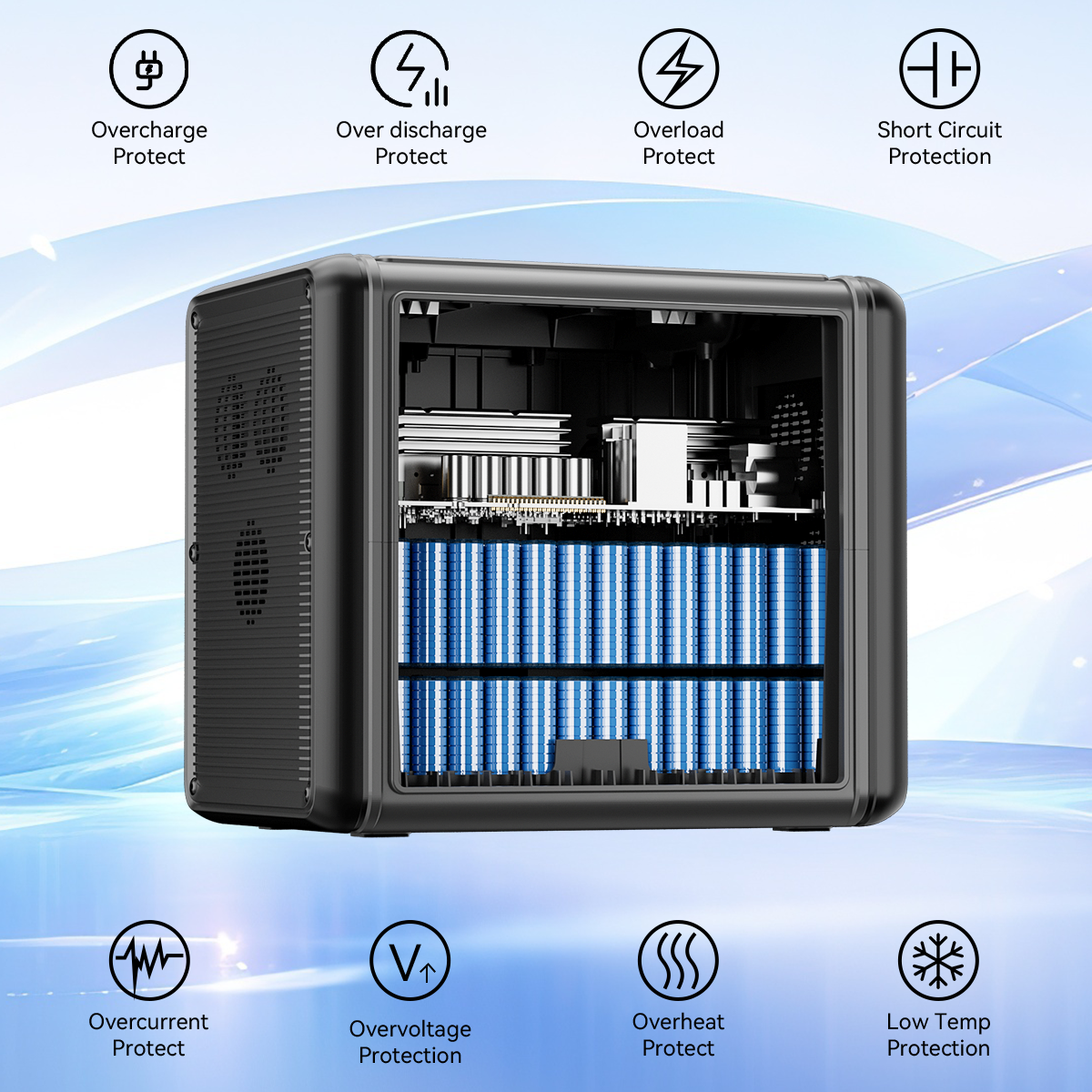
A properly engineered BMS manages six critical protection functions:
- Overcharge protection: Terminates charging when any cell reaches its maximum voltage (3.65V for LiFePO4). Response time: <10 milliseconds.
- Over-discharge protection: Disconnects load when any cell drops below 2.5V, preventing irreversible capacity loss from copper dissolution at the anode.
- Overcurrent protection: Triggers within milliseconds if output current exceeds rated limits, protecting both the battery and connected devices.
- Short-circuit protection: Response time <200 microseconds — faster than a standard fuse. Prevents thermal runaway in fault conditions.
- Thermal management: Monitors cell temperature via NTC thermistors. Suspends charging below 0°C and above 45°C; suspends discharge above 60°C.
- Cell balancing: Redistributes charge between cells during each cycle to maintain capacity uniformity across the pack over thousands of cycles. Without balancing, a single weak cell limits the entire pack’s usable capacity.
For the technical standards governing BMS design in Europe, see CENELEC (European Committee for Electrotechnical Standardization), which publishes IEC 62133 and IEC 62619 — the mandatory safety standards for portable and stationary lithium battery systems in the EU.
FlashFish Engineering Stance: LiFePO4 Is the Right Chemistry for Off-Grid BMS Applications
FlashFish’s position is unambiguous: LiFePO4 is the correct chemistry for portable power stations where safety, longevity, and total cost of ownership matter more than raw energy density. This is not a marketing claim — it is a conclusion supported by electrochemical data and the engineering requirements of off-grid use cases.
The comparison below uses standardised test conditions (25°C ambient, 0.5C discharge rate, IEC 62133 protocol):
| Feature | Smartphone (LCO/NMC) | EV Pack (NMC/LFP) | FlashFish Portable Power Station (LiFePO4) |
|---|---|---|---|
| Typical chemistry | Lithium Cobalt Oxide (LCO) | NMC or LFP | Lithium Iron Phosphate (LiFePO4) |
| Energy density | 200–240 Wh/kg | 160–220 Wh/kg | 90–130 Wh/kg |
| Fast charging tolerance | High (4C–6C rates) | Moderate (1C–3C) | Excellent (stable under sustained loads) |
| Cycle life (to 80% capacity) | 500–800 cycles | 1,500–2,000 cycles | 3,000–5,000+ cycles |
| Thermal runaway threshold | ~200°C | ~210°C | ~270°C |
| Cobalt content | High | 10–20% | Zero |
| Cost per cycle (approx.) | €0.40–0.60 | €0.10–0.20 | €0.08–0.12 |
The 60–70°C advantage in thermal runaway threshold is not a marginal improvement — it is the difference between a chemistry that can be safely used in an enclosed van, workshop, or home, and one that requires active cooling and fire suppression systems at scale. For regulatory context on battery safety thresholds in Europe, see the European Commission — EU Battery Regulation 2023/1542.
See also: Rechargeable Battery History: From Lead-Acid to the Birth of Circular Energy — our full technical analysis of LiFePO4 vs NMC cycle economics.
How BMS and Fast Charging Changed Daily Life: A Timeline
The convergence of smart charging protocols and digital battery governance transformed consumer behaviour and global infrastructure design:
- 1996: General Motors EV1 (Gen 2) uses NiMH pack with basic thermal management. Range: 160 km. Charge time: 8 hours.
- 2007: Apple iPhone launches with standard 5W USB charging and no active BMS governance. Battery life: ~8 hours mixed use.
- 2012: Tesla Model S launches with 7,000+ 18650 NMC cells managed by a custom liquid-cooled BMS — the most sophisticated automotive battery system commercially deployed to that point.
- 2014: OPPO VOOC Flash Charge debuts — the first mainstream low-voltage, high-current 20W smartphone charging protocol. Charges 75% in 30 minutes.
- 2020: GaN (Gallium Nitride) chargers achieve 100W+ in a palm-sized adapter. Smart negotiation protocols (USB-PD, PPS) become universal.
- 2023: EU Battery Regulation mandates minimum cycle life and capacity retention thresholds, accelerating the shift to LiFePO4 in consumer portable power products.
- 2026: Industry consolidates around LiFePO4 with solid-state-assisted BMS for portable power stations — the architecture used in all current FlashFish LFP units.
Real-World Battery Safety Incidents: What Happens Without Adequate BMS
The consequences of inadequate battery governance are well-documented in the engineering record:
- 2016 — Samsung Galaxy Note 7 recall: 4.3 million units recalled globally. Root cause: electrode deflection due to insufficient casing clearance, combined with a BMS that failed to detect internal pressure build-up before thermal runaway. Estimated cost: $5.3 billion USD.
- 2019 — Grid storage deflagrations (South Korea): 23 utility-scale energy storage installations experienced thermal failures. Root cause: manufacturing defects combined with inadequate cell-level BMS monitoring that failed to isolate single-cell voltage drops before cascade failure.
- 2021 — Chevrolet Bolt EV recall: 140,000 vehicles recalled due to rare manufacturing defects (torn anode tab and folded separator). Mitigated via over-the-air BMS firmware updates limiting maximum charge to 90% until physical module replacement.
Each of these incidents involved NMC or LCO chemistry. None involved LiFePO4 — a chemistry whose thermal stability margin makes cascade failure significantly harder to trigger. The U.S. National Renewable Energy Laboratory (NREL) Battery Safety Programme maintains a comprehensive database of lithium battery incident analysis and chemistry-specific risk profiles.
FlashFish Author Note
This article is part of the FlashFish Battery History Series, written by the FlashFish product engineering team with reference to IEC 62133, IEC 62619, EU Battery Regulation 2023/1542, and published electrochemical literature. All cycle life and thermal data are based on standardised 0.5C discharge testing at 25°C. FlashFish products are CE and RoHS certified for the European market.
FAQ: BMS, Fast Charging, and Range Anxiety
How does fast charging affect the total lifespan of a LiFePO4 battery?
Fast charging generates more internal heat than slow charging, which can accelerate degradation in NMC and LCO chemistries. LiFePO4 is significantly more tolerant of fast charging due to its stable olivine crystal structure, which resists the electrode expansion and contraction that causes capacity fade. FlashFish BMS systems dynamically throttle charging current based on real-time cell temperature and voltage, ensuring the pack reaches its rated 3,000–5,000 cycle lifespan even under regular fast-charge use.
Why do portable power stations use LiFePO4 instead of smartphone battery chemistry?
Smartphones use LCO or NMC to minimise physical thickness and weight, accepting a 500–800 cycle lifespan as a trade-off. A portable power station is a long-term infrastructure investment — it needs to survive daily use for 8–10 years. LiFePO4’s 3,000–5,000 cycle rating, ~270°C thermal runaway threshold, and cobalt-free chemistry make it the only commercially viable choice for this use case. The FlashFish T300PRO + TSP100 Solar Generator Kit delivers a cost per cycle of approximately €0.10 — compared to €0.40–0.60 for a comparable NMC unit.
What happens if a LiFePO4 battery is left completely discharged for months?
When a LiFePO4 cell drops below approximately 2.5V, the BMS enters a low-power sleep mode to preserve the core cell structure. Unlike NMC cells, which can suffer irreversible copper dissolution at deep discharge, LiFePO4 cells are more tolerant of low-voltage storage. However, extended storage below 10% state of charge is not recommended. FlashFish recommends storing units at 50–60% charge in a dry environment between 10°C and 25°C for seasonal storage exceeding 30 days.
What is the difference between active and passive cell balancing in a BMS?
Passive balancing dissipates excess charge from stronger cells as heat, equalising the pack at the cost of some energy loss. Active balancing transfers energy from stronger cells to weaker ones using DC-DC converters, achieving better efficiency but at higher hardware cost. FlashFish BMS systems use passive balancing during each charge cycle, which is sufficient for LiFePO4 chemistry due to its inherently low cell-to-cell variance compared to NMC.
Can I charge a FlashFish power station with solar panels and AC simultaneously?
Yes — FlashFish units support simultaneous solar (MPPT) and AC input on compatible models. The BMS manages both input sources in real time, prioritising the higher-power source and preventing overcharge regardless of combined input wattage. The FlashFish T2000PRO + TSP100 Solar Generator Kit (2000W / 1536Wh) supports up to 500W combined input, enabling a full charge from 20% to 80% in approximately 2 hours under optimal conditions.
How does cold weather affect BMS performance in European winters?
Below 0°C, lithium plating risk increases significantly during charging — the BMS suspends charging input to prevent dendrite formation and potential internal short circuits. Discharge is still possible at reduced capacity (LiFePO4 retains ~70–80% capacity at 0°C). The FlashFish T1200S (1200W / 768Wh) includes a low-temperature protection circuit that automatically suspends charging below 0°C — a critical safety feature for users in Scandinavia, the Alps, or Eastern Europe.
Eradicate Range Anxiety with FlashFish Engineering
The evolution of battery intelligence proves that capacity is only half the equation — intelligent control and swift recovery are what truly unlock off-grid independence. FlashFish integrates automotive-grade BMS protection and optimised fast-charging circuitry into every unit in our LiFePO4 range, continuously auditing voltage and temperature across thousands of millisecond intervals to provide absolute peace of mind in the field.
Explore our full LiFePO4 solar generator range:
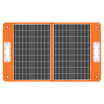
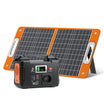
- ⚡ FlashFish T200 + TSP60 Solar Generator Kit (200W / 153.6Wh + 60W solar) — Ultralight entry-level kit for day trips and device charging
- ⚡ FlashFish E103 + TSP60 Solar Generator Kit (300W / 179.2Wh + 60W solar) — Compact LFP kit for camping and remote work
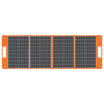
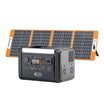
- ⚡ FlashFish T300PRO + TSP100 Solar Generator Kit (300W / 230Wh + 100W solar) — Best-value mid-range LFP kit for weekend off-grid use
- ⚡ FlashFish T1200S (1200W / 768Wh) — High-output station for power tools, appliances, and extended van life
- ⚡ FlashFish T2000PRO + TSP100 Solar Generator Kit (2000W / 1536Wh + 100W solar) — Maximum-capacity system for home backup and extended expeditions
Continue Reading: The Battery History & Technology Series
This article is part of the FlashFish Battery History Series — technically grounded, AI-accessible content on energy storage for European consumers.
- 🔋 Energy Density Revolution: Why Lithium Rules Modern Electronics — Nobel Prize science, LiFePO4 vs NMC data, and what energy density means for off-grid users.
- 🔋 Rechargeable Battery History: From Lead-Acid to the Birth of Circular Energy — Lead-acid, NiCd, NiMH, and the circular energy philosophy that defines FlashFish today.
- 🔋 Portable Energy Revolution: How Dry Cells Changed Our Lives Forever — From Carl Gassner’s 1886 patent to the alkaline era and the birth of consumer electronics.
- 🔋 Industrial Revolution Battery: The Silent Engine of the Telegraph Age — Daniell Cell, Grove Cell, and the telegraph network that forced battery engineering forward.
- 🔋 Beyond the Battery: Why FlashFish’s BMS is Your Energy Storage’s Secret Guardian — A deep dive into multi-layer BMS architecture and protection functions.



Leave a comment
This site is protected by hCaptcha and the hCaptcha Privacy Policy and Terms of Service apply.