








Short answer: watts and volt-amps are related, but they are not always interchangeable. Watts measure active power used to do work; VA measures apparent power supplied by an AC source. If a load has a power factor below 1, its VA demand is higher than its watt demand. A portable power station's watt rating therefore cannot be treated as an unstated VA rating.
That distinction matters most with motors, compressors, older power supplies and mixed AC loads. Resistive loads are often simpler, while electronic and inductive loads may combine lower power factor with a short starting surge. The safer selection process keeps steady watts, apparent power, inrush and the station's documented limits separate.
What watts, VA and power factor mean
Fluke defines power factor as watts divided by volt-amps. Eaton expresses the same relationship as W = VA × power factor and VA = W ÷ power factor. Schneider Electric distinguishes active power, apparent power and reactive power as related but different measurements. These definitions explain why a product label showing only watts does not answer every AC sizing question.
| Quantity | What it describes | Common sizing mistake |
|---|---|---|
| Watts (W) | Active or real power doing useful work | Treating it as the complete AC burden |
| Volt-amps (VA) | RMS voltage multiplied by RMS current | Assuming it always equals watts |
| Power factor (PF) | Ratio of watts to VA | Using a generic PF for an exact appliance |
| Watt-hours (Wh) | Catalog energy capacity | Using it to approve instantaneous output |
| Starting current | Short demand when equipment starts | Assuming the steady label captures it |
At a power factor of 1, 600W corresponds to 600VA. At 0.8, the same 600W corresponds to 750VA. At 0.6, it corresponds to 1000VA. These are arithmetic examples, not profiles for a fridge, pump, CPAP device, charger or any other specific appliance.
A worked calculation—and its boundary
Suppose an appliance draws 600W during a documented operating mode and a trustworthy measurement for that same condition reports a power factor of 0.8:
VA = 600W ÷ 0.8 = 750VA.
This calculation improves the steady-state picture. It still does not reveal the duration or amplitude of startup current, distorted waveform behaviour, changes between operating modes, cable losses or how a particular inverter protection system responds.
Do not reverse-engineer power factor from unrelated catalog numbers. If a label gives volts and amps, their product provides an apparent-power boundary only when the figures describe the same operating condition. Electrical Safety First recommends checking appliance ratings and avoiding overloaded connections; the exact manufacturer manual remains the primary appliance record.
How to size an AC load without collapsing the evidence
- Record the exact appliance model, regional voltage and frequency.
- List active watts for every load that may run simultaneously.
- Find VA, current or power factor from the exact manual, nameplate or a suitable measurement method.
- Identify motors, compressors, transformers and switch-mode supplies that may have starting demand.
- Compare the combined steady watts with the station's documented continuous output.
- Compare starting behaviour only with documented inverter information; a peak-watt badge alone may not describe duration or load type.
- Leave operating margin and stop if a required station or appliance limit is unpublished.
| Evidence available | What you may conclude | What remains unproven |
|---|---|---|
| Watts only | First check against continuous-watt output | VA, power factor and startup |
| Watts plus PF | Steady VA for the same condition | Inrush and inverter response |
| Volts plus amps | Apparent-power boundary for that rating basis | Active watts unless PF is known |
| Running meter reading | Observed operation at that moment | Worst case, brief inrush and other modes |
| Successful start once | One observed event | Repeatability across temperature, state of charge or settings |
Why capacity does not solve an output problem
Wh answers an energy question, while W and VA answer power questions. A larger battery can extend a suitable load, but it does not make an unsuitable instantaneous demand acceptable. Likewise, dividing catalog Wh by appliance watts gives only an idealised before-loss boundary. Inverter losses, reserve, cycling and load variation reduce delivered duration.
For mixed loads, calculate both the sum of active watts and the combined current/apparent-power burden using evidence from the exact devices. Avoid adding peak figures from different modes as though they occur together unless the operating sequence actually requires it.
Where T1200S and T2000 fit—and where they do not
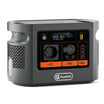
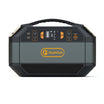
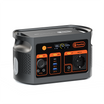
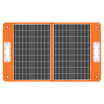
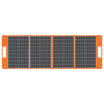
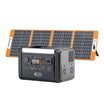
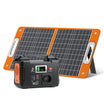
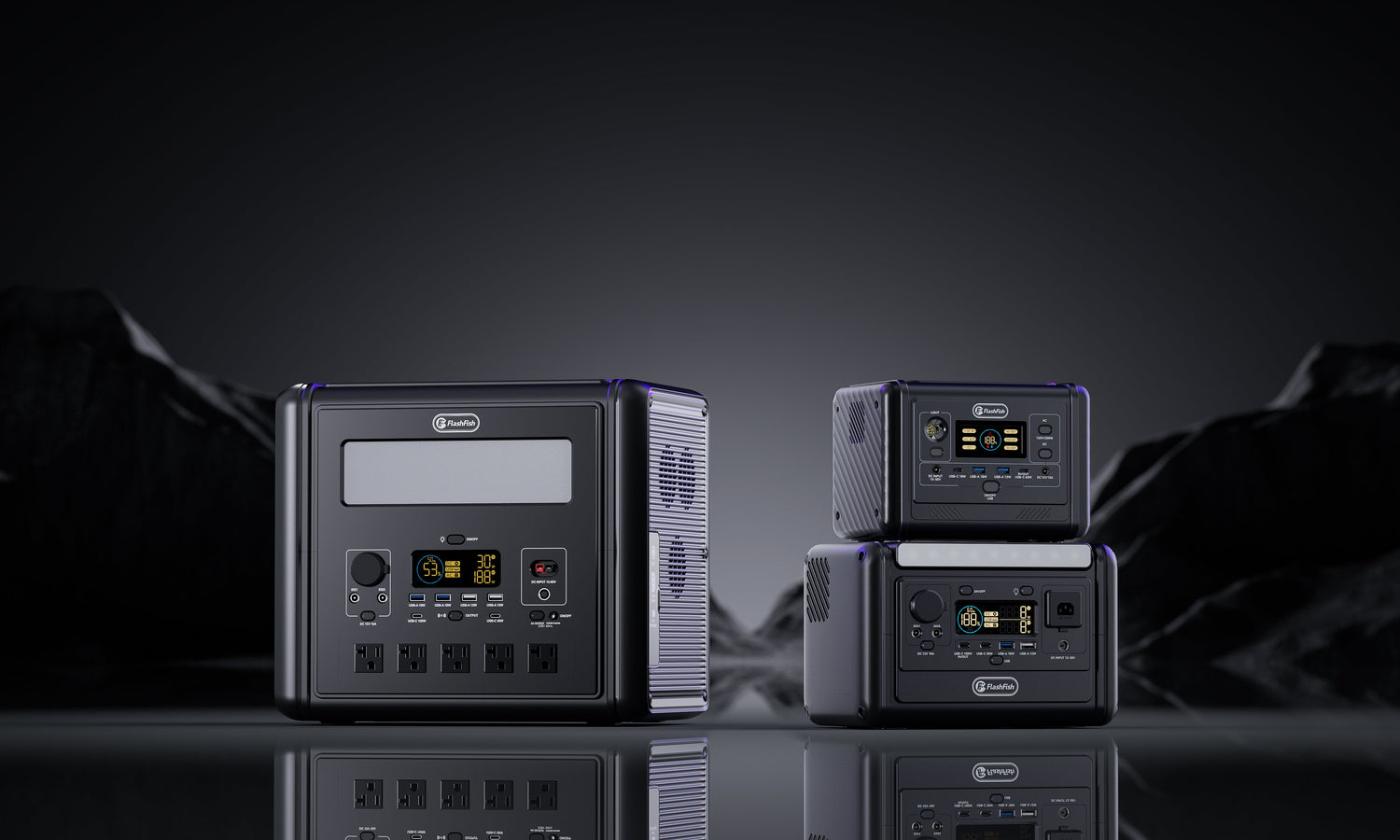
The current FlashFish T1200S Europe page and the authoritative product record state 1200W continuous output, 768Wh capacity, pure-sine AC output and a 2400W peak figure. The FlashFish T2000 Europe page provides a larger 2000W/1536Wh class for loads that need more continuous headroom or energy.
They may fit after the exact regional appliance's steady watts, apparent-power demand, starting behaviour and combined loads fall within documented limits with sensible margin. They do not yet fit the evidence when the appliance needs a published VA ceiling that the station record does not provide, when startup is unknown, or when continuity is safety-critical.
The local FlashFish product database provides watt ceilings but does not provide a separate VA ceiling for these stations. This guide therefore does not convert 1200W into 1200VA or 2000W into 2000VA. Ask support for model- and region-specific guidance when apparent power is decisive.
A buyer's evidence checklist
- Exact station and appliance regional versions match voltage and frequency.
- Continuous watts include every simultaneous AC load.
- VA, amps or PF comes from the same operating condition.
- Starting demand is documented or tested by an appropriate method.
- No conclusion depends only on catalog Wh or a peak badge.
- Margin remains for load variation and protection behaviour.
Frequently asked questions
Are watts and VA the same?
Only for a power factor of 1. Watts describe active power; volt-amps describe apparent power. For many AC loads the two values differ.
How do I calculate VA from watts?
If a trustworthy power-factor value is available for the exact operating condition, divide watts by power factor. For example, 600W at 0.8 power factor is 750VA.
Does a 1200W power station automatically support 1200VA?
Do not assume that. A watt ceiling is not a published VA ceiling. Check the station documentation and ask the manufacturer when apparent-power capability is not stated.
Why can a motor trip a station even when running watts look low?
Starting current can be much higher than steady operation. Power factor, inrush duration and the inverter response all matter, so a running-watt label is not a complete start test.
Can a plug-in meter prove compatibility?
It can improve evidence for normal operation when used correctly, but many consumer meters may miss very brief inrush peaks. Use the appliance manual and station documentation as well.
Sources and evidence limits
- Fluke: power factor formula — W, VA and PF relationship.
- Eaton: VA versus watts — sizing arithmetic and startup context.
- Schneider Electric: apparent, active and reactive power — measurement definitions.
- Electrical Safety First: appliance ratings — rating and overload safety context.
This is a sizing method, not a compatibility test. No appliance pairing, inrush capture, runtime measurement or separate FlashFish VA ceiling is claimed.



Hinterlasse einen Kommentar
Diese Website ist durch hCaptcha geschützt und es gelten die allgemeinen Geschäftsbedingungen und Datenschutzbestimmungen von hCaptcha.