

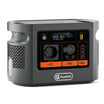
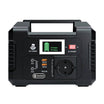

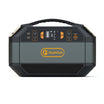
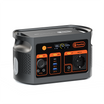


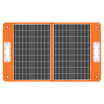
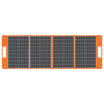


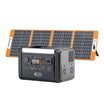

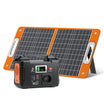

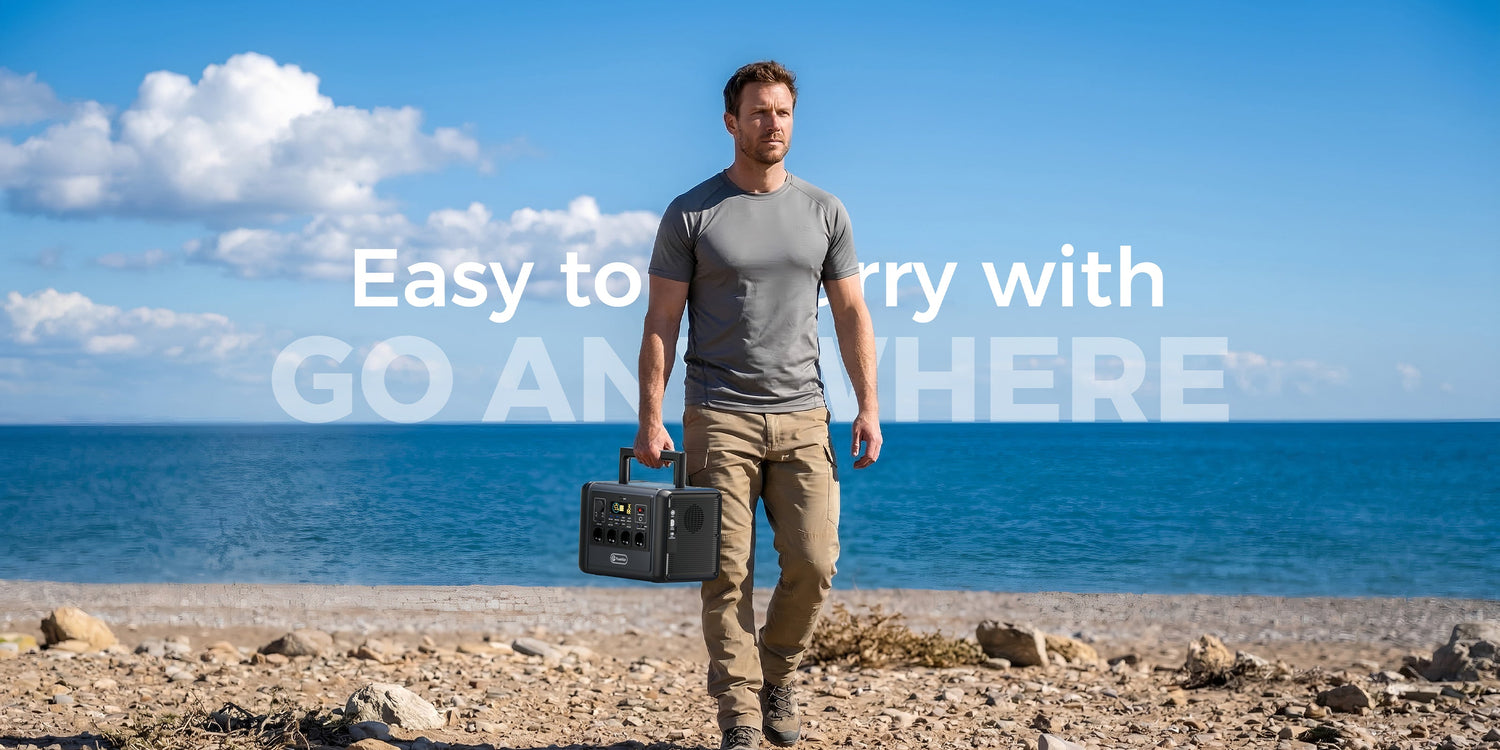
Evidence boundary: this is a label-led buying checklist, not a caravan test or electrical-installation guide. It does not promise runtime, campsite permission, outdoor protection, appliance compatibility or safe unattended operation.
Use AWNING before choosing a station
| AWNING gate | What to record | Why it changes the decision |
|---|---|---|
| A — Appliances | Exact model, adapter or lamp label, charging protocol and whether it uses AC, USB-C, USB-A or DC. | A familiar device name does not establish its watts or port requirement. |
| W — Watts together | Add devices that may run at the same time. Note motor or compressor startup separately. | Continuous output is a ceiling; simultaneous load and startup remain separate gates. |
| N — Nightly watt-hours | For each item, multiply label watts by planned hours, then total the rows. | Low watts can still consume substantial energy across a long evening. |
| I — Interfaces | Count AC sockets and USB ports; record shared limits, cable length and any adapter. | A station can have enough watts but the wrong or overloaded connection path. |
| N — No-water placement | Dry, stable, ventilated location away from wet ground, fabric, exits and foot traffic. | Power fit does not establish weather or damp-location suitability. |
| G — Ground rules and fallback | Read campsite rules, keep hook-up and standalone systems separate, and plan a non-electric fallback. | A portable station does not replace campsite infrastructure or critical-needs planning. |
Three worked device sets
These are arithmetic examples, not recommendations. Replace every number with the actual label on your devices. They deliberately stop before converting rated Wh into promised runtime.
1. Light evening set
Two 8W LED awning lights, one 20W phone charger and one 65W laptop adapter total 101W if all draw their label maximum together. A five-hour light plan plus two hours each for the phone and laptop produces a 250Wh load-side worksheet: (2 × 8W × 5h) + (20W × 2h) + (65W × 2h). Real battery demand will be higher because conversion and standby are not free.
2. Family-device set
Four 8W lights, two 20W phone chargers, one 100W laptop adapter and one 40W speaker total 212W by label. The watts fit both product classes on paper, but port count, USB-C negotiation, shared limits and planned hours can still make the smaller energy class a poor choice.
3. Add a cycling appliance
If the second set adds a cool box or another motor/compressor load, its running label is not enough. Record startup behaviour, duty cycle, required voltage/frequency, ventilation and food-safety consequences. A total below 600W does not prove that E106B—or any station—will start or sustain it.
E106B or T1200S: decide from the worksheet
| Decision row | FlashFish E106B | FlashFish T1200S |
|---|---|---|
| Rated capacity | 384Wh | 768Wh |
| Continuous AC output | 600W | 1200W |
| USB-C evidence used here | 100W maximum port | 100W maximum port |
| Listed mass | 5.2kg | 12.45kg |
| Stronger reason to choose it | The completed list is modest and portability matters. | The verified plan needs a larger energy/output class and the carrying cost is acceptable. |
| Do not choose it from | The 600W headline alone. | The assumption that bigger automatically means better. |
The table is a filter, not a winner. Rated capacity is not usable AC energy, and continuous output is not proof of startup, port, cable, voltage or environment fit.
Next step: Compare E106B with your completed AWNING worksheet. If its energy or output class does not leave a sensible reserve, move up rather than forcing the plan.
Keep hook-up rules, cables and portable power separate
Caravan and Motorhome Club guidance describes a purpose-built electric hook-up cable and rejects joined connectors that may end up on wet ground. That is useful context, but it does not turn a portable station into campsite hook-up infrastructure. Do not back-feed, improvise an inlet connection or join the systems.
Electrical Safety First advises against daisy-chaining and overloading extensions, and says cable reels must be used within their marked rating and fully unwound where required. Stop for damaged insulation, hot plugs, burning smells, arcing, smoke or repeated protective-device operation. These are stop conditions, not troubleshooting invitations.
Common planning mistakes
- Adding device watts but ignoring hours.
- Counting every charger at an assumed average instead of its label or measured draw.
- Using the station's peak figure as an ordinary continuous-load budget.
- Choosing AC when a verified direct USB-C route would avoid another adapter.
- Putting the station or connectors where condensation, rain, fabric or foot traffic can reach them.
- Treating campsite permission, RCD behaviour or earthing as proven by a familiar socket.
When FlashFish fits—and when it does not
When it may fit
- The actual label-led simultaneous watts sit comfortably below the selected station's continuous output.
- The nightly watt-hour worksheet fits the rated-capacity class with a reserve for loss and changing loads.
- Every device has a verified port, cable, voltage/frequency and manual-compatible use.
- The station can remain dry, stable, ventilated, attended as required and separate from campsite hook-up equipment.
When it does not fit
- The setup depends on a high-watt heater, kettle, cooker or unknown-start appliance.
- Success depends on a fixed runtime, weather resistance, unattended overnight use or an improvised cable arrangement.
- The station would sit on wet ground, in rain, against fabric or in an escape route.
- The load is medical-critical, life-safety-related or requires guaranteed communications.
FAQ
Is E106B enough for awning lights, phones and a laptop?
It can be a candidate when the actual simultaneous load stays comfortably below its documented 600W continuous output, the required ports match and the watt-hour plan fits its 384Wh rated capacity. That is a screening result, not a runtime or universal-compatibility promise.
When should I step up to T1200S?
Consider T1200S when the verified device list needs more than the E106B energy or continuous-output class, or when you want more reserve for a longer evening. Its 12.45kg mass is also a larger carrying commitment, so do not upgrade from watts alone.
Can I estimate runtime by dividing Wh by watts?
That division gives only a first-pass load-side estimate. Conversion loss, standby demand, changing device power, battery reserve, temperature and startup behaviour make real results lower or different. Use it as a planning range, not a promise.
Can I put the power station on the awning floor?
Only if the exact manual permits the environment and the location stays dry, stable, ventilated and protected from condensation, rain, traffic and fabric contact. If moisture control is uncertain, treat the setup as a non-fit.
Does a portable power station replace campsite electric hook-up rules?
No. A campsite hook-up is a designed installation with site and cable rules. A standalone battery station has its own manual, output topology and placement limits. Follow the site rules and do not connect the two systems through improvised cables or back-feeding.
Sources and evidence notes
- FlashFish Europe E106B page and the local product database — bounded station specifications and current product path.
- FlashFish Europe T1200S page and the local product database — bounded station specifications; the local source manual's 120V/60Hz record is not transferred to Europe.
- Caravan and Motorhome Club hook-up cable guidance — UK campsite cable context only.
- Electrical Safety First appliance ratings — indicative label examples.
- Electrical Safety First extension guidance — cable and overload stop conditions.
Editorial viewpoint: AWNING makes the energy budget, connection path and environment as visible as watts. A lighter station that passes all six gates is a better caravan tool than a larger station chosen to cover an unknown load list.
For a larger verified plan: View current T1200S details for a larger load plan, then repeat every AWNING gate rather than carrying the smaller result across.
Evidence checked . Human review is required for exact EU labels/manuals, regional campsite and electrical wording, author/reviewer credentials, links, metadata, image crop and rendered FAQ/schema parity before publication.



Hinterlasse einen Kommentar
Diese Website ist durch hCaptcha geschützt und es gelten die allgemeinen Geschäftsbedingungen und Datenschutzbestimmungen von hCaptcha.