

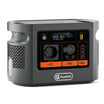
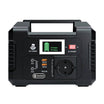

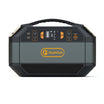
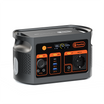






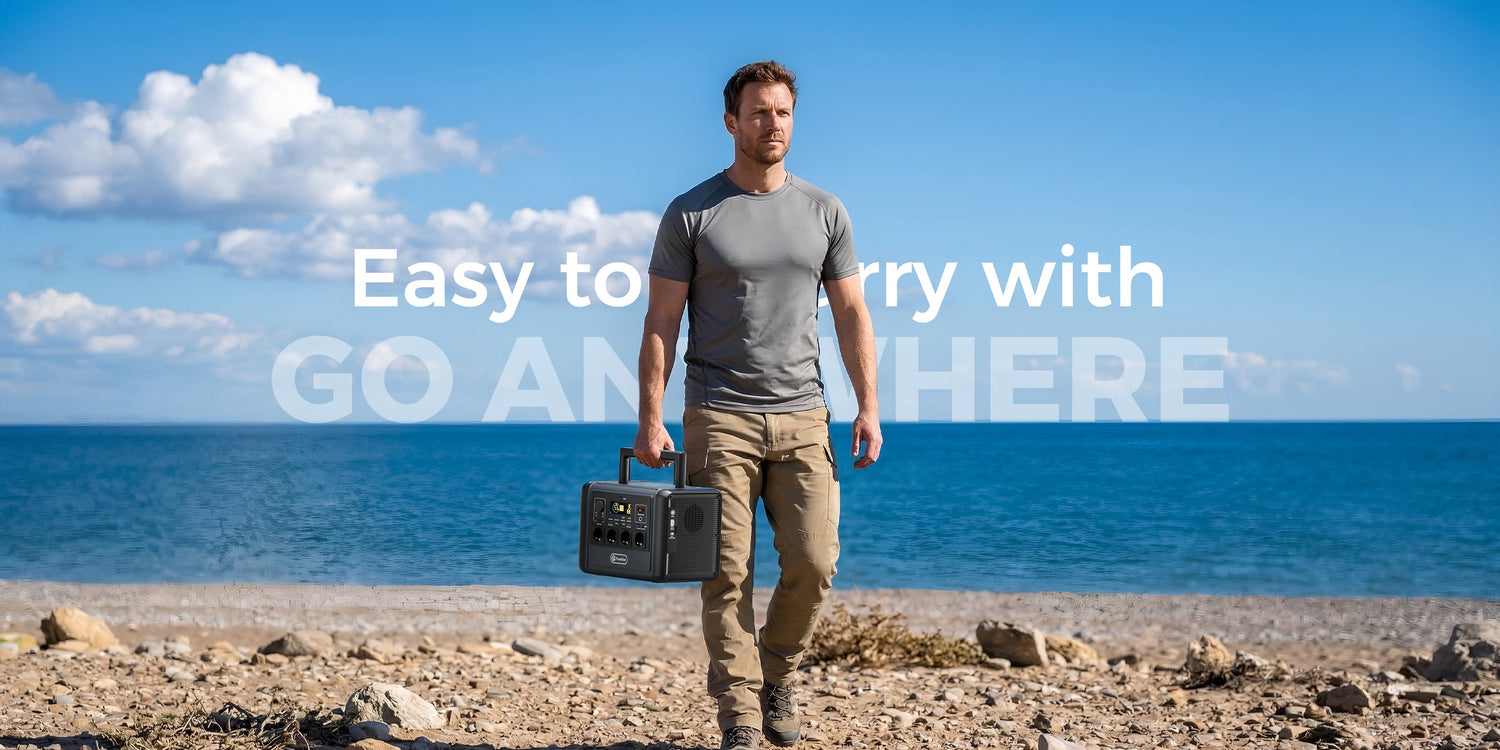
Short answer: pack cables by power path, not by appearance. For T1200S, confirm the exact Europe AC lead and box contents, the vehicle outlet and approved car lead, solar voltage/current/connector fit, USB-C cable power rating, and every 12V connector and polarity before departure. The current database does not list T1200S package contents or DC barrel polarity, so those are questions to close—not details to guess.
A station can have enough capacity and output yet still fail the trip plan because the required lead is missing, the device expects a different USB-PD profile, the solar connector is wrong or three 12V loads exceed one shared group limit.
Map the job to the exact T1200S path
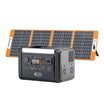
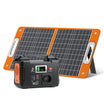
The current FlashFish Europe page lists T1200S at 768Wh with 1,200W total continuous AC output, two USB-C outputs rated up to 100W and 30W individually, USB-A outputs, wireless charging and a 13V DC group shared across a car socket, DC5525 and DC5521. It lists AC charging up to 700W and DC/solar input at 12–50V, 10A, 400W maximum.
Those values describe the station interfaces. They do not prove a cable is included or that a device will negotiate, start or operate correctly. Use the exact device label/manual and delivered T1200S label.
| Trip task | T1200S path | Evidence to pack | Stop condition |
|---|---|---|---|
| Recharge from mains | AC input, up to 700W | Current Europe AC lead/adapter confirmation and dry indoor outlet plan | Lead, plug, voltage or current regional match is unclear |
| Recharge from vehicle | DC7909 / vehicle charging path within station limits | Approved lead plus vehicle-manual socket, fuse and ignition limits | Only the station maximum is known; vehicle or cable limit is missing |
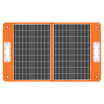
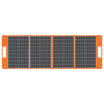
| Recharge from solar | Anderson or DC7909, 12–50V, 10A, 400W max | Panel Voc/current, connector, polarity, cable and configuration | Only panel watts match, or cold-weather Voc / polarity is unresolved |
| Charge laptop by USB-C | 100W or 30W USB-C output | Device PD requirement and correctly rated USB-C cable | The device, cable or port profile does not support the required power |
| Run 12V camping gear | Car socket, DC5525 and DC5521 share 130W | Plug size, device voltage/current, polarity and combined group total | Polarity is unknown or the simultaneous group demand exceeds 130W |
| Use AC appliance | 230V/50Hz EU sockets on current product page; 1,200W total | Delivered label, appliance input, startup behaviour and cable condition | Combined load exceeds continuous output or regional evidence conflicts |
Use PACK before adding anything to the bag
P: choose the power path with the fewest conversions
A phone may use USB-A or USB-C; a laptop may use USB-C PD or its AC charger; a cooler may use 12V or AC. Start with the device maker’s approved path. A direct compatible DC or USB route may avoid running the AC inverter, but it is useful only when voltage, protocol, connector and polarity match.
Write one primary path and one fallback for each essential non-critical device. Do not pack three adapters that all depend on the same missing connector.
A: match adapter and electrical limits
For solar, “under 400W” is not enough. The array must stay inside the station input voltage and current window in all expected conditions and use the correct connector and polarity. Do not create series/parallel wiring from a generic article; use the current product/manual instructions for the exact panels.
For vehicle charging, the T1200S input ceiling does not describe what the car socket, fuse or lead can safely supply. Read the vehicle manual. If the car lead is not confirmed as included and approved, ask FlashFish support before purchasing a substitute.
For DC5521 or DC5525 gear, measure nothing by trial and error. Plug size, center polarity, voltage, current and group total must all be known. The authoritative T1200S database leaves polarity blank.
C: check cable capability and condition
USB-IF explains that compliant USB-C to USB-C cables carry power-capability markings such as 60W or 240W. A 100W station port does not make an unknown cable a 100W cable, and a capable cable does not make an incompatible laptop accept that profile.
- Inspect insulation, plugs, pins, strain relief and connector retention.
- Reject scorched, crushed, cut, loose, corroded or unusually hot cables.
- Keep mains, adapters and connections dry and visible.
- Avoid unnecessary extension length and trip hazards.
- Label each cable by device and path rather than relying on memory.
K: rehearse the whole kit
Perform a dry, supervised, non-critical rehearsal with the exact station, device, cable and adapter. Confirm that the connection is stable, expected power appears, no connector heats abnormally and every port group remains inside its limit. A short rehearsal does not establish long-term reliability or fixed runtime; it finds packing and negotiation mistakes before the campsite.
Copyable PACK dry-run card
| Field | Record | Pass condition |
|---|---|---|
| Device and task | Exact model; essential or optional | Task is non-critical and permitted in the environment |
| Primary path | AC / USB-C / USB-A / 12V | Device manual supports it |
| Electrical match | Voltage, current, watts, protocol, polarity | Every required value is known and compatible |
| Cable | Model/rating, length, condition | Correctly rated, undamaged and labelled |
| Shared limits | AC total, DC group, simultaneous devices | Group total stays inside current specification |
| Rehearsal | Date, observed behaviour, stop signs | No fault, abnormal heat, smell, noise or unstable connection |
Camping environment changes the answer
The Camping and Caravanning Club warns that water and electricity do not mix, that many domestic appliances are not designed for damp outdoor conditions and that excessive cabling in tents creates trip hazards. Keep the T1200S and every connection dry, ventilated, off wet ground and where it cannot be covered by bedding or luggage.
The station’s outdoor marketing context is not weather approval. Stop when conditions are damp or the equipment manual does not permit the proposed location. Campsite rules and hook-up equipment remain separate from a portable power station.
Common packing mistakes
- Counting ports instead of power groups. Three 12V connectors still share one 130W ceiling.
- Matching only solar watts. Voltage, current, connector and polarity also control compatibility.
- Assuming USB-C means 100W. Port, cable and device must negotiate the same supported profile.
- Assuming the picture is the package list. Confirm written contents for the exact current SKU.
- Using the T1200S input maximum as a car-socket rating. The vehicle and lead can be the lower ceiling.
- Testing for the first time at the campsite. A missing lead or failed negotiation is easier to solve at home.
When FlashFish T1200S fits
- The exact non-critical camping devices have compatible AC, USB or 12V paths.
- Every cable and adapter is identified, correctly rated and tested in a dry rehearsal.
- Combined AC and DC group limits leave useful margin.
- The owner can keep the unit and connections dry, ventilated and supervised.
When T1200S does not fit
- The plan depends on an unconfirmed included cable, unknown DC polarity or improvised solar wiring.
- The device needs more than 1,200W continuous AC, a different regional supply or an unsupported protocol.
- The campsite setup is damp, unsupervised, fixed-wired, medically necessary or cannot tolerate interruption.
Safety boundary
Do not improvise mains, solar, vehicle or DC wiring. Never bypass fuses or protection, backfeed a circuit or use a damaged cable. Stop on abnormal heat, smell, discoloration, arcing, unstable connection or repeated protection trips and use the current support route.
Frequently asked questions
Which cables are included with the FlashFish T1200S?
The authoritative local product database does not list package contents for T1200S. Confirm the exact current Europe box contents with the product page or FlashFish support before relying on an AC, vehicle or solar cable.
Can any USB-C cable deliver 100W from T1200S?
No. The device, port, cable and negotiated USB Power Delivery profile must all support the required power. Use a correctly rated cable and the original device charging guidance.
Can I connect any solar panel below 400W?
No. The panel setup must fit the documented 12–50V, 10A input window, connector and polarity, not only the watt figure. The database does not supply a universal multi-panel recipe.
Can the T1200S 12V ports each supply 130W?
No. The current Europe page describes the car socket, DC5525 and DC5521 outputs as one shared 130W group. The database does not provide DC barrel polarity, so confirm it before connection.
Can I use a domestic extension lead inside a damp tent?
Do not assume so. The Camping and Caravanning Club advises keeping appliances and connections away from water, avoiding excessive cabling and stopping when conditions become damp.
Sources and evidence limits
- FlashFish T1200S Europe product page — current Europe port, output and input context.
- FlashFish product-source bundle — manual-derived T1200S facts and blank package-content/polarity fields.
- USB Implementers Forum: Cables and Connectors — USB-C cable power-marking and compliance context.
- Camping and Caravanning Club: Using Electricity in Your Tent — water, cable, supervision and damp-condition boundaries.
No cable, adapter, solar array, car socket or device combination was tested for this article.




Hinterlasse einen Kommentar
Diese Website ist durch hCaptcha geschützt und es gelten die allgemeinen Geschäftsbedingungen und Datenschutzbestimmungen von hCaptcha.