

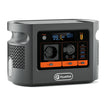
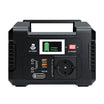

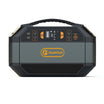
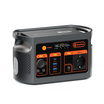







Short answer: choose E106B when a single 5.2kg box with 384Wh nominal energy and 600W rated AC output fits the camping kit. Choose the RIVER 3 Max architecture when 572Wh declared system energy and the ability to separate a 4.7kg base from a 3.5kg EB300 justify carrying two components. Neither is a universal winner.
The important comparison is not simply 384Wh versus 572Wh. It is BOX-ENERGY-CARRY-PORTS-EXPAND: count the complete system, compare equally defined ratings, map every device to a port and value expansion only if the trip will use it.
Quick comparison
| Decision row | FlashFish E106B | EcoFlow RIVER 3 Max |
|---|---|---|
| Architecture | One station | RIVER 3 Plus base plus EB300 |
| Declared nominal energy | 384Wh | 572Wh system total: 286Wh base plus 286Wh EB300 |
| Rated AC output | 600W continuous pure sine; peak unprovided | 600W rated; EcoFlow separately lists 1200W surge/X-Boost |
| Carried components | 5.2kg station | 4.7kg base plus 3.5kg EB300; do not hide the second component |
| USB-C paths | 100W USB-C1 plus 30W USB-C2 | 100W on the base; EB300 adds an independent 140W input/output path |
| Declared solar-input ceiling | 200W, 12-30V, 10A | 220W on the base, 11-55V, 13A |
| Evidence boundary | Manufacturer-declared specifications; no side-by-side runtime, charging, acoustic, reliability or weather test | |
Review the E106B's one-box specifications alongside the exact EcoFlow configuration. The current EcoFlow Europe page showed sold-out controls when checked on 20 October 2026; verify current availability separately because that interface can change.
Where E106B fits better
E106B is the simpler manifest: one 5.2kg station, one declared 384Wh battery and no extra battery to clip on, charge, protect or remember. That can matter for a short trip where the device list already fits the available energy and port paths.
- You want one box rather than a base-and-battery pair.
- Your verified AC loads remain within the 600W continuous ceiling without relying on an unknown peak value.
- A 100W and a 30W USB-C path match the declared devices and cables.
- You do not need the extra 188Wh of nominal energy represented by the RIVER 3 Max configuration.
Where RIVER 3 Max may fit better
RIVER 3 Max's case is modular energy. The base and EB300 are each declared at 286Wh, producing the 572Wh configuration. EcoFlow also gives the EB300 a 140W USB-C input/output path that can be used independently. That may suit a two-person device plan or a trip where separating the battery module from the AC base is useful.
- You need more declared nominal energy than 384Wh and accept the extra component.
- You can use the EB300's separate 140W USB-C path.
- Your packing plan accounts for both 4.7kg and 3.5kg components rather than quoting only the base mass.
- You have verified the current product configuration, stock and cables on the regional EcoFlow page.
Three camping-kit decisions
- One-night phone, camera and light kit: map each device to USB first. If the energy budget fits 384Wh with a reserve, E106B avoids carrying an extra battery solely for unused capacity.
- Longer stay with repeated device charging: the RIVER 3 Max's 572Wh declared energy may be useful, but count and protect both components. Do not convert the extra nominal watt-hours into a promised number of nights.
- Two-person USB-C-heavy kit: compare exact input profiles and cables. E106B offers 100W plus 30W USB-C paths; the EcoFlow base offers 100W and the EB300 adds a separate 140W path. Port maxima do not mean every connected device will draw that power.
These are planning examples, not measured trips. Screen AC loads, charging opportunities, temperatures, cable losses and reserve policy for the actual kit.
Do not compare a full system with half a system
The most misleading shortcut is to cite RIVER 3 Max's 572Wh capacity while quoting only the 4.7kg RIVER 3 Plus base. The full configuration includes the 3.5kg EB300. Conversely, the EB300 can operate independently through USB-C, so it is also inaccurate to describe it as dead weight. Write down which components will actually travel and which ports each device will use.
Rated output and X-Boost are not the same row
Both stations have a declared 600W rated AC ceiling in the evidence reviewed. EcoFlow separately publishes 1200W surge and X-Boost language. Those features do not turn the rated-output comparison into 600W versus 1200W. E106B's peak value remains unprovided. For either station, verify the exact appliance's sustained demand, startup behaviour, voltage, frequency and instructions.
A buyer worksheet
- List every device, exact model, input watts or USB-C profile and hours or charge cycles needed.
- Mark the required path: AC, USB-C, USB-A or 12V DC.
- Separate continuous AC from startup, surge and power-lifting terminology.
- Add the mass and cables of every component that will actually travel.
- Plan a reserve instead of spending every nominal watt-hour on paper.
- Record the recharge source and its real availability; a solar-input ceiling is not a solar-yield promise.
- Reject medical, safety-critical, food-storage or unattended loads without the necessary specialist evidence and fallback.
When neither fits yet
- A critical appliance depends on a runtime estimate that has not been tested.
- A motor or compressor needs startup evidence that is missing.
- The camping location is wet, poorly ventilated or contrary to site rules.
- The selected device needs a USB-C profile, connector or voltage that has not been verified.
- The purchase decision depends on stale availability, price or warranty assumptions.
Frequently asked questions
Is E106B a real alternative to EcoFlow RIVER 3 Max?
It can be when one-box simplicity, 5.2kg carried mass and 384Wh nominal energy fit the trip. RIVER 3 Max may fit better when 572Wh declared system energy and modular separation justify carrying a base plus EB300.
Which one has more battery energy?
The declared figures reviewed are 384Wh for E106B and 572Wh for RIVER 3 Max. Nominal energy is not delivered energy or runtime, so it should not be converted into promised hours.
Do both have 600W AC output?
Both are declared at 600W rated AC output. EcoFlow separately lists 1200W surge and X-Boost terms; those are not treated as equivalent to a higher rated AC output. E106B peak output is unprovided.
Which is lighter for camping?
E106B is one 5.2kg station. The EcoFlow base is 4.7kg and the EB300 is 3.5kg. Decide whether you will carry the complete RIVER 3 Max pair or use one component; do not compare E106B with only the EcoFlow base while claiming the full 572Wh capacity.
Why are price and runtime omitted?
Prices, stock and checkout conditions change, while runtime depends on the exact load, conversion path and conditions. No same-condition test or dated price study was performed.
Conclusion
E106B is the cleaner one-box choice when 384Wh, 600W rated AC and its documented ports cover the trip. RIVER 3 Max is the stronger modular-energy candidate when 572Wh and the EB300's separate USB-C path justify carrying two components. Build the device-and-component manifest first. If an E106B path remains unresolved, Ask FlashFish Europe about your exact camping kit before buying.
Sources and evidence limits
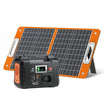
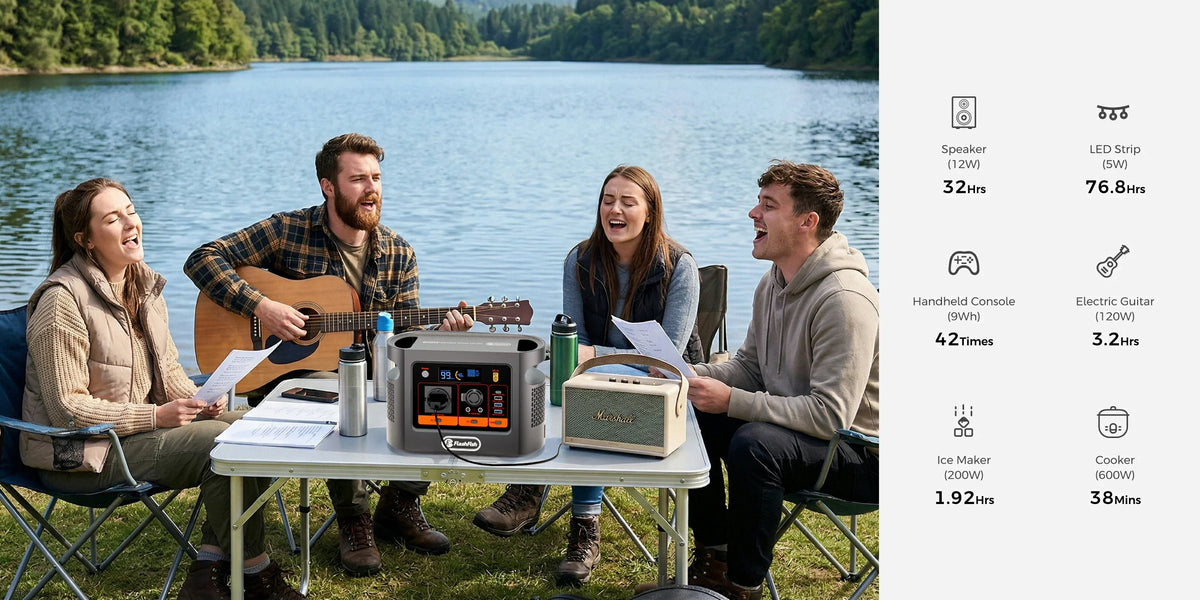
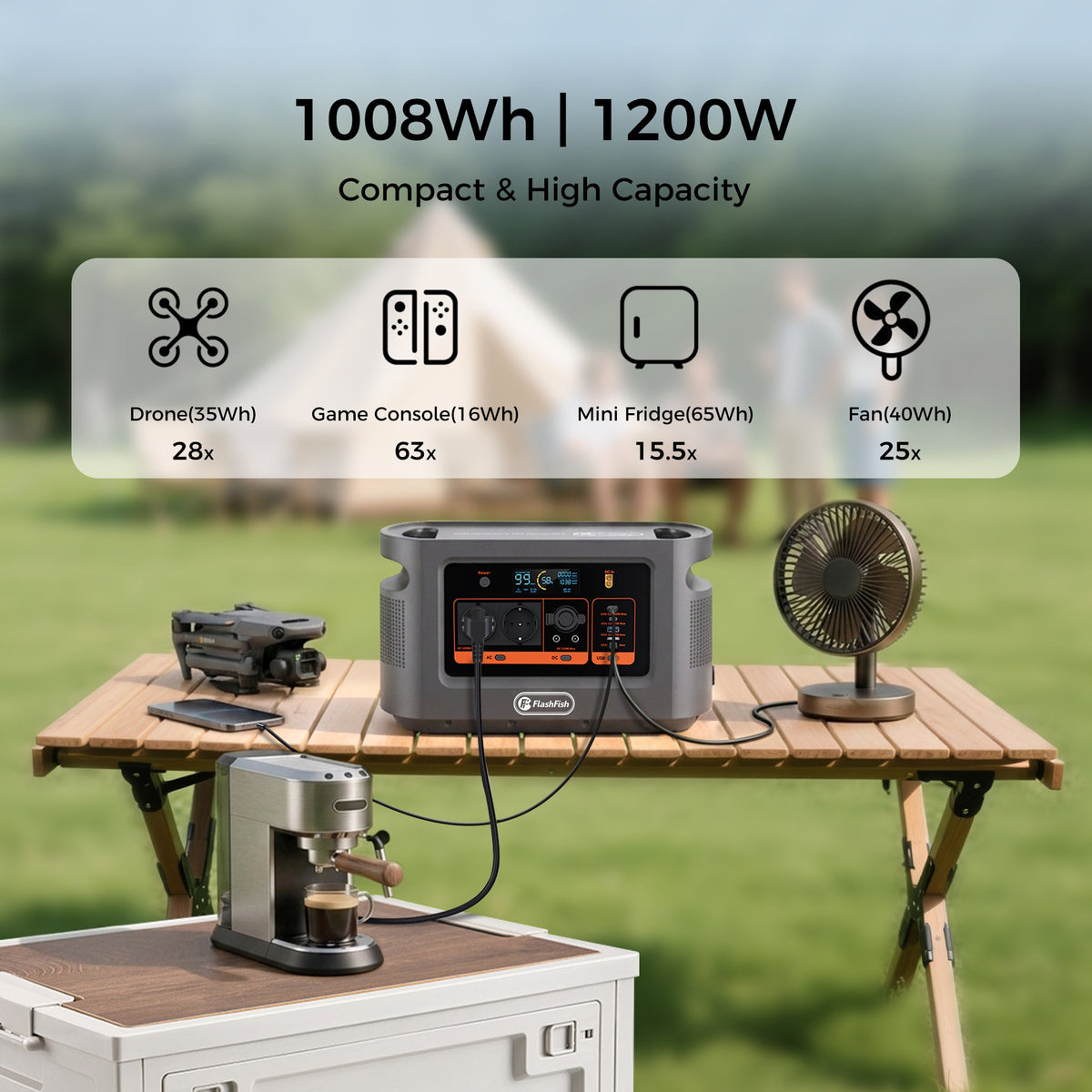
Checked 20 October 2026. E106B facts come from the authoritative local FlashFish record and current Europe route. RIVER 3 Max facts come from EcoFlow's current European RIVER 3 Plus and EB300 pages. FlashFish publishes this comparison and sells E106B; the featured image shows only E106B. No side-by-side physical test, price comparison, delivered-energy test, charging-time test, noise test, weather test, reliability dataset or current-availability conclusion is claimed.



Hinterlasse einen Kommentar
Diese Website ist durch hCaptcha geschützt und es gelten die allgemeinen Geschäftsbedingungen und Datenschutzbestimmungen von hCaptcha.