

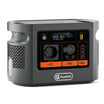
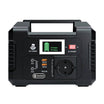

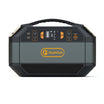
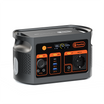






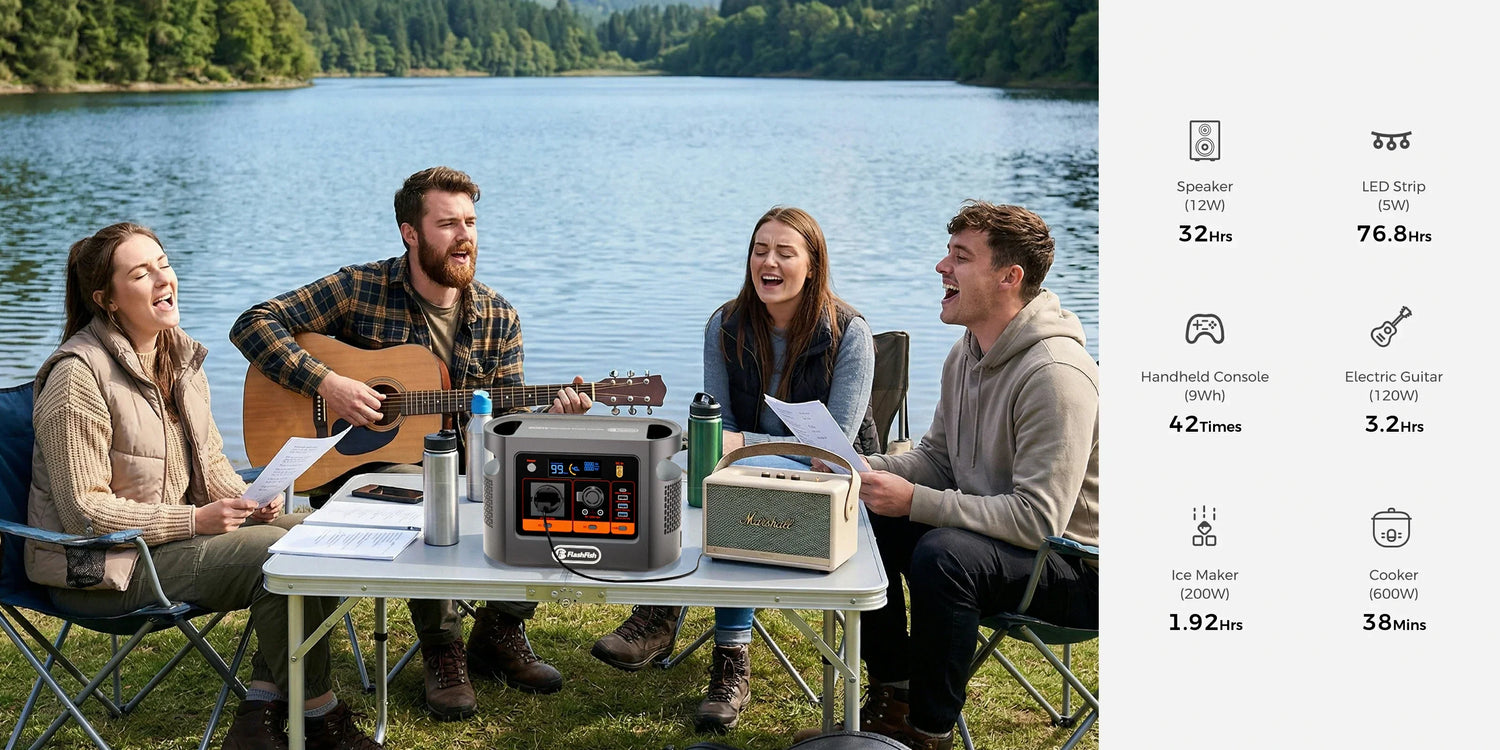
Evidence boundary: this is a specification-led comparison, not a side-by-side test. No current-price, runtime, sound, reliability or weather-performance conclusion is made. FlashFish's local authoritative record leaves E106B battery chemistry blank, so this draft does not resolve it from storefront copy.
Use PACK to choose by the trip, not one headline
| PACK gate | Question | Evidence needed |
|---|---|---|
| P — Power envelope | What must run, start and charge at the same time? | Exact labels, measured running watts, startup observation and an energy budget with reserve. |
| A — Access to ports | Which devices need AC, USB-C, USB-A or 12V? | Port-by-port plan, cable requirements and shared-output limits from the delivered manuals. |
| C — Carry and camp | How far will the unit be carried, and where can it stay dry and ventilated? | Published mass, route, pitch rules, stable covered location and a weather stop plan. |
| K — Known evidence | Which desired features are documented and which are unknown? | Current regional pages and manuals; preserve blanks rather than converting assumptions into facts. |
Published E106B and AC50P comparison
| Field | FlashFish E106B | BLUETTI AC50P | Practical meaning |
|---|---|---|---|
| Rated capacity | 384Wh | 504Wh | AC50P has the larger published energy store; usable energy still varies. |
| Continuous AC output | 600W pure sine | 700W | Screen measured continuous loads and startup behaviour separately. |
| AC outlets | 1 | 1 | Build a connection plan instead of assuming outlet expansion is appropriate. |
| USB-C | 100W + 30W | 65W + 65W | E106B favours one higher-power USB-C device; AC50P documents two equal 65W ports. |
| Solar input | Up to 200W; 12–30V/10A storefront input | Up to 200W | Equal headline watts do not prove panel, connector, polarity or voltage-window compatibility. |
| AC input | 250W storefront value | 600W | Published input limits are not a measured full recharge time in campsite conditions. |
| App / transfer-time evidence | Not provided in the local product record used here | App control; ≤20ms stated transfer time | Count only features documented for the exact regional model and suitable load. |
| Approximate mass | 5.2kg | 6.9kg | E106B is 1.7kg lighter by published figures; comfort was not tested. |
| Battery chemistry | Unresolved in the local authoritative record | LiFePO4 on current official page | Do not silently fill a FlashFish source conflict to make the table look complete. |
Decision step: Compare E106B with your completed PACK card. If the trip needs one 100W USB-C laptop and a lighter carry, E106B deserves consideration. If more published energy, two 65W USB-C ports, app control or the documented transfer function are required, AC50P may fit better.
Make a compact-camping load card
| Device | Exact input | Measured running W | Startup or duty cycle | Hours | Port |
|---|---|---|---|---|---|
| Camping fridge | Record label and manual | Measure representative use | Observe starts and ambient effect | Plan a range | AC or 12V as explicitly supported |
| Laptop | Record USB-C or AC adaptor | Measure normal charging | Note workload | Enter need | Match exact USB-C requirement |
| Lights / phones | Record each charger | Measure together | Note simultaneous use | Enter need | Map every port |
Calculate Wh from measured watts and time for each state, then add conversion loss and reserve. A fridge cycles, a laptop changes draw with workload, and solar input changes with weather and panel position. That is why 384Wh versus 504Wh cannot be converted into one universal runtime answer.
Three trade-offs buyers often miss
- One stronger USB-C port versus two equal ports: a 100W laptop can favour E106B's documented port, while two devices each needing up to 65W can favour AC50P's layout.
- Carry mass versus energy reserve: the published 1.7kg difference matters on foot; the 120Wh capacity difference may matter more on a longer stay without dependable recharge.
- Documented controls versus unused features: an app or transfer function has value only when the user has a real control or suitable backup requirement. It should not outweigh a better load and carry fit.
When E106B fits—and when it does not
When FlashFish fits
- The measured camping loads stay inside the delivered E106B's regional limits and its one-AC-outlet plan is sufficient.
- A 100W USB-C device and lower published carry mass matter more than the additional AC50P capacity and controls.
- The energy worksheet leaves reserve and every connection can remain dry, stable and supervised.
When FlashFish does not fit
- The trip needs more measured energy or continuous output than the E106B plan can support with reserve.
- Two 65W USB-C outputs, documented app control or a suitable documented transfer function are decision requirements.
- The buyer requires a settled battery-chemistry field before review; the current local FlashFish record does not provide it.
FAQ
Which is lighter, E106B or BLUETTI AC50P?
By the currently published figures, E106B is approximately 5.2kg and AC50P is 6.9kg. That is a published mass comparison, not a carry-comfort test.
Which has more capacity and AC output?
AC50P publishes 504Wh and 700W, while E106B publishes 384Wh and 600W. Capacity and output are separate gates; neither number alone predicts runtime for a real campsite load set.
Which has the stronger USB-C option?
E106B publishes one 100W and one 30W USB-C port. AC50P publishes two 65W USB-C ports. Choose from each device's exact USB-C power requirement and the whole simultaneous port plan.
Does AC50P's app and transfer-time claim make it the better camping choice?
Not automatically. Those are documented AC50P functions that may matter for remote control or a suitable backed-up load, but carry mass, energy need, ports and the exact operating environment may matter more.
How long will either station run a camping fridge?
This comparison does not provide a fixed runtime. Measure the exact fridge through its normal duty cycle, include startup and ambient-temperature variation, then plan from usable energy, conversion loss and reserve.
Sources and evidence notes
- FlashFish Europe E106B page and local product database — current product identity and documented limits; local battery chemistry remains unresolved.
- BLUETTI Europe AC50P page and Europe manuals portal — first-party AC50P fields and manual route, not independent test evidence.
- Electrical Safety First garden guidance — dry outdoor connection boundary.
Editorial viewpoint: a fair compact comparison preserves unknowns and asks which documented trade-off solves the trip. PACK separates the power envelope, port access, carry burden and evidence quality instead of declaring a universal winner.
Next step: Compare other FlashFish portable power station classes if the completed load card falls outside E106B's published range.
Evidence checked . Human review is required for current competitor facts, regional manuals, unresolved FlashFish chemistry, electrical wording, author/reviewer credentials, links, metadata, image disclosure and rendered FAQ/schema parity before publication.




Hinterlasse einen Kommentar
Diese Website ist durch hCaptcha geschützt und es gelten die allgemeinen Geschäftsbedingungen und Datenschutzbestimmungen von hCaptcha.