

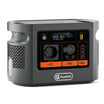
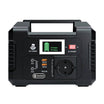

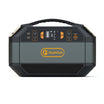
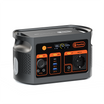


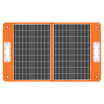
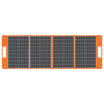


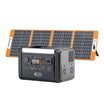

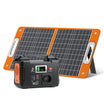


Short answer: LiFePO4 became common in portable power stations because buyers started asking for longer cycle life, steadier everyday durability and more confidence in larger-capacity home-backup and solar-ready products. In 2026, the market signal is clear: LiFePO4 is no longer a niche chemistry badge. It has become a mainstream expectation across many portable and semi-home-use stations.
That shift did not happen overnight. Portable power started as a category that borrowed ideas from emergency backup packs, camping batteries and compact inverter systems. As buyers asked more from these products, the battery conversation changed too.
Phase 1: portability mattered more than long-term chemistry questions
In the earlier growth years of portable power stations, many shoppers were simply happy to replace noisy fuel generators for small electronics and light-duty backup. Product conversations focused on output ports, pure sine wave claims, weight and whether the station could run a cooler, laptop or lights for a trip.
Battery chemistry still mattered, but it was not yet the first thing most non-technical buyers looked for.
Phase 2: bigger stations made battery durability more visible
As stations grew from compact trip companions into products that also supported home backup, van use and solar charging, buyers paid more attention to how often they could recharge the unit over time. That is where LiFePO4 started to move from specialist talking point to mainstream selling feature.
| Category phase | What buyers wanted | Why LiFePO4 gained attention |
|---|---|---|
| Compact early-use stations | Ports, portability, basic backup | Chemistry was secondary for many casual buyers |
| Weekend and solar-ready stations | More repeat use, more charging cycles, better resilience | Longer-life messaging became easier to understand and compare |
| Larger backup and home-adjacent systems | Frequent use, larger battery value, everyday reliability | LiFePO4 became a more natural fit for the way buyers planned to use the product |
What current 2026 reviews suggest
Current category roundups and reviews now treat LiFePO4 as normal rather than unusual. That is the strongest sign of the category transition. When best-of guides and product reviews mention LFP routinely across portable, camping and backup-oriented models, it shows the chemistry has crossed from premium differentiator into market standard for many use cases.
That does not mean every LiFePO4 station is automatically better than every non-LFP station. Size, output, charging speed, portability and price still matter. But the market has clearly moved toward LFP when buyers want a station they expect to use often rather than just store for rare emergencies.
Why this matters for FlashFish buyers now
The FlashFish EU range already shows this shift in practice. Buyers who care about LFP options can compare the LiFePO4 battery collection and then move into specific current products such as the FlashFish E103, T200, T300PRO, T1200S and T2000.
That makes the history useful, not just interesting. If you notice `LFP` or `LiFePO4` across multiple product pages, you are seeing a broad category change reflected in the store, not a one-off spec trend.
What LiFePO4 does not change
- It does not remove the need to match output to your devices.
- It does not make a large power station easy to carry.
- It does not guarantee that one model is the best value for every buyer.
- It does not replace normal battery care, ventilation and correct charging practices.
A practical buyer takeaway
If you want a compact station for occasional light charging, chemistry may be only one part of the decision. If you plan to recharge the unit often, pair it with solar, or move into larger-capacity backup use, the shift toward LiFePO4 becomes more relevant. That is why many 2026 buyers now start with product fit first and then use battery chemistry as a quality filter rather than as the only decision point.
FAQ
Why do so many current power stations mention LiFePO4?
Because the market has moved toward longer-life, repeat-use products and LiFePO4 fits that buyer demand well.
Does LiFePO4 mean a power station is always better?
No. It is an important product signal, but output, battery size, portability, charging options and price still matter.
Where should I start in the FlashFish range if I want LFP models?
Start with the LiFePO4 collection, then compare smaller models such as the E103 and T200 against larger options such as the T1200S and T2000.
Sources used for editorial context: Power Station Guide's public LFP explainer, TechRadar's 2026 portable power station roundup, and TechRadar review coverage of current compact systems.




Hinterlasse einen Kommentar
Diese Website ist durch hCaptcha geschützt und es gelten die allgemeinen Geschäftsbedingungen und Datenschutzbestimmungen von hCaptcha.