








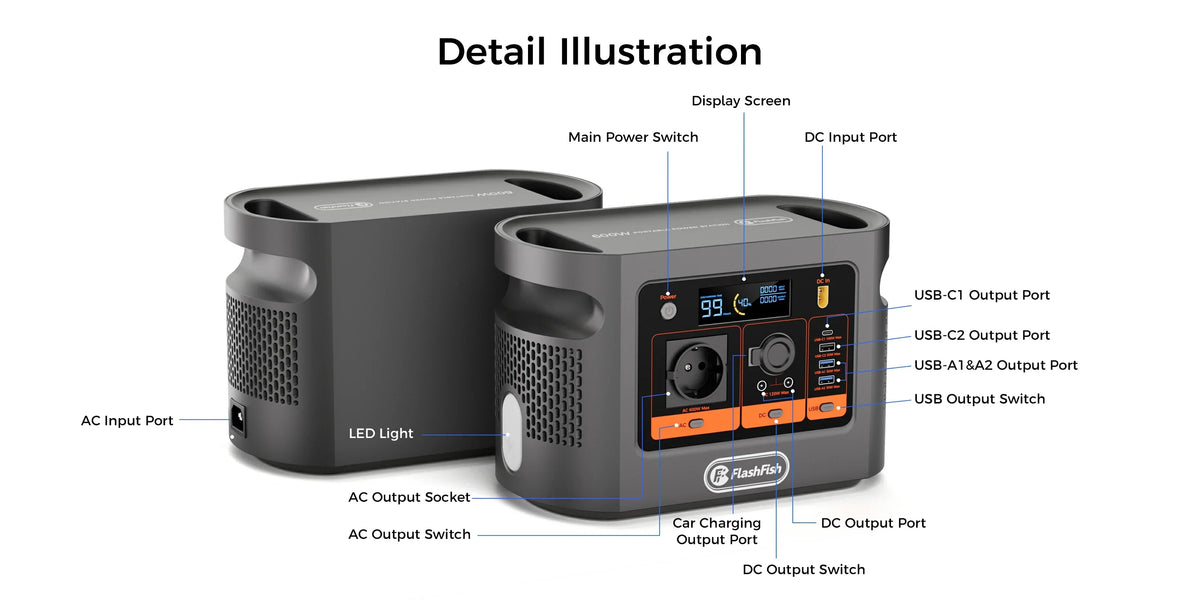
Short answer: most of Continental Europe's grid operates at approximately 50Hz, while 60Hz is common in the United States. A portable power station and the connected appliance should agree on frequency as well as voltage, plug, waveform and power. A 230V label or a physically fitting plug does not prove a 60Hz-only appliance is suitable for 50Hz output.
Frequency is the number of alternating-current cycles per second. Fifty hertz means 50 cycles each second; 60Hz means 60. Many modern electronic power supplies accept both, but motors, clocks, transformers and equipment designed for one fixed frequency may behave differently. The appliance label and manufacturer instructions—not the category name—decide.
In this guide: why frequency matters · LABEL MATCH · three label examples · mistakes · FAQ
Why 50Hz and 60Hz matter
ENTSO-E describes Continental Europe's interconnected transmission system as operating synchronously at approximately 50Hz. The European Commission's AC glossary contrasts that with 60Hz household power in the United States. A portable station recreates AC from a battery through an inverter, so its output frequency belongs to the station's regional design or setting—not automatically to the place where it is used.
Fluke notes that fixed-frequency equipment can operate abnormally at the wrong frequency and uses AC motor speed as a clear example. That does not mean every electronic device fails across regions. It means frequency must be treated as an explicit compatibility field instead of being guessed from voltage or plug shape.
| Label field | Question it answers | What it cannot prove alone |
|---|---|---|
| 230V | Does the nominal voltage match? | Frequency, waveform, power headroom or grounding. |
| 50Hz or 60Hz | Does the AC cycling rate match? | Voltage, plug, power or device behaviour under load. |
| 50/60Hz | Does the input accept either common frequency? | That every other electrical field matches. |
| Pure sine wave | What waveform shape is stated? | The actual frequency or universal sensitive-device compatibility. |
| EU plug | Does the physical connection fit the intended socket type? | Any electrical conversion or safety approval. |
Use LABEL MATCH before powering an appliance
L — Location and regional grid: identify the country and expected household frequency. Do not use that as a substitute for the product label.
A — Appliance input label: read the complete input line. Record voltage, frequency, watts or amps and whether the label says one frequency or 50/60Hz.
B — Both sides: compare the station's output label with the appliance or its original adapter input. If the appliance uses an external adapter, the adapter input is what the station powers.
E — Equipment type: flag motors, pumps, fans, clocks, transformers, heating controls and other frequency-sensitive loads. Electronics with a documented universal input may be more flexible, but only the label confirms it.
L — Lead and plug: verify the plug, cable, earth connection and any approved adapter. A passive travel adapter does not normally change frequency.
M — Manual and manufacturer: use the exact regional manual and ask the appliance maker when the label is unclear. Do not copy compatibility from a similar model.
A — Available continuous power: frequency agreement does not replace the wattage check. Add all simultaneous loads and allow for documented startup behaviour.
T — Test only after labels match: perform a supervised test within both manuals. Do not experiment with a known frequency mismatch.
C — Configuration lock: if a station offers a frequency setting, confirm the manual allows the correct regional value and prevent accidental changes during use.
H — Halt on uncertainty: stop when the label is missing, contradictory or single-frequency on the wrong side. Use a matching regional station or appliance rather than improvising a converter.
Three concrete label examples
1. Station output 230V 50Hz; appliance input 220-240V 50Hz
The voltage and frequency fields align on paper. Continue with plug, earth, waveform, continuous watts, startup demand and the appliance manual. This is a pass to the next checks, not a compatibility guarantee.
2. Station output 230V 50Hz; laptop adapter input 100-240V 50/60Hz
The adapter input accepts the station's stated voltage and frequency range on paper. The adapter output must still match the laptop, and its input demand must remain within the station and cable limits.
3. Station output 230V 50Hz; motor appliance input 230V 60Hz only
Stop. Voltage agreement does not erase the frequency mismatch. Do not use a plug adapter as a frequency converter or assume lower speed is the only consequence. Ask the appliance manufacturer or use matching regional equipment.
Common mistakes
- Checking only volts and ignoring hertz.
- Assuming an EU plug proves European electrical compatibility.
- Treating pure sine wave as though it includes the correct frequency automatically.
- Reading the device's DC output label instead of its AC adapter input label.
- Assuming every USB-C charger is universal without reading its input range.
- Changing a frequency setting without checking the station manual and connected loads.
- Using a passive travel adapter as if it converts voltage or frequency.
A Europe buyer's frequency checklist
- Photograph the station's delivered AC output label.
- Photograph the appliance or original adapter input label.
- Write voltage and frequency in separate columns.
- Confirm the regional plug and any earth requirement.
- Check waveform only after voltage and frequency match.
- Add continuous and documented startup demand for every simultaneous load.
- Read both exact regional manuals and stop on a missing or contradictory field.
- Keep the label record with the camping, travel or outage load sheet.
A bounded FlashFish example
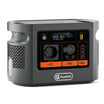
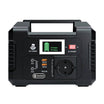
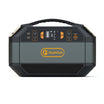
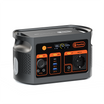
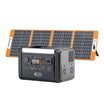
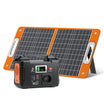
The authoritative local E106B record describes 110V or 230V and 50/60Hz by regional version. The current Europe page lists the EU AC output as 230V, 50Hz. That makes the EU page a useful regional example, but the delivered product label remains decisive. Do not assume a unit bought for another market has the same output because its model name or connector looks familiar.
For a broader model shortlist, use the Europe buying guide after checking voltage and frequency. Apply LABEL MATCH first so incompatible regional variants do not reach the shortlist.
Safety and evidence boundary
This guide does not provide transformer sizing, inverter modification, internal rewiring or frequency-conversion instructions. Those are separate engineering tasks with equipment-specific risks. When a fixed-frequency appliance and station do not match, the safe editorial answer is to stop and obtain manufacturer guidance or matching regional equipment.
FAQ
Is European household electricity 50Hz or 60Hz?
Continental Europe's interconnected grid operates at approximately 50Hz. Buyers should still read the exact country, product and appliance labels rather than relying only on geography.
Can a 50/60Hz appliance run from a 50Hz station?
Usually the frequency line passes if the appliance input explicitly says 50/60Hz, but voltage, waveform, power, plug, grounding and the full manufacturer instructions must also match.
Can a 60Hz-only appliance run from 50Hz?
Do not assume so. Motors, clocks, transformers and other frequency-sensitive equipment may behave incorrectly. Ask the appliance manufacturer or choose a matching regional product.
Does a plug adapter change 50Hz into 60Hz?
No. A passive plug adapter changes the physical connection only. It does not normally change voltage, frequency or waveform.
Does pure sine wave mean 50Hz and 60Hz are interchangeable?
No. Waveform shape and frequency are separate properties. A pure-sine output can still have the wrong frequency for an appliance.
Conclusion
For European use, frequency belongs beside voltage at the top of the checklist. Match the station output to the appliance or original adapter input, then verify plug, earth, waveform, watts and startup behaviour. When any regional field is missing, the right decision is to stop—not to improvise. After that screen, compare current Europe portable power stations using only the regional variants that remain eligible.
Sources and further reading
Regional context comes from ENTSO-E and the European Commission AC glossary. Equipment behaviour context comes from Fluke's frequency explanation. The E106B example uses its authoritative local record and current Europe page. No imported-product approval, cross-frequency compatibility, conversion method or appliance test is claimed.



Dejar un comentario
Este sitio está protegido por hCaptcha y se aplican la Política de privacidad de hCaptcha y los Términos del servicio.