

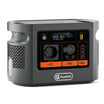
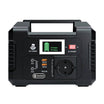

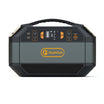
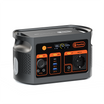


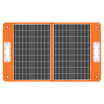
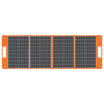


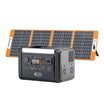

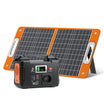


Short answer: start with the vehicle, not the station’s maximum input number. Confirm the exact accessory-socket voltage, watt/amp limit, fuse, ignition rule and approved cable. Then check that the FlashFish input window accepts the source. A T1200S “400W maximum” or T2000 “600W maximum” does not mean a 12V accessory socket can deliver that power.
This guide uses manufacturer specifications and vehicle-manual examples. It is not a timed car-charging test and does not state a fixed recharge duration.
Separate the station input from the vehicle limit
| Model | Verified station DC/car input | What it means | What remains unknown |
|---|---|---|---|
| T1200S | DC7909; 12-50V, 10A, 400W maximum | The station-side accepted window and ceiling | Actual car-socket output, approved cable and stable observed watts |
| T2000 | DC7909; 12-80V, 10A, 600W maximum | The station-side accepted window and ceiling | Actual car-socket output, approved cable and stable observed watts |
The local FlashFish product records leave package contents blank for both models. Therefore, check whether the correct car cable is in the current box or available from FlashFish. Matching connector shape is not enough: polarity, wiring, fuse and rated current also matter.
The five-part DRIVE checklist
D: identify the exact device and approved cable
- Confirm whether the station is T1200S or T2000 and inspect its DC7909 input label.
- Use only a cable that FlashFish approves for the exact model and vehicle-source type.
- Reject a cable with bent pins, looseness, cuts, heat marks or an unknown polarity.
- Do not stack adapters or use an extension unless both manufacturers explicitly permit the arrangement.
R: read the vehicle socket rating and fuse
Open the owner manual for the exact vehicle, model year and socket location. The same car can have more than one outlet with different rules. Record voltage, maximum watts or amps, fuse location, ignition requirement and whether the socket is intended for prolonged use.
One current Volvo support example states 120W/10A for the cited 12V socket. A Toyota Europe Aygo manual also provides a 12V/120W example. These values illustrate a method; they are not a universal rating.
| Number | Use it for | Do not use it for |
|---|---|---|
| Vehicle socket/fuse limit | Source-side ceiling | Estimating station capability |
| Station voltage/current/watt input maximum | Destination-side acceptance | Assuming the car can supply the same watts |
| Observed stable input | Planning from the real setup | Predicting every car, temperature or battery state |
I: follow the ignition and engine instructions
Some sockets are active only in a specific ignition mode. Some vehicle manuals warn that accessory use with the engine stopped can discharge the starter battery. Follow the exact manual; do not infer an “engine off” duration from another car.
If the engine must run, check local anti-idling, campsite, ferry, garage and ventilation rules. Never run an engine in an enclosed or poorly ventilated place. A charging goal is not a reason to ignore carbon-monoxide or site restrictions.
V: secure and ventilate the station
Place the station on a stable, dry surface where it cannot become a projectile under braking. Keep the required air clearances, do not cover vents and route the cable away from pedals, seat rails, door seals and sharp edges. Keep the accessory plug dry and fully seated.
E: monitor the first session and keep evidence
Start with the station and vehicle in normal condition and remain present. Record the initial state of charge, vehicle/ignition state, displayed input, connection stability and any warmth at the plug. Stop if the input cycles, the plug becomes unusually hot, there is odour, the fuse opens or the vehicle shows a warning.
First-session worksheet
| Field | Record before connecting | Record after 10-15 minutes |
|---|---|---|
| Vehicle | Make, model, year, socket location | Warnings or electrical-system change |
| Manual rule | Voltage, watts/amps, fuse, ignition state | Rule followed: yes/no |
| Cable | Approved part and condition | Plug/cable temperature and seating |
| Station | Model, state of charge, input label | Stable displayed input and interruptions |
| Environment | Dry, ventilated, secured position | Heat, movement or cable-routing issue |
Use this observed input for trip planning only after several stable checks. Charging power can change as the battery state, vehicle voltage, temperature or station control logic changes, so one screen reading is not a universal recharge-rate claim.
Common mistakes
- Using 400W or 600W as the car-socket draw: those are station input maxima, not vehicle promises.
- Buying by connector appearance: an unsafe polarity or current rating can share the same-looking plug.
- Leaving the station loose on a seat: secure it against normal driving and emergency braking.
- Testing by repeated reconnection: a blown fuse, hot plug or cycling input is a stop signal, not a challenge to bypass.
- Quoting a fixed time: a meaningful estimate requires the real stable input and starting state of charge.
When FlashFish car charging fits
- The exact vehicle manual permits the intended socket use and the correct fuse is installed.
- FlashFish confirms the cable for the exact T1200S or T2000 input and source.
- The station can be kept dry, ventilated and physically secure while monitored.
- The first session remains stable without warnings, odour, unusual heat or connector movement.
When it does not fit
- The vehicle rating, ignition rule, fuse or socket condition is unknown.
- The cable source, polarity, current rating or FlashFish approval cannot be confirmed.
- The only plan risks draining the starter battery or requires engine use where it is unsafe or prohibited.
- The circuit disconnects, the plug heats, a fuse opens or the vehicle reports a fault.
Frequently asked questions
Does the T1200S 400W input mean it draws 400W from a 12V car socket?
No. The vehicle circuit can impose a much lower source limit.
Does the T2000 600W input mean a cigarette-lighter socket can supply 600W?
No. Read the exact socket and fuse limit in the vehicle manual.
Is a car-charging cable included?
The current authoritative database does not list package contents, so confirm the current box and approved cable with FlashFish.
Can I charge with the engine off?
Only follow the exact vehicle instructions; some manufacturers warn about starter-battery discharge.
How long will car charging take?
No fixed time is defensible without the real stable input, starting charge, vehicle state and conditions.
What if the input repeatedly disconnects?
Stop and inspect the approved setup, fuse, plug seating and heat; do not keep reconnecting an unstable circuit.
Sources and evidence boundary
- FlashFish product-source bundle and T1200S/T2000 Europe pages — station-side input specifications.
- Volvo 12V socket guidance — one manufacturer’s socket and ignition example.
- Toyota Europe Aygo owner manual — a second socket limit and starter-battery caution example.
Human review must verify the cable part, current manuals and market-specific vehicle safety wording before publication.





Dejar un comentario
Este sitio está protegido por hCaptcha y se aplican la Política de privacidad de hCaptcha y los Términos del servicio.