

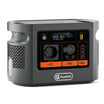
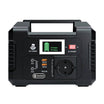

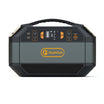
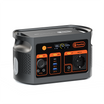


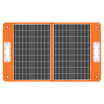
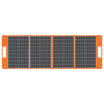


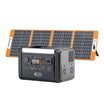

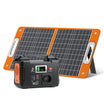

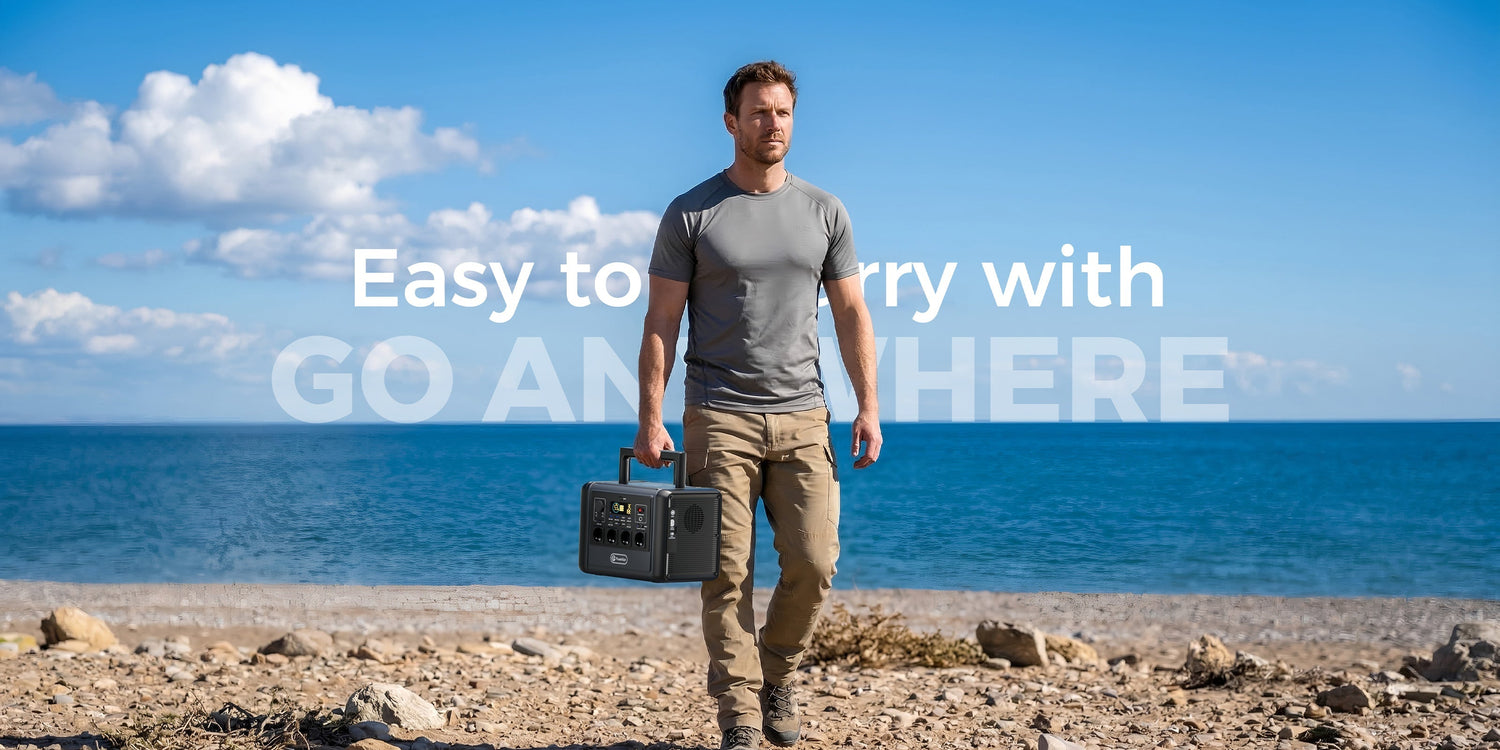
Short answer: not a typical portable hob with a 2000W connection rating. The FlashFish T1200S is recorded at 1200W continuous AC output. A 2000W hob exceeds that continuous limit, and the station’s 2400W peak figure is not a licence for sustained cooking.
A lower-rated induction hob may fit only when its documented maximum input, every simultaneous load, the cable arrangement and the campsite setup all pass. This guide gives a repeatable decision method; it does not report a FlashFish cooking test.
The three PAN gates
| Gate | Check | Pass condition |
|---|---|---|
| Plate maximum input | Read the hob connection rating or maximum input, not a favourite heat setting | Documented maximum is within the station’s continuous output and manual rules |
| All simultaneous loads | Add the hob and everything else drawing AC power | Combined continuous demand leaves operating margin below 1200W |
| Network, placement and venue | Plug/cable rating, dry stable position, ventilation, fire separation and campsite permission | Every physical and site rule is satisfied |
P: use the appliance maximum, not the dial setting
The FlashFish T1200S manual-derived record lists 1200W continuous and 2400W peak pure-sine AC output. Continuous output is the planning limit for a cooking load.
Induction-hob controls do not always behave like a simple dimmer. A lower heat selection can cycle a high input on and off or use a manufacturer-specific control pattern. Unless the manual states a hard maximum for a limited-power mode, plan from the appliance’s connection rating.
A: total every live AC load
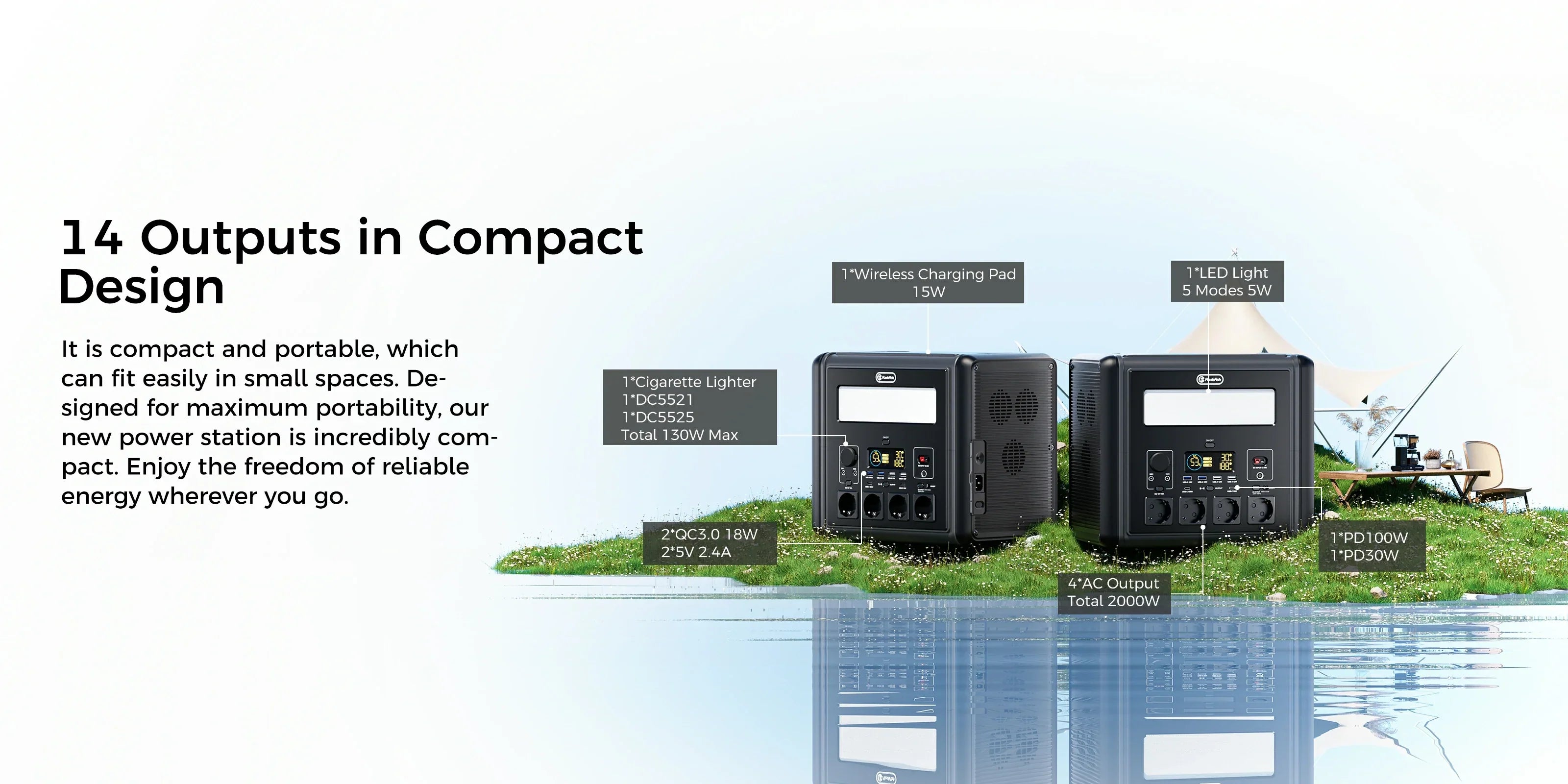
If the hob passes on paper, subtract any other AC device operating at the same time: fridge compressor, lights with AC adapters, chargers, coffee equipment or a second cooking appliance. A four-socket front panel does not create four separate inverter limits; the combined AC total still matters.
Leave room for variation rather than designing exactly at 1200W. Labels can describe nominal or maximum values differently, appliances can change demand during operation, and a station display is useful for observation but is not a laboratory meter.
N: the electrical path and cooking area are separate gates
Use the shortest manufacturer-approved connection path available. Electrical Safety First warns against overloaded extension leads, daisy chains and high loads on coiled cable reels. Stop if a plug, socket or cable becomes damaged, discoloured, unusually hot or gives off a burning smell.
Place the station away from steam, spills and cooking heat, and keep its ventilation clear. Put the hob on a flat, stable, heat-resistant surface away from tent fabric and combustible items. Check the campsite’s appliance, fire and quiet-time rules; owning a battery station does not override the venue.
Worked example: a 2000W portable induction hob
The official German page for the portable one-zone IKEA TILLREDA induction hob lists a 2000W connection rating, 10A current and a 220-240V supply. It also calls for a flat, stable surface.
| Item | Documented value | Decision |
|---|---|---|
| T1200S continuous AC output | 1200W | Planning ceiling for sustained AC loads |
| T1200S peak AC output | 2400W | Short-transient figure; not a continuous cooking allowance |
| Example hob connection rating | 2000W | Does not fit the T1200S continuous envelope |
| Remaining continuous margin at full hob rating | 1200W - 2000W = -800W | Failure before any other load is added |
The result is not borderline. The example hob’s documented input is 800W above the station’s continuous rating. Choosing a low setting does not turn that 2000W appliance into a documented sub-1200W appliance. Do not plan this pairing.
What a lower-rated hob must prove
A smaller or power-limited hob is a new evidence question, not an automatic yes. Collect its exact model and current regional manual, then complete the PAN check.
- Maximum input: the manual must state a maximum below 1200W for the mode you will use.
- Combined load: keep all other AC devices in the worksheet.
- Cookware: use flat, induction-compatible cookware within the appliance size limits.
- Cable: direct connection is preferable; any approved extension must be fully rated and correctly deployed.
- Environment: keep the station dry, ventilated and outside the heat/steam zone.
- Rehearsal: perform a supervised full setup before the trip, with a non-battery cooking fallback available.
Camping cooking load worksheet
| Load or condition | Label/manual evidence | Planned watts | Pass / unresolved |
|---|---|---|---|
| Hob maximum input | Model/manual: ____________ | ____________W | ____________ |
| Other simultaneous AC load 1 | Label: ____________ | ____________W | ____________ |
| Other simultaneous AC load 2 | Label: ____________ | ____________W | ____________ |
| Combined continuous load | Sum above | ____________W | Below 1200W with margin? |
| Plug/cable/reel arrangement | Ratings: ____________ | Not applicable | ____________ |
| Dry, stable, ventilated setup | Site check: ____________ | Not applicable | ____________ |
| Campsite permission and fallback | Rule/plan: ____________ | Not applicable | ____________ |
Why this article does not give a cooking runtime
The T1200S is recorded at 768Wh, but 768Wh divided by a hob label is not a meal promise. Usable energy depends on battery state, reserve, conversion losses, temperature, hob cycling, cookware, food mass and every other load. A proper result needs a defined recipe and a documented end-to-end test. None was supplied, so no runtime is claimed.
When T1200S may fit induction cooking
- The exact hob has a documented maximum input safely below 1200W.
- The combined AC plan leaves operating margin and excludes conflicting high loads.
- The setup uses approved, correctly rated connections in a dry and ventilated position.
- The venue permits the appliance and the camper has a non-electric cooking fallback.
When T1200S does not fit
- The hob is rated at 2000W, like the example appliance, or otherwise exceeds 1200W.
- The plan relies on the 2400W peak number for sustained cooking.
- The hob’s power-limiting behaviour is undocumented or only assumed from a dial setting.
- The load requires daisy-chained, coiled, damaged or under-rated extensions.
- The station would be exposed to rain, spills, steam, blocked airflow or cooking heat.
Safety boundary
Do not modify mains cables, plugs, the power station or the appliance. Do not bypass protection or use damaged equipment. Keep a suitable cooking-fire response plan, follow the hob and station manuals, and obey local campsite rules. If the electrical rating or regional plug arrangement is unclear, stop and ask a qualified person.
Frequently asked questions
Can a 1200W power station run a 2000W induction hob?
No. The hob rating is above the station’s continuous limit.
Does a lower heat setting make a 2000W hob compatible?
Do not assume so; use a documented maximum-input limit for the exact mode and model.
Can the T1200S peak rating run a larger hob?
Peak output is for short transients, not sustained cooking.
Would a lower-rated induction hob work?
It may pass the watts gate, but combined loads, connections, location and venue rules must also pass.
Can I use a cable reel with an induction hob?
Avoid unnecessary extensions. If an approved reel is required, follow its rating and fully unwind it; never daisy-chain.
How long will the T1200S cook?
No fixed runtime is supported without a defined recipe, measured load profile, losses, reserve and test conditions.
Sources and further reading
- FlashFish Europe T1200S and the local product-source bundle—continuous/peak output, capacity, weight and dimensions.
- IKEA Germany TILLREDA portable induction hob—representative 2000W appliance rating and placement instruction.
- Electrical Safety First extension-lead guidance—overload, cable-reel and damage warnings.
Human review note: verify the exact Europe labels and manuals and do not publish a runtime or compatibility result without a documented test.



Dejar un comentario
Este sitio está protegido por hCaptcha y se aplican la Política de privacidad de hCaptcha y los Términos del servicio.