

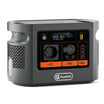
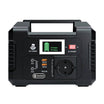

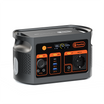






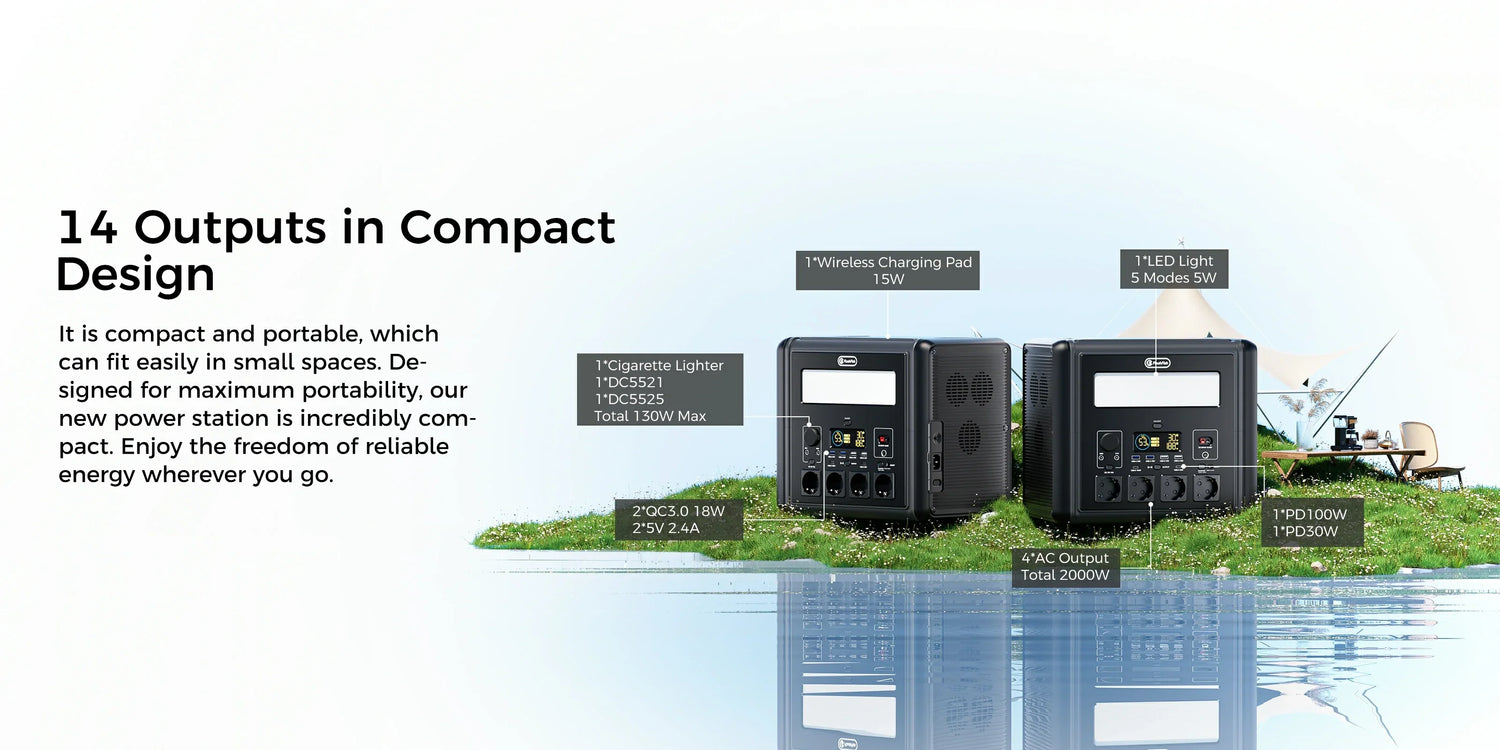
Short answer: FlashFish T2000 can fit a European market stall when the trader builds two separate budgets: simultaneous watts for everything running at once, and daily watt-hours for the full trading period. The plan must also keep the 19.2kg station dry, protected from customers, and connected through correctly rated cables that do not create a trip or damage risk.
A 2000W label is not a market-day duration promise. It is the continuous AC ceiling. A good stall plan also accounts for startup loads, USB/DC options, conversion losses, weather, payment-network dependencies and a shutdown fallback.
Start with the devices, not the station
| Stall device | Label or measurement to record | Planning trap |
|---|---|---|
| Card reader, phone or tablet | Charger watts, USB-C profile and hours connected | Powering the device does not assure the mobile or payment network. |
| Wi-Fi hotspot or router | Adapter watts and required input voltage | The wider provider network may still fail or be congested. |
| LED lighting or sign | Total watts for every lamp, driver and controller | Decorative lighting is often multiplied without being included in the load total. |
| Laptop, label printer or small display | Maximum adapter watts and duty cycle | Several moderate devices can create a high simultaneous total. |
| Cooler or compact fridge | Running watts, startup behaviour and temperature requirement | Food safety and compressor cycling cannot be reduced to one fixed runtime. |
| Kettle, hot plate or heater | Full rated watts and venue permission | Heat appliances can consume most of the 2000W ceiling and energy store. |
The STALL planning method
S - Simultaneous watts
Add the maximum watts of every device that may be on together. T2000 is rated for 2000W continuous AC output and 4000W peak, but peak power is brief startup headroom, not a second continuous rating. Multiple AC appliances share the total. USB and the shared DC group also have their own limits.
T - Time and watt-hours
For each device, multiply measured or label watts by realistic hours of use, then total the watt-hours. Separate always-on devices from short bursts. The result is a planning estimate, so allow for conversion, standby, temperature and cycling losses rather than dividing 1536Wh by one number and treating it as an assured duration.
A - Access control
HSE event electrical guidance tells organisers to consider trader and public areas, environmental conditions, power requirements and unauthorised access. Place the station where the trader can reach its controls but customers cannot touch the unit, plugs or cable connections. Keep it out of exits, customer queues and stock-handling routes.
L - Leads, connectors and weather
Use only correctly rated, undamaged cables and connectors suitable for the conditions. Keep them dry and protected from crushing, sharp edges and vehicles. Fully unwind cable reels and avoid daisy-chaining. Route cables away from public walkways; where a crossing cannot be avoided, the event organiser may require suitable protection and placement.
L - Loss reserve and fallback
Keep a reserve for a late closing time, cold weather, extra transactions or a device that uses more than expected. Decide in advance which non-essential load will be switched off first. Payment, emergency lighting, refrigeration or safety functions need separate continuity and venue planning; one portable station should not be the only dependency.
A worked planning example - not a field test
A trader writes down these hypothetical assumptions:
- LED lighting and sign: 60W for 6 hours = 360Wh.
- Tablet, phone and card-reader charging: average 30W for 6 hours = 180Wh.
- Hotspot: 15W for 6 hours = 90Wh.
- Laptop charger: 65W for 2 hours = 130Wh.
The simple energy subtotal is 760Wh, and the simultaneous total is below 200W when all four groups run. That does not predict a T2000 result: the trader still needs a reserve, conversion and standby allowance, actual charger measurements, cable checks and a pre-event test. If a 1500W kettle is added, the output and energy plan changes completely even though the low-power devices are unchanged.
T2000-specific planning points
| Verified T2000 fact | How it affects a stall plan |
|---|---|
| 1536Wh LFP capacity | Use as the starting energy store, then subtract a reserve and allow for real conversion and standby losses. |
| 2000W continuous AC output | All simultaneous AC loads must stay within the rated total; check startup behaviour separately. |
| 100W + 30W USB-C outputs | Compatible laptops, tablets or phones may avoid an AC adapter, but cable and charging-profile compatibility still matter. |
| 130W shared DC group | The car socket and DC5521/DC5525 outputs share the group limit. |
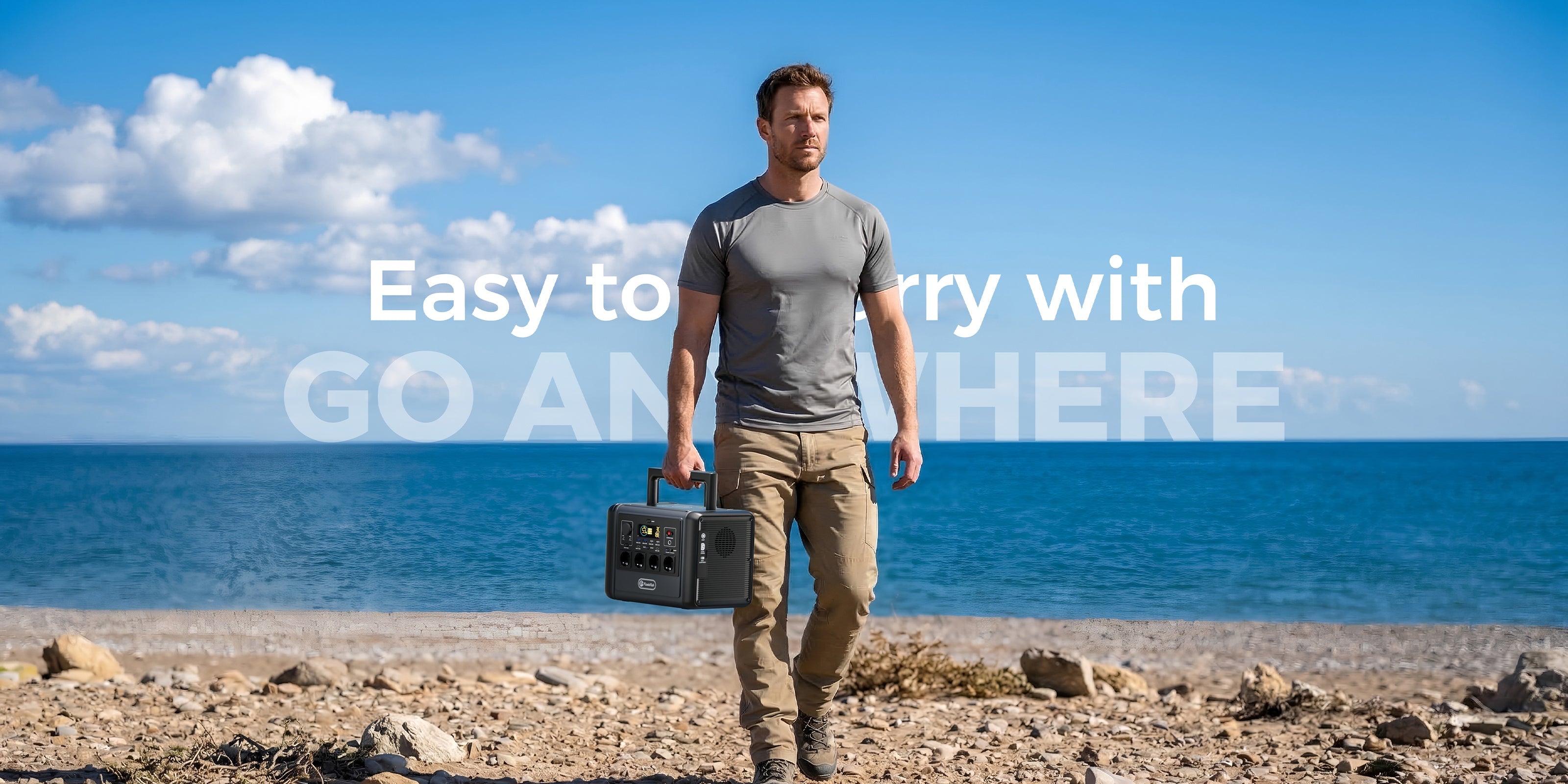
| 19.2kg | Plan stable placement and safe handling; do not put the station where a customer can pull a cable or tip stock onto it. |
When T2000 fits
- Your measured simultaneous load stays comfortably inside 2000W.
- Your daily Wh worksheet fits 1536Wh after a realistic reserve and loss allowance.
- The market provides a dry, stable, access-controlled position and an approved cable route.
- Your card reader, phone, tablet, laptop and signage have verified charging profiles.
- You have a fallback for connectivity, payment, refrigeration and early shutdown.
When T2000 does not fit
- High-heat catering devices or several appliances push the simultaneous load near or above 2000W.
- The station or connectors may be exposed to rain, standing water, crushing or customer access.
- The venue requires a temporary electrical installation or distribution design beyond direct, approved appliance connections.
- The stall cannot tolerate a power interruption and has no separate continuity plan.
- The trader is relying on a fixed runtime chart instead of measuring the actual setup.
Frequently asked questions
Can T2000 power a card reader, tablet and LED lights?
It may fit when the actual simultaneous watts and daily watt-hours remain within the plan. Powering the devices does not assure mobile, Wi-Fi or payment-network service.
Can a trader run a kettle or hot plate from T2000?
Check the exact appliance label and venue rules. High-heat devices can consume much of the 2000W rated output and quickly dominate the energy budget.
Can T2000 be left outside in rain?
Do not assume that. Follow the product manual, keep the station and connections dry and protected, and stop use if conditions cannot be controlled.
Should stall cables cross a customer walkway?
Avoid public routes where possible. Event guidance recommends cable routing and protection that minimise trip hazards, mechanical damage and unauthorised access.
Can solar panels keep the stall running all day?
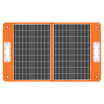
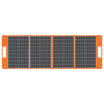
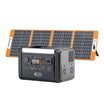
Solar input varies with weather, shade, angle and the approved setup. Treat it as a variable top-up and keep an energy reserve or another approved fallback.
Sources and evidence boundaries
- FlashFish Europe: T2000 and the local product-source bundle - current model identity and manual-derived limits.
- HSE: Electrical safety at events - temporary-event layout, environment, public access and cable-routing framework.
- Electrical Safety First: Garden electrical safety - dry equipment, outdoor-rated leads, cable-reel and damage checks.
Human review note: this is a planning worksheet, not a market-day test or venue approval. Verify country, organiser and market requirements plus every connected device before publication.




Dejar un comentario
Este sitio está protegido por hCaptcha y se aplican la Política de privacidad de hCaptcha y los Términos del servicio.