








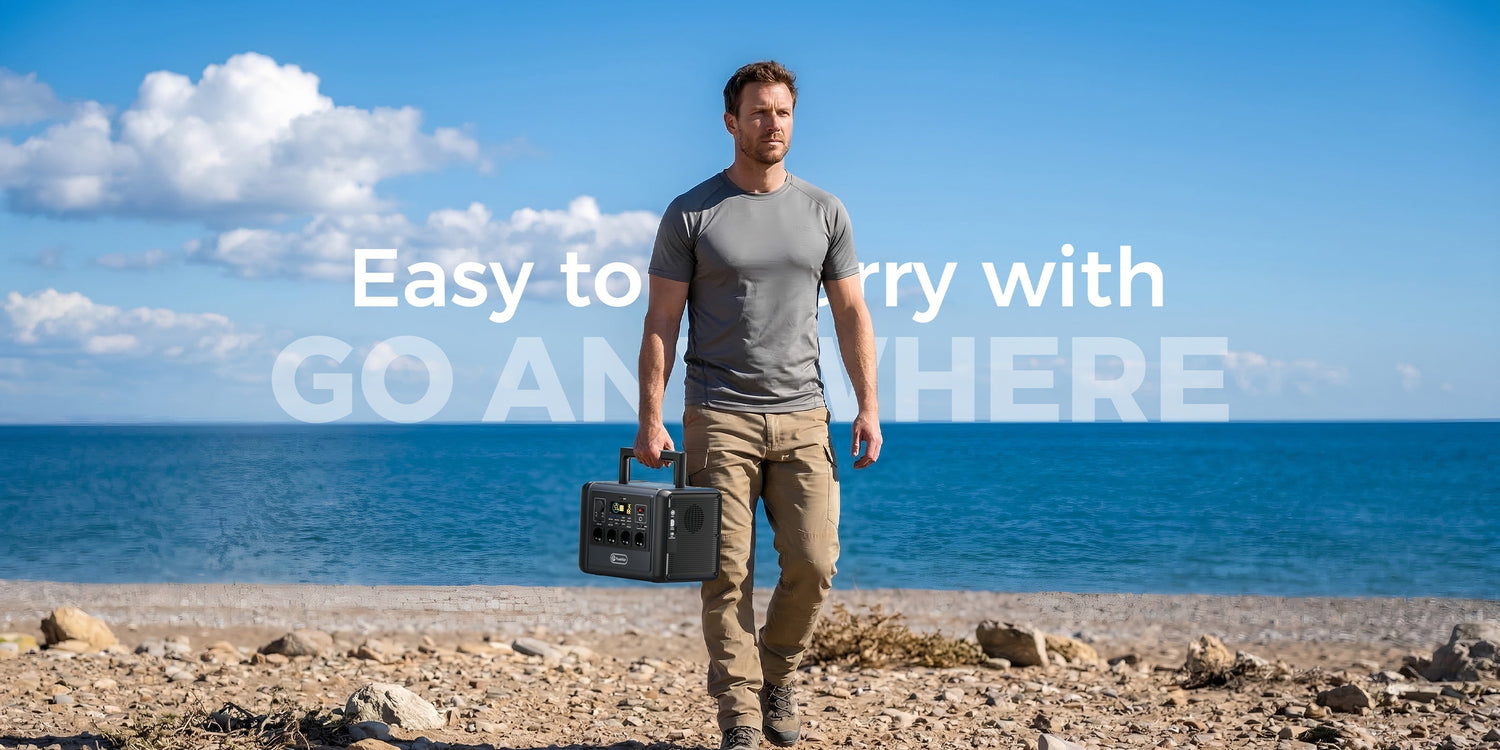
Short answer: choose campsite electric hook-up when you have a serviced pitch and need sustained power within the site's rules. Choose a portable power station when mobility, quiet standalone operation or power away from the pitch matters more. Many campers benefit from a deliberate combination: hook-up for the pitch, and a correctly sized power station for devices used elsewhere.
The comparison is not simply “unlimited power versus a battery.” Campsite supplies have availability and current limits; power stations have finite stored energy, output limits and a recharge requirement. The better choice comes from the PITCH decision: Place, Intended loads, Time away, Charging access and Handling.
Hook-up and portable power solve different problems
| Decision factor | Campsite electric hook-up | Portable power station |
|---|---|---|
| Energy source | Site supply at a serviced pitch, subject to campsite limits and availability. | Finite energy stored in the battery; it must be recharged. |
| Mobility | Useful at the assigned pitch. | Can move to a tent, picnic area, beach setup or vehicle stop within safe-use limits. |
| Long, steady loads | Often the stronger option if the site permits the load. | Possible only when output and energy budget fit; runtime is not unlimited. |
| Setup | Requires the correct campsite lead, connectors and site procedure. | Devices connect directly to approved station outputs; no back-feeding. |
| Weather and placement | Follow campsite and equipment weather-protection rules. | Keep the station dry, ventilated and within its manual limits. |
| Failure plan | Site outage, tripped protection or unavailable pitch supply. | Battery depletion, output overload or no recharge opportunity. |
Use the PITCH method before buying
P — Place and site rules
Ask the campsite whether electric hook-up is available for your pitch, which connector and lead are required, the current limit, and whether high-draw appliances are restricted. The Camping and Caravanning Club describes campsite hook-up as a 230V supply, but individual sites still set their own arrangements. Continental and UK equipment conventions can differ, so verify rather than assume.
I — Intended loads
List every device, its rated watts, startup surge if relevant, hours of use and whether devices run together. A phone, camera and LED light create a very different plan from a kettle, heater, hair dryer or cooking appliance. With a power station, both simultaneous output and total energy matter.
T — Time away from the pitch
If most power use happens beside the caravan on a serviced pitch, hook-up is convenient. If you need power at a tent, photography location, picnic table or day trip, a portable station earns its weight through mobility. Do not carry more capacity than your route and load list justify.
C — Charging access and contingency
A power station needs a realistic recharge route. Solar input varies with location, season, angle, shading and weather; car charging may be slow; mains access may not be available. Treat every trip as an energy budget with a reserve, not a best-case runtime promise.
H — Handling and cable safety
Weight, lifting, storage, ventilation and cable routing are practical buying criteria. Electrical Safety First warns against overloading extension leads, daisy-chaining them and leaving cable reels coiled under load. Stop using any lead or connector that becomes hot, damaged or shows burning or arcing.
A simple decision matrix
| Your trip pattern | Starting choice | Why |
|---|---|---|
| Serviced caravan pitch, several days, sustained approved appliances. | Hook-up first. | Ongoing pitch supply is better suited to steady energy demand. |
| One or two nights in a tent with phones, lights and camera batteries. | Portable station first. | Mobility and quiet selected-load power matter more. |
| Hook-up at base plus day trips away from the pitch. | Use both in separate roles. | Hook-up serves the pitch; the station serves mobile devices. |
| High-draw heating or cooking with no site supply. | Reconsider the load plan. | A large watt figure does not remove the finite-energy problem. |
| Safety-critical or medically necessary equipment. | Use purpose-approved equipment and professional advice. | A consumer camping plan cannot establish assured resilience. |
Where T1200S and T2000 fit
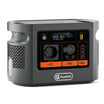
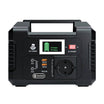
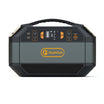
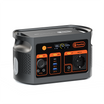
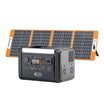
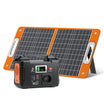
The Europe store lists both products as ACTIVE. The FlashFish product-source bundle records the T1200S at 768Wh, 1200W continuous AC output and 12.45kg. It records the T2000 at 1536Wh, 2000W continuous AC output and 19.2kg. Those figures create a clear trade-off: T1200S is easier to move; T2000 provides more stored energy and output headroom but adds 6.75kg.
Neither specification proves a trip runtime. Appliance cycling, inverter losses, temperature, standby consumption and recharge conditions change the result. Make a watt-and-hours worksheet for your own devices and leave a reserve.
When FlashFish fits—and when it does not
A FlashFish station fits when the trip includes mobile, selected loads; the verified continuous output exceeds simultaneous demand; the energy budget includes losses and reserve; and there is a credible recharge plan. It can complement a campsite hook-up without replacing campsite electrical rules.
It does not fit when the user expects unlimited energy, plans sustained high-draw heating without a realistic budget, needs a waterproof outdoor installation, intends to back-feed caravan wiring, or requires assured continuity for safety-critical equipment.
Frequently asked questions
Is a campsite electric hook-up the same as a portable power station?
No. A hook-up supplies the pitch from the campsite. A power station stores a finite amount of energy and can move away from the pitch.
Can I plug a portable power station into caravan hook-up wiring?
Do not back-feed or improvise a connection. Use only manufacturer-approved arrangements and seek qualified advice for vehicle or caravan wiring.
Which option is better for a short tent trip?
A portable station often fits light, mobile loads, while hook-up may fit sustained pitch-based use. The answer still depends on the load list, site rules and recharge plan.
Does every European campsite provide the same electrical capacity?
No. Availability, current limit, connector and site rules vary. Ask the campsite before travel and use the required equipment.
Can I use both hook-up and a portable power station?
Yes, if each is used within its approved role—for example hook-up at the pitch and a station for devices away from it—without unsafe cross-connection.
How do T1200S and T2000 differ for camping?
T1200S is lighter with less stored energy and continuous output. T2000 provides more capacity and output but is heavier. The better fit follows the load list and handling limit.
Sources and evidence boundaries
- The Camping and Caravanning Club: Using electricity on site — supports campsite hook-up and 230V supply context.
- Electrical Safety First: Overloading sockets — supports extension-lead loading and cable-reel cautions.
- FlashFish product-source bundle and Europe Shopify snapshot, accessed 17 July 2026, for T1200S and T2000 specifications and active Europe URLs.
Human review note: confirm campsite terminology and product specifications immediately before publication. This draft is a trip-planning framework, not campsite approval or electrical installation advice.




Dejar un comentario
Este sitio está protegido por hCaptcha y se aplican la Política de privacidad de hCaptcha y los Términos del servicio.